What Happens If a US Pilot Is Captured by Iran? The Reality Behind Prisoner Of War Treatment and Political Leverage
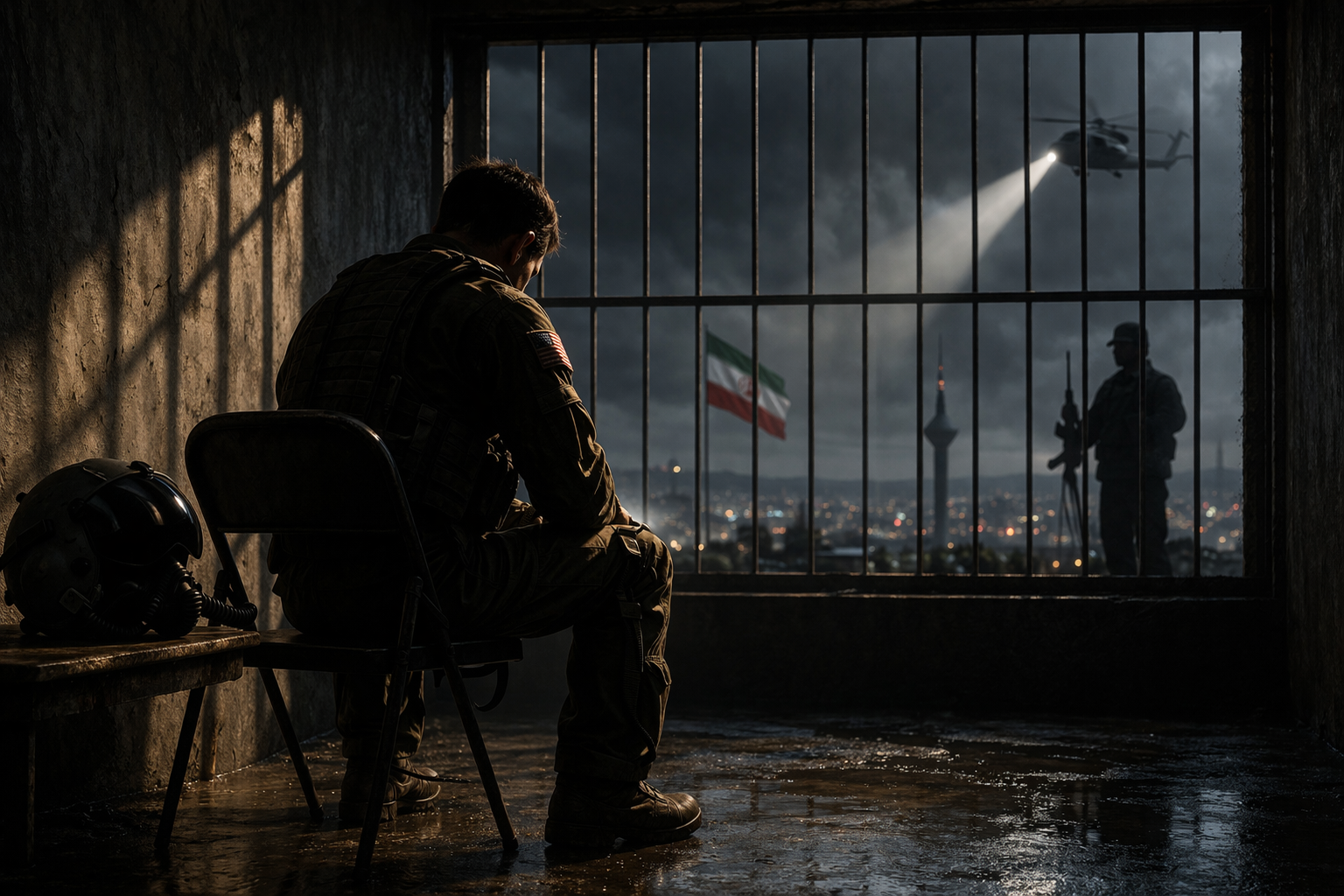
If Iran Captures a US Pilot, Here’s the Real Outcome
If Iran Captures a US Pilot, Here’s the Real Outcome
Reports and claims around captured personnel in the escalating US–Iran conflict remain unclear, with both sides controlling information tightly.
But if a US pilot were captured alive by Iran, the legal framework is well defined — and the real-world outcome is far more complicated.
Under international law, that pilot would be classified as a prisoner of war. In practice, they would likely become something else entirely: a strategic asset.
The story turns on whether Iran treats the pilot purely as a POW—or as leverage.
Key Points
A captured US pilot would legally qualify as a POW under the Geneva Conventions
Iran is obligated to provide humane treatment, medical care, and protection
In reality, detainees are often used for political leverage and negotiation
Public exposure or propaganda use is likely
Execution is highly unlikely, but prolonged detention is possible
The outcome typically depends on diplomacy, not law alone
The Legal Framework: What Should Happen
If captured in a declared or de facto international conflict, a US pilot becomes a prisoner of war under the Third Geneva Convention.
That status carries strict protections.
They must be treated humanely, protected from violence, and allowed contact with the outside world. They cannot be tortured, publicly humiliated, or forced to provide intelligence beyond basic identification.
They must also be released and repatriated once hostilities end.
On paper, this provision provision is one of the strongest legal protections in international law.
The Reality: Law Meets Power
The problem is not the law. It’s enforcement.
The Geneva Conventions rely on mutual compliance. They work best when both sides expect reciprocity.
In a high-intensity geopolitical conflict like US–Iran, that assumption weakens.
Iran has historically detained foreign nationals—including Western citizens—in ways widely interpreted as leverage-building. These cases frequently blur the distinction between legal detention and strategic bargaining.
A captured military pilot would sit directly in that space.
What Actually Happens After Capture
The sequence is usually predictable.
First comes secure detention, typically under military or intelligence control, most likely the Islamic Revolutionary Guard Corps.
Then comes interrogation. While coercion is illegal under international law, questioning will still happen—often intensively, especially in early capture stages.
Next is information control.
Iran would likely confirm the capture publicly at a time of its choosing. That could include video footage, statements, or images.
This is not random. It is messaging.
It signals capability, creates pressure, and shapes perception.
Why Public Exposure Matters
One of the most sensitive rules in the Geneva Convention is the prohibition on exposing POWs to “public curiosity.”
In reality, this rule is frequently stretched or broken in modern conflicts.
If Iran released footage of a captured US pilot, it would serve three purposes:
Demonstrate operational success
Undermine US narrative control
Create domestic and international pressure
This phase is where the situation shifts from military to political.
The Strategic Value of a Captured Pilot
A captured pilot is not just a person in custody.
They are:
Proof of military engagement
A bargaining chip
A symbol
That changes how they are handled.
Iran would have strong incentives to keep the pilot alive and relatively stable, because their value increases over time in negotiations.
This is why execution is highly unlikely.
Dead prisoners have no leverage.
Living ones do.
### What Most Coverage Misses
Most reporting focuses on whether the pilot would be treated well or badly.
That’s the wrong question.
The real hinge is incentive structure.
Iran does not need to violate the Geneva Convention outright to gain advantage. It only needs to control timing, access, and information.
A pilot can be treated adequately by minimum standards while still being used as a powerful strategic tool.
That includes:
Delayed communication
Limited external access
Controlled visibility
Negotiation positioning
The distinction between “protected” and “instrumentalized” is where the real story sits.
Risks That Actually Matter
There are risks, but they are often misunderstood.
The greatest risks are not immediate violence.
They are:
Being held longer than expected
Being used in negotiation standoffs
Being caught in escalation cycles
There is also a non-zero risk of mistreatment, especially early in detention, when control is not fully stabilized.
But structurally, Iran benefits more from keeping the pilot alive than harming them.
What Determines the Outcome
Three factors matter most:
1) Conflict trajectory
If the war escalates, detention may harden. If it de-escalates, release becomes more likely.
2) Diplomatic channels
Backchannel negotiations often determine the timing of release more than public statements.
3) Political value
The more valuable the prisoner, the more controlled—and prolonged—the detention may become.
What Happens Next If a Capture Is Confirmed
If Iran officially confirms capturing a US pilot, expect a rapid shift from military to diplomatic theater.
The US would likely:
Demand proof of life
Push for Red Cross access
Begin quiet negotiation channels
Iran would likely:
Control information release carefully
Use the situation to shape leverage
Avoid actions that trigger uncontrolled escalation
At that point, the situation becomes less about warfighting and more about negotiation dynamics.
Where This Could Go
There are two main paths.
One is rapid resolution: a prisoner exchange or diplomatic release tied to de-escalation.
The other is slower and more complex: prolonged detention, periodic signaling, and eventual negotiated release.
The difference between those paths depends less on law and more on leverage.
And that is the uncomfortable truth.
Even in a rule-based system, the outcome is rarely determined by the rules alone.
