Trump Rules Out Iran Strikes Before US Midterms — But Leaves Door Open To New War After Election
Iran Faces Uncertain Future After November Vote
The Pentagon Prepares For Possible New Offensive
The US president has promised no new attacks before 3 November, even as military preparations continue, nuclear negotiations remain divided and the Strait of Hormuz faces renewed disruption.
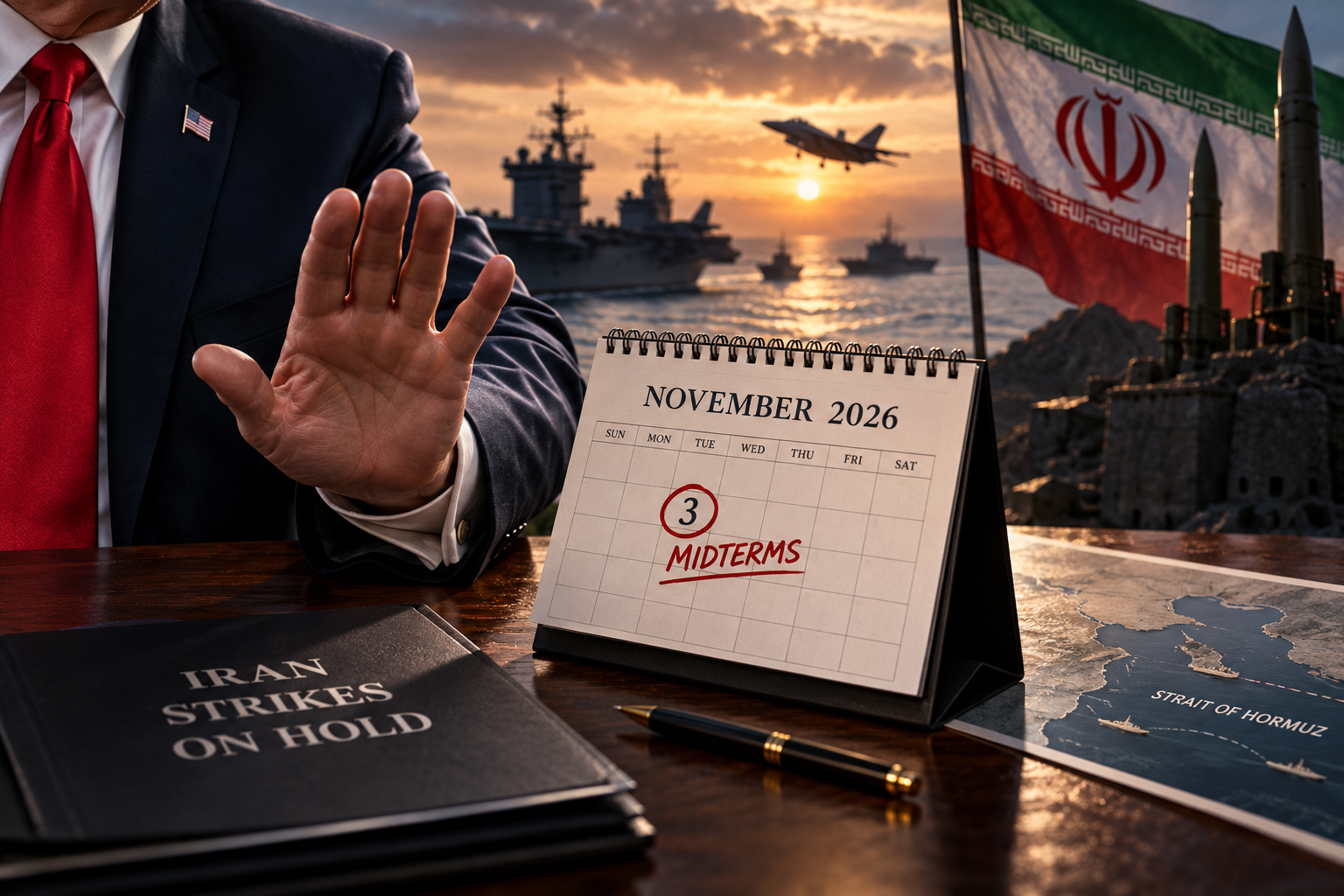
Donald Trump has ruled out launching fresh American military strikes against Iran before the United States holds its midterm elections on 3 November 2026, offering a temporary assurance against another major escalation in the Middle East.
The president made the announcement on Thursday, 8 October, after renewed discussion within his administration about resuming large-scale combat operations against Tehran. He also said American and Iranian officials were engaged in productive discussions, although significant disagreements remain over Iran's nuclear programme, economic sanctions and the future of the Strait of Hormuz.
His commitment establishes a clear public deadline. It does not amount to a permanent ceasefire, an agreement with Iran or a promise that American forces will remain inactive after election day.
Trump Makes His Position Clear
In a statement published on Truth Social, Trump said the United States would not attack Iran before the midterm congressional elections.
The president argued that Iran was in a weakened economic and military position. He also insisted that the American blockade of Iranian ports would continue and described oil movements through the Strait of Hormuz in positive terms.
That combination is important.
Trump has suspended the prospect of fresh attacks for the remainder of the immediate election campaign while maintaining the economic and military pressure Washington is using to seek concessions from Tehran.
The president has not announced a withdrawal of American forces, an end to the blockade or an agreement resolving the dispute over uranium enrichment.
His comments also represent a change in emphasis from statements made during September, when he declined to rule out further military action before the elections.
The public position now is more definite. No renewed American strikes before 3 November.
Whether that commitment changes the calculations of Iranian military commanders is a separate question.
Pentagon Preparations Had Raised Fears Of Another Major Attack
Trump's announcement follows preparations for the possible resumption of major American combat operations against Iran.
US Central Command, which oversees American military operations across much of the Middle East, had been instructed to complete preparations for a potential new offensive. The reported planning did not establish that Trump had made a final decision to order the attacks.
Potential operations were understood to include large-scale strikes against Iranian energy infrastructure, nuclear facilities and other strategic targets.
These would be significantly more consequential than an isolated attack on a military installation or missile-launching position.
Iranian oil facilities are important to Tehran's finances, while its nuclear infrastructure remains central to the dispute with Washington. Striking either could provoke retaliation against American military installations, Israel or commercial shipping.
The United States has also been strengthening its regional military presence.
Additional American troops and a third aircraft carrier have been directed towards the Middle East, increasing the forces available for possible operations.
Military readiness and a decision to launch an attack are different things, however. The Pentagon routinely develops options for the president, including operations that are never authorised.
Trump's latest statement therefore changes the announced timing of potential American military action without necessarily ending preparations for it.
Why The November Elections Matter
The United States is approaching an election that will determine control of Congress during the remaining two years of Trump's presidency.
All 435 seats in the House of Representatives and roughly one-third of the Senate are being contested.
The Republicans currently hold narrow congressional majorities. The conflict with Iran has become part of a broader debate about the cost of living, petrol prices and the administration's handling of foreign policy.
A recent national opinion survey found that approximately six in ten Americans disapproved of Trump's handling of Iran, including roughly one-quarter of Republican respondents.
Those figures illustrate why the conflict is politically sensitive. They do not establish the reason behind Trump's decision to postpone further strikes.
There are competing political considerations.
A new offensive might demonstrate military resolve to voters who support a more forceful policy towards Tehran. But it could also increase casualties, push energy prices higher and intensify public concerns about the duration and cost of the war.
Trump has repeatedly suggested that the confrontation could end shortly after the elections and that oil prices would decline as a result.
Neither outcome has been secured by a diplomatic agreement.
The president's decision also affects the period leading up to Israel's parliamentary elections on 27 October. Israeli officials have been considering the risk that another large American offensive could trigger Iranian missile attacks against Israel.
A significant exchange of missiles immediately before that vote could disrupt election arrangements and place additional pressure on Israeli security forces.
Iran's Nuclear Programme Remains The Central Obstacle
Despite Trump's description of productive discussions, Washington and Tehran have not reached agreement over the nuclear issue.
The United States wants Iran to accept meaningful reductions in its uranium-enrichment capacity. Vice-President JD Vance has identified that demand as an important condition for ending the conflict.
Iran's leadership has resisted surrendering its ability to enrich uranium.
On Thursday, Iranian state media cited the head of the country's Atomic Energy Organisation as saying Tehran would not abandon enrichment or hand over its uranium stockpile.
Enrichment increases the proportion of uranium-235 in nuclear material. Low-enriched uranium can be used for civilian nuclear energy, while substantially higher enrichment levels raise concerns about possible weapons applications.
Western governments have long accused Iran of seeking the capability to produce nuclear weapons. Tehran denies seeking nuclear arms and maintains that its programme serves peaceful purposes.
The disagreement concerns more than the existence of nuclear facilities. Any credible settlement would need to address enrichment limits, the status of existing material, independent monitoring and the conditions under which sanctions might be lifted.
These are technical issues with major political consequences.
An agreement that Tehran regards as surrendering its sovereign rights might be impossible for Iranian leaders to accept. Conversely, an arrangement that Washington considers too weak could leave the United States unwilling to ease pressure.
Trump's earlier prediction of a post-election agreement with Iran remains a forecast rather than a completed diplomatic achievement.
The Strait Of Hormuz Keeps The World Economy Exposed
The confrontation has immediate consequences beyond the two countries involved.
The Strait of Hormuz, between Iran and Oman, connects the Persian Gulf with global shipping routes. In normal conditions, approximately one-fifth of the world's petroleum liquids consumption passes through the waterway.
Any prolonged disruption can affect fuel supplies and transport costs far beyond the Gulf.
The struggle for control of the Strait of Hormuz has become one of the defining features of the conflict.
Washington maintains a blockade against Iranian ports while allowing authorised shipping to continue. Tehran disputes American claims of effective control over the waterway and has continued to threaten or attack maritime traffic.
On 8 October, another tanker attack near Qatar added to concerns about the safety of vessels operating in the region.
Oil prices rose sharply during trading as markets assessed the possibility of military escalation and further disruption to supplies.
Brent crude briefly moved above 100 dollars a barrel, before some of the increase eased following Trump's announcement.
Energy prices are also being affected by disruptions to production in the Gulf of Mexico, where a hurricane threat has forced some operators to suspend activity.
It would therefore be misleading to attribute every movement in the oil market to Iran alone.
Still, the relationship between security in the Strait of Hormuz and worldwide energy prices is direct. Shipowners, insurers and fuel traders must account for the possibility of attacks, delays and interrupted deliveries.
For British households, sustained increases in international energy prices could eventually affect petrol, diesel, transport and other costs. The scale of any increase would depend on how long disruptions last and how wholesale prices move.
Could The United States Attack Iran After 3 November?
Trump has not ruled that out.
His statement specifically addresses the period before the midterm elections. It does not remove military options for the days and weeks that follow.
Earlier comments from the president established that further attacks remained possible if Iran did not reach an acceptable settlement.
At the same time, negotiations could produce a diplomatic outcome that makes renewed bombing unnecessary.
Both possibilities remain open.
American officials have explored military options while diplomats continue exchanging proposals. Iran has offered its own terms for ending the conflict, but differences over nuclear restrictions, sanctions and maritime access have prevented agreement.
Further strikes would also carry significant strategic risks.
Iran retains ways to threaten regional shipping, launch missiles and drones, and impose costs on American partners. Even an extensive bombing campaign would not automatically produce the political concessions Washington wants.
The earlier escalation between American forces and Iran demonstrated how quickly a military operation can create pressure for retaliation.
Any new offensive would also require decisions about its objectives. Destroying particular facilities is a different undertaking from forcing a government into a negotiated settlement.
For now, Trump has publicly chosen to leave that decision unresolved.
What Would A Real Peace Agreement Require?
An enduring agreement would need to achieve more than a temporary pause in bombing.
Washington and Tehran would have to establish mutually acceptable arrangements for Iran's nuclear activities, international verification and relief from economic restrictions.
They would also have to address the blockade and the security of commercial vessels passing through the Persian Gulf.
Implementation could be especially difficult because the two governments have sharply different accounts of the conflict.
Iran wants assurances that concessions will not simply be followed by further attacks. Washington wants restrictions it regards as enforceable and meaningful.
Even if an agreement were announced, independent monitoring, sanctions arrangements and military de-escalation would still require practical decisions.
The next significant date is now 3 November.
Until then, Trump has promised not to resume American attacks on Iran. The blockade remains in place, diplomatic negotiations continue and US forces retain the capacity to conduct operations.
What has not been established is whether election day will bring the diplomatic breakthrough Trump has predicted or merely mark the end of his publicly announced pause in military strikes.
Sources
Reuters — Trump Says US Will Not Attack Iran Before Midterm Elections In November — 8 October 2026. Confirms Trump's announcement, the nuclear negotiating positions, election context and public opinion findings.
Axios — Trump Rules Out Iran Strikes Before Midterms — 8 October 2026. Details Trump's statement, preparations for a possible offensive and consultations with Israeli defence officials.
Associated Press — Trump Says US Will Not Resume Military Strikes On Iran Before The November 3 Midterm Elections — 8 October 2026. Independently confirms the president's election-period commitment.
Next Reads
Trump Threatens Iran’s Regime At UN And Predicts A Deal After The Midterms — The background to Trump's earlier prediction that an agreement could follow the American elections.
Trump Declares ‘We Control Hormuz’ As Iran Launches Major Gulf Attack — Examines the dispute over the strategic shipping route at the heart of the conflict.
US Attack On Iran Triggers A Fast Escalation Ladder — And A Hard Ceiling — Explains the military and strategic consequences of renewed confrontation.
