Trump Says War Is Ending — Then Escalates It
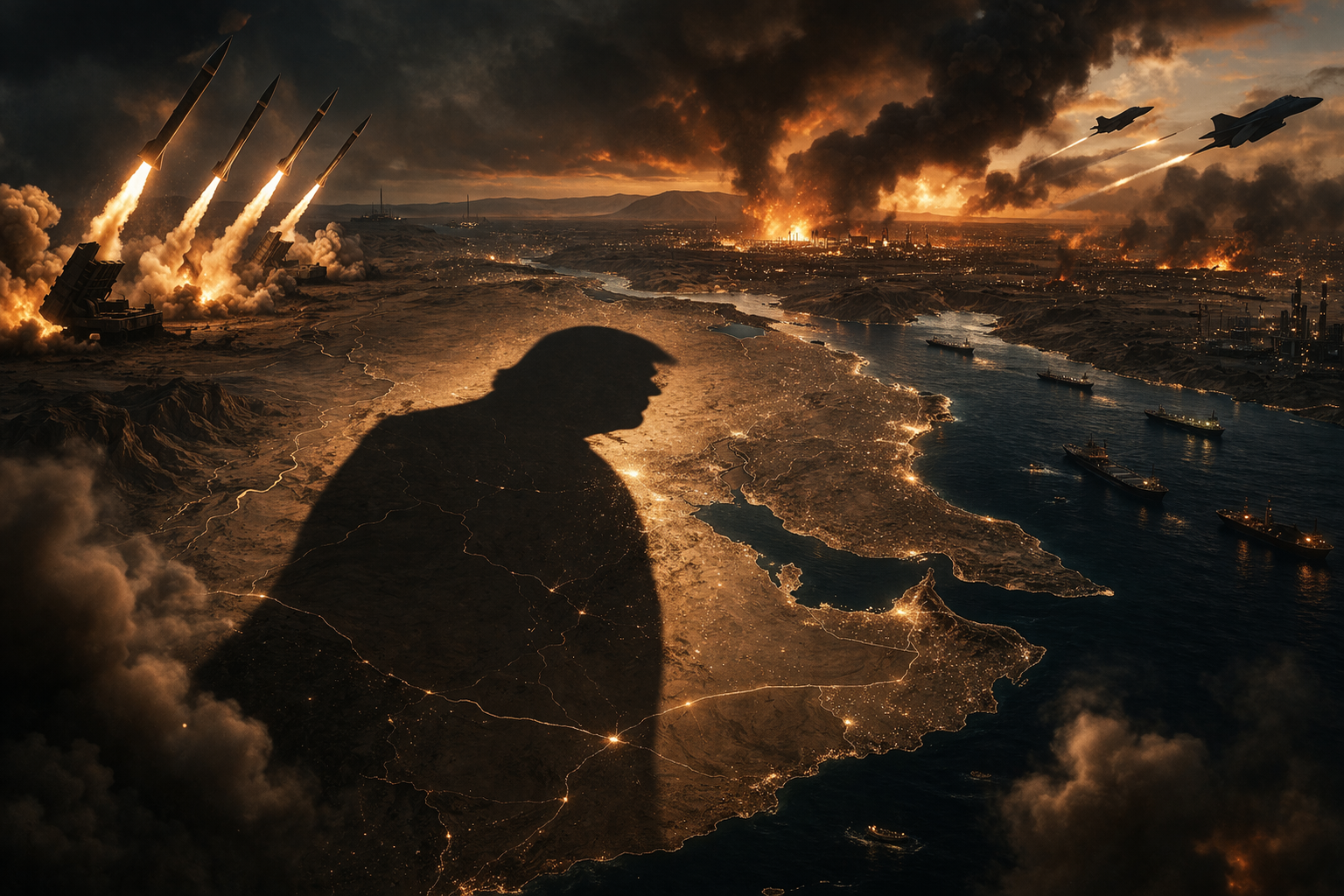
Trump Threatens Iran With Final Blow — But War Isn’t Ending
Trump Escalates Iran War: “Extremely Hard” Strikes Planned—While Claiming the End Is Near
Donald Trump has delivered one of the most contradictory wartime messages of his presidency: the U.S. will intensify attacks on Iran “extremely hard” over the next 2–3 weeks—while simultaneously insisting the war is “nearing completion.”
That combination—escalation alongside claims of imminent victory—is the core tension now shaping global markets, military strategy, and political risk.
The reality is simple: the war is not winding down in any conventional sense. It is entering its most dangerous phase.
The story turns on whether escalation is being used to end the war—or whether it risks prolonging it.
Key Points
The U.S. has confirmed continued and intensified strikes on Iran for the next 2–3 weeks, not a slowdown.
Trump claims core military objectives are nearly complete, despite ongoing attacks and no clear ceasefire terms.
The war began in late February 2026 and has already disrupted global oil markets and regional stability.
Iran has not agreed to a ceasefire, contradicting U.S. messaging about an endgame.
Oil prices have surged above $100/barrel amid fears over the Strait of Hormuz disruption.
The U.S. has hinted at potential strikes on power grids and oil infrastructure, raising escalation risks.
The Contradiction at the Center of Trump’s Strategy
Trump’s message contains two claims that don’t naturally fit together:
The war is nearly over
The most intense strikes are still to come
On the surface, that sounds inconsistent. In reality, it reflects a specific military and political strategy.
The U.S. appears to be attempting a “shock endgame”—a final burst of overwhelming force designed to:
break Iran’s remaining capabilities
force a political concession
avoid a long, drawn-out occupation
This is not new in U.S. doctrine. It mirrors earlier “shock and awe” concepts—but with a tighter timeline and far higher geopolitical stakes.
How the War Reached This Point
The conflict began on February 28, 2026, with a coordinated U.S.–Israeli strike campaign targeting Iranian military and nuclear infrastructure.
Since then:
Iran’s navy, air force, and missile systems have reportedly been heavily degraded
Iran has responded through regional attacks and disruption of shipping routes
The Strait of Hormuz—a key global oil artery—has been partially restricted, driving energy prices higher
Despite battlefield gains, one critical fact remains:
The Iranian regime is still intact.
That matters more than any destroyed infrastructure.
The Real Stakes: Oil, Power, and Global Stability
This situation is no longer just a regional conflict. It is now directly tied to global economic stability.
Oil prices have surged past ~$100 per barrel
Supply chains face disruption
Inflation risks are rising again globally
The Strait of Hormuz alone carries roughly 20% of global oil flows—meaning even partial disruption has an outsized impact.
Trump’s comments have already triggered:
market volatility
investor uncertainty
political pressure domestically
This is why the contradiction matters. Markets don’t react to rhetoric—they react to clarity. And right now, there isn’t any.
What Most Coverage Misses
The key misunderstanding is this:
“Nearing completion” does not mean the war is actually close to ending.
It means the initial objectives may be complete—but the political outcome is not secured.
There are two separate layers:
Military success (destroying assets)
Strategic success (forcing compliance or regime change)
The U.S. appears close to the first—but far from guaranteeing the second.
That gap is where wars typically drag on.
If Iran’s leadership still believes it can:
survive
rebuild
or outlast U.S. pressure
Then escalation won’t end the war—it will extend it.
This is the real hinge.
Who Gains—and Who Is Exposed
United States
Gains: short-term military dominance, leverage in negotiations
Risk: prolonged conflict, political backlash, economic damage
Iran
Gains: narrative of resistance, potential regional sympathy
Risk: infrastructure collapse, internal instability
Global Economy
Gains: none
Risk: energy shocks, inflation, recession pressure
Allies
Increasingly divided—some support the campaign, others are frustrated by lack of clarity
The Next 2–3 Weeks Will Decide Everything
There are three plausible paths from here:
1. Forced Settlement
Heavy strikes push Iran to negotiate
→ War ends quickly
→ U.S. claims decisive victory
2. Controlled Stalemate
Strikes continue but Iran absorbs pressure
→ No clear resolution
→ Conflict drags on in a lower-intensity phase
3. Escalation Spiral
Attacks expand to infrastructure or trigger regional retaliation
→ Wider Middle East conflict
→ Global economic shock
Right now, the second and third scenarios are more structurally likely than the first.
The Endgame Is Not What It Looks Like
Trump is framing this as a war that is almost finished.
But the structure of the conflict suggests something different:
Military dominance ≠ political resolution
Short timelines ≠ controlled outcomes
Escalation ≠ guaranteed compliance
The next 2–3 weeks are not the final chapter.
They are the most volatile phase of the war.
And the real question is no longer whether the U.S. can win militarily—but whether it can end the conflict on its own terms.
