Trump Signals Indefinite Iran Blockade As Tanker Attacks Bring Hormuz Traffic Near Standstill
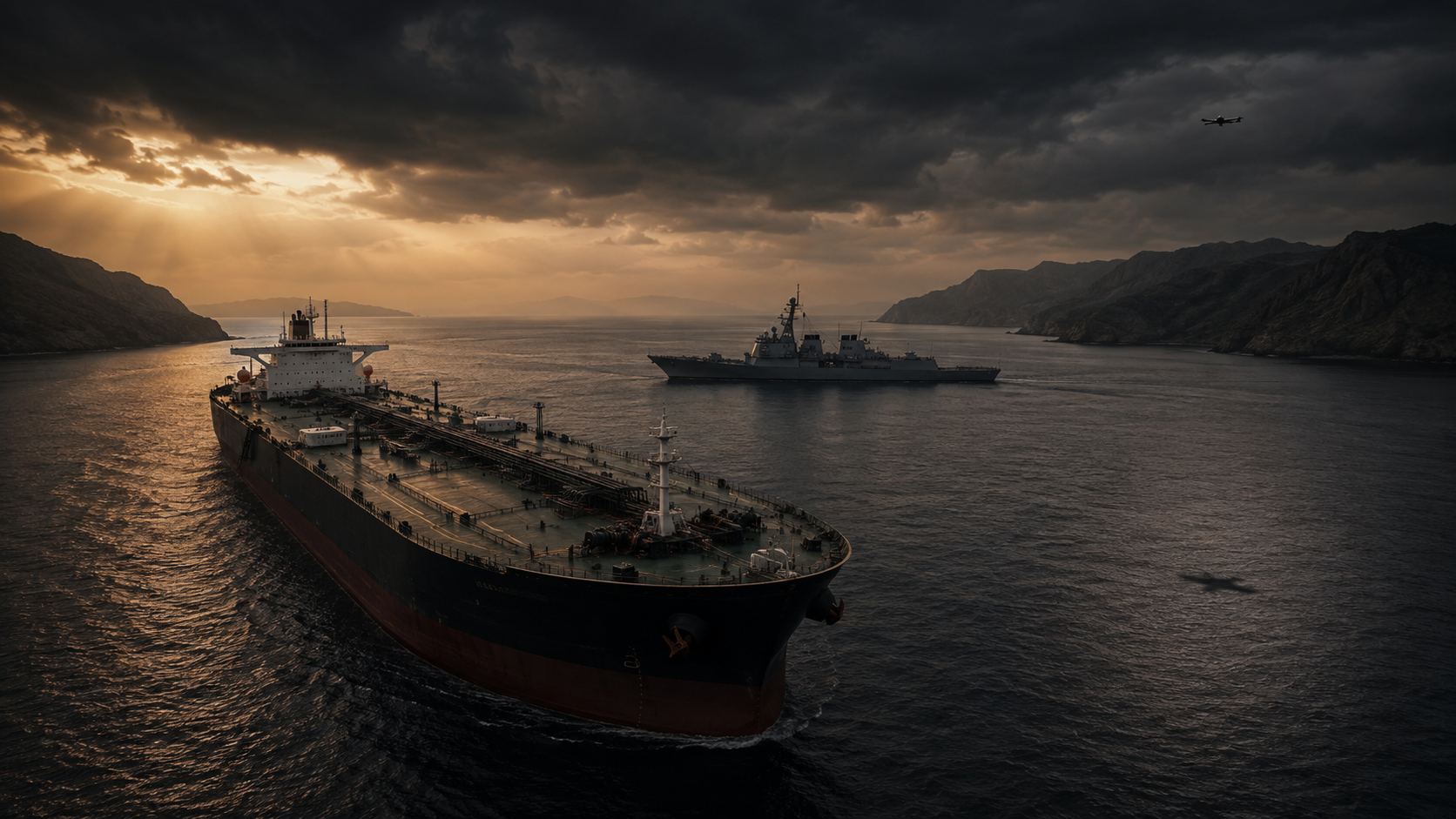
US Warns Iran Blockade Could Last Indefinitely As Hormuz Crisis Deepens
Trump’s “Wall of Steel” Closes Around Iran As Tankers Come Under Attack
Donald Trump has signalled that America may retain control over the Strait of Hormuz as his defence secretary declared that the US Navy could enforce its blockade of Iran indefinitely. The warning came as two vessels operated by the United Arab Emirates’ state-owned energy company ADNOC were attacked while crossing the strait, bringing commercial traffic through the vital waterway close to a halt.
The attacks caused no reported injuries and were brought under control, but they exposed the widening gap between Washington’s claims of dominance and the reality confronting merchant crews. The United States can obstruct Iran’s ports and exports, yet Tehran retains the capacity to make passage through the strait dangerous, expensive and unpredictable.
Trump’s “Wall of Steel”
Trump has claimed that the United States possesses “total control” over the Strait of Hormuz and suggested that America could keep that control. He described the naval blockade as a “wall of steel” that Iran is powerless to break, framing the operation as both a military achievement and a source of long-term economic leverage.
US Defence Secretary Pete Hegseth then gave the threat a more concrete meaning. He said the Navy could maintain the blockade indefinitely by rotating vessels into and out of the region, allowing Washington to continue restricting ships travelling to and from Iranian ports without assigning the operation a fixed end date.
More than 20 US warships and tens of thousands of military personnel have reportedly been deployed across the wider region since the conflict began. American forces have redirected dozens of commercial vessels suspected of attempting to breach the blockade, boarded ships and disabled several others.
In one recent confrontation, an American naval helicopter fired missiles into the engine room of a Panama-flagged vessel after US forces said it ignored repeated warnings. The episode demonstrated that this is no longer merely an economic restriction enforced through paperwork and sanctions. It is an armed blockade in which a misunderstood order, disputed destination or failed interception could produce another violent escalation.
Two Tankers Attacked in Hormuz
ADNOC confirmed that two of its vessels were attacked while transiting the Strait of Hormuz on Thursday evening. The company said nobody was injured and that the situation had been brought under control, although no public details were initially provided about the vessels, their cargoes or the scale of any damage.
The UAE accused Iran of carrying out the attacks and described the targeting of commercial shipping as a direct threat to regional stability and global energy security. Iranian authorities had not immediately responded to the latest allegation, meaning responsibility should still be treated as an accusation rather than an independently established fact.
The incident followed another alleged attack on an ADNOC-linked carrier less than a week earlier. Iran’s Revolutionary Guards have previously threatened to act against vessels connected to countries Tehran considers hostile or ships that attempt to cross the strait without Iranian approval.
The latest tanker attacks matter far beyond the vessels themselves. Every new explosion, drone sighting or missile warning encourages shipowners to delay journeys, reroute cargoes, demand higher fees or withdraw vessels from the area altogether. Iran does not need to sink every tanker to exert power; it needs only to make the risk of passage commercially unacceptable.
Shipping Approaches a Standstill
Before the war, more than 130 vessels reportedly crossed the Strait of Hormuz each day. Only nine visible crossings were recorded on Thursday, following five on Wednesday, while early ship-tracking data showed no observable passages on Friday.
Some ships may have crossed with their tracking equipment disabled, but the contrast remains stark. A waterway that once functioned as an artery for global trade is now operating at only a fraction of its former activity.
Before the conflict, roughly one-fifth of the world’s oil and liquefied natural gas moved through the strait. More than a quarter of globally traded seaborne oil passed through it during recent normal trading periods, with China, India, Japan and South Korea among the markets most exposed to disruption.
Saudi Arabia and the UAE possess pipelines capable of bypassing Hormuz, but their spare capacity cannot replace the full volume normally carried by tankers. Qatar’s enormous liquefied natural gas exports are particularly difficult to reroute because they depend heavily on shipping through the strait.
The result is a crisis that can spread without another major battle. Higher insurance premiums, freight charges and energy prices feed through supply chains, while Asian refiners seek alternative crude and governments reassess the security of their fuel supplies.
Two Blockades, One Global Chokepoint
The confrontation is unusual because both sides are applying different forms of maritime pressure. America is blockading Iranian ports and shipping to deprive Tehran of export revenue and hard currency. Iran, meanwhile, is restricting or threatening commercial passage through the strait to impose costs on Washington and its regional partners.
Trump can therefore claim that Iran is trapped behind an American blockade, while Tehran can point to the collapse in ordinary shipping as proof that it still controls the central economic pressure point. Neither claim tells the whole story.
The United States possesses overwhelming conventional naval power, but military superiority does not automatically produce safe commercial navigation. Small drones, missiles, mines and fast attack craft can generate enough uncertainty to keep civilian ships away even when Iran cannot challenge the US fleet directly.
Iran’s leverage is also dangerous for Tehran. Repeated attacks on civilian shipping risk alienating Gulf governments, Asian energy customers and other countries that may oppose American policy but still depend on freedom of navigation. Every tanker incident gives Washington another argument for expanding the blockade, imposing sanctions or launching retaliatory strikes.
Economic Pressure Replaces a Quick Victory
Washington is preparing additional economic measures intended to isolate Iran further. Treasury Secretary Scott Bessent has promised announcements involving an exceptional level of financial pressure, suggesting that the administration currently prefers tightening the economic siege to opening another phase of direct military escalation.
That approach reflects both strategy and domestic politics. Trump faces pressure to end a conflict that has raised fuel prices and remains unpopular with sections of the American public ahead of November’s midterm elections.
An indefinite blockade allows him to maintain pressure without committing ground troops or ordering some of the more dangerous attacks considered during the conflict. It also creates a long-term obligation for the US Navy and leaves American forces repeatedly exposed to miscalculation, retaliation and regional escalation.
Iran has demanded sanctions relief and the release of frozen assets before allowing the waterway to reopen fully. Washington has demanded safe, unrestricted passage for commercial ships. With neither side willing to surrender its principal source of leverage, the strait has become both the battlefield and the bargaining table.
What Happens Next
The immediate test will be whether commercial traffic begins moving again or whether the latest attacks persuade more operators to suspend crossings. Investigators must also establish how the ADNOC vessels were targeted and whether evidence supports the UAE’s attribution to Iran.
Washington’s next sanctions package will reveal how far Trump intends to push economic pressure while avoiding a larger military operation. Iran must decide whether continued interference with shipping strengthens its negotiating position or creates a coalition of states prepared to confront it more aggressively.
The greatest danger is no longer simply a formal decision to widen the war. It is the possibility that another tanker attack, interception or misidentified vessel triggers retaliation before either side has chosen escalation. America may be capable of maintaining its blockade indefinitely, but the world economy cannot absorb indefinite uncertainty around the Strait of Hormuz without paying a steadily rising price.
