

Trump’s Iran Deal Could Reopen Hormuz And Shake The Global Economy Overnight
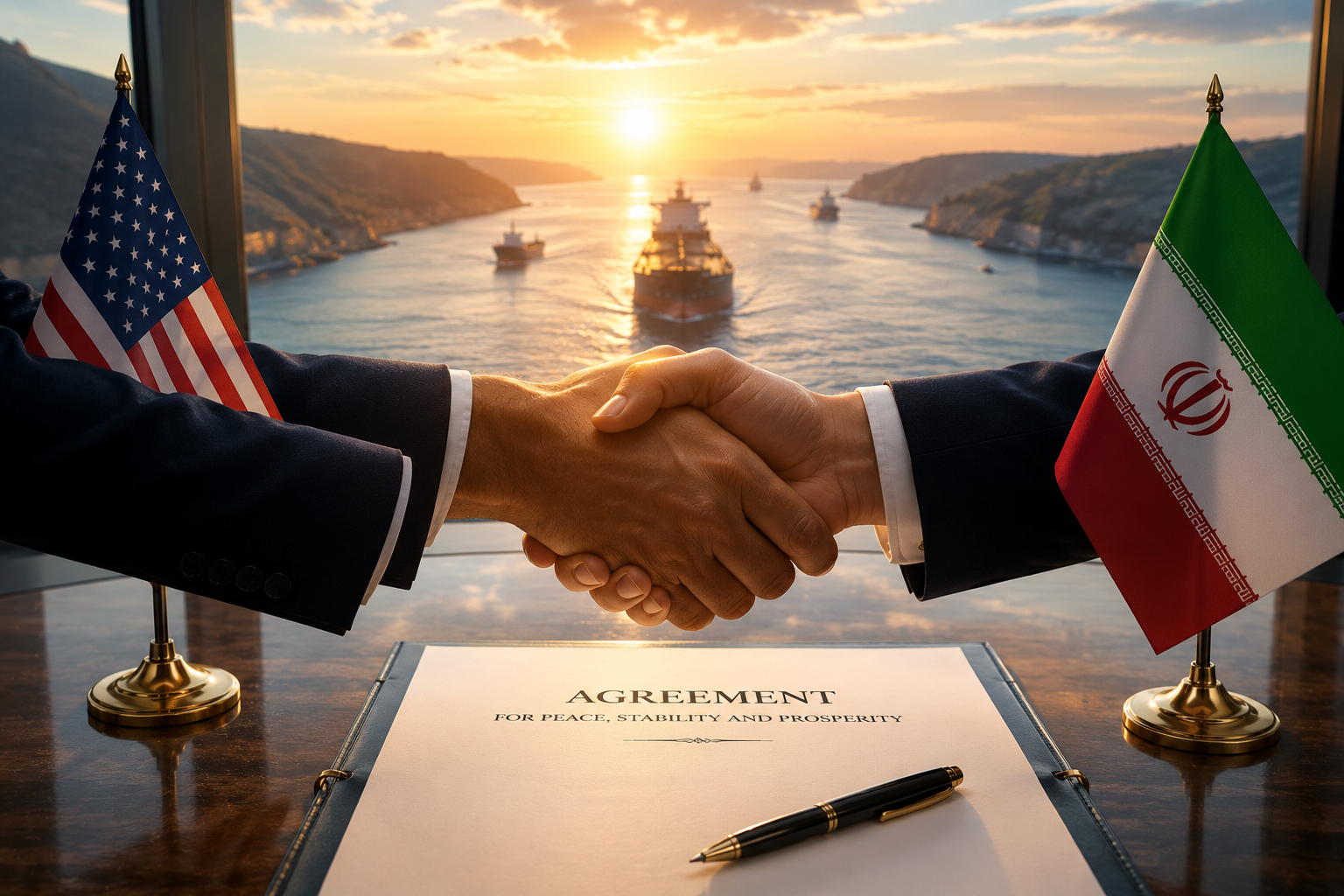
The US-Iran Deal That Could Break The War And Unlock The World’s Oil Lifeline
The Agreement That Markets Were Waiting For
The United States and Iran have reached a preliminary agreement designed to halt the conflict, reopen the Strait of Hormuz and create a 60-day window for deeper negotiations. The deal is being treated as the most serious diplomatic breakthrough yet in a confrontation that had pushed energy markets, regional security and global diplomacy into a dangerous new phase.
The immediate importance is obvious. The Strait of Hormuz is one of the world’s most sensitive energy chokepoints, and any disruption there has consequences far beyond the Gulf. When oil and gas routes are threatened, the effects move quickly into fuel prices, shipping costs, inflation expectations, aviation, manufacturing and consumer confidence.
This is why markets reacted so sharply. Reports of the preliminary agreement sent oil prices lower and lifted global equities, with European markets also rallying after the deal reduced fears of a prolonged energy shock.
The Agreement Terms
The headline is peace, but the substance is more careful than that. This is not a final grand settlement between Washington and Tehran. It is a framework designed to stop the bleeding, reopen the waterway and move the hardest issues into a controlled negotiation period.
The reported agreement terms include:
An immediate cessation of hostilities between the United States and Iran.
A wider halt to military action across connected fronts, including Lebanon, though Israel’s position remains more complicated.
Reopening the Strait of Hormuz to commercial shipping.
Removal of the US naval blockade affecting Iranian ports.
A 60-day ceasefire and negotiation window.
Follow-on talks over Iran’s nuclear programme, uranium enrichment and stockpile.
Potential discussions over sanctions relief.
Possible release or unfreezing of Iranian assets.
Mediation and diplomatic support from Pakistan and other regional actors.
A formal signing process expected in Switzerland/Geneva on June 19, 2026, if the agreement holds.
The hidden pressure is that the agreement does not solve the central dispute. It postpones it into a defined diplomatic window. That can be smart statecraft, because it stops the immediate escalation. It can also be fragile, because every unresolved issue becomes a possible trigger.
Why Hormuz Matters More Than The Battlefield
The Strait of Hormuz is not just a body of water. It is a pressure valve for the global economy. When it closes, the world does not simply lose a shipping lane; it loses confidence in the reliability of energy movement through one of the most strategically important corridors on earth.
That is why this deal matters even to people who do not follow Middle East politics closely. A reopened Strait can calm oil markets, reduce the fear premium in energy prices and make inflation forecasts less frightening. It also gives governments room to breathe, because energy shocks quickly become political shocks.
But the deeper point is control. Iran’s ability to threaten or close Hormuz gives it leverage far beyond its conventional military power. America’s ability to blockade, patrol or reopen maritime routes gives Washington its own leverage. The agreement is therefore not just about ships passing through water. It is about who controls the rhythm of global economic anxiety.
The Nuclear Question Has Not Gone Away
The most dangerous illusion would be to treat this agreement as the end of the crisis. The nuclear issue remains central. Reports say the 60-day period is expected to include talks on uranium enrichment, Iran’s stockpile and the wider architecture of any future nuclear arrangement.
That means the ceasefire is really a test chamber. If both sides use the pause to negotiate seriously, the deal could become the foundation for a wider settlement. If either side uses it to regroup, reposition or harden its demands, the same crisis could return with greater force.
There is also a political trap for Washington. Any nuclear-related concession, sanctions pathway or asset release will be attacked by opponents who argue that pressure should not be exchanged for promises. At the same time, refusing to negotiate after reopening the Strait could make the ceasefire look like a temporary tactical pause rather than a strategic breakthrough.
Iran faces its own version of the same dilemma. It can present the deal as proof that resistance forced concessions, but a real negotiation would require limits, inspection mechanisms or restrictions that hardliners may resist. That is where the public victory narrative can collide with the private diplomatic reality.
Israel, Lebanon And The Risk Of A Deal Being Outrun
The most fragile part of the agreement may not sit directly between Washington and Tehran. It may sit in the wider regional theatre. Reports around the deal describe continuing concern over Lebanon and Israeli military action, with Israel not simply disappearing from the equation because America and Iran have reached a framework.
That matters because ceasefires often fail at the edges before they fail at the centre. A strike, retaliation, proxy attack, militia miscalculation or maritime incident can quickly test whether the agreement is real or merely diplomatic theatre. The more actors involved, the harder it becomes to control the chain reaction.
This is the central weakness of any narrow deal in a wide conflict. Washington and Tehran can agree on text, but the region is full of armed groups, rival states, domestic political pressures and unresolved fronts. A ceasefire only works if the wider system can be kept from detonating around it.
Trump Gets The Optics, But Also The Risk
For Donald Trump, the agreement offers an obvious political prize. He can present the reopening of Hormuz and the halt to hostilities as a hard-power negotiation victory: pressure applied, route reopened, blockade lifted, talks forced. Reports say he emphasised the opening of the Strait and the removal of the US naval blockade.
That is powerful messaging because it gives supporters a simple storyline. America pushed, Iran moved, global markets calmed. In political terms, that is cleaner than a long, grinding conflict with rising fuel prices and uncertain military objectives.
But the risk is equally clear. If the deal collapses, Trump owns the spectacle of the breakthrough as much as the breakthrough itself. A failed agreement could be framed as weakness by opponents, betrayal by hawks or bad faith by either side. The bigger the announcement, the more damaging the reversal if Hormuz closes again.
The Real Test Begins After The Signing
The formal signing matters, but it is not the finish line. The real test begins after ships move again, markets calm down and the cameras leave the negotiation room. That is when the 60-day clock starts to matter.
The central questions are brutal. Can Iran accept nuclear limits that Washington can sell as meaningful? Can America offer sanctions relief without looking like it rewarded escalation? Can regional actors avoid blowing up the process before it matures? Can the Strait stay open long enough for confidence to return?
For now, the agreement has done the one thing the world most urgently needed. It has created a pause. It has reopened the possibility of movement instead of escalation. It has taken a blocked chokepoint and turned it back into a negotiating table.
But that is also the danger. The Strait of Hormuz may reopen before the conflict is truly resolved. The ships may move before trust exists. The oil price may fall before the hard choices are made. This deal is not peace yet. It is a narrow bridge over a very deep drop.
