Trump’s Tariff Threat to Britain Isn’t Just About Tax — It’s a Test of Power, Loyalty, and Who Blinks First
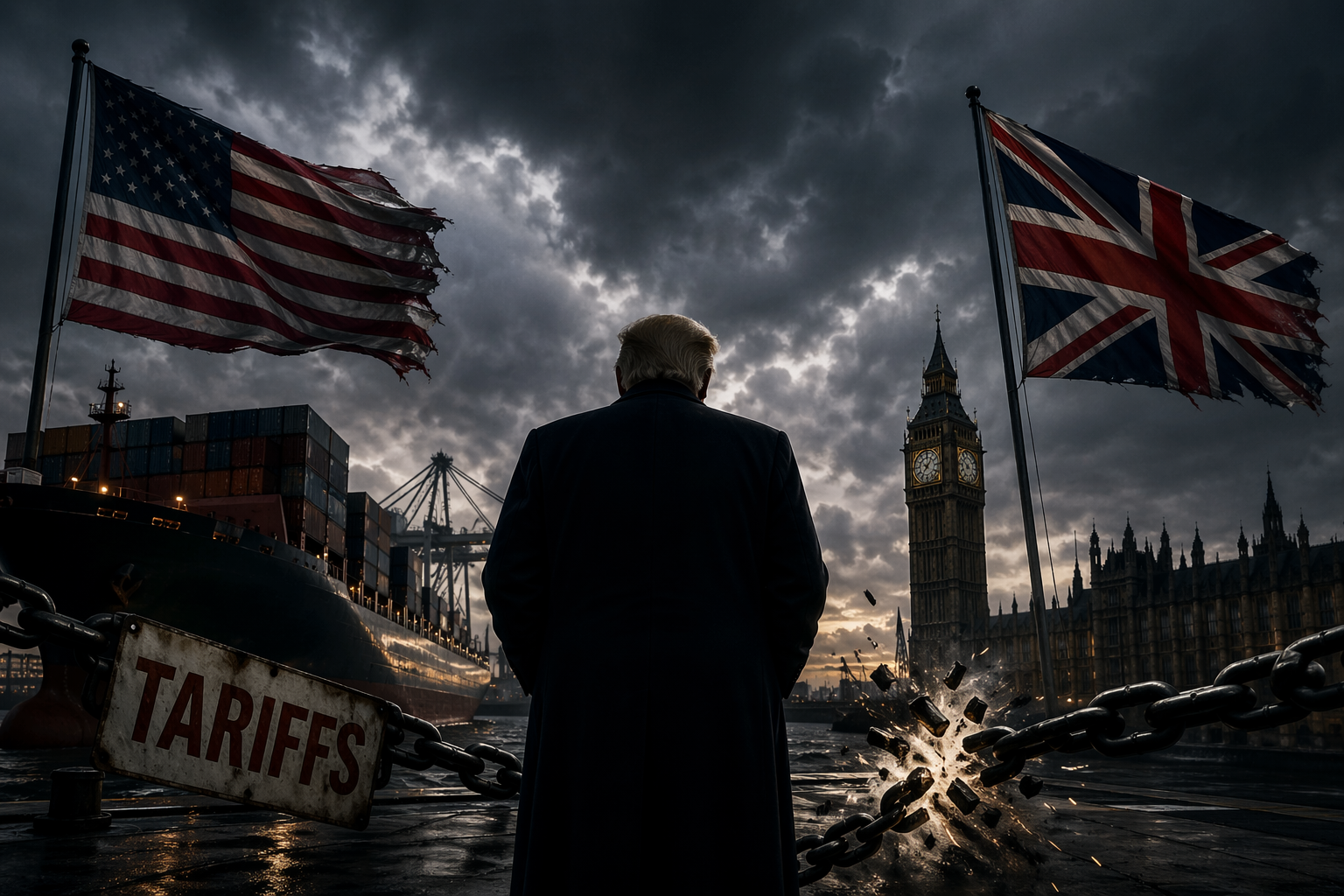
Trump vs Starmer: The Digital Tax Clash That Could Trigger a Trade War
The UK–US Alliance Just Hit a Pressure Point—And It’s About More Than Money
The clash over Britain’s digital tax reveals a deeper shift: economics, politics, and alliance loyalty are now colliding—and neither side wants to back down
The threat is simple. The consequences are not.
The United States has warned it could impose a “big tariff” on British goods if the UK refuses to scrap its digital services tax — a 2% levy aimed at large tech companies operating in Britain.
On the surface, thisthe issueks like a dispute over tax policy. In reality, it is something far sharper: a pressure move in a widening contest over who controls the rules of the modern economy and how far alliances stretch when money is on the line.
What This Is Really About
The UK’s digital services tax was introduced to resolve a problem that governments have struggled with for years: global tech companies generate huge revenues in countries where they pay relatively little tax.
The solution was blunt but targeted:
A 2% levy on revenues generated from UK users
Applied only to the largest firms
Designed as a stopgap until global tax reforms emerge
But here is the tension: many of those companies are American.
From Washington’s perspective, the issue is not just taxation — it looks like a targeted hit on national champions. Trump has made that framing explicit, arguing the UK is effectively singling out US firms and “taking advantage” of them.
That framing matters because it turns a tax dispute into a trade dispute—and trade disputes escalate fast.
Why Trump Is Escalating Now
This escalation is not happening in a vacuum.
Trump has consistently used tariffs not just as economic tools but as leverage—a way to force concessions without formal negotiation. His approach is simple:
Identify a policy seen as hostile
Threaten disproportionate retaliation
Force the other side to decide whether the cost is worth it
We’ve seen this pattern repeatedly. Tariffs are not always the end goal — they are often the opening move.
In this case, the logic is clear:
The UK collects hundreds of millions annually from the tax
The US can potentially impose tariffs worth far more
The imbalance creates pressure
Trump himself has framed it explicitly as reciprocity—or escalation beyond it.
The UK’s Position — And Its Problem
The UK is not backing down.
Officials have indicated the tax remains in place and is considered “fair and proportionate”—a necessary correction to how global tech companies are taxed.
That stance makes sense domestically:
The tax raises significant revenue
Public sentiment generally supports holding large tech firms accountable
Scrapping it under pressure would look weak
But it creates a strategic dilemma:
Option 1 — Hold the line
Maintain policy credibility
Risk tariffs on UK exports
Option 2 — Back down
Avoid immediate economic damage
Signal vulnerability to external pressure
There is no clean win here. Only trade-offs.
What Media Misses
This battle is not just a fight about tax fairness or trade balance.
It is a signal that the old rules of alliance behavior are weakening.
For decades, the UK–US relationship has operated on an assumption: close allies do not use hard economic coercion against each other.
That assumption is now under strain.
What this moment reveals is a shift from alliance-first thinking to interest-first thinking.
The message embedded in the tariff threat is blunt:
Alignment is conditional.
If a policy impacts American economic interests, even from a close ally, retaliation is now a viable option.
That changes the psychology of the relationship far more than any single tariff ever could.
Why This Is Bigger Than It Looks
A 2% tax has triggered something much larger because it sits at the intersection of three forces:
1. The Future of Digital Taxation
Countries worldwide are grappling with the same issue: how to tax companies that operate globally but have a specific headquarters.
If the UK backs down, it sends a signal to others:
National digital taxes are politically fragile
Pressure works
2. The Rise of Economic Leverage Politics
Tariffs are no longer just economic tools. They are instruments of political influence.
This dispute reinforces that trend—and normalizes it.
3. The Fragility of “Special Relationships”
The UK–US relationship has long been framed as uniquely stable.
This episode suggests something different:
Stability is conditional
Alignment must now be actively maintained
Even close allies can become economic targets
What Happens Next
Three paths are emerging.
Most Likely
The dispute moves into negotiation.
The UK keeps the tax—for now
Quiet concessions or adjustments are explored
Tariffs remain a threat, not yet reality
Most Dangerous
The US follows through.
Tariffs imposed on UK goods
Retaliation considered
Escalation into a broader trade conflict
Most Underestimated
The tax becomes a bargaining chip in a wider deal.
Linked to tech regulation
Linked to future trade terms
Used as leverage in negotiations far beyond taxation
The Real Question
The issue is not ultimately about whether the UK keeps a 2% tax.
It is about whether mid-sized powers can set their own economic rules when those rules collide with the interests of a larger ally.
Once tariffs are introduced into the discussion, the dynamics shift.
This stops being a policy debate—and becomes a test of resolve.
The Aftershock
The UK now faces a choice that defines more than a tax policy:
Stand firm and risk economic retaliation.
Or compromise and signal that pressure works.
Either way, something shifts.
Because once a relationship moves from cooperation to coercion—even subtly— it does not fully return to what it was.
And that may be the real cost of this dispute.
