Tsunami Alerts, Evacuations and A Race Against Time After Massive Philippines Quake
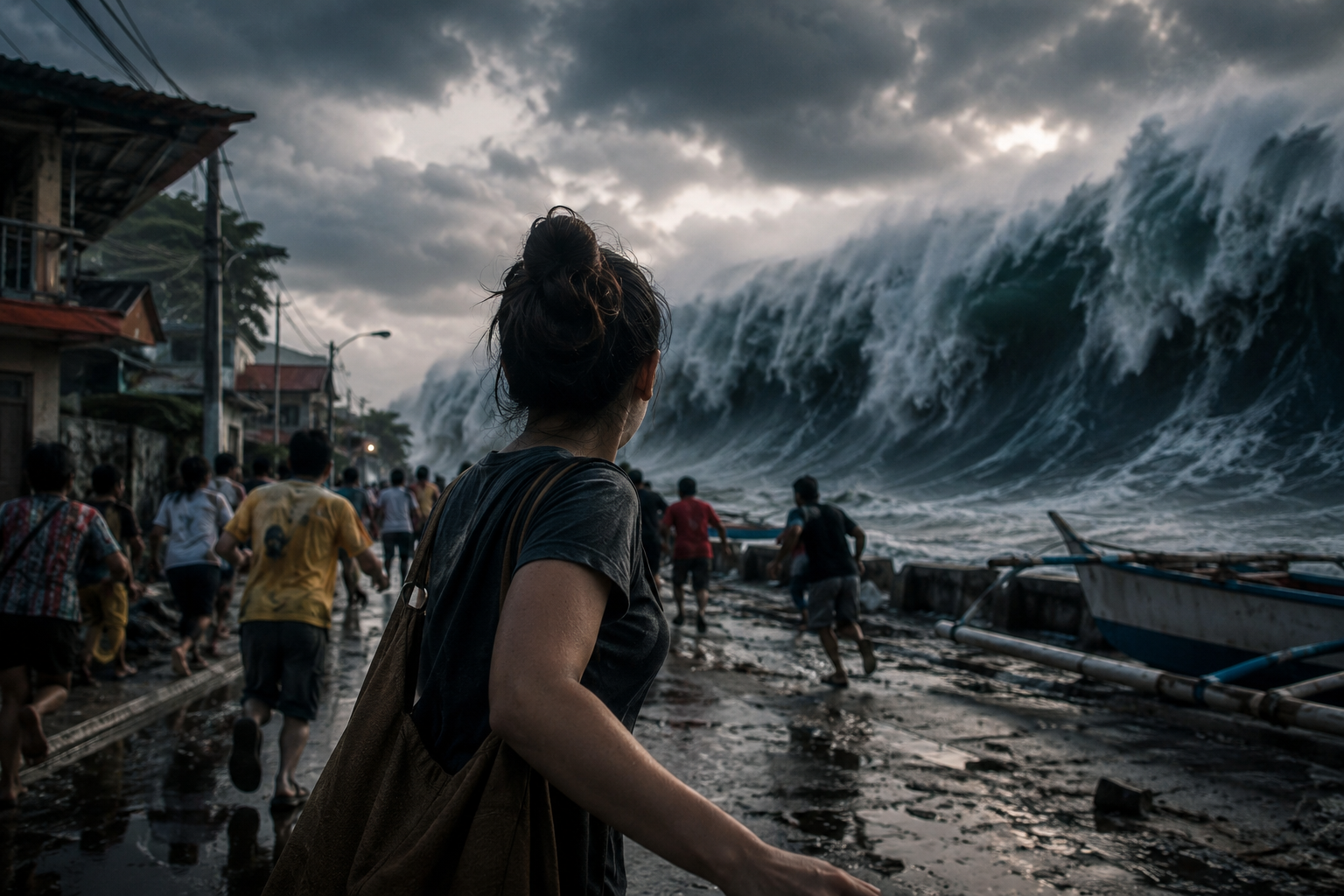
The Pacific Ring of Fire Strikes Again as Tsunami Warnings Spread
A Powerful Earthquake Triggers Regional Alarm
A powerful magnitude 7.8 earthquake struck off the southern Philippine island of Mindanao, immediately triggering tsunami warnings, emergency monitoring and large-scale evacuations across vulnerable coastal areas. The quake occurred at a shallow depth, making it far more likely to produce intense surface shaking and potential structural damage.
Authorities in the Philippines, Indonesia and international tsunami-monitoring networks rapidly issued warnings advising residents in exposed coastal zones to move to higher ground. Early reports described damaged buildings, power disruptions, communications outages and frightened residents fleeing homes as aftershocks continued to roll through the region.
Why Tsunami Warnings Change Everything
Earthquakes are terrifying. Tsunamis are often worse.
The moment a major undersea earthquake strikes, emergency planners are forced into a race against physics. The greatest danger is uncertainty. Authorities do not immediately know whether destructive waves are coming, how large they might become or which coastlines could be affected. That uncertainty is why evacuations often begin before full confirmation arrives.
In this case, forecasts suggested tsunami waves could reach several metres in some Philippine coastal areas, while smaller sea disturbances were monitored elsewhere across the region. Even relatively modest waves can become deadly when combined with strong currents, flooding and coastal infrastructure damage.
The Human Reality Behind The Headlines
The statistics tell only part of the story.
In towns and cities near the epicentre, residents described furniture falling, appliances crashing to the floor and buildings shaking violently enough to force immediate evacuations. Schools were suspended, communications networks suffered interruptions and emergency services began rapid assessments of injuries and structural damage.
One reason these events attract such enormous global attention is that everyone instantly understands the stakes. Earthquakes are among the few natural disasters capable of transforming an ordinary morning into a life-or-death emergency in seconds. There is no negotiation, no warning period and often very little time to react.
The Ring Of Fire Never Really Sleeps
The Philippines sits on one of the most geologically active regions on Earth.
The country lies along the Pacific Ring of Fire, a vast zone where tectonic plates constantly collide, grind and shift. The same geological forces responsible for creating mountains, volcanoes and island chains also generate some of the world's most destructive earthquakes and tsunamis.
Recent scientific monitoring has highlighted continued seismic activity around parts of Mindanao and nearby trench systems. Historical events in the region demonstrate that major earthquakes can occasionally generate devastating tsunami impacts, which is why authorities tend to act aggressively whenever large offshore quakes occur.
Why The Story Is Generating Global Attention
Natural disasters remain one of the most consistently high-performing news categories in the world.
The reason is simple. They combine genuine human drama, visual impact, uncertainty and immediate relevance. Readers want to know who is affected, whether the danger is growing, what happens next and whether loved ones are safe.
This particular event also checks nearly every engagement box: a powerful magnitude, tsunami warnings, international monitoring, dramatic evacuation scenes and the possibility of significant infrastructure damage. Even when casualties remain unclear, the scale alone creates global attention.
The Next Few Hours Matter Most
The initial earthquake is rarely the end of the story.
Authorities continue monitoring aftershocks, assessing structural damage and tracking any abnormal sea activity. In many major seismic events, some of the most important information emerges hours after the first headlines appear as engineers inspect buildings, emergency responders reach affected areas and governments compile damage reports.
For now, the Philippines faces the familiar challenge that follows every major earthquake: determining whether the worst has already happened or whether secondary risks remain. The earthquake itself lasted seconds. Its consequences could be measured in days, weeks or even months.
