Israel Strikes Iran As Middle East Crisis Enters A Dangerous New Phase
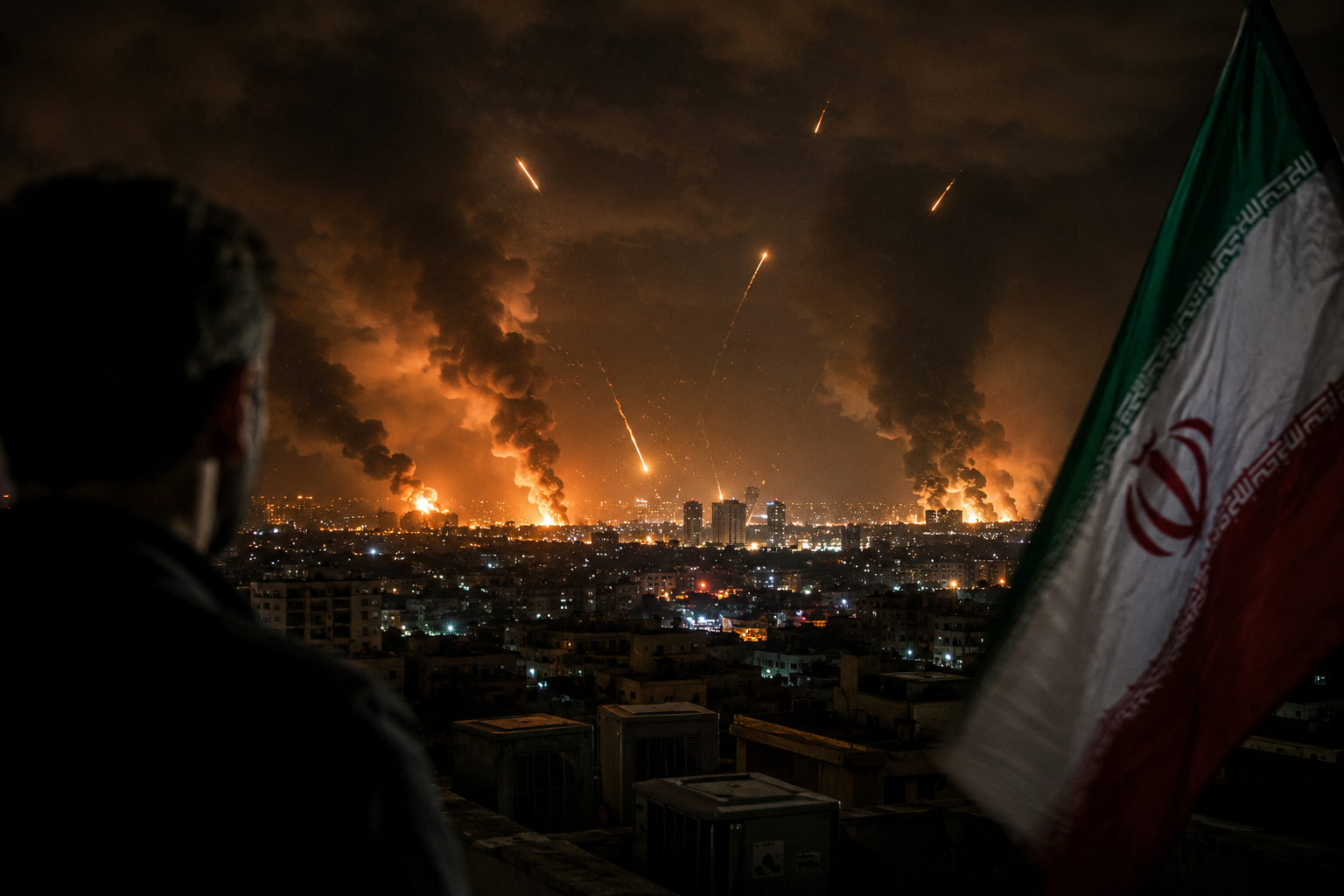
Israel Hits Targets Deep Inside Iran As Regional Tensions Surge
The Israel-Iran Conflict Just Escalated Again — And The Global Risks Are Growing
Israel says it has carried out strikes against military targets in central and western Iran following Iranian missile attacks directed at Israeli territory. Explosions were reported in multiple Iranian cities, including areas around Tehran, Isfahan and Tabriz, according to reports emerging from the region.
The operation represents another major escalation in the increasingly direct confrontation between Israel and Iran. For years, both countries largely fought through proxies, cyber operations and covert actions. That distinction has been steadily eroding, and the latest strikes reinforce a reality that would once have been viewed as a major regional red line.
The Chain Of Events Behind The Escalation
The immediate trigger appears to have been an Iranian missile attack on Israel. Iranian officials described that missile barrage as retaliation for Israeli military action linked to Hezbollah positions in Beirut. Israel then responded with strikes inside Iran itself.
This cycle highlights one of the most dangerous dynamics in modern geopolitics. Every side can claim it is responding rather than initiating. Each strike becomes justification for the next strike. The result is an escalation ladder that becomes increasingly difficult to control once political leaders, military commanders and public opinion become invested in demonstrating strength.
Airspace Closures Reveal Growing Anxiety
One of the clearest indicators of concern is not necessarily the military action itself but the response around it. Iran reportedly closed key sections of its airspace, while neighbouring countries have also introduced restrictions as authorities attempt to manage the risks created by a rapidly changing security environment.
Commercial aviation often provides an early warning signal during geopolitical crises. Airlines, insurers and regulators tend to react quickly when missile activity, military aircraft and uncertainty converge in the same region. The expansion of airspace restrictions suggests governments are preparing for the possibility that the confrontation could continue rather than end quickly.
Oil Markets Are Watching Every Development
The military dimension is only part of the story. Energy markets are paying extremely close attention because the Middle East remains one of the most strategically important regions for global oil supply. Even the perception of heightened risk can drive significant price volatility.
Recent market moves underline that reality. Oil prices have reacted sharply to concerns that a broader conflict could threaten transport routes, energy infrastructure or regional stability. Investors are not simply pricing current events. They are attempting to calculate the probability of future disruption, and that uncertainty often carries its own economic cost.
Diplomacy Is Racing Against Military Momentum
Reports indicate that diplomatic efforts are continuing behind the scenes, with multiple governments attempting to prevent a wider regional war. However, diplomacy becomes significantly harder when military actions are unfolding in real time and political leaders face pressure to demonstrate resolve.
The challenge is that diplomacy works slowly while military escalation can happen within minutes. A single missile launch, air strike or miscalculation can change the strategic environment before negotiators have time to respond. That mismatch between diplomatic timelines and military timelines is one reason regional crises can suddenly accelerate beyond expectations.
Why This Matters Far Beyond The Middle East
The significance of these events extends well beyond Israel and Iran. Global energy markets, international shipping, aviation routes, military alliances and financial markets all have exposure to stability in the region. When tensions rise, the consequences can be felt thousands of miles away.
The most important question now is not whether strikes occurred. That is already confirmed. The real question is whether this latest exchange remains a contained episode or becomes the starting point for a broader phase of confrontation involving additional actors and new military fronts. The answer will shape not only the future of the Middle East but potentially the global economy as well
