Ukraine–Russia Prisoner Swap Opens a Narrow Deal Window—But the Hard Part Comes Next
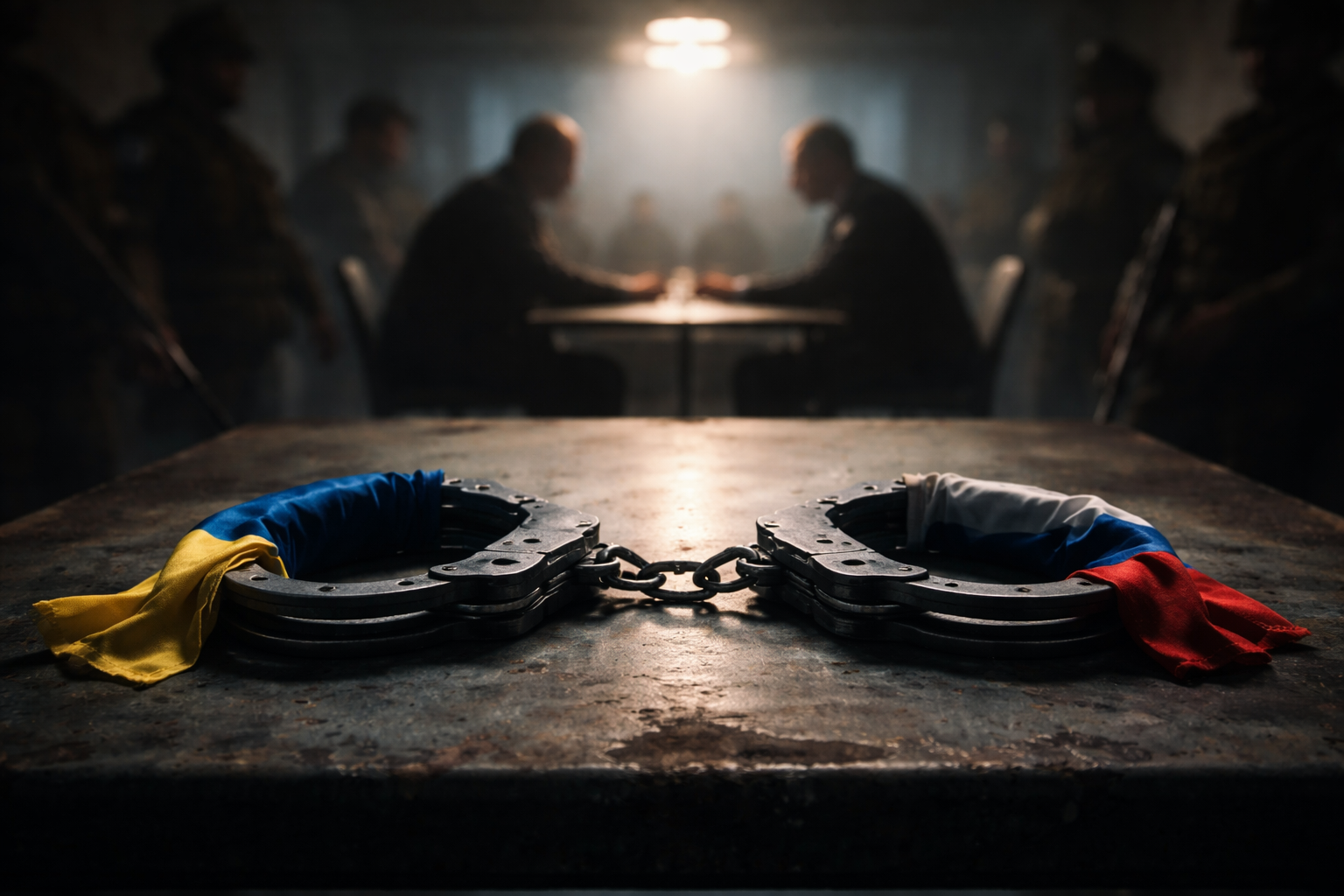
A major Ukraine–Russia prisoner swap followed U.S.-brokered talks. Here’s the real deal-map: leverage, red lines, and what a freeze would require now.
The Ukraine–Russia Prisoner Swap Isn’t Peace—It’s a Test of Whether Any Deal Is Possible
Ukraine and Russia have completed a significant prisoner exchange—314 people in total, 157 from each side—after a further round of U.S.-brokered talks in Abu Dhabi, with the UAE helping convene. It is one of the few concrete outcomes from renewed diplomatic engagement in months.
The swap matters because it proves something simple but rare: the two war machines can still execute a verified, reciprocal transaction at scale. But it also risks being misread as “momentum toward peace” when, in reality, prisoner exchanges are often the easiest deliverable—humanitarian, discrete, and separable from the core disputes.
One overlooked hinge sits beneath the headlines: the swap is less a peace signal than a test of whether a durable “transaction channel” can operate under wartime pressure—because any interim freeze lives or dies on verification and sequencing, not on a single handshake.
The story turns on whether this renewed contact can expand from humanitarian trades into enforceable security and sanctions sequencing.
Key Points
Ukraine and Russia have exchanged 314 prisoners (157 each) following a U.S.-brokered round of talks in Abu Dhabi, with the UAE playing a convening role.
The exchange is a tangible outcome, but it does not, by itself, change the core negotiating positions on territory, security guarantees, and sanctions.
Prisoner swaps are “high output, low concession” deals: politically valuable, morally urgent, and easier to verify than battlefield or territorial commitments.
The real negotiation space is about sequencing: what gets implemented first, how it is verified, and what happens if one side breaks the terms.
An “interim freeze” is not one thing; it can range from a pause in offensives to a monitored ceasefire with buffers, inspectors, and a sanctions-ramp schedule.
The most important near-term signal is whether the parties can establish repeatable mechanisms—hotlines, lists, inspection rights, and enforcement triggers—without collapsing back into maximal demands.
Background
The war has hardened into a contest where both sides claim existential stakes. Ukraine’s publicly stated position has centered on sovereignty, security, and refusal to legitimize territorial seizures. Russia’s publicly stated position has centered on recognition of territorial claims and long-term constraints on Ukraine’s security alignment. These positions are not new, which is why diplomatic efforts often struggle to move beyond statements.
That is what makes a large prisoner exchange stand out. It requires lists, identity verification, logistics, and synchronized execution. It also requires both sides to accept a shared definition of what is being traded, at least for that transaction.
The Abu Dhabi talks appear to have produced no announced breakthrough on the central issues. But they did produce a concrete output that can be repeated, scaled, and potentially extended into other “verifiable” categories—if the political will exists.
Analysis
Why prisoner swaps happen when everything else stalls
Prisoner exchanges sit in a sweet spot of negotiability.
They are humanitarian, so leaders can justify them to domestic audiences without framing them as weakness. They are also bounded: a swap has a start, a finish, and an easily checked outcome. Most importantly, they can be executed without resolving the war’s “why.”
That makes them attractive as diplomatic proof-of-life. The danger is that observers treat them as a proxy for readiness to compromise on the core war aims. They are not. They are a sign that the parties can transact, not that they can settle.
The trade space: what each side can give without surrendering core aims
If the talks are trying to widen from prisoner swaps into a broader interim arrangement, the “deal map” is less about one grand bargain and more about a ladder of trades—each rung designed to be survivable at home.
Ukraine can trade (without conceding core aims):
Humanitarian and administrative steps: more swaps, return of specific categories of detainees, repatriation of remains, family tracing, and access arrangements.
If verification exists, Ukraine can exercise operational restraint in defined zones, such as limiting certain strike types or agreeing to protected corridors.
Procedural engagement: formal working groups on verification, deconfliction, and monitoring.
Russia can trade (without conceding core aims):
Humanitarian steps at scale: repeated swaps, access assurances, and narrowly defined restraint commitments.
Operational predictability: limits on specific systems or targeting categories if linked to reciprocal measures.
Procedural engagement: acceptance of third-party monitoring structures—if framed as neutral and limited.
What neither side can easily trade—at least not early—is the symbolically loaded core: sovereignty claims, recognition of territorial changes, and long-term security alignment. That is why negotiations often gravitate toward “interim” frameworks.
Leverage and constraints: what actually pushes movement
A useful way to map leverage is to separate capability leverage from political leverage.
Battlefield leverage is not just territory gained; it is the capacity to sustain operations, replace losses, generate munitions, and protect critical infrastructure through winter cycles.
Economic leverage is not just sanctions; it is whether restrictions create compounding friction in supply chains, finance, and industrial throughput.
Political leverage is whether leaders can credibly sell any pause as serving national survival rather than surrender.
The constraint both sides share is enforcement credibility. Any interim freeze that relies on trust collapses fast. That is why third-party verification and trigger-based enforcement matter more than lofty wording.
What an “interim freeze” would actually look like in practice
“Interim freeze” gets used as if it is a single option. In reality, it is a menu of designs with radically different implications.
Model A: Tactical pause (low structure, high fragility)
Model A involves a pause during major offensives, characterized by vague language and minimal monitoring.
Why it happens: fast relief, low paperwork.
Why it fails: every incident becomes a casus belli because there is no shared adjudication.
Signposts: rapid announcement, thin detail, immediate mutual accusations.
Model B: Monitored ceasefire line (medium structure, survivable)
The model includes a clearly defined line of contact, limited buffers, and a monitoring mission that is governed by access rules.
Why it matters: reduces ambiguity, creates a mechanism for disputes.
Risk: monitoring becomes politicized; access is denied; reporting is contested.
Signposts: talk of observers, inspection rights, mapped zones, and a joint incident process.
Model C: Ceasefire plus sequencing (high structure, politically hardest)
A monitored freeze paired with staged measures: restraints, prisoner returns, humanitarian access, and conditional sanctions adjustments tied to verified compliance.
Why it matters: it creates incentives to hold.
Risk: sequencing fights dominate; each side demands front-loaded benefits.
Signposts: explicit timetables, snapback clauses, verification milestones, and third-party guarantees.
The most realistic “interim freeze” is not a romantic ceasefire announcement. It is a bureaucracy: inspectors, lists, hotlines, maps, and enforcement triggers.
What Most Coverage Misses
The hinge is that the prisoner exchange is not mainly about goodwill; it is a stress test for whether a reliable transaction system can function under active conflict.
The mechanism is simple: if the parties can repeatedly execute verified trades—lists agreed, people moved, counts matched—they can, in theory, extend the same architecture to other narrow commitments (localized restraint, protected infrastructure categories, monitoring access). That is the only credible bridge from “talks” to an interim freeze that survives first contact with reality.
Two signposts would confirm this in the coming days and weeks: first, whether additional swaps or humanitarian measures are scheduled with clear operational detail; second, whether officials describe the creation of working groups on verification, monitoring access, or incident adjudication rather than only repeating maximal public positions.
What Happens Next
In the next 24–72 hours, the key question is whether the prisoner swap is treated as a one-off humanitarian success or as a template. If it becomes a template, the next steps are predictable: expanded exchanges, formalized lists, and repeatable logistics under third-party facilitation.
Over the following weeks, the negotiations will likely grind on three fault lines:
Territory language: anything resembling recognition triggers domestic political shockwaves, especially in Ukraine, and is difficult for Russia to soften if framed as war aims.
Security architecture: “neutrality,” “guarantees,” and “future alignment” are not semantic issues; they determine whether either side believes a freeze simply resets the war clock.
Sanctions sequencing: any relief without verified compliance creates a credibility trap, but demanding full compliance first creates a stalemate—because both sides fear giving the other the first irreversible gain.
The main consequence is this: an interim freeze only becomes durable if benefits are conditional and reversible, because that is the only structure that survives distrust.
Real-World Impact
A Ukrainian family gets a call that a relative is on the exchange list—then spends days refreshing messages, unsure if the name will survive last-minute changes.
A logistics manager at a firm supplying generators recalculates deliveries after a brief lull in strikes, knowing a “pause” can end overnight and the insurance terms will shift with it.
A border-town local authority plans emergency shelter capacity based on the risk of renewed offensives, because even a rumor of a freeze changes population movement.
A small manufacturer tracks currency and input prices as sanction policy signals flicker, because the difference between “temporary” and “sequenced” measures changes contracts and credit.
The Deal Map Readers Should Watch, Not the Headlines
The prisoner exchange is meaningful because it is measurable. It happened, it was reciprocal, and it required coordination. But it is also a reminder of how narrow the current deal space still is.
The conflict is not between "peace" and "war," but rather between "repeatable, enforceable transactions" and "symbolic diplomacy that collapses on enforcement." If the talks produce monitoring rules, verification access, and sequencing with triggers, an interim freeze becomes imaginable. If they do not, prisoner swaps will remain the most visible progress—because they are the only thing both sides can trade without rewriting the war’s fundamentals.
The next historical marker will not be a grand speech. It will be a mechanism: who can inspect what, who decides violations, and what automatically happens when the line is crossed.
