US Helicopter Reportedly Opens Fire on Ship Trying to Break Iran Blockade
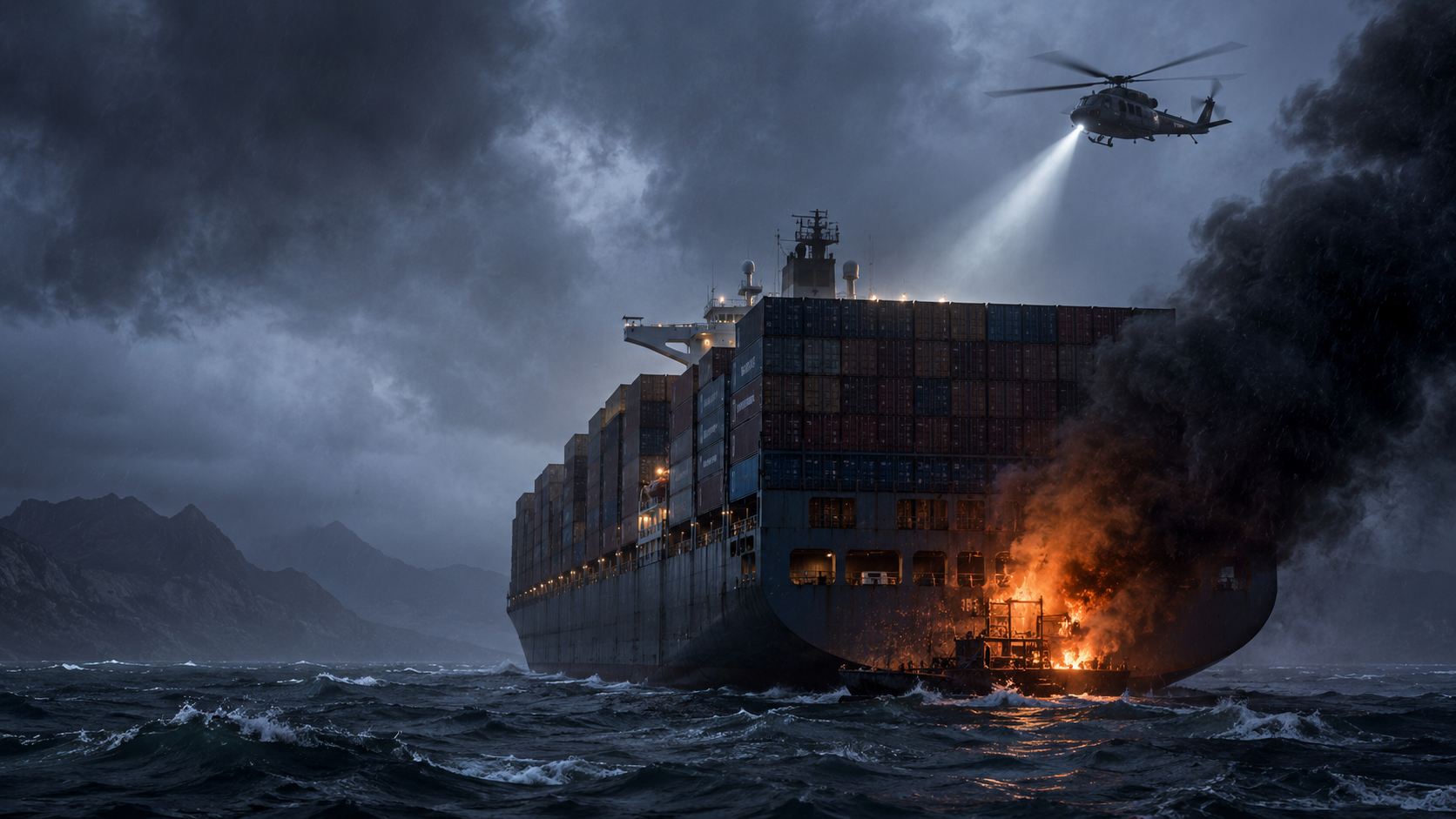
US Reportedly Fires on Civilian Ship After Blockade Warnings Ignored
Trump’s Iran Blockade Enters Dangerous New Phase in Gulf of Oman
A US military helicopter reportedly fired at the rudder of a Panama-flagged container ship after it ignored repeated warnings and attempted to breach America’s naval blockade of Iranian ports. The reported strike triggered a fire aboard the Vela Nova in the Gulf of Oman, although all 17 crew members were accounted for and no casualties had been reported.
The incident could mark another forceful enforcement of President Trump’s effort to isolate Iran by sea. It also exposes the growing danger to commercial vessels operating across waters that connect the Strait of Hormuz, the Arabian Sea and major Asian shipping routes.
A Ship Left Unable to Navigate
The confrontation reportedly occurred around 71 nautical miles from Pakistan while the Vela Nova was travelling west through the Gulf of Oman. A US helicopter is alleged to have targeted the vessel’s rudder after its crew failed to obey instructions from forces enforcing the blockade.
A fire was subsequently reported aboard the ship but was said to have been extinguished. Maritime tracking information indicated that the vessel was no longer under command, while separate accounts suggested its crew were preparing to transfer to another civilian ship.
UK maritime authorities initially confirmed only that they had received a report involving a vessel and military forces. Their notice did not identify the Vela Nova, accuse it of attempting to enter an Iranian port or confirm that American forces had fired on it.
Trump’s Blockade Was Never an Empty Threat
The United States announced its blockade of Iranian ports in July and warned that it would apply to vessels of every flag. Ships suspected of entering or leaving the restricted area without authorisation could be intercepted, diverted or captured.
The enforcement guidance went further. It warned that vessels refusing to comply could face disabling or destructive fire, while masters were told to respond immediately to military instructions and avoid placing their crews in danger.
That makes the reported attack consistent with the enforcement powers Washington said it was prepared to use. It does not, however, independently prove why the Vela Nova was stopped, what warnings were issued or whether its intended destination was an Iranian port.
US forces had already disabled an unnamed tanker on 15 July after it allegedly attempted to breach the blockade. If the latest account is confirmed, the Vela Nova incident would demonstrate that such action is becoming an operational feature of the blockade rather than an isolated warning.
Civilian Shipping Is Being Pulled Into the Conflict
The reported confrontation took place far from the immediate approaches to an Iranian harbour. Its location near Pakistan illustrates the geographical reach of the enforcement zone, which extends across the Gulf, the Gulf of Oman, the Strait of Hormuz and parts of the North Arabian Sea.
For shipping companies, the danger now extends beyond attacks launched by Iran or allied groups. Commercial crews must also respond correctly to American forces operating under rules that permit rapid escalation when a vessel is suspected of defying the blockade.
The possibility of miscommunication is particularly dangerous. Radio interference, disputed destinations, unclear ownership structures or a delayed response from a ship’s bridge could turn a commercial voyage into a military encounter within minutes.
Insurers and operators will therefore have to examine routes, ownership links, recent port calls and cargo documentation with greater care. Even vessels that are not sanctioned could face scrutiny if their movements create suspicion that they are supporting trade with Iran.
Critical Details Still Need Confirmation
US Central Command had not publicly confirmed its involvement at the time of writing. There was also no detailed American account of the warnings allegedly issued, the ship’s intended destination, its cargo or the precise weapon used against it.
Those gaps matter because the confirmed official notice remains narrower than the more dramatic emerging accounts. A military encounter occurred, but the identification of the ship, the alleged blockade breach and the reported American strike still depend on information awaiting formal confirmation.
If Washington confirms the operation, the consequences will reach beyond one damaged rudder. It would send a stark message that neutral flags offer no protection to ships suspected of trading with Iran—and that Trump’s blockade is now being enforced with weapons against commercial vessels hundreds of miles across the surrounding seas.
