US Rescues One Airman—but Another Is Missing Inside Iran
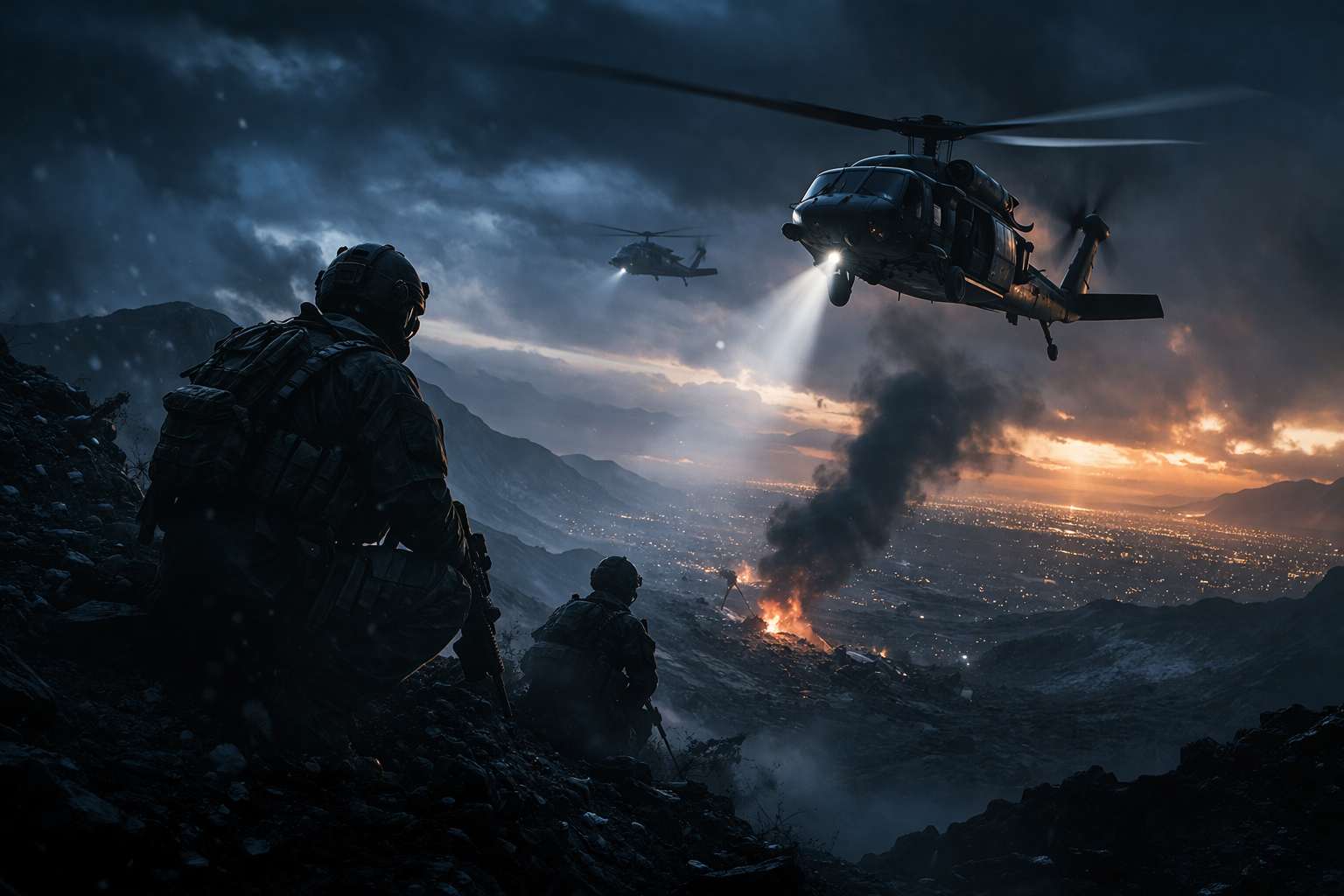
Downed US Jet: One Saved, One Still in Enemy Territory
US F-15E Crew Rescue Changes the Stakes as Second Airman Remains Missing in Iran
The situation around the downed US F-15E over Iran has shifted sharply. As of April 3, 2026, one crew member has been successfully rescued by US forces, while the second remains missing inside Iranian territory.
That single change transforms the story—from uncertainty about survival to a high-stakes race involving time, territory, and control over a potentially captured American serviceman.
The core question now is no longer whether anyone survived. It is who reaches the second crew member first.
The story turns on whether US forces can recover the missing crew member before Iranian forces do.
Key Points
One US crew member has been rescued following the F-15E shootdown over Iran
A second crew member remains missing inside Iranian territory
US combat search-and-rescue operations are ongoing, involving aircraft and special forces
Iranian authorities and civilians are also actively searching for the missing airman
Reports of possible capture remain unconfirmed and contested across sources
This is the first confirmed live recovery outcome since the aircraft was downed
What Changed—From Uncertainty to a Live Recovery Race
Earlier reporting focused on confusion: whether the jet was shot down, whether the crew survived, and whether Iran had already captured them.
That phase is over.
It is now confirmed that both crew members ejected, and at least one survived long enough to be recovered by US forces.
That confirmation matters. It means the second crew member is highly likely to have also survived the initial incident.
Which turns this into a time-sensitive search and recovery operation deep inside hostile territory.
Why This Is a Different Kind of Military Problem
Combat search and rescue is one of the most complex missions the US military conducts.
It requires:
locating a moving or hiding individual
avoiding enemy detection
inserting recovery teams into hostile terrain
extracting under threat
In this case, the difficulty is amplified by geography.
The missing crew member is inside Iran—not a contested border zone, but sovereign territory where Iranian military, security forces, and civilians are actively searching.
That creates a dual-track race:
US forces trying to recover quietly and quickly
Iranian forces trying to locate and secure the individual
The Risk of Capture—and Why It Changes Everything
Iranian state-linked outlets have already suggested the possibility of capture, though this remains unverified.
If the second crew member is captured, the situation shifts immediately from a military rescue problem to a geopolitical crisis.
That would introduce:
hostage dynamics
propaganda leverage
negotiation pressure
escalation risk
The difference between recovery and capture is not marginal. It is strategic.
The Wider Conflict Context
This incident is not isolated.
It comes amid an ongoing US-Iran conflict that has already seen:
multiple aircraft losses
missile and drone exchanges across the region
rising energy market volatility
increasing international pressure
The downing of the F-15E marks one of the most direct and symbolic escalations so far—an American manned aircraft lost inside Iranian territory.
That alone raises the stakes.
A captured pilot would raise them further.
What Most Coverage Misses
The key hinge is not just the rescue itself.
It is the asymmetry of time.
US forces need speed. Iran does not.
The US must locate, identify, and extract the missing crew member before detection. That window shrinks by the hour.
Iranian forces, by contrast, can widen the search over time. They control the territory, can mobilize local networks, and can afford a slower, broader sweep.
This creates a structural disadvantage for the US operation.
It is not just a search. It is a race against geography, exposure, and time.
What Happens Next Depends on Minutes, Not Days
The next phase of this story will likely move quickly.
There are three realistic near-term outcomes:
The US recovers the second crew member
Iran locates and captures the individual
The situation remains unresolved, extending the search window
Each path carries different consequences.
A successful US recovery would limit escalation and demonstrate operational reach.
A confirmed Iranian capture would trigger a political and military crisis with global attention.
A prolonged search increases the risk of detection, miscalculation, or confrontation on the ground.
The broader significance is clear.
This is no longer just about a downed aircraft.
It is about control—of people, of narrative, and of escalation.
And right now, that control is still undecided.
