

White House Infighting Over Iran War Strategy Raises Fears of a Conflict Without a Clear Endgame
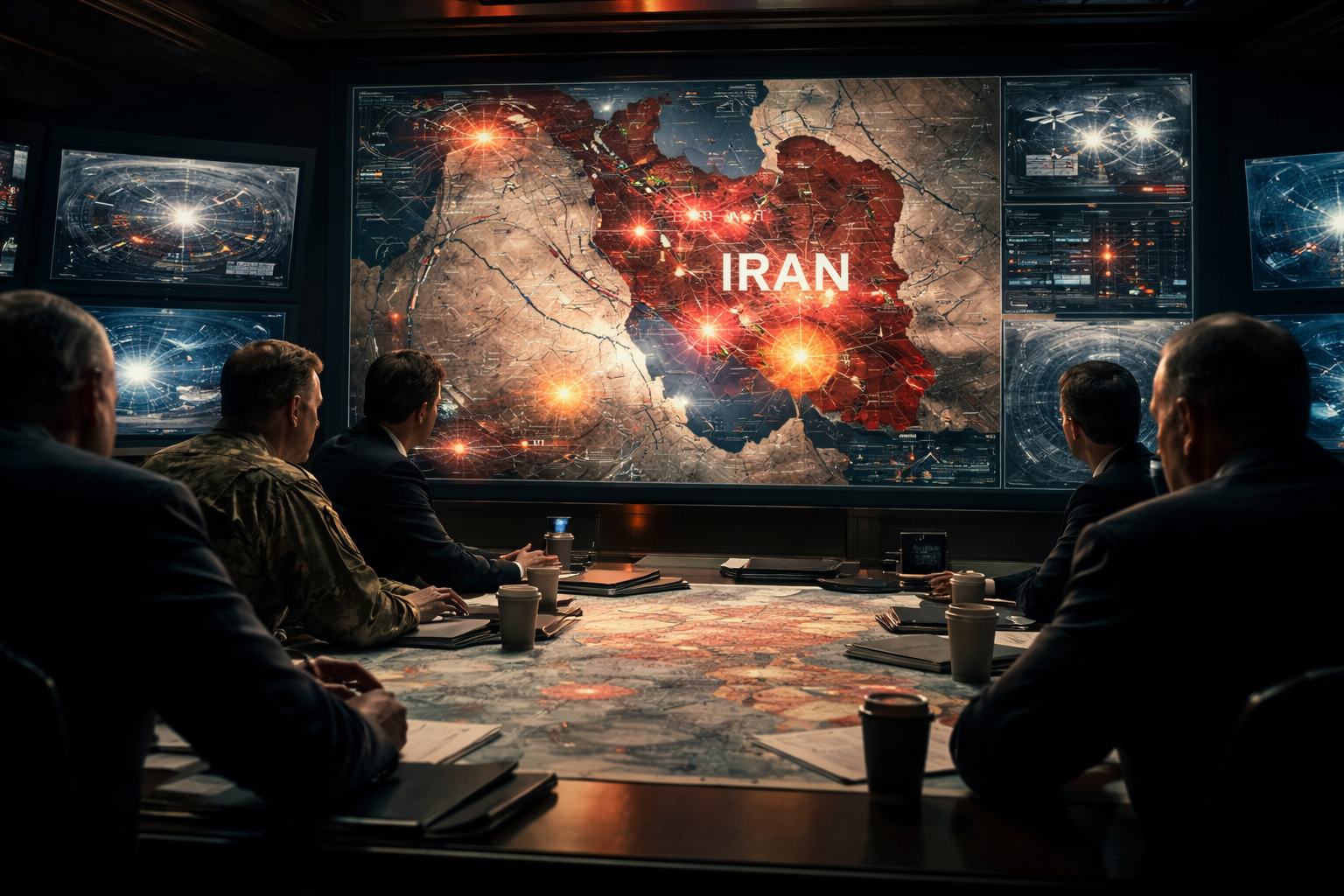
White House Divided: The Hidden Fight Over America’s Iran War
The Iran War’s Biggest Risk May Be Inside the White House
Signs of internal conflict inside the White House over how to prosecute and end the war with Iran are becoming increasingly visible. The United States and Israel launched large-scale strikes on Iran on February 28 in a coordinated campaign that quickly escalated into a broader regional conflict.
Now, nearly two weeks into the war, the administration faces mounting questions: What exactly is the objective, and how does the conflict end? Even some U.S. officials and lawmakers say the strategy appears inconsistent, with shifting explanations of whether the goal is deterrence, military degradation, or something closer to regime change.
The deeper tension is not just about tactics. It is about whether the United States is fighting a limited military campaign—or drifting toward a war whose political end state has not been fully defined.
The story turns on whether Washington can align its political objectives with the military campaign now underway.
Key Points
The U.S. and Israel began coordinated strikes against Iran on February 28, targeting military and strategic infrastructure in what has become a widening regional war.
Inside Washington, disagreements have emerged over the conflict’s objectives, including whether the war aims to degrade Iranian military capability, stop nuclear development, or push for regime change.
Intelligence assessments warn that even large-scale military action may not collapse Iran’s political system, raising questions about the viability of regime-change narratives.
Public messaging from the White House has sometimes contradicted internal briefings, contributing to confusion about how the war might end, particularly regarding the administration's stance on whether the ultimate goal is to achieve regime change or to stabilize the region.
The conflict is already affecting global markets and regional security, including threats to oil shipments and missile exchanges across the Middle East.
As the war expands, pressure is growing on the administration to define a clear exit strategy.
How the War Began and Why It Escalated So Quickly
The current conflict traces back to rising tensions over Iran’s nuclear program and regional military posture. Negotiations between Washington and Tehran in 2025 attempted to reach a new agreement limiting nuclear development and missile capabilities, but those talks collapsed without a settlement.
On February 28, 2026, Israel launched a coordinated strike campaign against Iranian military sites. The operation—conducted alongside U.S. support—hit targets in Tehran and other cities, marking the start of a major military confrontation.
Iran retaliated with missile and drone attacks across the region, while the United States expanded its operations, targeting Iranian naval assets and missile infrastructure.
Within days, the conflict had widened beyond bilateral strikes. Regional proxies, cyber operations, and maritime threats began shaping the battlefield, leading to increased tensions and complicating diplomatic efforts in the region. Oil markets reacted sharply, with prices surging amid fears that Iran could disrupt shipping through the Strait of Hormuz.
The rapid escalation forced the White House to clarify what success would look like. The clarification has not been easily achieved.
The Strategy Debate Inside Washington
The central disagreement in Washington is about the war’s strategic objective.
Some officials argue the mission is primarily military: destroy Iran’s missile forces, degrade its naval capabilities, and prevent nuclear weapons development. Defense leaders have framed the campaign in those terms, emphasizing targeted strikes rather than political transformation in TOthers argue that the war's logic inevitably leads to regime change, even if it remains officially undeclared.eclared. The killing of key Iranian leaders and attacks on political infrastructure have fueled speculation that weakening the regime itself is part of the calculation.
This ambiguity has spilled into Congress. After classified briefings, some lawmakers warned that the administration’s war aims appear unclear or incomplete, raising concerns about entering a prolonged conflict without a defined end state.
Even within the executive branch, officials have struggled to articulate how military operations translate into a political outcome, which has led to confusion among lawmakers and the public about the administration's objectives and the potential consequences of the military actions being taken.
A War With Real Economic and Global Stakes
The consequences of the strategy debate are not abstract. They affect global markets, regional stability, and domestic politics in the United States.
Oil prices surged as traders priced in the risk of disruption to the Strait of Hormuz, one of the world’s most critical energy corridors.
Meanwhile, the war has already caused significant casualties and economic disruption across the Middle East, with missile exchanges and drone attacks spreading beyond Iran’s borders.
Domestically, the conflict has triggered protests in several U.S. cities and renewed debate over presidential war powers. Critics argue the campaign risks becoming another open-ended Middle East war without congressional authorization.
These pressures intensify the importance of strategic clarity. Without it, the war could continue to escalate without a clear political outcome.
What Most Coverage Misses
Much of the debate around the Iran war focuses on military capability: which side can strike harder, how many targets have been destroyed, and whether Iran’s infrastructure is collapsing.
The deeper strategic hinge is political durability.
Intelligence assessments circulated before the war suggested that even a large-scale military campaign would be unlikely to topple Iran’s governing system. Iran’s leadership structure—anchored by the Islamic Revolutionary Guard Corps and clerical institutions—has succession mechanisms designed to survive external pressure, which means that even if military assets are destroyed, the regime is likely to remain intact and continue its governance without significant disruption.
In other words, destroying military assets does not necessarily produce political collapse.
That creates a strategic dilemma. If the United States is not seeking regime change, it must define a limited objective and an exit strategy. If it is seeking regime change, it may require far larger commitments—potentially including ground operations—that Washington has not publicly endorsed.
This structural mismatch between military action and political outcomes may be the real source of the White House infighting now emerging, as differing opinions on the objectives and strategies could lead to conflicting priorities among key decision-makers.
The Strategic Fork in the Road
The next phase of the war will likely hinge on which strategic path Washington chooses.
One scenario is a limited campaign: continue air and cyber strikes until Iran’s military capabilities are sufficiently degraded, then push for a negotiated ceasefire.
Another scenario is escalation. If the United States believes that replacing Iran's leadership is essential for achieving long-term stability, the conflict could significantly escalate in both scope and duration.
The signposts to watch are clear.
The first signpost to monitor is whether Washington articulates a defined political objective beyond military damage.
Second, we need to assess whether U.S. forces broaden their involvement beyond air and naval operations.
Thirdly, we need to consider whether diplomatic channels will reopen with regional intermediaries.
Wars often begin with tactical clarity and strategic ambiguity. The defining question for this conflict is whether the United States resolves that ambiguity before the war itself expands beyond its original aims.
