

Israel Blows Up Key Lebanon Bridge as Middle East War Expands
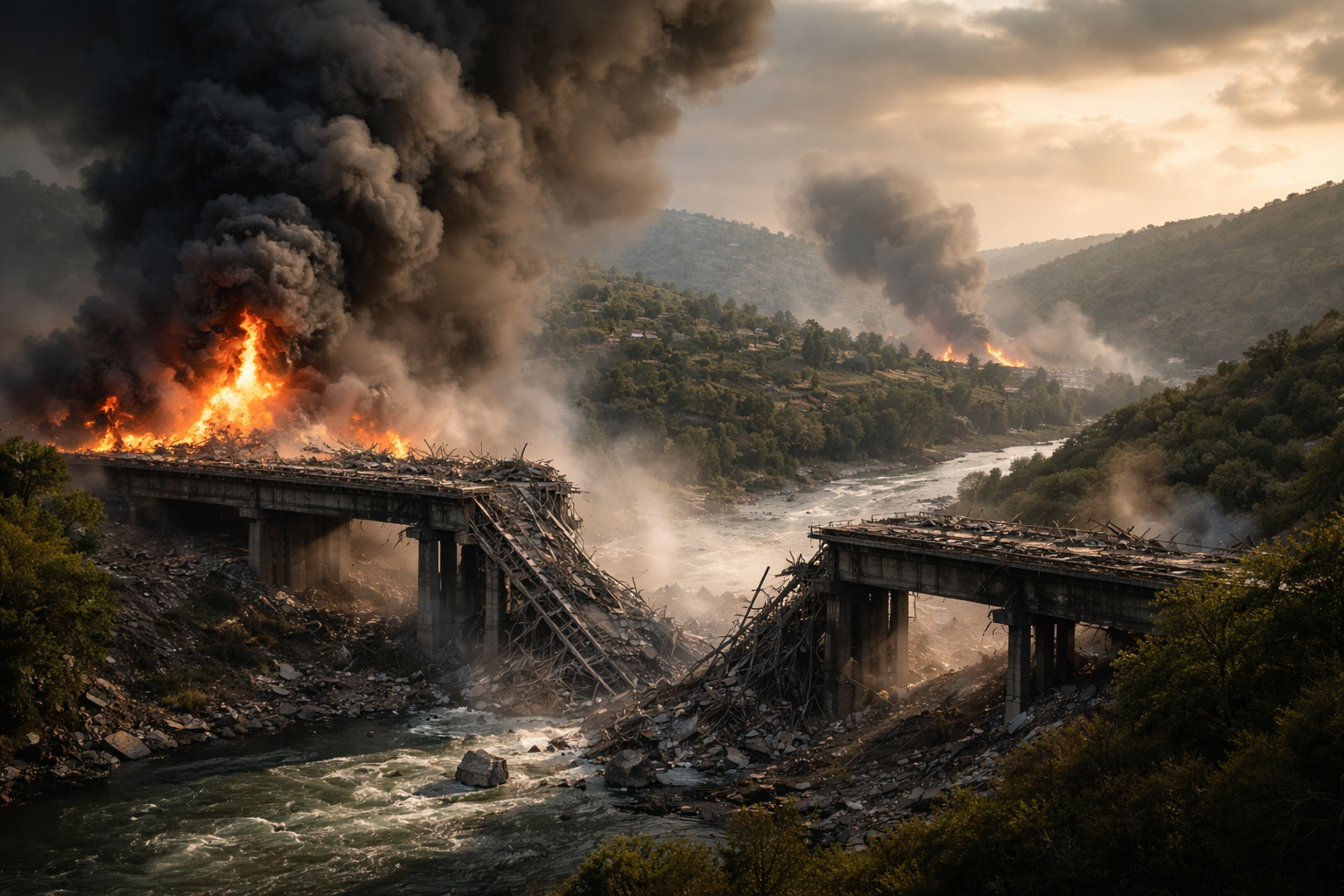
Israel Destroys Strategic Litani River Bridge Used by Hezbollah
Israel Destroys Key Litani River Bridge in Southern Lebanon as Conflict Widens
Israeli forces have struck and destroyed a key bridge over the Litani River in southern Lebanon, marking a notable escalation in the ongoing Israel–Hezbollah conflict. The bridge, located near the village of Zrariyeh, was targeted because Israeli officials say it was being used by Hezbollah fighters to move personnel and equipment between areas north and south of the river.
The strike comes amid an intensifying regional war involving Israel, Hezbollah, and Iran-backed forces, with airstrikes expanding across Lebanon and beyond recently.
But the real significance may not simply be the destruction of a bridge. It may signal a strategic shift toward targeting logistical infrastructure—something Israel has historically avoided early in conflicts in Lebanon.
The story turns on whether Israel is beginning to dismantle Hezbollah’s mobility network across southern Lebanon rather than just striking individual targets.
Key Points
Israeli forces struck the Zrariyeh bridge over the Litani River in southern Lebanon on March 13, 2026.
The Israeli military said the crossing was used by Hezbollah militants moving between operational zones.
The strike appears to be one of the first publicly acknowledged attacks on major infrastructure in the current campaign.
The attack comes amid a broader regional escalation involving Israel, Hezbollah, Iran, and U.S. involvement.
Strikes have expanded across Lebanon, including Beirut, with significant casualties and displacement reported.
Targeting infrastructure could signal preparation for longer-term operations or a potential ground campaign in southern Lebanon.
The Bridge That Connected Hezbollah’s Southern Front
The Litani River is one of Lebanon’s most important geographic barriers. Running across southern Lebanon, it forms a natural dividing line between Hezbollah’s traditional strongholds near the Israeli border and areas farther north.
Bridges over the river are therefore critical logistical corridors.
Israeli military officials said the Zrariyeh bridge served as a key crossing used by Hezbollah fighters moving personnel and equipment between operational zones on either side of the river.
Destroying such a crossing can slow or fragment militant movements, forcing longer routes and making convoys easier to detect and strike from the air.
In modern warfare, disrupting logistics often matters more than destroying individual weapons systems.
A Conflict That Is Rapidly Expanding
The strike comes during one of the most volatile phases of Middle Eastern conflict in years.
Over the past two weeks:
Israel and the United States have launched major strikes on Iranian targets.
Iran-backed Hezbollah has fired large barrages of rockets and drones into northern Israel.
Israeli airstrikes have hit multiple locations in Lebanon, including Beirut.
The violence has displaced hundreds of thousands of civilians and killed hundreds across the region.
Energy markets and global shipping routes have also been affected, particularly after Iranian actions in the Strait of Hormuz sent oil prices sharply higher.
In other words, the bridge strike is not an isolated tactical event. It is part of a widening regional confrontation.
Why Infrastructure Strikes Change the Military Equation
Historically, Israeli operations in Lebanon have often focused on targeted strikes against fighters, weapons depots, or command centers.
Infrastructure attacks represent a different strategy.
Destroying bridges, roads, and logistical hubs can:
Limit the movement of fighters and heavy weapons
Disrupt supply chains for rockets and drones
Slow reinforcements during battles
Isolate militant strongholds
Such actions can also have broader consequences for civilians, since these same structures are often used by local populations for daily transport and trade.
This creates a complex balance between military advantage and humanitarian impact.
What Most Coverage Misses
Most reporting focuses on the destruction itself—a bridge hit by an airstrike.
The more important question is why this specific bridge matters strategically.
The Litani River has long been viewed by Israeli planners as a natural defensive line in southern Lebanon. In previous wars, including the 2006 conflict with Hezbollah, Israeli military planning frequently revolved around controlling territory south of the river.
By destroying crossings across the Litani, Israel can fragment Hezbollah’s operational area into smaller pockets.
That creates two advantages.
First, it makes it harder for Hezbollah to shift fighters rapidly between sectors of the front.
Second, it prepares the battlefield for potential future operations—including the possibility of Israeli forces pushing northward and attempting to control territory south of the river.
In short, the bridge strike is less about destruction and more about shaping the battlefield.
The Escalation Risk for Lebanon
For Lebanon, the attack highlights a growing dilemma.
The Lebanese government has limited control over Hezbollah, which operates as both a political movement and a powerful armed organization.
Israel has warned that if Hezbollah attacks continue, it may expand operations further into Lebanese territory.
That raises the risk of a much larger war.
During previous conflicts, Israeli ground offensives into southern Lebanon were among the most destructive phases of fighting. Infrastructure damage and mass displacement followed quickly.
If logistical routes continue to be targeted, analysts may interpret it as preparation for a similar phase.
The Strategic Fork in the Road
The coming days will reveal whether the bridge strike was a one-off tactical move or the opening step in a broader campaign to isolate southern Lebanon.—a
Several signals will matter.
If more bridges and roads across the Litani River are struck, it would suggest a systematic effort to sever Hezbollah’s logistical network.
If Israeli forces begin massing near the border while infrastructure is degraded, the risk of a ground operation increases sharply.
But if strikes remain limited to specific crossings tied to militant activity, the action may remain part of a narrower effort to disrupt Hezbollah movements.
Either way, the destruction of a single bridge now sits at the intersection of military strategy and regional escalation — a reminder that in war, the structures that matter most are often the ones that connect the battlefield.
