

Iran Launches Massive Drone Assault Across Gulf States Hosting U.S. Bases
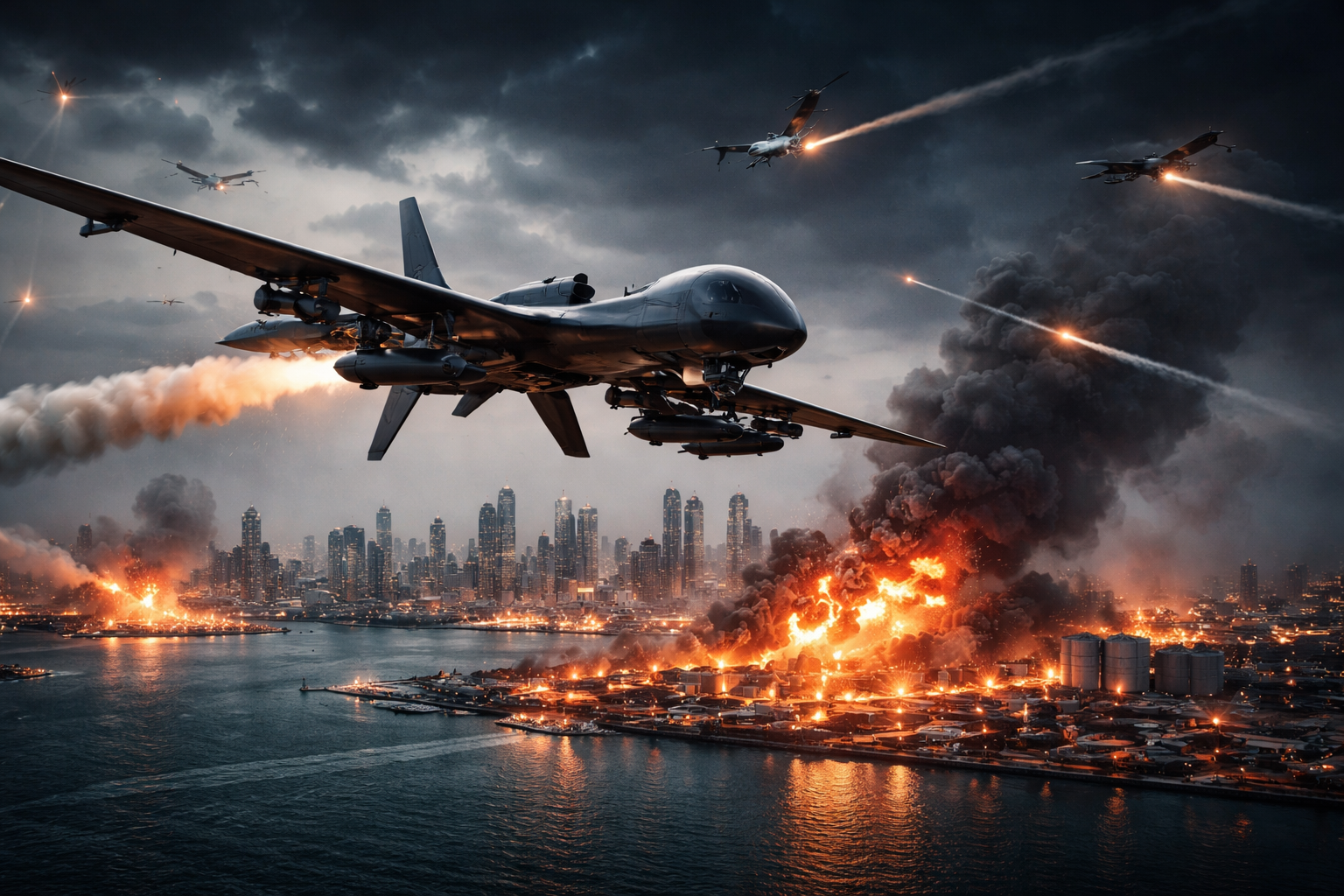
Iran Targets U.S. Bases Across Gulf In Massive Drone Assault
Drone War Erupts in the Gulf
Tehran Expands Attacks Toward Regional Countries as War Escalates
Iran has launched a new wave of drone and missile strikes targeting multiple Gulf states that host American military bases, dramatically widening the scope of the ongoing Middle East conflict.
The attacks mark one of the most significant escalations in the regional war that began after joint U.S. and Israeli strikes on Iranian targets earlier this year.
Officials across the Gulf reported air-defense systems intercepting incoming drones overnight, while several strikes caused fires, infrastructure damage, and emergency alerts across key cities.
The developments raise fears that the conflict could expand into a broader regional war involving multiple Gulf states.
Drone Waves Target Countries Hosting U.S. Military Bases
Iranian forces launched drones and missiles toward several Gulf states, including Saudi Arabia, Bahrain, and the United Arab Emirates.
Saudi authorities said they intercepted nearly 50 drones during early-morning attacks, highlighting the scale of the assault.
Bahrain's air-raid sirens sounded after detecting drones approaching key infrastructure sites, while interceptions resulted in explosions and smoke in industrial areas.
In one incident, a drone strike ignited a large fire at fuel storage tanks near Bahrain International Airport, underscoring the vulnerability of energy infrastructure in the region.
U.S.-supplied air-defense systems stationed across the Gulf reportedly intercepted most of the incoming drones.
Strategic Targets: U.S. Bases and Energy Infrastructure
Iran has repeatedly stated that countries hosting U.S. military forces are legitimate targets in retaliation for American and Israeli strikes on Iranian territory.
Key bases in the region include:
Al Dhafra Air Base in the United Arab Emirates
Camp Arifjan in Kuwait
Naval facilities in Bahrain
Air installations in Saudi Arabia and Qatar
Previous Iranian drone attacks have already targeted these locations, including a strike near Al Dhafra Air Base that shook parts of Abu Dhabi and injured civilians.
Military analysts say the strategy aims to pressure Gulf governments to reconsider their security partnerships with Washington.
Regional War Widens Beyond Israel and Iran
The latest attacks are part of a broader escalation across the Middle East.
The conflict intensified after U.S. and Israeli strikes on Iranian military facilities triggered a wave of retaliation by Tehran.
Iran has since launched drones, missiles, cyberattacks, and maritime strikes against regional targets and shipping routes.
At the same time, Iranian leaders have warned that they will continue attacking American assets and allies until military operations against Iran stop.
This escalation has pushed several Gulf countries onto the front lines of a war they had previously tried to avoid.
Oil Markets and Global Trade at Risk
The Gulf region contains some of the world’s most critical oil infrastructure and shipping lanes.
Strikes against energy facilities and ports have already disrupted supply chains and pushed oil prices sharply higher.
The conflict also threatens the Strait of Hormuz, the narrow waterway through which roughly a fifth of the world’s oil supply normally passes.
Even limited disruptions could trigger major economic consequences worldwide, such as increased fuel prices, inflation, and potential shortages of oil-dependent products.
Air Defense Systems Limiting Damage
Despite the scale of the attacks, most incoming projectiles have been intercepted.
U.S. and allied air-defense systems have reportedly stopped over 90 percent of drones and missiles targeting Gulf states during the conflict.
Still, falling debris from interceptions has caused fires, injuries, and damage to civilian areas.
Officials warn that sustained waves of attacks could eventually overwhelm defenses.
Risk of a Wider Middle East War
The growing list of targeted countries signals that the conflict is evolving into a regional confrontation.
Iran’s strategy appears aimed at
Punishing states that host U.S. forces
Disrupting global energy markets
Forcing Western powers to reconsider military operations against Tehran
At the same time, Gulf states are now under pressure to decide whether they will remain defensive participants or become active combatants.
For now, most governments are focusing on air defense and protection of infrastructure while urging international mediation.
But with drone attacks continuing and retaliatory strikes ongoing, the region remains dangerously close to a much larger war.
