

Israel Bombs Central Beirut After Hezbollah Fires 200 Rockets
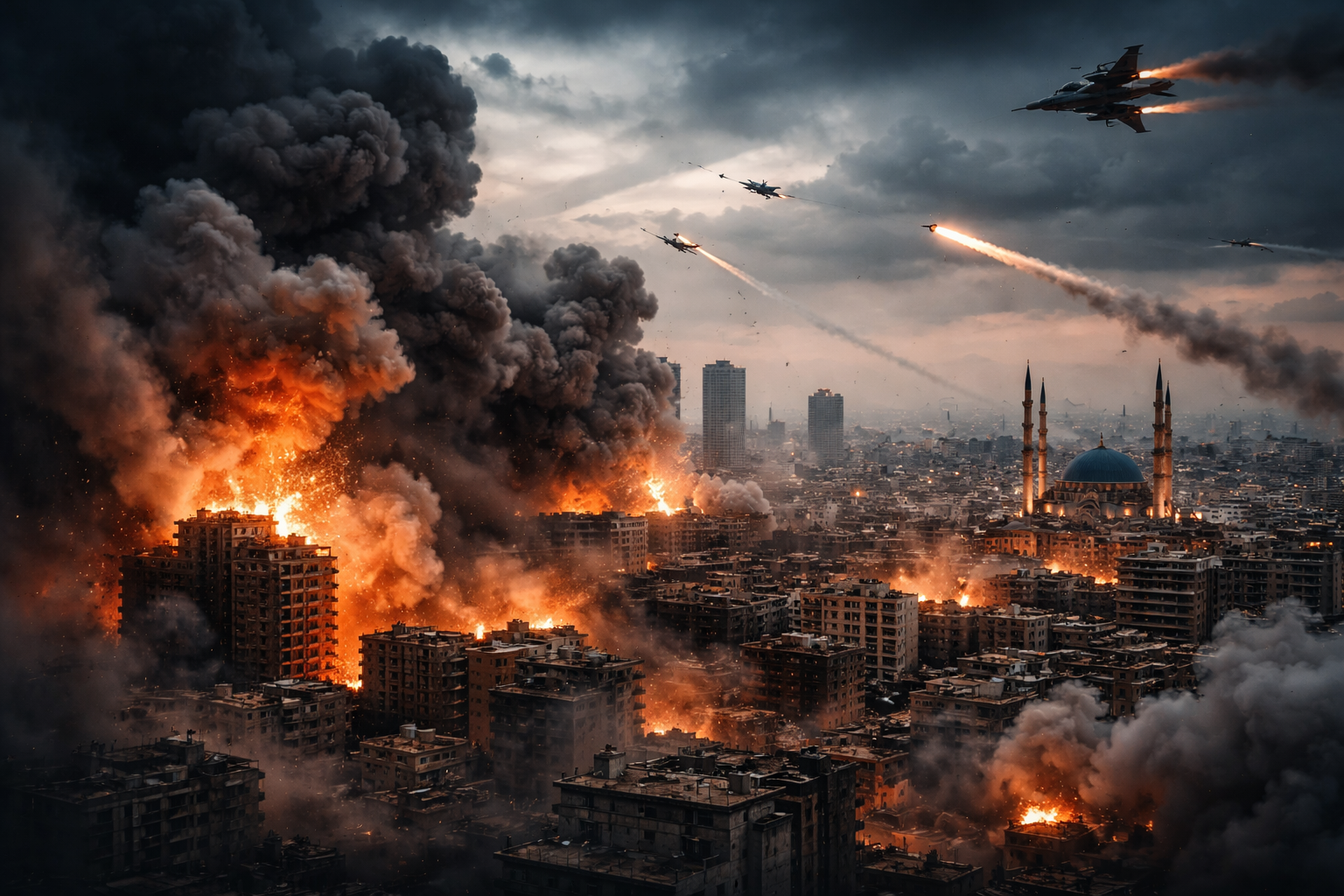
Beirut Under Fire as Israel Expands War With Hezbollah
Israel Pounds Central Beirut After Hezbollah Rocket Barrage, Raising Fears of a Wider Lebanon War
Israeli forces have expanded airstrikes into central Beirut after a large barrage of Hezbollah rockets and drones targeted Israel, marking one of the most dangerous escalations of the Lebanon conflict in years. As of March 13, 2026, Israeli warplanes have struck multiple buildings in Beirut and across Lebanon, while Hezbollah continues launching rockets toward Israeli cities.
The escalation comes after Hezbollah fired roughly 200 rockets and drones toward Israel in a coordinated attack, some launched alongside missiles from Iran, according to Israeli military statements.
Israel responded with expanded strikes on Hezbollah targets across Lebanon, including densely populated parts of Beirut near government buildings.
What makes this moment especially dangerous is not just the scale of attacks, but where they are happening. Israel historically focused strikes on Hezbollah’s southern strongholds and suburbs of Beirut. The shift into central Beirut signals a widening target set and potentially a longer campaign.
The story turns on whether Israel’s escalation remains an air campaign against Hezbollah infrastructure or evolves into a broader war that pulls Lebanon, Iran, and possibly other regional actors deeper into the conflict.
Key Points
Israel has expanded airstrikes into central Beirut following Hezbollah’s largest rocket barrage of the war.
Hezbollah launched around 200 rockets and drones, some coordinated with Iranian missile strikes.
Israeli leaders have warned the military campaign will expand and could involve more troops and resources, raising fears of a ground invasion.
Since the conflict escalated in early March, the death toll in Lebanon has reached hundreds, accompanied by reports of large-scale displacement.
Lebanon’s government has appealed for international mediation while struggling to control Hezbollah’s military operations.
The Immediate Trigger: Hezbollah’s Largest Barrage of the War
The latest escalation began when Hezbollah launched its largest coordinated attack of the conflict, firing rockets and drones toward Israeli military sites and northern cities.
Israeli air defenses intercepted many of the projectiles, but the sheer scale of the barrage triggered a rapid military response.
Israeli officials say the strikes targeted Hezbollah infrastructure and operatives in Beirut and across Lebanon. One Israeli statement indicated that a recent strike in Beirut was aimed at a Hezbollah operative operating inside the capital.
The attacks also occurred alongside Iranian missile launches toward Israel, reflecting a broader confrontation between Israel and Iran’s regional allies.
This combination of Hezbollah and Iranian activity is one reason Israeli leaders are signaling that the campaign may expand rather than taper off.
Why Central Beirut Is a Strategic Escalation
Historically, Israeli operations against Hezbollah focus on southern Lebanon and the Dahieh suburb of Beirut, where the group maintains strongholds.
Central Beirut is different.
Strikes there send a political signal: Israel is willing to hit areas near Lebanon’s government institutions and commercial districts if Hezbollah operates there.
Recent strikes reportedly hit buildings near Lebanon’s Grand Serail government headquarters, underscoring the symbolic impact of the operation.
The move increases pressure on Lebanon’s government, which already faces international demands to restrain Hezbollah’s military activity.
But it also increases civilian risk, which could raise diplomatic pressure on Israel and complicate the conflict, potentially leading to greater international scrutiny and calls for ceasefire negotiations to protect non-combatants.
Civilian Toll and Displacement
The conflict has already produced a severe humanitarian toll.
According to Lebanese officials, the war's escalation earlier this month has resulted in the deaths of hundreds of people, including civilians and children.
Large parts of southern Lebanon have emptied as residents flee airstrikes and evacuation orders.
In total, hundreds of thousands of people have been displaced, straining an already fragile economy and political system.
Israel argues the strikes target Hezbollah infrastructure embedded in civilian areas, while Lebanese officials accuse Israel of violating international law.
What Most Coverage Misses
Most reporting frames the escalation as a simple Israel-Hezbollah retaliation cycle.
But the deeper mechanism shaping the conflict is Hezbollah’s role as Iran’s forward pressure front against Israel.
Recent attacks were coordinated with Iranian missile launches, creating a synchronized multi-front challenge to air defenses.
This tactic serves two purposes.
First, Hezbollah rockets fired from nearby Lebanon force Israel to activate its missile defense systems immediately.
Second, longer-range Iranian missiles launched from farther away attempt to exploit the distraction and penetrate defenses.
The result is a layered attack strategy designed to overwhelm defensive systems rather than simply inflict damage.
Understanding that tactic changes the interpretation of Israel’s response. Israel is not just striking Hezbollah to retaliate—it is trying to dismantle the launch network that enables coordinated regional attacks, which includes targeting key infrastructure and command centers that facilitate these operations.
That makes the campaign inherently broader than a local border conflict.
The Strategic Stakes for Israel, Hezbollah, and Iran
For Israel, the war is about preventing Hezbollah from establishing a permanent missile threat along its northern border.
Hezbollah, meanwhile, frames its campaign as support for Iran and resistance against Israel’s regional operations.
Iran’s involvement adds another dimension. Tehran sees Hezbollah as one of its most powerful regional partners, capable of threatening Israel without direct Iranian territory being attacked.
This triangular dynamic—Israel, Hezbollah, and Iran—means escalation decisions in Beirut or southern Lebanon can rapidly affect the wider Middle East, potentially leading to increased military confrontations or diplomatic efforts among regional powers to mitigate conflict.
What Happens Next
Several possible paths could emerge over the coming weeks.
The first is continued airstrikes and rocket exchanges, keeping the conflict intense but contained.
The second is a limited Israeli ground operation in southern Lebanon, aimed at pushing Hezbollah forces away from the border.
The third—and most dangerous—is deeper regional involvement if Iran increases direct attacks or if other allied groups join the conflict.
Key signals to watch include whether Israeli troops move into Lebanon, whether Hezbollah expands rocket strikes toward central Israel, and whether diplomatic mediation gains traction.
At this moment, the escalation in Beirut signals that the conflict has entered a new phase—one where the battlefield is no longer confined to the border but increasingly tied to the wider regional confrontation between Israel and Iran.
