WHO Investigates Mystery Death At Russian Plague Laboratory As 5,500 Tests Fail To Identify Killer
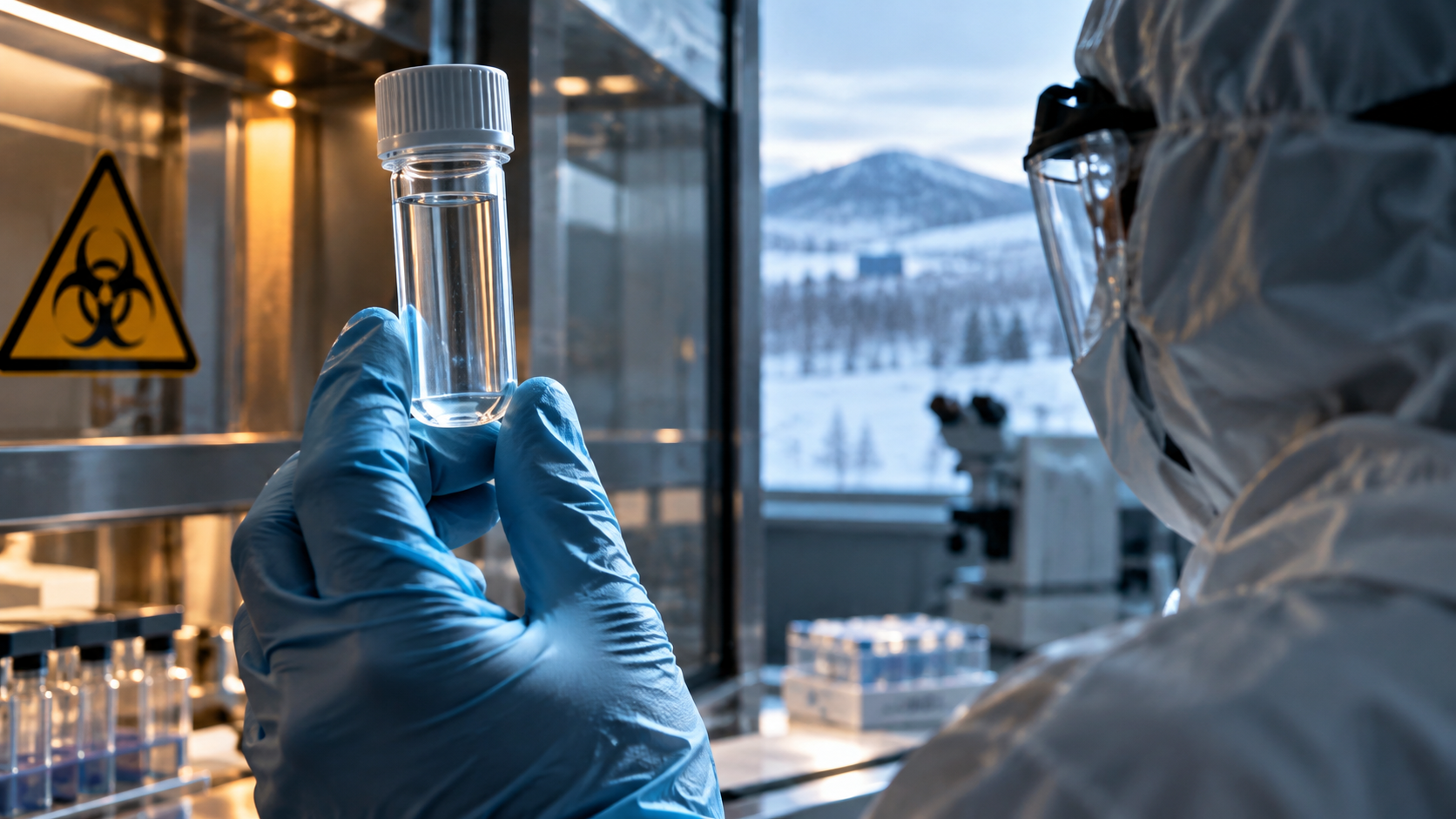
Russian Plague Lab Death Baffles WHO As Mystery Pneumonia Sparks International Investigation
The Russian Plague Lab Mystery
A Young Laboratory Worker Is Dead, Thousands Of Tests Are Negative And The Cause Remains Unknown
The World Health Organization has called for further investigation into the mysterious death of a 28-year-old laboratory worker at a Russian facility that studies some of the world's most dangerous infectious diseases.
The woman, identified as Darya Shipilova, died on 2 October 2026 after developing severe pneumonia. She worked at the Irkutsk Anti-Plague Research Institute of Siberia and the Far East, a specialist research centre in Siberia.
Her death raised immediate fears of a possible exposure to pneumonic plague, an exceptionally dangerous form of the disease that attacks the lungs.
Yet after more than 5,500 laboratory tests, Russian authorities say they have found no evidence of dangerous pathogens connected to the incident.
The World Health Organization, known as WHO, confirmed on 10 October that the cause of Shipilova's fatal pneumonia remained undetermined.
Russia insists there was no laboratory accident, no confirmed plague case and no evidence of continuing transmission.
WHO has not identified evidence of ongoing spread either. But it says the missing diagnosis prevents a fully confident assessment of what happened.
What Happened At The Russian Plague Research Institute?
Shipilova worked at the Irkutsk Anti-Plague Research Institute, an organisation involved in studying dangerous infectious diseases and supporting public-health surveillance.
The institute handles high-consequence pathogens, meaning microorganisms capable of causing especially serious illness.
On 29 September, Shipilova was admitted to hospital suffering from severe pneumonia.
She died on 2 October.
Initial accounts raised suspicions that she might have contracted pneumonic plague through occupational exposure. Unverified allegations included the possibility of an accident involving a laboratory test tube.
Those claims have never been substantiated.
Russian health officials have denied that any laboratory accident occurred.
Two investigations, described by Russian authorities as independent, reportedly found no biosafety or biosecurity incident at the institute.
The authorities also maintained that microorganisms connected to Shipilova's professional work were not detected in her body.
The problem is that eliminating particular explanations does not necessarily establish the actual cause of an illness.
Shipilova's pneumonia remains classified as having an undetermined cause.
WHO Confirms More Than 5,500 Tests Found No Dangerous Pathogens
On 10 October, WHO published a formal Disease Outbreak News assessment examining the circumstances surrounding the death.
The report provided the most detailed international account of the case to date.
According to information submitted by Russia's national health authorities, more than 5,500 laboratory tests were conducted during the investigation.
These included bacteriological, biological, molecular genetic and mass spectrometric methods designed to detect infectious agents.
The testing covered potential causes including influenza, COVID-19, other respiratory viruses, bacterial infections and high-threat pathogens such as plague.
No dangerous pathogen was identified as the cause of Shipilova's death.
Testing of identified contacts also failed to detect the high-threat microorganisms under investigation.
However, some contacts tested positive for common infections.
These included two COVID-19 infections, three rhinovirus infections and one detection of bacteria from the Haemophilus group, alongside other opportunistic infections.
Those findings do not establish what killed Shipilova or demonstrate that these infections were connected to her illness.
The extensive negative results provide reassurance against several feared explanations, but they do not amount to a complete diagnosis.
That distinction remains central to WHO's assessment.
Why WHO Cannot Fully Rule Out A Laboratory Exposure
The most consequential finding in WHO's latest assessment concerns the possibility of occupational exposure.
Russian authorities maintain that laboratory investigations found no evidence of an accident.
Nevertheless, WHO says a laboratory-associated exposure cannot be fully excluded.
The reason is straightforward.
Shipilova worked at an institution handling dangerous infectious agents, and the organism responsible for her fatal illness remains unidentified.
Without a confirmed diagnosis, investigators cannot confidently establish where she acquired the illness or how exposure might have occurred.
WHO also says it lacks sufficient information to independently determine whether the monitoring period for contacts was long enough to exclude every plausible cause of the fatal illness.
This does not mean WHO has found evidence of a laboratory leak.
It means important medical and epidemiological questions remain unresolved.
The distinction matters because an occupational infection could have implications for laboratory safety even if there were no wider outbreak.
A confirmed community-acquired infection, on the other hand, might point investigators towards a different explanation.
Neither has been established.
Hundreds Monitored As Russia Introduces Emergency Health Measures
The death prompted an extensive public-health response.
Russian authorities convened an extraordinary regional sanitary and anti-epidemic commission on 2 October.
Officials introduced contact tracing, medical surveillance, laboratory screening and precautionary infection-control measures.
Quarantine measures were also implemented at the hospital where Shipilova received treatment.
Approximately 200 contacts were initially reported to have been placed under observation or quarantine.
The aim was to identify possible additional infections before they could spread.
Five organisations overseen by Russia's public-health regulator, Rospotrebnadzor, participated in the response, including three research institutions.
By 9 October, Russian authorities said the identified contacts had remained without relevant symptoms during observation.
No additional linked cases of severe pneumonia had been confirmed.
Medical monitoring was subsequently discontinued.
WHO has said it has not identified evidence of continuing transmission associated with the incident.
That finding substantially limits the immediate grounds for fearing an expanding outbreak.
Nevertheless, it does not explain the original death.
Was A Second Russian Laboratory Worker Infected?
One of the most alarming early claims concerned a possible second case of unexplained pneumonia.
WHO sought clarification from Russian authorities after the allegation circulated.
The claim raised questions about whether Shipilova's illness might have spread to another employee.
Russia denied that a second related case existed.
In its 10 October assessment, WHO said the information supplied by Russian authorities had not identified another case of severe pneumonia linked to Shipilova.
No confirmed secondary case of plague has been established.
This is an important distinction.
One unexplained fatal illness at a specialist laboratory requires careful investigation.
A second confirmed infection epidemiologically linked to the first would raise additional questions about transmission, shared exposure and laboratory containment.
At present, the available evidence does not establish such a cluster.
Why Pneumonic Plague Raised International Alarm
Pneumonic plague is among the most dangerous forms of infection caused by the bacterium Yersinia pestis.
The same bacterium causes bubonic plague, the form most commonly associated with the medieval Black Death.
But pneumonic plague behaves differently.
Rather than primarily affecting the lymphatic system, it infects the lungs and can cause rapidly developing respiratory illness.
In some circumstances, the infection can spread between people through infectious respiratory droplets during close contact.
Without rapid treatment, pneumonic plague can be fatal.
However, it is a bacterial illness, and effective antibiotic treatments are available.
Early diagnosis, immediate treatment and appropriate isolation are central to controlling suspected cases.
The relevance to the Russian incident is clear.
Shipilova worked at an institute that handles dangerous pathogens and died following severe pneumonia.
Those facts justified investigating pneumonic plague as a possible cause.
They do not prove she had it.
Russian authorities say their testing found no evidence of plague infection.
WHO has not confirmed plague and has identified no evidence of continuing transmission.
As examined in the earlier Russian plague institute investigation, the potential severity of an infectious disease must be considered separately from evidence that it is actually spreading.
Why The United States Is Watching Russia's Investigation
The incident has also attracted scrutiny beyond international health organisations.
American authorities previously sought additional information from Moscow about the death and the measures introduced around the institute.
The United States has an interest in determining whether a potentially dangerous pathogen has escaped laboratory containment, particularly when the cause of a fatal illness has not been established.
Washington's involvement does not constitute evidence of a biological-weapons programme, deliberate release or cover-up.
Those are separate allegations that would require independent evidence.
The concern is principally one of biological safety and international disease surveillance.
Countries handling high-consequence pathogens are expected to maintain systems capable of detecting incidents, identifying infections and sharing relevant public-health information.
The United States previously acknowledged that it was monitoring the Russian laboratory health scare.
Questions have also emerged about what would happen if a future investigation uncovered evidence of a laboratory-associated infection.
That would require investigators to establish the pathogen involved, its possible source, the circumstances of exposure and whether containment measures were adequate.
But no such explanation has been confirmed in this case.
Is There Any Evidence Of A New Pandemic Threat?
There is currently no confirmed evidence of a plague outbreak resulting from Shipilova's death.
WHO has not identified continuing transmission associated with the incident.
The identified contacts reportedly completed monitoring without developing symptoms linked to the event.
No dangerous pathogen was confirmed through the extensive testing described by Russian authorities.
These findings make the situation very different from an established outbreak involving multiple laboratory-confirmed infections.
The uncertainty concerns the cause and source of one fatal illness, not a demonstrated chain of international transmission.
Plague remains a serious disease requiring prompt medical intervention, but modern diagnostic testing, antibiotics and established containment measures significantly improve the ability to control infections.
A suspected laboratory exposure also does not automatically imply that a pathogen has spread into the surrounding community.
In the earlier discussion of whether the Russian plague scare could become another pandemic, the central distinction was between the potential danger of a pathogen and evidence that an outbreak was occurring.
The latest WHO findings reinforce that distinction.
There is no confirmed plague outbreak linked to this death, but the initial illness is still unexplained.
What Happens Next In The WHO Investigation?
WHO says further clinical, epidemiological and laboratory information is required to strengthen its assessment.
Investigators need a clearer understanding of the illness that caused Shipilova's death.
Establishing the responsible organism, if one can be identified, would help determine whether the pneumonia arose from a common infection, an unusual pathogen or an occupational exposure.
More detailed information could also clarify whether the available contact-tracing measures were sufficient.
For now, Russia maintains that the sanitary and epidemiological situation is stable and that the investigations found no laboratory safety incident.
WHO continues to monitor developments and assess any possible public-health implications.
More than 5,500 tests have helped rule out several dangerous possibilities.
None has yet supplied the missing answer.
The investigation now depends on whether medical evidence can establish what killed Darya Shipilova on 2 October.
Sources
World Health Organization — Pneumonia Of Undetermined Etiology In The Russian Federation, 10 October 2026 — Primary outbreak assessment covering testing, contact monitoring, Russian official statements, laboratory exposure uncertainty and the absence of confirmed ongoing transmission.
Associated Press — Cause Of Death Still Unclear For Russian Plague Lab Worker, WHO Says, 10 October 2026 — Supports the latest international response, unresolved cause of death and clarification of allegations concerning a second case.
Reuters — WHO Unsure What Caused Pneumonia That Killed Plague-Lab Worker In Russia, 10 October 2026 — Supports the Russian testing findings, lack of confirmed plague infection and continuing uncertainty over the fatal pneumonia.
Next Reads
WHO Presses Russia For Answers After Mystery Death At Plague Institute — Could This Become Another Pandemic? — Explains the earlier international response and whether pneumonic plague could trigger a wider outbreak.
US Monitoring Russian Health Scare After Plague Institute Worker Dies — Examines the first international reaction to the unexplained death in Siberia.
Trump Offers US Help As Russian Plague Institute Scare Raises The Question Nobody Wants To Ask: Could This Become Another Pandemic? — Explores American involvement and the public-health questions surrounding the Russian laboratory.
