Trump Offers US Help As Russian Plague-Institute Scare Raises The Question Nobody Wants To Ask: Could This Become Another Pandemic?
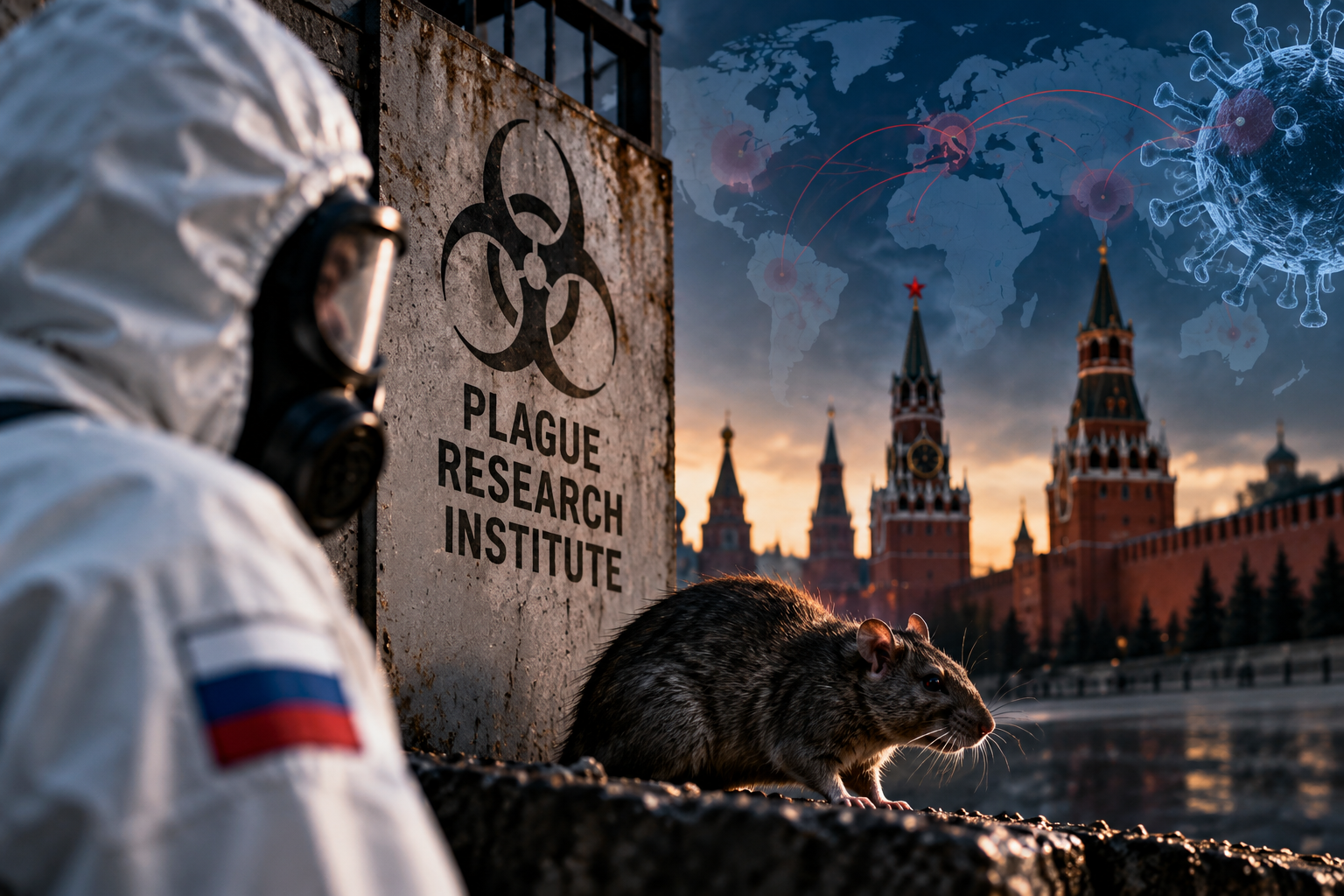
Trump Steps In After Siberian Plague-Institute Death — How Fast Could Pneumonic Plague Spread?
The Disease Scare Bringing Back Pandemic Fears
A laboratory worker is dead, contacts have been quarantined and Donald Trump says America is willing to help — but the evidence so far points to a serious containment investigation, not the start of another COVID-scale pandemic.
Donald Trump has offered United States assistance to Russia after the death of a laboratory worker at a plague research institute in Siberia triggered quarantines, emergency monitoring and a surge of international concern.
Speaking at the White House on 5 October, the US president described the situation as a “big problem for Russia”, called plague a “rough disease” and said America would do what it could to help.
That intervention immediately raises the most unsettling question surrounding the incident.
Could this become another pandemic?
The scientifically responsible answer is that pneumonic plague has the biological ability to spread rapidly between people under the wrong conditions. It can be extremely dangerous, symptoms can develop with startling speed, and untreated infections can kill.
But nothing currently confirmed in Siberia shows the world is facing a new pandemic.
There is not even public confirmation that the laboratory worker died from plague.
That distinction is everything.
What Actually Happened At The Russian Institute
The case centres on a 28-year-old woman who worked at the Irkutsk Anti-Plague Research Institute of Siberia and the Far East.
She became seriously ill and later died after developing what Russian authorities have described as pneumonia of unknown origin. The circumstances surrounding her illness remain unclear.
Rumours circulated that she had been exposed to live plague bacteria after a laboratory accident. Russian health authorities have said they found no evidence of an accident involving the handling of pathogens and no confirmed link between her death and her work.
Yet the response has been substantial.
People who had contact with the woman were placed under medical supervision or quarantine. Areas of the hospital where she was treated were restricted. The head of Russia’s federal health watchdog travelled to the region. Workers at a nearby industrial site were told to wear masks.
Russian officials say all known contacts have been identified and that no new related cases have been detected.
Those measures do not prove that authorities are facing an outbreak. They show that officials are treating the possibility seriously enough to contain it before certainty arrives.
That is precisely what outbreak control is supposed to look like.
Why Pneumonic Plague Sounds So Frightening
Plague is caused by the bacterium Yersinia pestis.
The name carries the historical weight of the Black Death, but the disease exists today and remains present in animal reservoirs in several parts of the world.
There are different clinical forms. Bubonic plague typically follows exposure through infected fleas. Pneumonic plague affects the lungs and is the form that creates the greatest concern about direct human transmission.
A person with pneumonic plague can release infectious respiratory particles when coughing.
The World Health Organization says plague symptoms commonly appear after an incubation period of one to seven days, while pneumonic plague can develop much faster. In some cases, symptoms can begin within about 24 hours.
That short incubation is one reason a genuine cluster would demand an aggressive response.
Untreated pneumonic plague can progress rapidly and can be fatal. Early treatment, however, changes the picture dramatically. Yersinia pestis is a bacterium rather than a novel virus, and effective antibiotics already exist.
That makes this threat fundamentally different from the opening months of COVID-19, when the world was confronting a newly identified virus without established immunity, proven treatments or vaccines.
The broader lesson from what the next pandemic could look like is that the identity of a pathogen matters less than its combination of transmissibility, severity, detectability and available countermeasures.
On those measures, plague is dangerous — but it is not an unknown enemy.
Could It Really Become Another Pandemic?
In biological terms, pneumonic plague can cause outbreaks.
That is not speculation. Human-to-human transmission is possible, and the disease can spread through respiratory particles when infected people are in close contact with others.
But the leap from “can spread between people” to “could become another COVID” is enormous.
A global pandemic requires sustained transmission across communities, cities and international borders. It needs chains of infection that continue faster than health authorities can find, isolate and treat them.
There is currently no public evidence of that in Siberia.
No expanding chain of confirmed plague infections has been announced. No evidence of international transmission has emerged. Russian officials say they have traced the known contacts of the woman who died and have not identified further cases linked to the institute.
That makes the present situation closer to a high-consequence investigation than a pandemic event.
It is useful to compare that with previous disease scares. A suspected cluster can generate enormous anxiety before investigators know whether person-to-person spread is happening at all. The same distinction shaped concern during the hantavirus cruise-ship outbreak, where transmission patterns mattered more than the frightening name of the disease.
The decisive signal in Siberia would be new confirmed cases without a direct laboratory exposure or another obvious source.
That would suggest the bacterium had moved into a human transmission chain.
So far, that has not been established.
How Quickly Could Pneumonic Plague Spread?
If this were confirmed as pneumonic plague, speed would matter.
The incubation period can be extremely short. Someone infected could become seriously ill within days and, in some cases, begin developing symptoms after roughly one day.
That creates a narrow window for diagnosis and treatment.
But rapid illness can also work against widespread hidden transmission. Diseases that make people visibly sick very quickly can sometimes be easier to identify and isolate than pathogens that spread efficiently for days before symptoms become obvious.
COVID demonstrated the destructive potential of transmission from people who were asymptomatic, mildly ill or not yet aware they were infected.
Plague does not behave in exactly the same way.
Pneumonic plague usually requires relatively close exposure to infectious respiratory particles. Public-health teams can identify contacts, monitor symptoms, isolate suspected cases and use antibiotics for treatment and, where appropriate, preventive protection.
That does not make an outbreak harmless.
It makes it more controllable.
The danger rises sharply if diagnosis is delayed, authorities lose track of contacts, hospitals become transmission sites or infected people travel before their illness is recognised.
That is why the early response matters disproportionately.
Does Trump’s Offer Of US Help Show How Serious This Is?
It shows seriousness in one specific sense: Washington considers the situation worth monitoring at senior levels and the US president is publicly willing to offer assistance.
It does not prove Russia has lost control of an outbreak.
Before Trump’s comments, US officials had already said they were monitoring the situation with public-health and interagency partners. His remarks elevate the political visibility of the event, particularly because relations between Washington and Moscow remain strained.
Public-health threats can produce cooperation even between governments that disagree profoundly elsewhere. Infectious disease does not respect diplomatic boundaries.
Trump’s offer is also just that at this stage: an offer.
There has been no public confirmation that Russia has requested American assistance, that US disease teams are being deployed to Siberia, or that Washington has evidence of a wider outbreak hidden from the public.
The distinction matters because presidential involvement can easily be interpreted as evidence of secret information or imminent danger.
It may instead reflect the opposite strategy: treating uncertainty seriously before it becomes a larger problem.
What Would Make This Far More Dangerous?
There are several developments that would materially change the assessment.
The first would be laboratory confirmation that the woman died from pneumonic plague.
The second would be confirmed infections among people who had no direct laboratory exposure.
The third would be sustained person-to-person spread beyond immediate close contacts.
A fourth would be cases appearing in multiple locations without obvious epidemiological links.
And the most worrying development would be evidence that transmission was continuing faster than contact tracing could contain it.
Those are the kinds of signals that turn an isolated health scare into an outbreak with wider consequences.
Until then, comparisons with the earliest days of COVID remain emotionally understandable but scientifically premature.
The world has seen how quickly a dangerous pathogen can escalate when surveillance fails. It has also seen how aggressively outbreaks such as Ebola can be contained when transmission chains are identified quickly.
The Siberian case now sits inside that uncomfortable gap between uncertainty and confirmation.
A worker at a plague institute is dead. Russia has imposed precautions. America is watching. Trump has offered help.
Those facts justify attention.
They do not yet justify calling this the beginning of another pandemic.
Sources
Reuters — Trump says US will help Russia after Siberia plague institute death — Supports Trump’s 5 October comments, his offer of US assistance and his description of the situation as a major problem for Russia.
Reuters — Dozens quarantined in Siberia after plague institute lab worker dies — Supports the circumstances of the worker’s death, Russian quarantine measures, the absence of confirmed new cases and official statements on the investigation.
World Health Organization — Plague — Supports the medical explanation of Yersinia pestis, pneumonic-plague transmission, incubation, severity and the effectiveness of early antibiotic treatment.
Next Reads
The Next Pandemic: What to Expect — Explains which characteristics allow an outbreak to develop into a global pandemic and what health systems watch for first.
Hantavirus Cruise Ship Outbreak: Suspected Human-To-Human Spread Raises Fears After Three Deaths — A useful comparison showing why confirmed human transmission matters more than the frightening reputation of a pathogen.
Congo Ebola Outbreak Spreading Faster Than Expected As Global Health Emergency Declared — Examines how contact tracing, speed and containment determine whether a dangerous disease remains localised.
