Why Eurovision Suddenly Feels Like Europe’s Most Explosive Culture-War Battleground
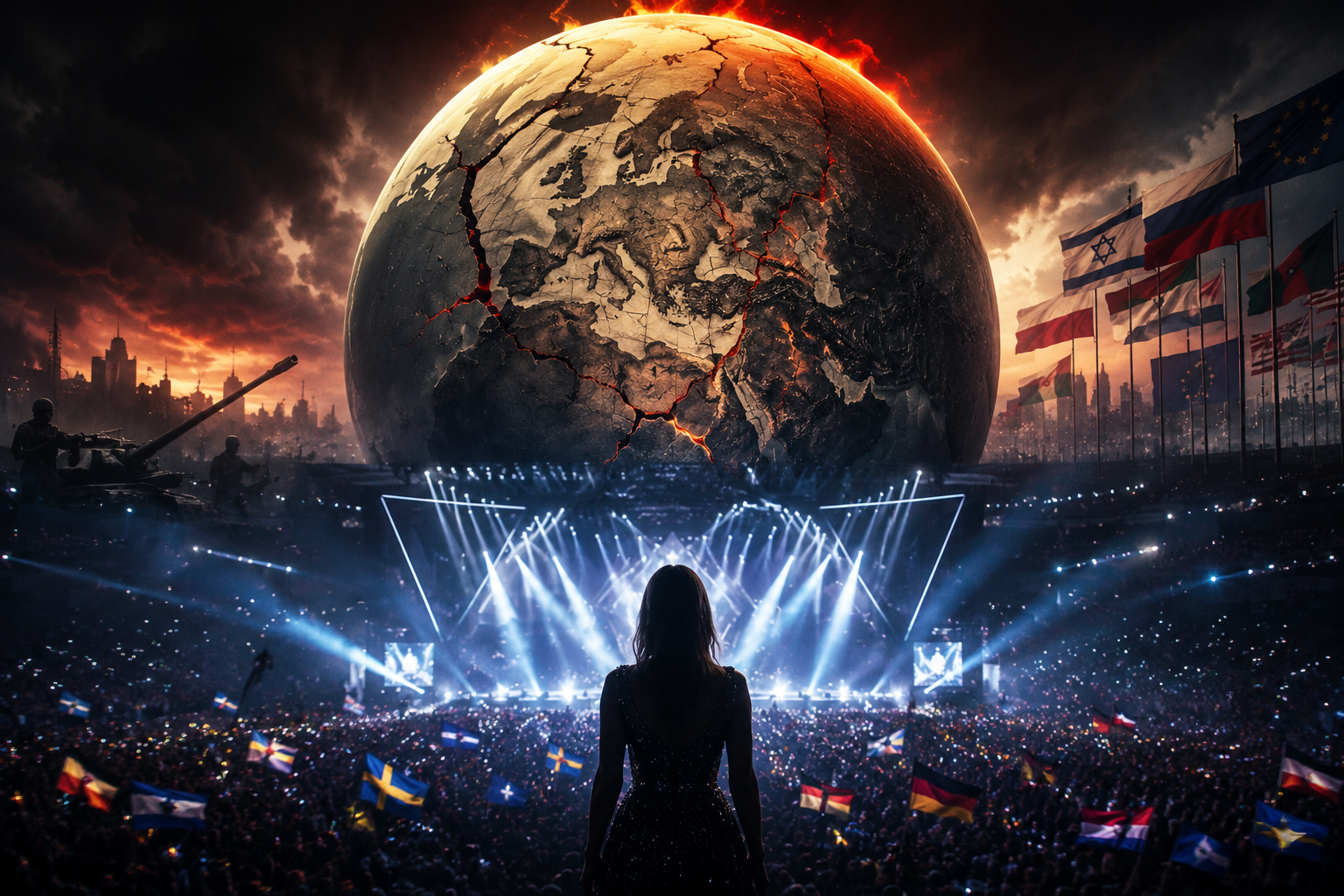
How Eurovision Turned Into A Geopolitical Flashpoint
The Eurovision Crisis Nobody Can Ignore Is No Longer About Music
Eurovision was designed to make Europe feel connected again after catastrophe. That was always the underlying idea: music as emotional glue for a continent exhausted by conflict, nationalism, division, and political trauma.
Now the contest itself is starting to absorb the exact tensions it was meant to calm.
Eurovision 2026 has arrived under an atmosphere that feels radically different from the glitter-heavy optimism the competition once depended on. Multiple countries have boycotted the event over Israel’s participation. Protest movements are growing around the context. Former winners have publicly distanced themselves from the competition. Broadcasters are openly attacking the European Broadcasting Union. The arguments are no longer really about songs.
They are about legitimacy, identity, morality, nationalism, censorship, public pressure, Gaza, European values, institutional trust, and whether supposedly neutral cultural spaces can survive the political era now consuming the West.
That is the part of the story that changes everything.
The Contest That Wanted To Escape Politics Is Now Trapped Inside It
Eurovision has always claimed to stand above politics.
That claim has never been entirely true.
The contest has long reflected Europe’s tensions beneath the sequins: Cold War symbolism, Balkan fragmentation, post-Soviet identity struggles, arguments over migration, LGBTQ+ politics, nationalism, regional alliances, and voting controversies have all shaped the competition for decades.
But 2026 feels different because the political pressure no longer sits quietly underneath the spectacle.
It has moved to the center of the area.
Israel’s participation has become the defining fault line. Several countries — including Ireland, Spain, Slovenia, Iceland, and the Netherlands — either withdrew entirely or boycotted participation after the European Broadcasting Union allowed Israel to remain in the contest despite escalating controversy connected to the Gaza war.
The scale of the backlash matters.
Eurovision has survived controversies before. Coordinated institutional revolt from participating broadcasters is rare.
That changes the atmosphere completely.
The event no longer feels like a harmless shared European ritual. It feels like a referendum on whether culture can remain politically neutral in a deeply polarized age.
The Hidden Problem Beneath The Boycotts
The deeper issue is not simply Israel.
It is trust.
A growing number of critics believe major Western cultural institutions now apply rules selectively depending on the geopolitical sensitivities involved. That perception, whether fair or unfair, is becoming corrosive.
Russia was excluded from Eurovision after the invasion of Ukraine. Israel was not excluded after the Gaza war escalated. The European Broadcasting Union defended the distinction by arguing Eurovision is a contest between broadcasters, not governments. Critics argue that explanation no longer convinces large parts of the audience.
Once audiences begin believing institutions enforce principles inconsistently, every decision becomes ideological.
Every rule becomes political.
Every artistic event becomes a proxy war for wider cultural frustration.
That is why Eurovision suddenly feels emotionally radioactive.
The contest are now carrying tensions far larger than they themselves.
The Atmosphere Around Europe Is Changing Faster Than Eurovision Can Adapt
Part of the reason Eurovision feels so unstable is because Europe itself feels unstable.
The continent is moving through overlapping crises simultaneously:
Economic pressure
Migration tensions
Political fragmentation
Rising populism
Identity conflict
War anxiety
Institutional distrust
Online radicalisation
Social media tribalism
Generational anger
Those pressures increasingly bleed into entertainment, sport, music, celebrity culture, and public events.
Nothing stays “just entertainment” anymore.
That transformation can also be seen in the wider collapse of trust across Western politics, where institutions increasingly struggle to appear neutral, coherent, or morally consistent under public scrutiny. Western politics is entering a deeper credibility crisis in ways that increasingly spill into culture itself.
Eurovision now sits directly inside that emotional storm.
The Israel Debate Has Become A Symbolic Proxy War
The reason emotions around Eurovision are so intense is because the contest now functions symbolically far beyond music.
For some viewers, allowing Israel to compete represents artistic openness and resistance to politicized exclusion.
For others, Israel’s inclusion represents institutional hypocrisy and moral failure during a humanitarian catastrophe.
Those positions are not reconcilable through staging changes, branding slogans, or public relations language.
That is why the European Broadcasting Union’s “United By Music” message suddenly sounds fragile rather than reassuring.
The slogan collides directly with a political reality in which Europe increasingly appears divided over almost everything.
The Real Risk Eurovision Faces Next
The danger is not that Eurovision disappears tomorrow.
The danger is slower.
Loss of legitimacy.
That is much harder to repair.
If audiences increasingly view the competition as politically manipulated, ideologically selective, or institutionally inconsistent, Eurovision risks losing the emotional innocence that made it powerful in the first place.
The contest survives because millions of people emotionally buy into the illusion that everyone briefly enters the same cultural space together.
Once that illusion weakens, the event changes fundamentally.
That risk is already visible in the rhetoric surrounding this year’s contest. Analysts and commentators are openly describing Eurovision as one of the largest crises in the competition’s history.
The tone around the event feels heavier.
More defensive.
More ideological.
Less joyful.
That matters because Eurovision’s entire identity depends on emotional escapism.
What Most People Are Missing About the Culture War Explosion
The bigger story is not really Eurovision itself.
It is the collapse of neutral space.
Politics now floods almost every major institution:
Universities
Hollywood
Tech platforms
Sporting events
Corporate brands
Award ceremonies
Music festivals
Film festivals
Social media platforms
Eurovision simply became the latest arena where those tensions exploded into public view.
The contest’s crisis reflects a broader European anxiety about identity, borders, morality, nationalism, sovereignty, institutional trust, and cultural cohesion. Similar fault lines are already reshaping global geopolitical tensions and public trust across Western societies.
That is why this no longer feels like a niche argument about a singing competition.
It feels bigger because it is bigger.
The Moment Eurovision Stopped Feeling Safe
For decades, Eurovision operated as controlled absurdity.
Camp.
Escapism.
Flags.
Glitter.
Political awkwardness softened through music and spectacle.
Now the spectacle itself feels politically unstable.
The shift is psychological as much as institutional.
Viewers increasingly arrive at Eurovision already carrying ideological identities into the event. Social media intensifies that process further by rewarding outrage, tribal loyalty, and emotionally maximal interpretations of every controversy.
That creates a dangerous cycle:
The more political Eurovision becomes, the more audiences interpret everything politically.
And the more audiences interpret everything politically, the harder neutrality becomes.
The Question Hanging Over Eurovision’s Future
Eurovision may survive this crisis.
It has survived many before.
But 2026 feels like a warning sign that Europe’s wider political fragmentation is becoming impossible to contain inside supposedly apolitical cultural institutions.
That matters because Eurovision was never really about music alone.
It was about emotional cohesion.
Shared identity.
A belief that Europeans could still occupy the same cultural room together despite disagreements elsewhere.
That belief suddenly looks far weaker than it once did.
And once a continent loses confidence in its shared cultural rituals, the damage rarely stays inside entertainment for long.
