
Why Trump’s Sudden Ukraine Pivot Has World Leaders Paying Attention
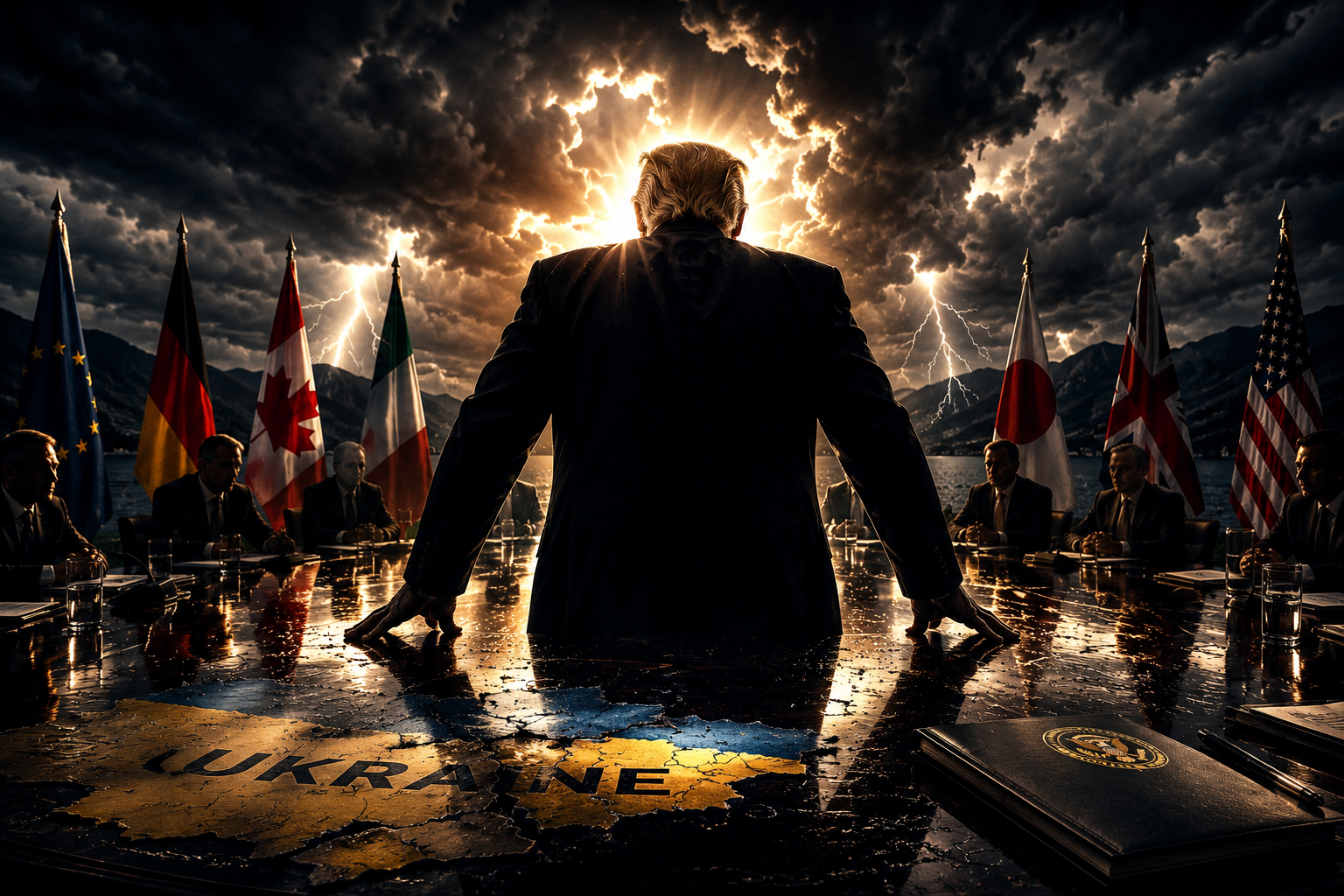
Why Trump’s Sudden Ukraine Pivot Has World Leaders Paying Attention
Trump’s Tone Suddenly Changed
For months, much of the discussion surrounding the war in Ukraine focused on whether Washington was gradually disengaging from the conflict. Questions lingered over military support, sanctions, and whether President Donald Trump saw ending the war primarily through pressure on Kyiv rather than pressure on Moscow.
At the G7 summit in France, however, something noticeably different emerged. Trump publicly stated that Russia should make a deal, met with Ukrainian President Volodymyr Zelenskyy, and signalled a willingness to restore sanctions that had previously been eased during the recent Iran crisis. The change was subtle, but in geopolitics subtle changes often matter most.
The immediate question is not whether Trump has become a traditional Ukraine hawk. The more important question is whether he has concluded that Russia is now the main obstacle to ending the war.
Ukraine Has Forced A Strategic Reassessment
The battlefield matters in diplomacy.
For much of the past year, many governments hoped negotiations might become easier if one side gained a decisive advantage. Instead, the conflict has become increasingly defined by endurance, technology, and economic resilience.
At the G7, Ukrainian officials argued that Russia was not moving toward compromise and that continued pressure remained necessary. Reports from summit discussions suggested Trump showed greater openness to that argument than many observers expected. Ukrainian officials indicated that discussions included air defence systems, sanctions, and future support.
That does not mean American policy has fundamentally changed overnight. It does suggest that the White House may be reassessing who bears responsibility for the continued stalemate.
Europe Has Been Working Toward This Moment
One of the less visible stories behind the summit was the sustained effort by European leaders to re-engage Trump on Ukraine.
For months, leaders across Europe have attempted to persuade Washington that support for Ukraine is not simply about helping Kyiv. It is also about the credibility of Western alliances, deterrence, and the future balance of power in Europe.
At the summit, leaders pushed Ukraine back toward the top of the agenda after global attention had recently shifted toward Iran and the Middle East. The strategy appears to have achieved at least partial success. Trump held discussions with Zelensky, acknowledged the importance of reaching a settlement, and indicated openness to increasing pressure on Moscow.
That represents a markedly different atmosphere from earlier periods when concerns centred on whether Ukraine was gradually becoming a secondary priority in Washington.
Why Sanctions Matter More Than Speeches
The most significant development may not have been any public statement.
It may have been Trump's indication that sanctions on Russian oil could soon return. Energy revenues remain one of Moscow's most important economic lifelines. While sanctions alone rarely determine the outcome of conflicts, they influence resources, investment, and long-term economic stability.
Trump suggested that measures eased during the Iran crisis could be reinstated as conditions in global energy markets stabilise. If implemented, that would represent a concrete policy shift rather than simply a change in rhetoric.
Markets, governments, and military planners tend to pay far more attention to actions than headlines. If sanctions return, the geopolitical significance would be difficult to ignore.
The Bigger Question Is What Trump Wants Next
The most interesting aspect of the summit may be what it reveals about Trump's broader strategic thinking.
Trump has repeatedly stated that he wants the war to end. He has also shown frustration that achieving a settlement has proven far more difficult than many expected. The challenge is that every peace process eventually reaches the same fundamental question: which side must make the greater compromise?
The signals emerging from the G7 suggest Trump may increasingly believe that pressure must be applied to both sides rather than primarily to Ukraine. That would represent an important evolution in approach.
Yet uncertainty remains. Trump continues to emphasise negotiations and has not abandoned the goal of securing a deal. The administration's long-term position will ultimately be judged by policy decisions rather than summit language.
Why This Matters Beyond Ukraine
The deeper significance of this story extends beyond the war itself.
Ukraine has become a test case for how major powers respond to prolonged geopolitical challenges. The outcome will influence how allies evaluate American commitments, how adversaries assess Western resolve, and how future crises are managed.
That is why even small diplomatic signals generate intense scrutiny.
The G7 summit may not have produced a dramatic breakthrough. It may not lead immediately to peace talks or a major military escalation. But it did reveal something important: Ukraine is once again near the centre of Washington's strategic attention.
For months, the dominant question was whether America was drifting away from Ukraine.
After the G7, the more interesting question may be whether America is gradually moving back.
