Why Weddings Became So Expensive And How Smart Couples Beat The System
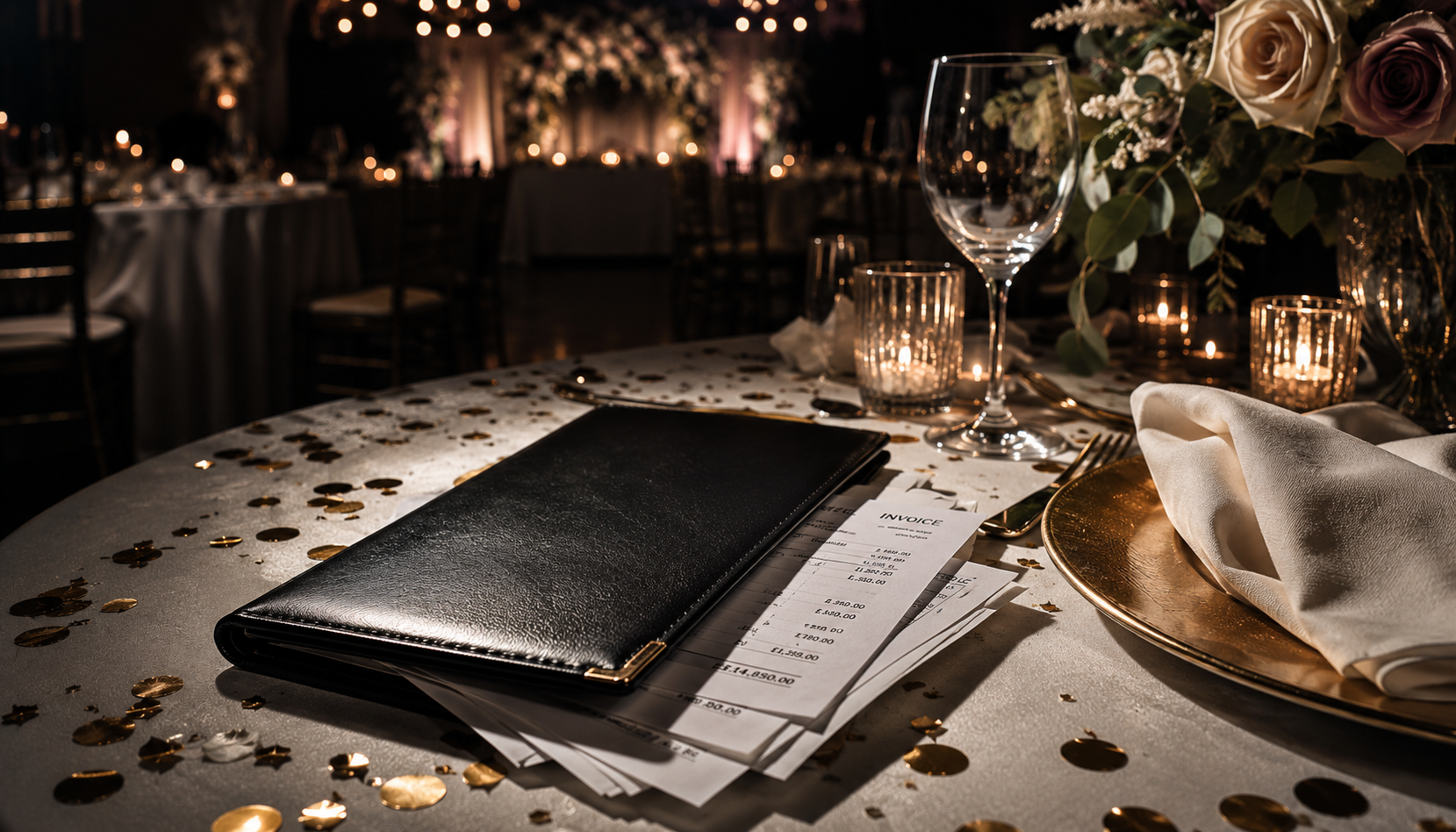
How To Have A Great Wedding Without Wrecking Your Finances
The Wedding Cost Trap And The Smart Way To Escape It
Weddings are expensive because they combine emotion, scarcity, social pressure and a long chain of suppliers into one high-stakes day. Once a couple adds a venue, food, drink, photography, outfits, flowers, entertainment, transport, accommodation, décor and guest expectations, the price stops feeling like one event and starts behaving like a small production.
The current UK benchmark shows why many couples feel trapped. Bridebook’s 2026 UK Wedding Report puts the average UK wedding cost at £20,604, while Hitched reports an average of £21,990, with average spend per guest rising to £272. The real problem is not only the headline cost. It is that weddings create dozens of moments where couples are encouraged to upgrade, add, personalise or avoid disappointing someone.
The Real Reason Weddings Cost So Much
The biggest cost driver is the guest list. Every extra guest can mean another meal, chair, drink allocation, invitation, favour, place setting and slice of the venue capacity problem. A wedding for 50 people and a wedding for 120 people are not the same event with more people in the room. They are different financial machines.
Venues also shape the bill early. Many popular venues have minimum spends, preferred supplier lists, corkage charges, late-night fees, accommodation packages or seasonal premiums. Once the venue is chosen, the couple often inherits a cost structure before they have made the most personal decisions.
Then comes the wedding premium. This is not always a scam. Wedding suppliers are often charging for weekend work, long hours, insurance, setup, planning calls, delivery, breakdown, risk and a one-day event where failure is not tolerated. A photographer cannot miss the ceremony, a caterer cannot run out of food, and a venue cannot redo the day next week.
The emotional pressure makes it worse. Couples rarely plan a wedding like they plan a normal purchase. They plan it while thinking about family, photographs, memories, status, tradition and the fear of regret. MoneyHelper says a wedding budget should start with an open conversation about what the couple can realistically afford, because the budget has to come before the dream version starts expanding.
The Guest List Is The Budget
The fastest way to make a wedding cheaper is to cut the guest list before cutting quality. A smaller wedding can still have good food, good photos, good music and a beautiful setting. A bloated wedding often forces couples to dilute everything just to feed people they barely see.
The most useful rule is brutal but fair: if you would not take someone for dinner at £100 a head, think carefully before inviting them to the wedding. That does not mean being rude. It means refusing to let distant expectations control a bill that the couple may be paying for years.
Couples should build three lists. The first list is non-negotiable: parents, siblings, closest friends and people who genuinely belong in the room. The second list is desirable: people the couple would love to include if the budget allows. The third list is pressure: people invited because of guilt, politics or fear of awkwardness.
The third list is where money disappears. Every person added from that list weakens the budget for the parts of the day that matter most. A wedding should not become a debt-funded reunion for people who will not be central to the couple’s life afterwards.
How To Cut Costs Without Making It Feel Cheap
The best savings are structural, not cosmetic. Changing the day of the week, season, venue type or guest count can save far more than haggling over napkins. A Thursday, Friday, Sunday or winter wedding can often cut the venue cost while keeping the overall experience strong.
Food is another major lever. A formal three-course meal with canapés, evening food and an open bar can become one of the most expensive parts of the day. A high-quality buffet, sharing menu, later ceremony, limited bar tab, paid bar after a certain point, or single main meal can reduce the bill without making the event feel thin.
Flowers and décor are where couples should be ruthless. Large floral installations photograph well but die quickly. Candles, lighting, rented décor, seasonal flowers, greenery, simple table styling and venue-led atmosphere often produce a stronger look for less money.
Outfits are another area where emotion can overpower logic. The dress, suit, alterations, shoes, accessories, hair, makeup and bridal party costs can swell fast. Buying sample dresses, pre-owned dresses, high-street suits, rented suits or limiting the bridal party can save hundreds or thousands without changing the legal or emotional meaning of the day.
Photography is worth protecting, but not blindly upgrading. The right photographer matters because the photos last longer than the cake, cars or centrepieces. The saving trick is to book fewer hours, skip albums at first, avoid unnecessary second shooters unless needed, and choose someone whose editing style already matches the couple’s taste.
The Best Way To Pay For A Wedding
The best way to pay for a wedding is savings first, family contributions second, low-cost planned credit third, and high-interest debt never. MoneyHelper advises that saving earlier makes the cost more manageable and suggests separating wedding savings into a dedicated pot or account. That is the cleanest option because the day ends without the marriage beginning under repayment pressure.
The practical method is to set the wedding date only after calculating the monthly saving gap. If the target budget is £15,000 and the couple can save £750 a month, the wedding is a 20-month project. If they can save £400 a month, the same wedding is a 37-month project unless the budget changes.
Family money should be handled clearly. A contribution is helpful only if it does not buy control. Couples should ask whether money is a gift or a loan, whether it comes with expectations, and whether it is for the whole wedding or a specific item. Written clarity can prevent later resentment.
Credit can work only when it is controlled. A 0% purchase credit card can be useful for deposits or final balances if the couple has a fixed repayment plan before the interest-free period ends. MoneyHelper notes that some credit cards offer 0% interest on purchases for a year or longer, while its borrowing guidance compares options such as 0% cards, loans and buy-now-pay-later products.
A personal loan can be cleaner than rolling credit card debt because it has fixed monthly payments and a fixed end date. It is still debt. Comparison data in June 2026 showed representative personal loan rates for wedding loans starting from around 5.9% for some larger loan bands, but smaller loans could carry higher representative rates. The important number is not the advertised rate. It is the monthly repayment the couple can afford after rent, mortgage, bills, emergency savings and normal life.
What Couples Should Avoid
The worst way to pay for a wedding is to assume future money will solve present overspending. Credit card balances, overdrafts, buy-now-pay-later splitting, family loans and personal loans can all feel manageable when viewed separately. Together, they can turn one day into a long financial hangover.
Couples should avoid borrowing for things guests will not remember. Guests remember whether they felt welcome, fed, comfortable and included. They rarely remember upgraded chairs, luxury stationery, elaborate favours, premium charger plates, personalised signage or a more expensive cake tier.
They should also avoid paying deposits before the full budget is mapped. A dream venue can trap the couple into cutting everything else or borrowing heavily to protect the original vision. No supplier should be booked until the couple knows the total estimated cost, contingency amount, payment dates and cancellation terms.
Debt help should not be treated as failure. Citizens Advice provides guidance on debt, credit cards and personal loans, while MoneyHelper offers budgeting and debt-support tools for people who are struggling. If a wedding plan already requires unaffordable borrowing, the answer is not a better loan. The answer is a smaller wedding.
The Smart Wedding Formula
The strongest wedding budget starts with three numbers: the maximum total spend, the monthly saving capacity, and the maximum repayment the couple could handle if borrowing is unavoidable. Those numbers decide the guest list, venue and date. Not the other way round.
A sensible structure is simple. Keep 10% of the budget as contingency, spend heavily only on the parts that matter most, cut anything done for appearances, and make every supplier earn their place. The couple should decide their top three priorities before spending anything. For most people, those priorities are venue atmosphere, food and photography.
The smartest couples do not make weddings cheap. They make them intentional. They cut the parts built for pressure and protect the parts built for memory.
A wedding should launch a marriage, not weaken it. The best day is not the one that looks most expensive. It is the one the couple can enjoy without waking up married, stressed and financially exposed.
