


Rachel Reeves’s Budget Gamble
London wakes to a sharp November morning. The air is cold and grey. In a small flat, a mother warms milk for her child. She checks the electricity bill. It is higher than last month. She sighs. Across town, a shop owner examines his accounts.
he numbers are tight. Outside 11 Downing Street, a red budget box sits on a desk. In a week, Chancellor Rachel Reeves will carry it to Parliament. She will speak about taxes and spending. The country is listening.

Unlikely Allies: Trump Meets New York’s Mayor-Elect Zohran Mamdani, in Oval Office
Unlikely Allies: Trump Meets New York’s Mayor-Elect in Oval Office
On a November afternoon in Washington, two political opposites sat side by side in the Oval Office. President Donald Trump, a 79-year-old Republican and real-estate mogul, and Zohran Mamdani, a 34-year-old newly elected Democratic mayor of New York City, traded smiles and firm handshakes. Just weeks after harshly attacking each other on the campaign trail, they publicly agreed on the need to tackle shared problems – especially the city’s high cost of living. The surprising cordiality caught many off guard. Both men spoke of lowering grocery and utility bills, building more housing, and keeping New Yorkers safe. Their cooperation marked a sharp turn from the name-calling and threats that had defined their relationship.

Leaked US Draft Plan Shocks Ukraine and Allies (November 2025)
Leaked US Draft Plan Shocks Ukraine and Allies
Ukraine’s leaders are reeling after a secret 28-point peace blueprint leaked this week. The U.S. draft plan – reportedly backed by President Donald Trump – would force Kyiv to cede large swathes of eastern Ukraine to Russia. Ukrainian officials warned it amounts to “capitulation” to the invader. In a national address, President Volodymyr Zelenskiy said Ukraine now faces an “impossible choice” between keeping its dignity or appeasing Russia. The draft proposal has thrust the conflict back into the spotlight just as a new winter offensive looms, and it has set off alarm bells in Washington and European capitals alike.

Why Was the 2025 U.S. Government Shutdown So Long?
Why Was the 2025 U.S. Government Shutdown So Long?
Airports turned into an impromptu army of stranded travelers. Lunch counters at schools and food banks stood empty. By mid-November 2025, the federal government had been shut down for a record 43 days – longer than any other pause in modern U.S. history. This shutdown was not caused by a natural disaster or cyberattack, but by a political standoff. Flights grounded by a shortage of controllers and empty pantries highlighted one ugly truth: lawmakers could not agree on how to fund the government.

The Middle East Power Shuffle: Iran, Israel and the New Red Line Politics of 2025
The Middle East Power Shuffle: Iran, Israel and the New Red Line Politics of 2025
Sirens blared across Tel Aviv and Tehran as missiles rained down between two longtime adversaries. For twelve tense days in June 2025, Israel and Iran fought a war that had once seemed almost unthinkable. By the time the smoke cleared, the Middle East’s balance of power had shifted — and a new era of “red line” politics had begun.
Now, just months later, the region is grappling with the war’s aftermath. Iran, battered and isolated, is scrambling for diplomatic lifelines. Israel, emboldened by its military gamble, is doubling down on hard limits it vows to enforce. Caught in between, neighboring powers like Saudi Arabia are playing unexpected new roles as mediators. It’s a geopolitical shuffle that is redefining alliances and testing how far each player will go to defend its interests.

UK’s Strategic Shift: Why the New Nuclear SMR Supply Chain Marks a Geopolitical Breakpoint
UK’s Strategic Shift: Why the New Nuclear SMR Supply Chain Marks a Geopolitical Breakpoint
Britain’s latest energy move stunned its closest ally. When the UK chose a homegrown champion – Rolls-Royce – to build its next wave of nuclear reactors, it wasn’t just picking a contractor. It was sending a message. In a world of fractured supply lines and great-power jostling, this decision marked a seismic shift. A domestic company will lead the small modular reactor (SMR) program at Wylfa in Wales, producing reactors of about 470 MW each (enough to power over a million homes per unit). The announcement, meant to secure clean energy and British jobs, immediately reverberated from London to Washington. What should have been a routine energy project became a flashpoint in global politics.

COVID-19 Lockdowns: Lifesaving Strategy or Global Mistake?
COVID-19 Lockdowns: Lifesaving Strategy or Global Mistake?
In 2020 the world pressed pause. Streets went empty and schools closed overnight. For months, cities fell silent as life moved online. Now, as we watch new COVID variants emerge, that unprecedented decision still divides opinion. Did those months of lockdown save lives – or did they sow deeper troubles?

Trump’s Lavish White House Summit with Saudi Crown Prince
Trump’s Lavish White House Summit with Saudi Crown Prince
In mid-November 2025, President Trump rolled out a literal red carpet on the South Lawn for Saudi Crown Prince Mohammed bin Salman.
A military band played, cavalry trotted, and jets roared overhead as Mr. Trump hailed the young heir as a “fantastic” partner for America. Cameras captured the two leaders exchanging handshakes and smiles – a vivid scene of pageantry and a sharp display of warming ties. The next day in the Oval Office, Trump doubled down on the enthusiasm.
He lavished praise on MBS’s record and announced sweeping agreements: massive Saudi investments in U.S. industries (rising to a pledged $1 trillion), plans to sell Riyadh advanced F-35 fighter jets, a new strategic defense pact, civil nuclear and AI cooperation, and even special “major non-NATO ally” status for Saudi Arabia. In short, the summit staked a new course in the U.S.-Saudi relationship through deals and fanfare alike.

Ukraine War at a Crossroads: Trump’s Peace Plan and NATO Tensions
Ukraine War at a Crossroads: Trump’s Peace Plan and NATO Tensions
Snow falls on battered cities as world leaders scramble for peace in the Ukraine war. A new 28‑point proposal backed by the United States – widely tied to former President Donald Trump – has Ukraine under intense pressure. One side sees a chance to end six years of fighting. The other fears losing hard‑won land and security. Short, vivid sentences capture the moment: a deal looms, and the world waits to see if Ukraine will say “yes” or lose its lifeline.

The Fractured World Economy: How Sanctions, Supply Chains and Rival Blocs Are Replacing Globalization
The Fractured World Economy: How Sanctions, Supply Chains and Rival Blocs Are Replacing Globalization
The old era of frictionless trade is giving way to a new age of dividing lines. In boardrooms and factories around the world, companies are changing course. Decisions that once focused only on cost now hinge on politics and security. A raw-materials pipeline war in Africa. A chipmaker’s order held up by border checks. A farmer watching grain ships turn away. These scenes are no longer isolated headlines – they are the new reality of a fractured global economy.

How Media Bias Shapes Geopolitics: The 2025 Information War You’re Not Seeing
Imagine turning on your TV or scrolling your phone and hearing one story about a war. Now imagine someone else, at the same time, hearing the opposite story on a different channel. That is our hidden war today. In 2025, news isn’t built the same for everyone. Media bias in headlines and tweets is like tinted glasses. It makes facts look different colors, shaping how we see the world.
We live in an information war — one fought with narratives and visuals, not just guns and tanks. Across the globe, governments, media owners and tech companies all march in formation. Every day they feed us a version of reality. Western news outlets may hype one angle, and state broadcasters in China or Russia will cast an entirely different spin. Social media algorithms reinforce those spins. Over time, we each live in our own media bubble, rarely hearing the full picture.
What you read in the news today can decide how you vote tomorrow. When it comes to foreign policy, this quiet struggle over facts can have real-world consequences. If a TV channel calls an action “defensive,” viewers might nod along. Call it an “invasion,” and people get angry. Different media present two sides of every story. You’re likely to believe the one you hear most often. This is the power of media narratives in shaping geopolitics.
This article peels back the curtain on that battle. We’ll trace the roots of media bias, show how global news outlets spin events, and explore the tech trends that keep us divided. We’ll look at CNN and Fox in the US, BBC and GB News in the UK — even contrast them with Russian and Chinese state media. We’ll explain how AI and algorithms feed the fire, and how synthetic news and echo chambers lock us in. The goal isn’t just to expose bias, but to help you see through it. Because in an age of information warfare, understanding these forces is a survival skill.
Commodity Conflict 2030: Rare Earths, Critical Minerals and the Next Resource Wars
A quiet conflict is brewing over minerals. Rare earth elements and other critical metals are in high demand. These materials power clean-energy technology, advanced weapons and the digital infrastructure of the 21st century. Countries around the world are scrambling to secure them. By 2030 this race could spark open “resource wars” as nations jostle for control of mines and processing plants.
In an era of climate goals and great-power rivalry, governments see these minerals as strategic assets. Electric vehicles, wind turbines and solar farms all rely on metals like lithium, cobalt, nickel and rare earths. High-tech weapons and jet engines need rare earth magnets and special metals. Even the fiber cables and data centers of the internet age require large amounts of copper, aluminum and silicon. All these uses add up to surging demand. As industrial and military applications grow, analysts warn that global demand for key minerals could triple by 2050 under aggressive clean-energy scenarios. That rapid growth has put pressure on supply chains and driven up prices.

Island Frontlines: How the Pacific’s Tiny Nations Are Becoming Super-Power Chessboard
Rivalry Reaches Remote Shores
In the vast Pacific Ocean, small island nations find themselves at the center of an intensifying great-power rivalry. Once, these islands were quiet outposts known mainly for palm trees and turquoise reefs. Now they are caught in a contest between world powers. The United States, China, and regional players like Australia are all vying for a foothold on these tiny shores. What was long an overlooked backwater has become an arena for strategic ambition.
This struggle is not entirely new. During World War II, places like the Solomon Islands and Tarawa atoll were literal battlegrounds for great empires. Wreckage from those conflicts still rests on the seafloor and beaches today. The current contests are quieter but no less consequential. Instead of armies clashing on the sand, there are diplomats with deals in hand and engineers with blueprints. The goal remains control of the Pacific—a vast expanse of ocean dotted with nations that collectively command enormous maritime territory.
For the people of these island states, the sudden attention is a mix of opportunity and anxiety. Big powers promise investment, jobs, and security training. But they also bring the risk of entanglement in rivalries far beyond local concerns. As one regional observer has noted, geopolitics is taking an interest in these islands whether they want it or not. Communities that cherish their independence now find themselves on the frontlines of a high-stakes rivalry they did not start.

The AI Cold War: How Generative Intelligence Is Reshaping Global Power
A new arms race is under way – one fought not with bombs but with bytes. Countries now battle with lines of code and clouds of data. Generative AI – the technology behind ChatGPT, image generators, and deepfakes – is the new weapon of power. It can write an essay, draft a speech, edit images, and even help plan military strikes. And it learns from every word and image it ingests. Tech giants and secret labs race to build ever-smarter AI models that might outpace humans in creativity and problem solving. This is not science fiction. It is happening now, on a global scale.
The Arctic Comeback: Britain, NATO and the High-North Race for Control
It was a stunt both audacious and symbolic. In August 2007, a Russian submarine crew plunged to the dark ocean floor beneath the North Pole and planted a flag on the seabed. At the time, the world reacted with curiosity and alarm: what message was Moscow sending from under the ice? Today, the meaning is unmistakable. The Arctic – once dismissed as a frozen backwater of polar bears and research stations – is back at the center of global geopolitics. From Washington to London, Oslo to Moscow, the race for control of the High North is on.

The Digital Sovereignty Race: Why Nations Want Control of Your Data
The internet once promised a borderless world. Information would flow freely from New York to New Delhi, unhindered by national boundaries. But today nations are pulling back the reins. They see data as a strategic asset – one that must be corralled within their borders. A global race for digital sovereignty is underway as countries compete to control the digital lives of their citizens
Future Legacy: The 2050 Popularity of U.S. Presidents and U.K. Prime Ministers
Future Legacy: The 2050 Popularity of U.S. Presidents and U.K. Prime Ministers
As the mid-21st century approaches, public memory will shape which leaders remain admired. By 2050, ordinary people will remember presidents and prime ministers based on the stories, lessons, and myths passed down. This isn’t a historian’s ranking of greatness, but a guess at who will still be beloved or respected by the average voter decades from now. Factors like generational memory, cultural legacy (movies, books, speeches), policy impact, and scandals will decide the order. Here we project who might top that list in each country.
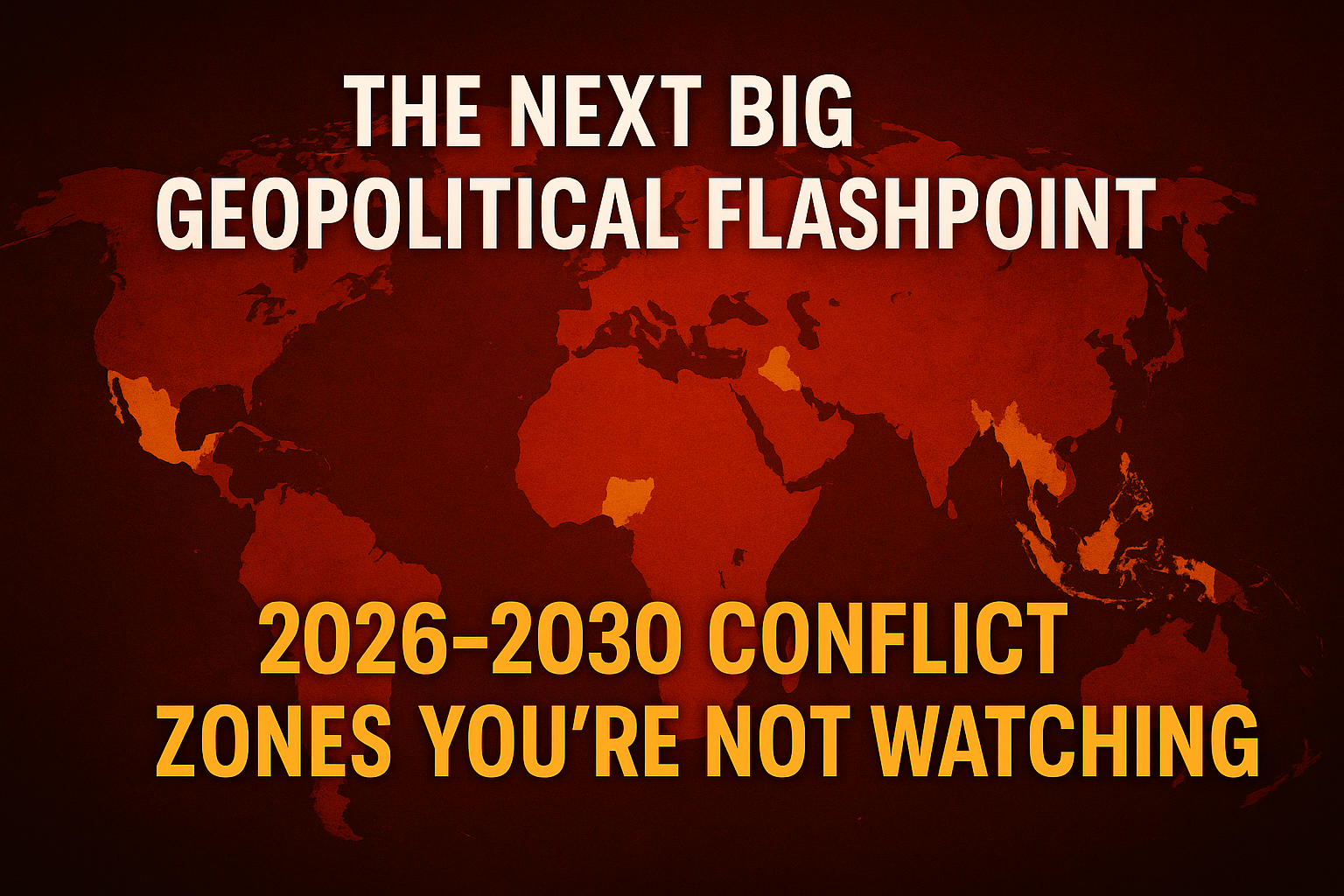
The Next Big Geopolitical Flashpoint: 2026–2030 Conflict Zones You’re Not Watching
Global powers dominate the headlines. But new fires are burning away from the spotlight. Strange alliances, resource fights and climate strains spell trouble in hidden corners of the world. By 2026–2030, these overlooked zones could erupt into the next global flashpoints.

Illegal Migration in the UK: How Recent Policy Moves Could Reshape Border Politics
Britain’s approach to illegal migration is at a crossroads. In late 2025, the UK government unveiled some of the toughest asylum rules in modern history, signaling a dramatic shift in the nation’s border politics. A new asylum overhaul promises to make refugee status temporary and speed up the removal of those who enter the country illegally. Even Prime Minister Keir Starmer, once known as a human rights lawyer, has adopted strikingly hard-line rhetoric – vowing not to “stop the boats” per se, but to “smash the gangs” that smuggle migrants across the English Channel. This hard pivot comes amid record numbers of people attempting the perilous journey to Britain and rising public pressure to regain control of the country’s borders. Recent headlines have been dominated by packed dinghies landing on English beaches, government charter flights poised to deport asylum seekers, and fiery debates in Parliament. The current moment feels like a turning point: how the UK handles illegal migration now could reset not just its immigration system, but also its politics and relationships beyond its shores.

The New US–China Tech Cold War: AI, Chips, and Digital Hegemony
The New US–China Tech Cold War: AI, Chips, and Digital Hegemony