
News & Current Affairs
Timely, sharp coverage of global news and events – elections, foreign policy, economic trends, AI, regulation, and culture – offering clear context, deep insight, and big-picture analysis so you stay ahead of the story, not behind it.

Imminent US Federal Reserve Rate Cut: How Global Markets Are Repricing Risk
Imminent US Federal Reserve Rate Cut: How Global Markets Are Repricing Risk
Investors are now betting heavily that the US Federal Reserve will cut interest rates again in December, forcing a rapid repricing across bonds, equities, currencies and commodities – with big implications for the UK and the rest of the world.

Novichok Poisoning Report Finds Putin Morally Responsible as Victim’s Family Demands Answers
Novichok Poisoning Report Finds Putin Morally Responsible as Victim’s Family Demands Answers
China, France and the Fractured World Order: Macron, Xi and the Push to Overcome Differences
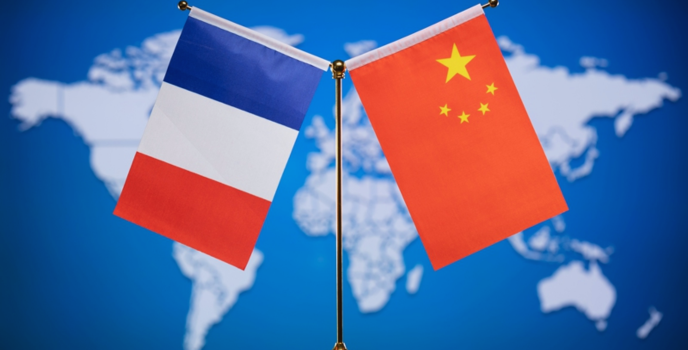
China, France and the Fractured World Order: Macron, Xi and the Push to Overcome Differences

Global Economic Tremors: Manufacturing Slump and Emerging-Market Stress
Global Economic Tremors: Manufacturing Slump and Emerging-Market Stress
Putin Refuses Compromise in Moscow Talks as Ukraine War Grinds On
Putin Refuses Compromise in Moscow Talks as Ukraine War Grinds On

New Epstein Private Island Photos: What the House Democrats’ Release Really Shows
New Epstein Private Island Photos: What the House Democrats’ Release Really Shows

Deepfake Democracy: How AI Could Warp UK, US And Global Elections in the 2030s
Deepfake Democracy: How AI Could Warp UK, US And Global Elections in the 2030s
In early 2024, some voters in New Hampshire picked up the phone and heard what sounded like the US president telling them not to vote in the primary. It was not him. It was a cloned voice, pushed out in a mass robocall, designed to nudge people away from the polls. Months earlier, British voters scrolling social media were served slick video ads of the UK prime minister saying things he had never said. Again, not real. Synthetic faces. Synthetic voices. Real politics.
These early political deepfakes did not appear to swing results. But they showed how cheap, convincing fakes can be aimed at specific voters at key moments. As the UK and US move toward the 2030s, when both countries are likely to face more high-stakes national votes, the worry is simple: what happens when anyone can generate a believable video of any candidate, saying almost anything, and spread it in minutes?
This article explores how deepfake democracy could evolve in the 2030s. It looks at what has already happened in recent election cycles, how regulators in the UK and US are scrambling to respond, and why the biggest danger may not be one big, decisive fake, but a slow corrosion of public trust. By the end, the reader will have a clearer view of the risks, the countermeasures, and the signals to watch as the next decade unfolds.

Luigi Mangione Trial: Fight Over Gun, Notebook and Evidence in UnitedHealthcare CEO Killing
Luigi Mangione Trial: Fight Over Gun, Notebook and Evidence in UnitedHealthcare CEO Killing
David Lammy’s Jury Trial Reforms: What Limiting Juries for Shorter Sentences Means for British Justice
David Lammy’s Jury Trial Reforms: What Limiting Juries for Shorter Sentences Means for British Justice

Why US-China Tensions Are Rising in the South China Sea and the Wider Pacific
Why US-China Tensions Are Rising in the South China Sea and the Wider Pacific

US Suspends Afghan Immigration Requests After National Guard Shooting Near the White House
US Suspends Afghan Immigration Requests After National Guard Shooting Near the White House
Introduction
A quiet lunch hour in downtown Washington turned to panic when gunfire rang out near the White House. Two National Guard soldiers were left in critical condition. Within hours, the incident had triggered one of the most sweeping immigration moves of Donald Trump’s second term.
The US government has now halted all immigration requests involving Afghan nationals, after officials named a 29-year-old Afghan man as the suspect in the attack near Farragut Square. The case is being investigated as a possible act of terror, even as the motive remains unclear.
At stake is more than one criminal investigation. The suspension reaches deep into the heart of America’s post-Afghanistan legacy: its promises to Afghan allies, its approach to refugee protection and its renewed embrace of hardline border controls. This article explains what happened, why Afghan immigration has been frozen, how the decision fits into Trump’s broader agenda, and what it could mean for Afghans and Americans in the months ahead.

Trump Backs Envoy Steve Witkoff After Leaked Calls With Kremlin Over Ukraine Peace Plan
Trump Backs Envoy Steve Witkoff After Leaked Calls With Kremlin Over Ukraine Peace Plan

Ukraine Peace Deal at a Crossroads: Can Trump Shake Off Putin’s Shadow?
Ukraine’s revised peace plan offers Washington a viable path to end the war—but can Trump break free from Putin’s shadow and secure a balanced deal?

Ukraine’s ‘Yes’ to Trump’s Amended Peace Deal: What It Really Means
Ukraine’s ‘Yes’ to Trump’s Amended Peace Deal: What It Really Means
Opening: A Deal on the Table While the War Still Burns
Missiles are still falling on Ukrainian cities, but diplomats are rushing to draft the terms of “peace.” Ukraine has now signaled support for an amended US-backed peace framework, even as Russia threatens to walk away if the deal strays from its preferred terms.
A nearly four-year war, a hard deadline from Washington, and secret talks in Geneva and Abu Dhabi have converged on a single question: can this deal actually end the fighting without locking in a fragile, one-sided peace?

Trump’s Muslim Brotherhood Gambit: What a Terror Designation Really Means
Trump’s Muslim Brotherhood Gambit: What a Terror Designation Really Means
The news broke fast. Cameras caught the moment. The President signed an executive order and handed the pen to his new Secretary of State. The announcement was blunt: the administration is moving to classify parts of the Muslim Brotherhood as a foreign terrorist organization and choke off their funding.
Supporters cheered. Critics warned of blowback at home and abroad. Most people saw the headlines and were left with one question:
What does this actually do?
Trump’s 28-Point Ukraine Peace Plan: Deal, Deadline, or Defeat?
Trump’s 28-Point Ukraine Peace Plan: Deal, Deadline, or Defeat?
Four years into the war, Ukraine’s cities are still under fire and the front line barely moves. Into that exhausted landscape comes a blunt offer: a 28-point peace plan backed by the White House, framed as the fastest way to stop the killing.
There is a catch. If Ukraine refuses, US military aid could be cut off. If it accepts, it would renounce NATO forever, cap its army, and live with the loss of Crimea and much of the Donbas.
Critics in Kyiv and across Europe call it capitulation dressed up as diplomacy. Moscow, by contrast, has welcomed the original draft as a “good basis” for talks.

Trump, Geneva, and the Search for an End to the Ukraine War
Trump, Geneva, and the Search for an End to the Ukraine War
The war in Ukraine has ground on for years. Frontlines move by meters, not miles. Artillery still pounds cities most people in the West can barely find on a map. Into that stalemate, a sudden flash: closed-door talks in Geneva, a controversial 28-point U.S. peace plan, and a promise of a “refined framework” that might—just might—change the course of the conflict.
No one trusts it yet. Everyone is watching it.

Ukraine Peace Talks on Razor’s Edge as World Watches
Geneva, swathed in winter grey, hosted a flash of hope this weekend. US President Donald Trump, back in the spotlight, hinted that “big progress” may have been made in secret talks to end the war in Ukraine. His hardline, 28-point proposal – demanding Ukraine freeze its borders, slash its army and give up land to Russia – has set off alarms worldwide.
President Volodymyr Zelensky and his Western backers slammed the draft as a surrender that shatters basic principles of sovereignty. Yet after intense weekend negotiations, both Kyiv and Washington say they will refine the framework. Now capitals from London to Beijing are weighing what comes next as the shooting continues across Ukraine’s scarred landscape.
Peace talks flash of hope: Trump says “big progress” in Geneva; US and Ukraine announce a refined peace framework.
Controversial terms: The draft calls for Ukraine to cede eastern territory, cut its forces and abandon NATO membership.
Kyiv’s backlash: Zelensky and soldiers call it “capitulation,” warning that giving ground rewards aggression.
Western alarm: EU, UK and NATO leaders urge major changes to protect Ukraine’s sovereignty and security.
Global chorus: Russia awaits a revised plan; China quietly praises any peace effort; Turkey offers to mediate further.
Frontline reality: As talks stall, Russian missiles and drones pummel Kharkiv and Zaporizhzhia, pressing Ukraine’s defenses.
Stakes towering: The outcome could redraw Europe’s map, test international law and shape the future of NATO and global borders.

Europe Pushes Back: EU Counters Trump’s Peace Plan With an 800,000-Troop Cap for Ukraine
Europe has drawn a clear line in Geneva. During a new round of tense peace negotiations, European officials unveiled a counter-offer to the Trump administration’s 28-point peace plan—one that raises the proposed limit on Ukraine’s army and directly challenges Washington and Moscow’s preferred terms.
Ukraine-Russia war live_ Europe…
The European plan caps Ukraine’s forces at 800,000 personnel, rejecting the much lower 600,000 figure floated in President Trump’s draft proposal. Ukraine’s army today stands at roughly 850,000 troops, making it already one of the largest military forces in the world.
Ukraine-Russia war live_ Europe…
This move is more than a numbers debate. It signals Europe’s intent to push back against what many EU lawmakers describe as a dangerously pro-Russian proposal—one that could force Kyiv to cede territory, restrict its defence posture, and limit foreign troop presence inside Ukraine.
Below is a full breakdown of what happened in Geneva, why Europe is resisting Washington’s plan, and what it means for the future of the war.

Europe Pushes Back: How the EU Is Rewriting the US Ukraine Peace Plan
Europe Pushes Back: How the EU Is Rewriting the US Ukraine Peace Plan
Snow fell in Geneva while negotiators argued over commas and red lines.
On paper, it is a peace plan. In reality, it is a power struggle.
A draft US plan for ending the war in Ukraine has met firm resistance from Europe’s big three—Britain, France, and Germany. They have drawn up a counter-proposal that keeps Ukraine stronger, pushes back on territorial concessions, and demands tougher terms on Russian money frozen in the West.
Europeans propose changes to US…
This is not just another diplomatic document. It is a test of how far Europe is willing to go to back Ukraine—and how much control Washington expects to keep over the endgame.