

Trump’s Tariff Threat to Britain Isn’t About Tax — It’s a Power Play That Could Redraw the UK–US Relationship
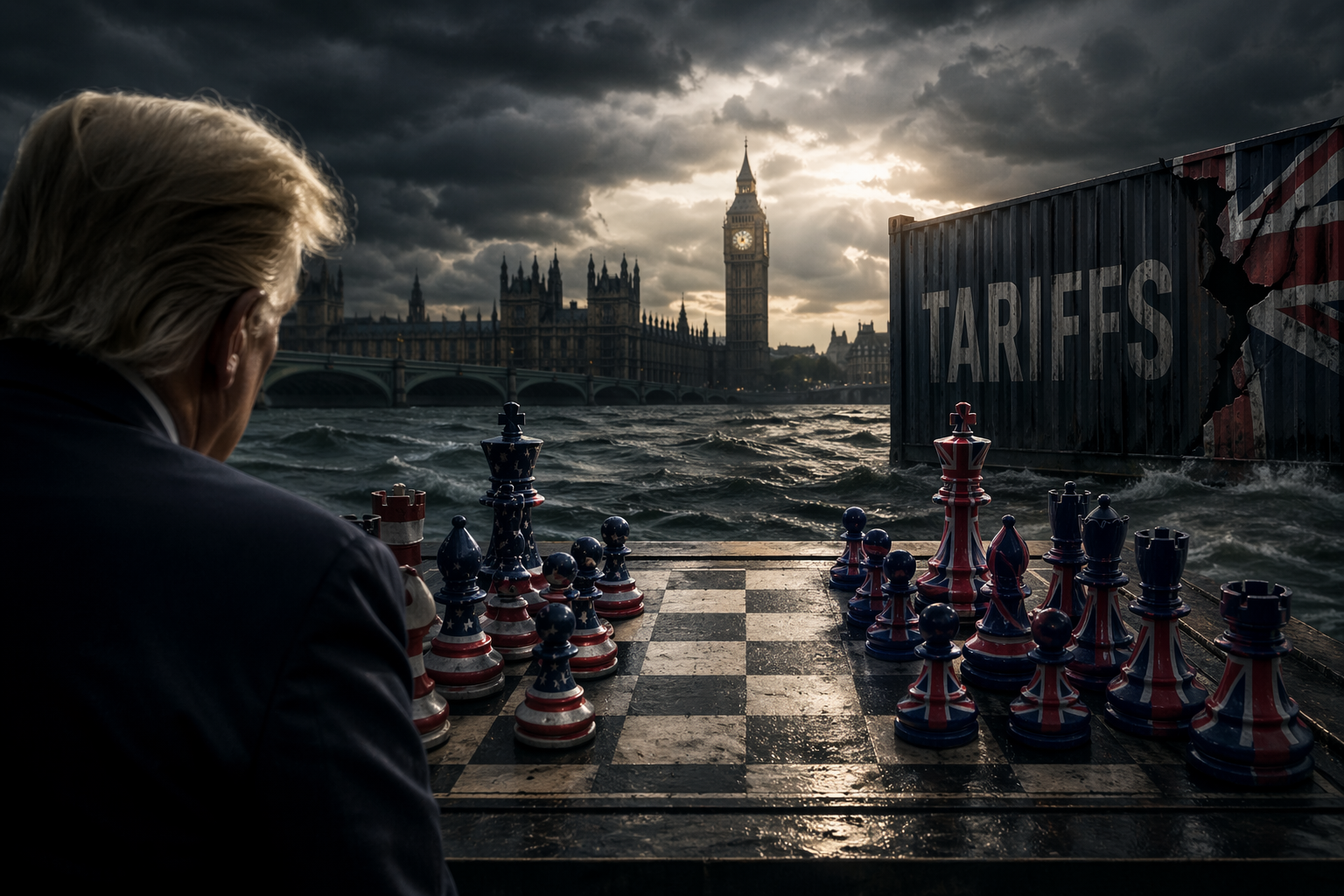
Starmer Under Pressure as US Signals Economic Retaliation
Trump Targets UK with Tariff Threat in Explosive Tech Tax Standoff
The clash over Britain’s tech tax is quickly becoming a test of power, leverage, and political resolve—not just policy
This is not a routine policy disagreement. This serves as a warning.
The United States has signaled it is prepared to hit the United Kingdom with significant tariffs if Britain refuses to scrap its digital services tax—a move framed as retaliation but carrying far broader implications.
At the center of the dispute is a simple number: 2%. That is the levy Britain applies to revenues generated in the UK by large digital platforms — most of them American.
But the scale of the reaction tells you the issue is not really about 2%.
It is about control.
What’s Actually Happening
The UK’s digital services tax was introduced to capture revenue from global tech firms that operate in Britain but historically paid relatively little tax locally.
It applies to companies with significant global and UK revenues— including major platforms in search, social media, and online marketplaces.
From Britain’s perspective, the logic is straightforward:
If value is created in the UK, tax should be paid in the UK.
From Washington’s perspective, it looks completely unique:
A targeted levy on American companies.
That perception is driving the escalation.
The US position is now explicit—if the tax remains, tariffs will follow, potentially set "equal to or greater” than the revenue Britain collects from it.
That is not symbolic retaliation. That is designed to outweigh the policy entirely.
Why This Matters Now
Timing is everything.
This threat lands at a moment when global trade tensions are already elevated, supply chains remain fragile, and economic uncertainty is feeding political risk across markets.
It also comes against a backdrop of increasingly aggressive tariff use by the US, where trade policy has become a frontline tool of economic strategy rather than a last resort.
For the UK, the pressure point is clear:
Drop the tax and lose hundreds of millions in revenue
Keep the tax and risk a direct hit to exports
Reported figures suggest the tax generates roughly £800 million annually.
That number suddenly looks small compared to the potential cost of tariffs on British goods entering the US market.
The Real Story: This Is About Leverage
This is where the surface narrative breaks down.
The dispute is not really about fairness in taxation.
It is about leverage over the global digital economy.
Digital services taxes have been creeping into multiple countries, each trying to solve the same problem: how to tax companies that operate everywhere but are based somewhere else.
From the US perspective, this move creates a dangerous precedent:
If every country taxes American tech firms independently, the global model fragments—and US dominance in the digital economy becomes more vulnerable.
The tariff threat is therefore strategic:
Stop the spread early.
Or it may become too costly to continue.
What Media Misses
The focus on “tech tax vs. tariffs” is too narrow.
The deeper issue is that governments are struggling to adapt taxation systems to a digital economy that does not respect borders—and the largest economy in the world is pushing back hard against any unilateral solution.
This is less about one policy and more about who sets the rules.
If the UK capitulates, it indicates that economic pressure can override national attempts to tax global tech companies.
If it holds firm, it risks triggering a chain reaction of trade retaliation.
Either way, the outcome shapes far more than a single tax.
Starmer’s Position: A Political Trap
For Keir Starmer, the issue is not just economic — it is political.
Holding the tax:
Signals toughness
Aligns with public sentiment on taxing big tech
Risks economic retaliation
Dropping the tax:
Avoids tariffs
Preserves trade stability
Risks looking weak under pressure
There is no clean option.
That is precisely why the pressure works.
What Happens Next
Three paths are now visible:
1. Quiet Compromise
The UK modifies or phases out the tax as part of broader negotiations.
Tensions ease, but the underlying issue remains unresolved.
2. Controlled Escalation
The tax stays.
Tariffs are introduced, but limited in scope.
Both sides signal strength without triggering full-scale conflict.
3. Trade Confrontation
Tariffs escalate beyond symbolic levels.
The dispute expands into a wider trade conflict affecting multiple sectors.
The third path is the least likely but the most dangerous.
The Hidden Consequence
If tariffs are imposed, the impact will not stop at government balance sheets.
It will flow through:
UK exporters
Supply chains
Consumer prices
Investment decisions
Crucially, it will signal that even close allies are no longer immune to economic coercion.
That changes behavior.
The Bottom Line
This is not a technical dispute about tax policy.
It is a test of how far economic power can be used to shape another country’s domestic decisions.
And it raises a sharper question than it first appears:
When the world’s largest economy pushes back, how much independence does any country really have?
