



Biggest Technological Advancements Year by Year from Now to 2040
Biggest Technological Advancements Year by Year from Now to 2040

How AI in Fusion Research Is Speeding Up the Race for Clean Energy
How AI in Fusion Research Is Speeding Up the Race for Clean Energy
AI arms race: OpenAI’s “code red”, Mistral 3 and Runway Gen-4.5
AI arms race: OpenAI’s “code red”, Mistral 3 and Runway Gen-4.5

The Germanium-on-Silicon Breakthrough That Could Turbocharge Future Chips
The Germanium-on-Silicon Breakthrough That Could Turbocharge Future Chips

OpenAI’s A$7 Billion Sydney AI Campus: Why the NEXTDC Deal Matters Far Beyond Australia
OpenAI’s A$7 Billion Sydney AI Campus: Why the NEXTDC Deal Matters Far Beyond Australia

Short-Term Memory Chip Shortage: How AI and Gadget Demand Are Squeezing Supply
Short-Term Memory Chip Shortage: How AI and Gadget Demand Are Squeezing Supply
What If AI Ran the Economy? How Algorithms Could Steer Growth, Jobs, and Power
What If AI Ran the Economy? How Algorithms Could Steer Growth, Jobs, and Power

The AI Oligarchs: How Five Tech Giants Are Quietly Taking Control of the Future
The AI Oligarchs: How Five Tech Giants Are Quietly Taking Control of the Future
A handful of companies are pouring hundreds of billions of dollars into artificial intelligence, building data centers, chips, and models at a scale that rivals national infrastructure programs. Their share prices have driven much of the stock market’s recent gains, and global regulators now warn that an AI-fueled bubble and rising market concentration could threaten financial stability.
These “AI oligarchs” are not science-fiction villains. They are familiar names: Microsoft, Alphabet (Google), Amazon, Meta, and Nvidia. Between them, they dominate the cloud platforms that run the largest models, the chips that power them, and the consumer and enterprise services built on top. In some segments, one company controls as much as 80–90% of the market.
This article explores how these five firms built their position, how their alliances and rivalries shape the next phase of AI, and how policymakers are trying—often awkwardly—to keep up. It also looks at what this concentration means for countries, companies, and ordinary users who increasingly rely on systems they do not control.
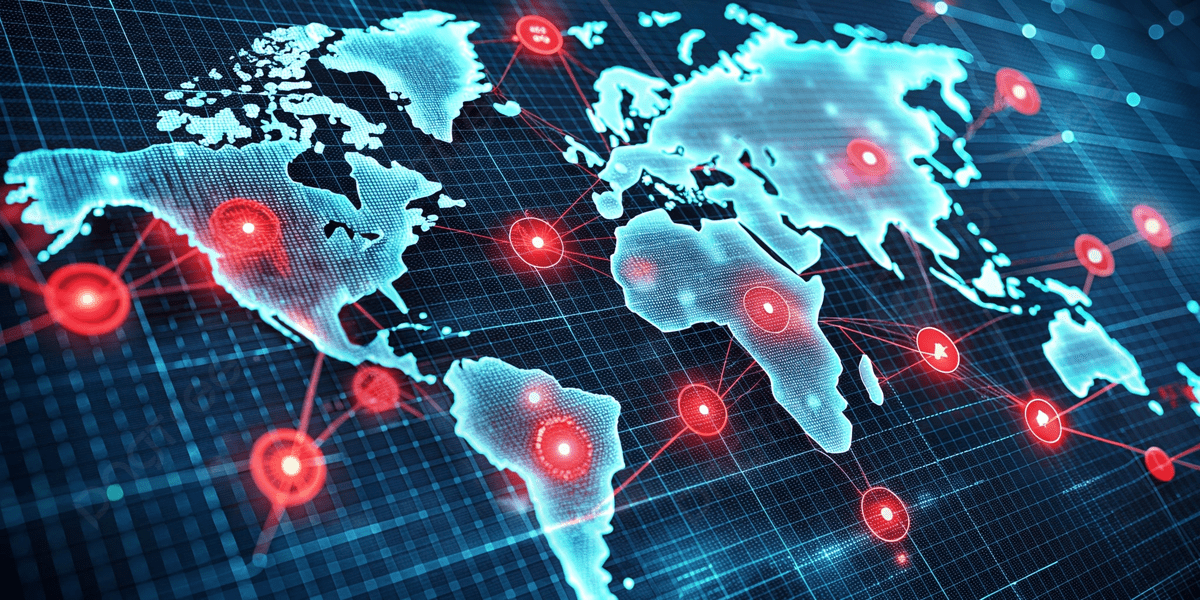
World War Wired: How AI Makes a Global Conflict Possible by 2030
World War Wired: How AI Makes a Global Conflict Possible by 2030
Modern war is already online. In Ukraine and Gaza, algorithms help drones find targets, sift surveillance feeds and guide strikes even when human operators lose contact. At the United Nations, diplomats now debate not just missiles and treaties, but code, data and “human control” over digital weapons.
This is the world that sets the stage for “World War Wired” – a future in which artificial intelligence, cyber tools and autonomous systems do not just support conflict, but shape whether a regional clash spirals into a global one by 2030. Great powers are racing to embed AI into everything from drones and submarines to early-warning radars and nuclear command systems, betting that speed and smarter data will deliver an edge.
The risk is not that machines suddenly “decide” to start a world war. The danger lies in how AI changes human decisions: compressing timelines, amplifying mistrust, and creating new ways for accidents, misread signals or cyber attacks to cascade across borders.
This article explores how AI-driven warfare is emerging today, how it could make a global conflict more likely by 2030, and what might still be done to keep a wired world from stumbling into a wider war.

Smugglers of Silicon: Inside the Black Market for AI Chips
Smugglers of Silicon: Inside the Black Market for AI Chips
In late 2025, prosecutors in the United States charged a small group of traders with secretly shipping high-end graphics processors to China. The chips at the heart of the case were designed to power cutting-edge artificial intelligence systems. They were also on a list of products that exporters are not supposed to send to Chinese buyers without a licence.
The case was not an isolated incident. Over the past three years, export bans and sanctions have turned advanced AI chips into one of the world’s most sought-after contraband goods. A thriving black market now moves processors worth billions of dollars through freight hubs, shell companies and online brokers, despite layers of controls. In China, restricted chips such as Nvidia’s latest data-centre processors can now be bought on a grey market at a steep premium.
This article looks inside that world. It explains how the black market for AI chips emerged, the routes and tricks smugglers use, and why governments are struggling to keep up. It also explores what is at stake for global security, for the chip industry and for the ordinary businesses caught between demand for computing power and the risk of breaking the law
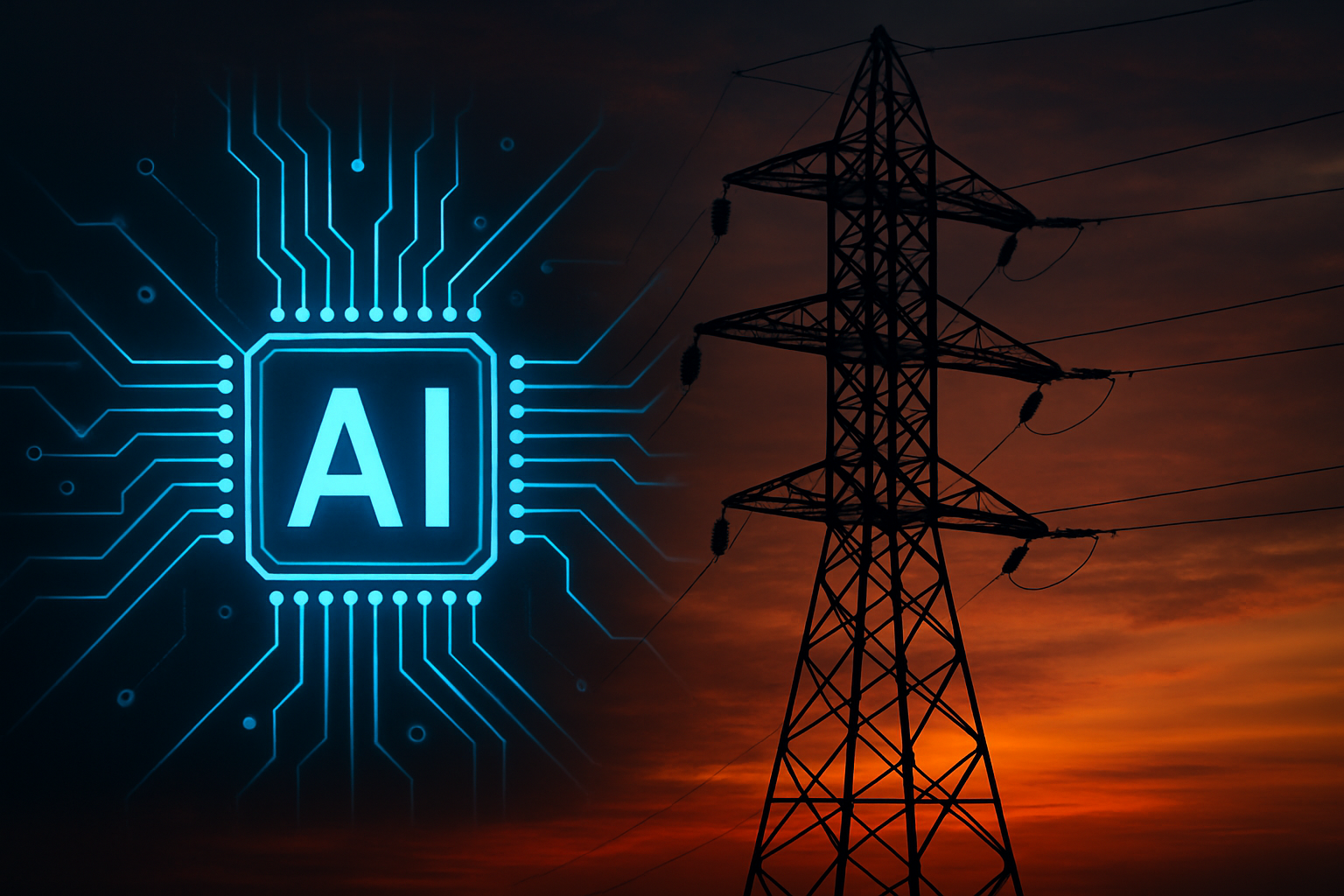
Can AI Survive the Energy Backlash? Why Big Tech Now Needs “Social Permission” to Grow
Can AI Survive the Energy Backlash? Why Big Tech Now Needs “Social Permission” to Grow
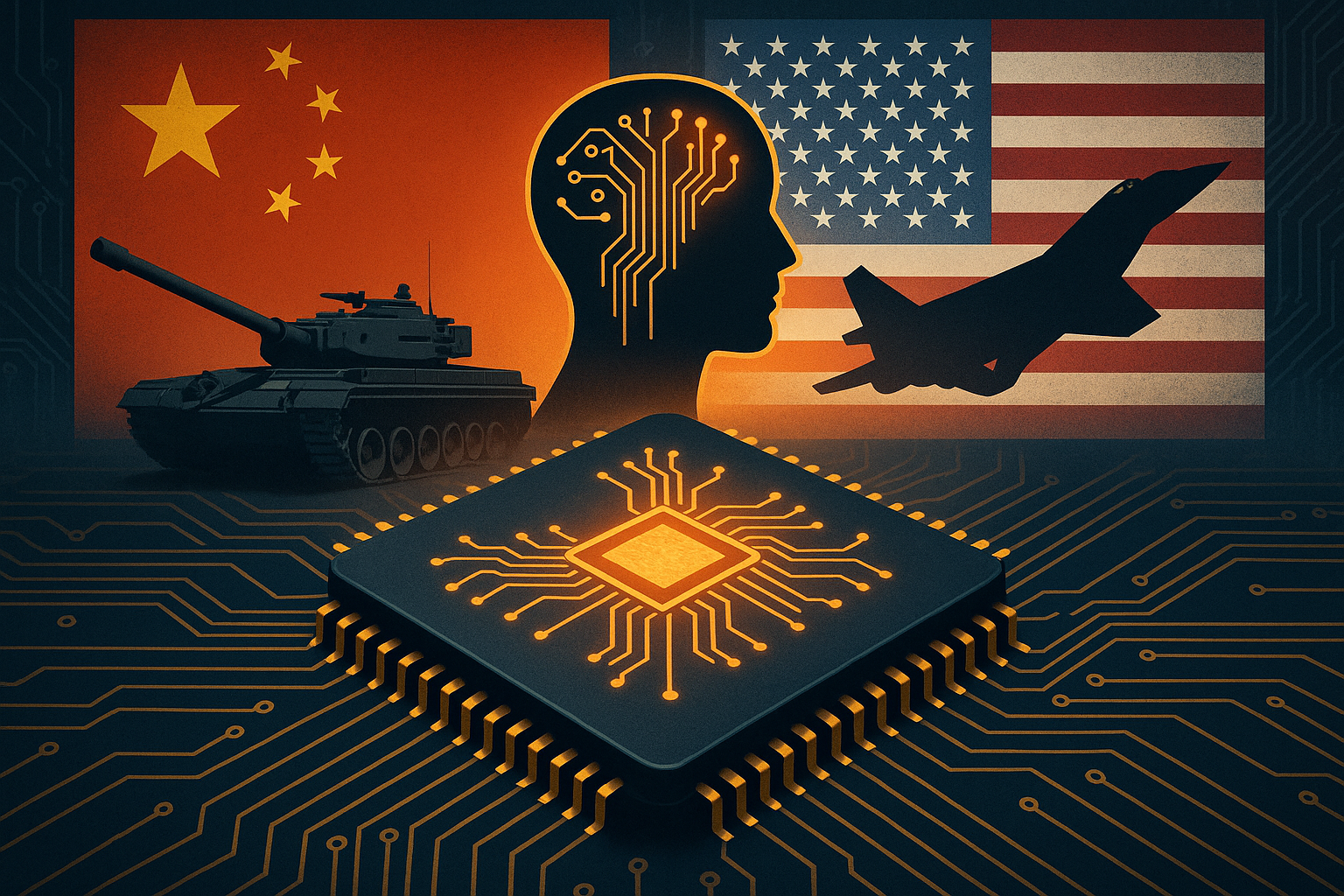
What the Chip War Means for National Security: AI, Military Tech and the Next Cold War
What the Chip War Means for National Security: AI, Military Tech and the Next Cold War

10 Shocking Ways AI Could Collapse Modern Democracy by 2030
10 Shocking Ways AI Could Collapse Modern Democracy by 2030
In the last two years, elections around the world have quietly entered a new phase. Generative systems can now write tailored political messages, produce convincing fake images and audio, and debate humans online with near-expert persuasion. Researchers have already shown that automated systems can match or even beat human debaters when given basic profile data about their audience.

Google AI Engineering Center in Taiwan Marks a New Phase in the Chip Wars
Google’s new AI engineering center in Taiwan boosts TPU hardware, deepens chip supply ties, and puts the island at the heart of the global AI infrastructure race.

AI, Automation and the Universal Income Debate
AI, Automation and the Universal Income Debate
The machines have come for some jobs, and that raises a question: what then? The rise of powerful AI tools – from factory robots to chatbots – is putting routine work at r

Autonomous Systems and Robotics in Daily Life: Evolution and What’s Next
Autonomous Systems and Robotics in Daily Life: Evolution and What’s Next
In a city street at dawn, an autonomous car glides past sleeping storefronts without a driver. In homes, robot vacuums hum gently down silent corridors. This is no longer science fiction. Today’s newsfeeds told of humanoid robots completing a half-marathon in Beijing and drone fleets delivering takeout in urban skies. Machines once confined to factories are creeping into every corner of life.
The revolution is vivid and fast. Driverless taxis are already ferrying passengers in some cities. Smart kitchens use AI to manage groceries, and wearable robots help the elderly up the stairs. These advances feel abrupt but they rest on decades of progress. We’ve reached a tipping point: autonomous systems – from physical robots to intelligent agents – are moving from lab demos to everyday reality.

AI-Designed Life: Synthetic Organisms
In a lab dish this year, a computer program scripted a new virus from scratch. That machine-made virus then turned on drug-resistant bacteria and killed them. It sounded like science fiction, but it’s real. Scientists have taught artificial intelligence to write the code of living things. Now a trend is emerging where computers and biotech are teaming up to program life itself.
The scene isn’t in the distant future – it’s happening now. Across the world, researchers are using AI to design organisms, from viruses that hunt bacteria to microbes that make medicines o

mRNA 2.0: The New Frontier in Cancer and Autoimmune Therapies
mRNA 2.0: The New Frontier in Cancer and Autoimmune Therapies
In labs from Cambridge to Tokyo, messenger RNA is sparking new hope beyond COVID vaccines. In late 2025, the U.S. announced big funding to use mRNA 2.0 tech against cancer and autoimmune disease. Researchers worldwide are racing to write tiny genetic instructions that train our own bodies to heal or stand down. The same platform that helped save millions from coronavirus is now being retuned for diseases once thought incurable. In sharp, vivid terms, mRNA 2.0 promises personalized cancer shots and even novel treatments for autoimmune disorders.

Microbiome and Synthetic Biology: Pioneering the Next Biotech Revolution
Microbiome and Synthetic Biology: Pioneering the Next Biotech Revolution
They live unseen: trillions of bacteria, viruses and fungi swarm inside our bodies, oceans, and soils. In labs today, scientists are rewriting their DNA like lines of code. One recent experiment delivered a capsule into a mouse’s gut and flipped off an antibiotic-resistance gene in nearly all the target bacteria. Suddenly, the invisible world can be engineered.
It sounds like science fiction. Imagine bacteria programmed to shrink tumors, or a probiotic yogurt that flushes fat from your bloodstream. These ideas are no longer fantasy. Researchers have already built microbes that produce insulin or destroy toxins on demand. The microbial world is becoming a playground for engineers.

What Consciousness Looks Like on Other Planets
What Consciousness Looks Like on Other Planets
The sky whispers a secret. In 2025, a space telescope picks up a gas on a distant world that on Earth only life can make. This stirs an ancient question: if we find life, how would it think?
We know our own minds, but an alien mind might be stranger than fiction.