A Tiny Touch, a Big Payoff: How Plants Survive Together
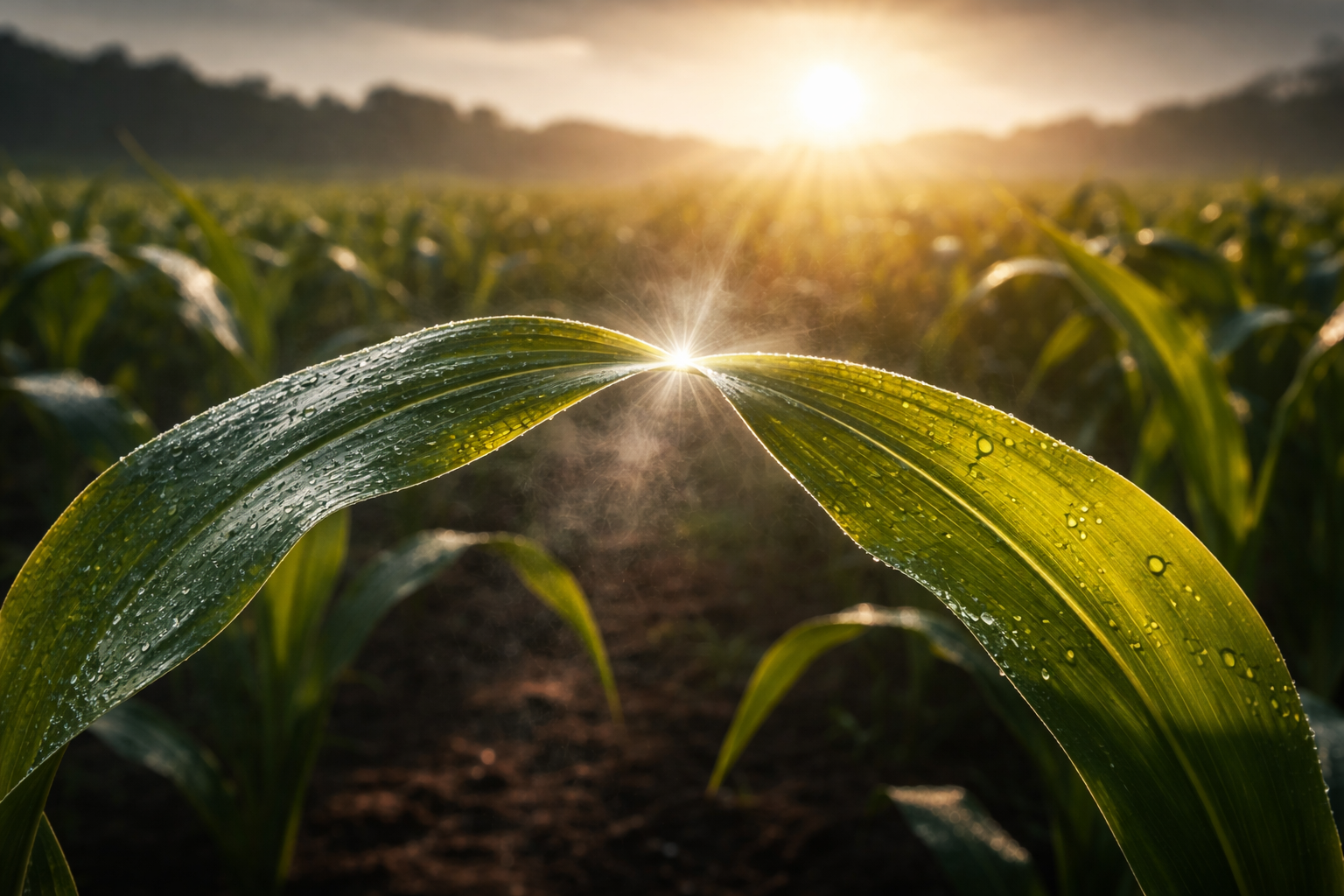
Plants that touch can prime stress defenses against sudden excess light. Here’s the mechanism, what “touch” means biologically, and what it could change for crops.
Plants Don’t Need Words: Touch Builds a Shared Warning Network
Plants can “prepare for trouble” simply by touching a neighbor.
That sounds like a metaphor, but recent experiments in the model plant Arabidopsis suggest physical contact can flip on a community-wide defense mode that makes plants more resilient to sudden excess light stress.
The surprising part is not that plants sense touch. They do. The surprise is what touch accomplishes here: it appears to help plants share an early warning signal, so they activate protective genes before damage cascades.
Agriculture and climate resilience find this technique particularly appealing, as light stress often manifests as a shock, such as a gap in cloud cover, a heatwave day with intense sun, or a canopy shift following wind.
The story turns on whether touch is acting as a simple “we’re in a crowd” trigger that primes shared stress defenses, rather than being a quirky lab-only effect.
Key Points
When plants grow close enough for leaves to touch, they can become more resilient to excess light stress compared with plants grown alone.
The effect looks fast: within about an hour of contact, plants in groups can switch on large sets of stress-response genes tied to multiple threats, not just light.
Evidence points to reactive oxygen signaling, especially hydrogen peroxide, as a key messenger in the touch-linked warning system.
Biologically, “touch” is not one thing: it includes leaf brushing, sustained contact, and small mechanical strains that trigger calcium and oxidative signaling inside cells.
For crops, the practical question is not “pack plants tighter,” but how to capture the priming benefit without raising disease risk, lodging, or competition.
The most actionable takeaway may be design: engineered spacing, varieties, or trellis systems that create controlled contact points while preserving airflow and light distribution.
Background
Plants live in a constant dilemma: they need light to power photosynthesis, but too much light can overwhelm their photosynthetic machinery.
When light input exceeds what a leaf can safely process, electrons back up in the photosynthetic system and trigger oxidative stress. That can damage proteins, membranes, and pigments, reducing growth and yield.
Plants do have protective tools. They can dissipate extra energy as heat, adjust chloroplast function, build antioxidants, and reprogram gene expression to cope.
The twist is that plants also sense neighbors. They detect crowding through changes in light quality (like red/far-red ratios), chemical cues, and mechanical signals. Touch is one of the most direct of these cues.
The newer work under discussion shows that plants grown close enough to touch leaves behaved differently under intense light compared to isolated plants. The group-grown plants showed stronger early defense activation and less damage under the same stress conditions.
Analysis
How Plant “Touch” Works Biologically
“Touch” in plants is best understood as mechanical stimulation.
A leaf doesn’t need nerves to sense it. Plant cells have membranes under tension, rigid cell walls, and mechanosensitive channels that respond when tissue is bent, pressed, or stretched.
When contact happens, several early signals can fire:
Calcium spikes inside cells, often within seconds, act like a rapid alarm that activates downstream responses.
Reactive oxygen species (ROS) bursts, which can be damaging at high levels but act as powerful signals at controlled levels.
Electrical signals and membrane voltage shifts, which can travel quickly and coordinate responses across tissue.
Hormone changes (often involving jasmonates, ethylene, and others), which shape longer-term gene expression and growth decisions.
This is why a light brush, a sustained leaf press, or repeated leaf-to-leaf rubbing can all “count” as touch. They all produce mechanical strain that the plant’s sensor systems translate into chemistry and gene regulation.
What Signal Is Actually Shared Between Plants
In the excess-light case, the key idea is not just that touch changes one plant’s internal state.
It is that touch may create a bridge for signals between plants, so a stress response becomes “community-wide” rather than isolated.
Multiple channels could contribute:
Direct surface transfer of signaling molecules occurs across contacting leaf surfaces, particularly when moisture films form at the contact point.
Small reactive molecules diffuse locally at the boundary between leaves.
Touch-linked electrical coupling occurs at the level of tissue-to-tissue signaling dynamics, facilitating coordinated responses, despite not physically sharing electrons like a wire.
The messenger that keeps showing up in coverage is hydrogen peroxide (H₂O₂).
Hydrogen peroxide is an ROS with a special property: it is reactive enough to matter but stable enough to move and act as a signal. Inside plants, it is widely used in stress signaling, including light stress.
The emerging claim is that when plants touch, hydrogen peroxide becomes part of what spreads the warning, helping neighboring plants switch on defenses before the worst damage occurs.
Timing: Seconds, Minutes, Hours (Why the Clock Matters)
To understand whether this matters in the field, timing is everything.
Light stress damage can escalate quickly. A leaf suddenly exposed to intense sun may experience a rapid spike in ROS and photoinhibition risk.
A useful warning system must therefore operate on short timescales:
Seconds to minutes: mechanosensing and calcium signaling can begin almost immediately after contact.
Minutes to an hour: transcriptional changes can ramp up, turning on defense genes and protective pathways.
Hours to days: structural changes, antioxidant capacity shifts, and longer-term acclimation can follow.
Reports around this work emphasize that plants in contact can activate thousands of stress-related genes within about an hour of touching. If that holds broadly, it is fast enough to matter for real-world light shocks.
It also hints at something important: touch may function as priming, not protection by itself. It is like cocking the trigger. The plant still needs the stress event to fully deploy the defense program, but it is no longer starting from zero.
Costs and Trade-Offs (Because Nothing Is Free)
If touch priming were purely beneficial, evolution would push plants to always behave as if they were touching.
They do not, which suggests trade-offs.
Likely costs include:
Growth penalties: Touch responses often shift resources from growth to defense and can change plant architecture.
Competition signals: Touch can be interpreted as crowding, which can trigger shade-avoidance behaviors in some contexts, potentially reducing yield efficiency.
Disease risk: Denser canopies and more leaf contact can increase humidity retention and pathogen spread, especially fungal diseases.
Lodging and mechanical damage: Tight stands can increase lodging risk in cereals under wind and rain, and repeated rubbing can damage tissues.
So the practical goal is not maximizing touch. The goal is targeted, low-cost priming that improves resilience without inviting new problems.
What Most Coverage Misses
The hinge is this: touch is probably acting as a “crowding proxy” that primes oxidative stress defenses, so the most scalable farming lever may be controlled contact design, not higher planting density.
Mechanistically, that changes the incentive landscape for agriculture. If the benefit comes from priming via mechanical contact and hydrogen peroxide signaling, you could pursue it through canopy architecture, trellis patterns, strip designs, or mixed stands that create strategic touch points while protecting airflow and light distribution.
To confirm this in the coming weeks and months, watch for two signals. First, field or semi-field trials in crops showing the same priming effect under realistic sun, wind, and humidity conditions. Second, look for measurements that connect where leaves touch each other with how hydrogen peroxide behaves and how it activates genes in different crop species, not just Arabidopsis.
What Changes Now
The immediate shift is conceptual: “spacing” stops being only about light competition and disease management.
It also becomes about information flow.
In a warming, more variable climate, farms face more abrupt stress transitions: heat spikes, high light after storms clear, drought stress layered with sun stress, and canopy disruptions from wind.
If touch-based priming is real across species, it suggests new stress-resilience strategies:
Design planting systems that allow brief, periodic contact during high-risk periods without permanent crowding.
Breed or select for varieties that produce strong priming responses without large growth penalties.
Use canopy management to encourage distributed resilience, where stress defenses are activated across a stand rather than only in the most exposed plants.
The main consequence is not that every farm should plant denser, but that crop systems could be engineered to reduce “surprise stress” damage because primed plants respond faster.
Real-World Impact
A greenhouse grower dealing with high midday light spikes could adjust trellising so plants brush lightly at predictable points, aiming to prime defenses without trapping humidity.
A grain producer might look at row spacing and variety architecture not only for yield and airflow but also for whether the canopy structure encourages coordinated stress readiness across plants.
A horticulture operation might use controlled mechanical stimulation as a tool, similar in spirit to how some growers already use airflow or gentle movement to influence plant structure, but tuned for stress resilience instead of just form.
A plant breeder could screen lines for strong, rapid priming responses after mechanical stimulation, selecting for resilience traits that do not require chemical inputs.
The Farm Design Question Behind the Biology
The biology is elegant: mechanical contact triggers fast internal alarms, and those alarms may spread as chemical signals that prime defenses against sudden light stress.
The hard part is translation: agriculture lives in trade-offs. Dense stands can raise disease and competition costs even if they improve resilience.
The fork in the road is whether we treat this as a curiosity about crowded plants or as a design principle for resilient cropping systems.
If follow-on studies show the same effect in major crops under field conditions, the next wave of “climate-smart” farming could include something surprisingly physical: shaping when, where, and how plants touch.
The historical significance of this moment is that it reframes plant resilience as a collective property that can be designed, not just an individual trait to breed.
