

Evolution Is Still Happening. The Stakes Are Health, Power, and Survival
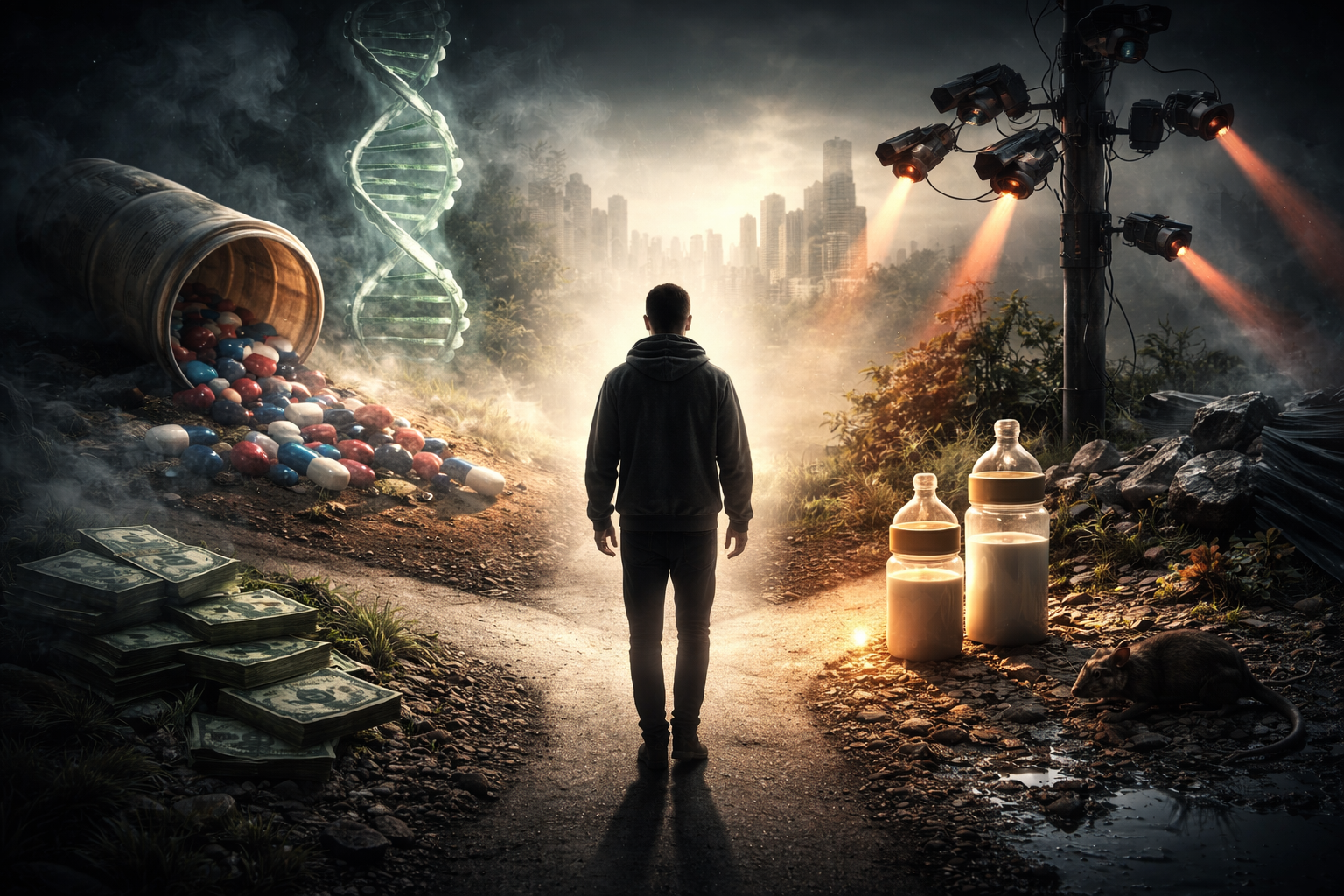
Modern Evolution Today: What Drives Natural Selection Now
The Quiet Forces Steering Evolution Today
Evolution did not stop when humans built skyscrapers, invented antibiotics, or started tracking our lives in spreadsheets.
It changed location.
Instead of predators, the sharpest pressures now often come from policies, economies, institutions, and the environments we have damaged—or redesigned.
The tension is simple: modern life reduces many classic “survival” pressures, but it creates new filters for who reproduces, whose traits spread, and which species cope.
The story turns on whether today’s strongest selection acts more through fertility and pairing than through survival.
Key Points
Selection pressure has moved "upstream."
In many places, the biggest lever is not who dies, but who forms families and has children, and at what age.
Economics and politics shape reproduction
Jobs, housing, benefits, healthcare access, and instability all change life timing and family size, which can shift selection over generations.
Education and career paths rewire mating markets
Education affects who meets whom, when people have children, and how many, making it a major modern filter.
Culture and belief can act like an "environment."
Norms around marriage, contraception, and gender roles can steer reproduction and can feed back into biology over long periods.
Environmental damage drives fast evolution in other species
Cities, warming, pollution, and harvesting create strong selection in wildlife—often on short timelines.
Microbes evolve on the fastest clock
Antibiotic use and health-system gaps select for drug-resistant pathogens, making evolution a present-day public safety issue.
How Evolution Works in Modern Systems
A selection pressure is anything that changes who survives or reproduces more.
Evolution needs three ingredients: differences between individuals, some heritable component, and a consistent advantage over time.
Modern life can blunt selection (by keeping more people alive) while also sharpening it (by changing who pairs up, who has children, and which microbes or animals survive our interventions).
The Systems Quietly Shaping the Next Generation
Money, Politics, and Institutional Selection
The economy and the state shape evolution mainly by shaping life chances and family formation.
When housing is expensive, careers are unstable, or childcare is scarce, people delay children or have fewer. That changes the “reproductive map” of a country: who becomes a parent, at what age, and with what resources.
Politics matters because policy decides the real constraints: access to contraception, fertility care, maternal health, schooling, social safety nets, and migration rules. Those do not change genes directly, but they change the conditions under which genes spread.
Institutions can be especially sharp filters. Prison is a clear case: long sentences remove people from partner markets, disrupt marriages, and alter community sex ratios and relationship patterns. That can shift who forms stable families and when, which can change reproductive outcomes over time (even if the genetic effects are uncertain).
Education, Careers, and Reproductive Timing
Education is not just “knowledge.” It is a sorting system for networks, income paths, and mate choice.
In many modern societies, the strongest differences in reproduction are about timing: later marriage, later first birth, fewer total children, and different partnering patterns. That makes education and career structure a major driver of who reproduces.
Some research also links education-associated genetic signals (polygenic measures) to fertility outcomes, suggesting a potential route by which the education system could indirectly shape genetic patterns—though effects vary by place, time, and social context.
The constraint is obvious: humans have long childhoods and limited fertile windows. When careers demand long training, reproduction competes with credentialing and job security.
Culture, Belief, and Gene–Culture Feedback
Culture changes the environment faster than genes can.
Beliefs about family size, marriage, gender roles, and contraception can rapidly shift fertility patterns within a generation. Those shifts can then persist long enough to matter evolutionarily, especially if they keep changing who has children.
This is one reason “nature versus nurture” is a trap here. Culture is part of nature now. It is an inherited system too—just not genetic inheritance.
Over long periods, gene–culture coevolution can happen when cultural practices consistently reward certain biological traits. We know the logic works historically; the open question is which modern cultural systems are stable enough and strong enough to do the same today.
Environmental Damage and Urban Evolution
For many species, the strongest selection pressures are now human-made.
Cities remake temperature, light, noise, food, predators, and disease exposure. That can drive rapid evolution in urban wildlife, and researchers treat urbanization as a major evolutionary arena.
Climate change can also force populations toward evolutionary rescue (adapt fast or decline), but the pace of change can outstrip adaptation, especially when warming is combined with other stressors like pollution.
Pollution adds a quieter pressure: some chemicals disrupt hormones and reproduction in wildlife (and potentially in humans), changing who reproduces successfully and how.
Then there is direct harvesting. Size-selective fishing can favor fish that mature earlier at smaller sizes, creating evolutionary change that can reduce future yields and resilience.
Technology, Medicine, and Microbes Under Pressure
Medicine blunts many selection pressures in humans.
But it intensifies selection in microbes.
Antibiotics, antivirals, and infection-control gaps create strong incentives for pathogens to evolve resistance. This is evolution on a fast clock, with real-world consequences for hospitals, surgery, and routine infections.
The key constraint is global: resistance spreads through travel, supply chains, and uneven health systems. The same drug can be used carefully in one country and misused in another, and the evolutionary outcome does not respect borders.
The Hidden Mechanism
The hinge: In modern societies, selection is often strongest through fertility and pairing—not survival.
The mechanism is that institutions (education, labor markets, housing, prisons, healthcare, and culture) shape who forms relationships and who becomes a parent, which changes the distribution of traits in the next generation.
Two signposts that would confirm this direction over time are (1) persistent fertility gaps by education, income, or partnering status and (2) the growing influence of policy and technology on who can afford, delay, or access reproduction.
Why This Matters
If you picture evolution as “the toughest survive,” you will miss the modern mechanisms.
The most affected groups are often those facing the tightest constraints: people under economic stress, communities shaped by incarceration or conflict, and populations living in polluted or rapidly warming environments.
In the short term, the biggest consequences show up in health and safety—especially through drug-resistant infections, which raise the risk and cost of care because treatments stop working.
Long term, the consequence is subtler but deeper: societies can unintentionally steer which traits become more common because their institutions decide who reproduces more, not just who survives.
Real-World Impact
A couple in a high-cost city delays having children into their late 30s while they chase stability. Their peers who start earlier end up with larger families, not because they are “fitter,” but because their lives have fewer timing constraints.
In a community where many men serve long sentences, relationships become less stable, and family formation shifts. The institution changes the partner market, and the effects ripple to children and households for years.
A coastal fishing economy notices more small, fast-maturing fish in the catch. Harvest pressure has quietly changed the traits that survive to reproduce, and that can make recovery harder later.
A hospital faces infections that once responded to first-line antibiotics. Treatment becomes slower, riskier, and more expensive as microbes adapt to the drug environment we created.
The World We Build Becomes the Selector
Evolution today is not only about forests and oceans. It is about schools, prisons, cities, clinics, and climate.
The fork in the road is whether we treat these systems as neutral backdrops or as engines that shape life outcomes and reproduction.
Watch the signposts: fertility patterns by education and income, the trajectory of antimicrobial resistance, and whether environmental change outpaces adaptation. These will tell us which pressures are winning.
Future historians may describe this era as the moment selection moved indoors—into the rules, markets, and technologies we chose to live by.
