

Can The Human Heart Regrow Muscle? What The Evidence Actually Shows
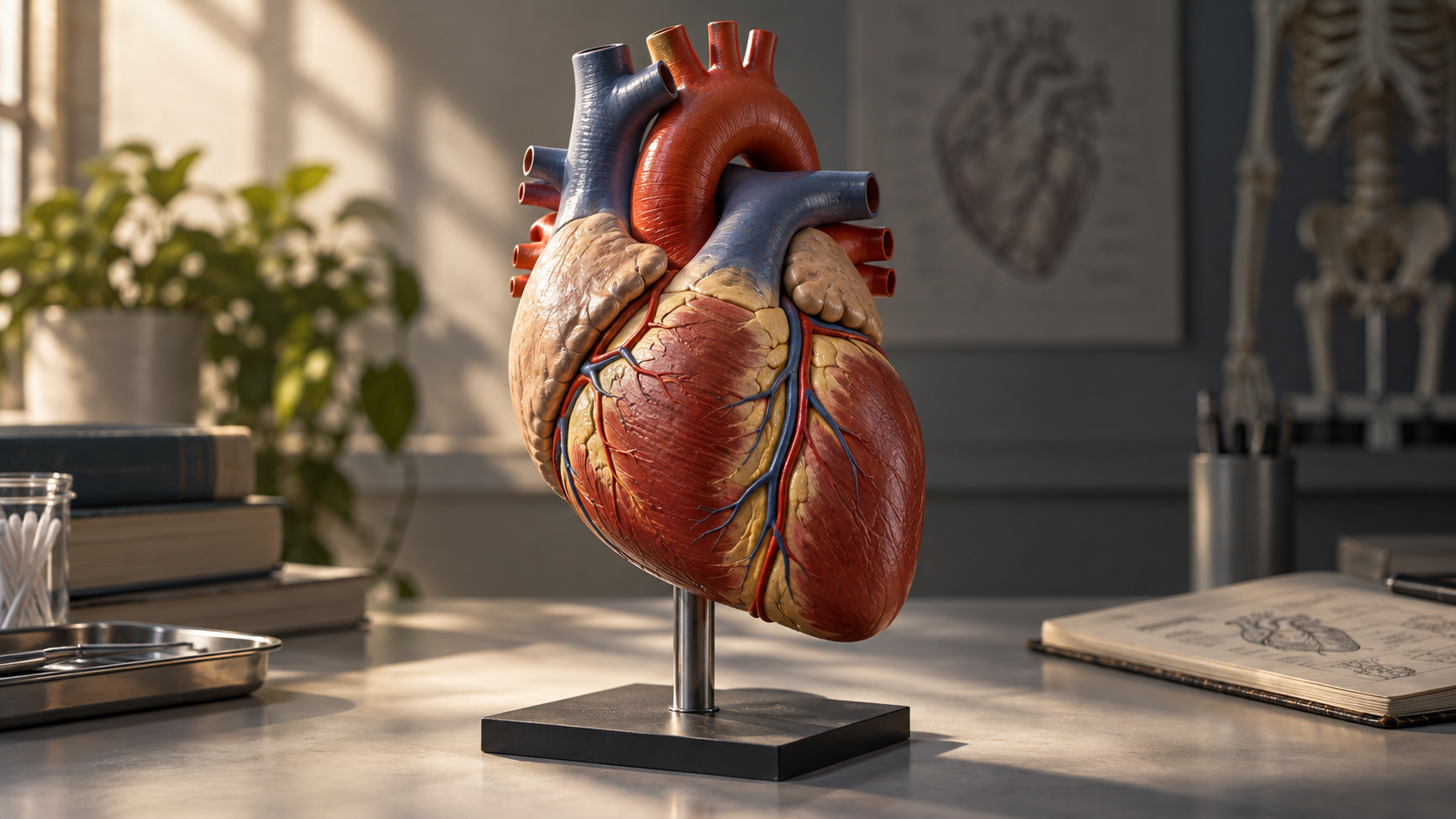
Heart Regeneration: Capacity Is Not Complete Repair
What Heart-Muscle Cell Division Can Tell Us
Evidence of heart-muscle cell division is an important biological finding, but it does not mean a damaged heart fully repairs itself.
The adult human heart has some capacity for heart-muscle cell division, and researchers have reported increased activity after injury. That does not mean the heart can replace all the muscle lost in a heart attack or that a regenerative treatment is ready for patients.
A study by Robert Hume and colleagues helps clarify the question. Its publication record shows an online date of 4 December 2025 and a January 2026 journal issue. September coverage of the work should therefore not be mistaken for a discovery made this week.
What The Study Adds
The paper reports increased mitosis and cytokinesis in adult human heart-muscle cells in response to ischaemia, meaning inadequate blood supply. The researchers used several methods, including tissue analysis and molecular measurements, to investigate the response.
Mitosis concerns division of the cell’s genetic material; cytokinesis concerns the separation of the cell itself. Distinguishing these processes matters when asking whether an observed biological response contributes to new cells.
The authors frame the therapeutic goal as future development: enhancing an intrinsic capacity could potentially support new approaches to cardiac regeneration. That is a research direction, not a demonstrated reversal of heart failure in a clinical trial.
Regeneration Has To Be Large Enough To Matter
A process can exist without being sufficient. Detecting some new muscle-cell formation does not establish that enough cells are produced to replace the damage, integrate with the surrounding tissue and restore useful function.
Consider an illustrative wall with 1,000 damaged bricks. Evidence that ten replacements have been made would refute the claim that replacement is impossible. It would not establish that the wall has been repaired. The analogy captures the difference between biological possibility and an adequate response, without estimating what occurs in an actual heart.
For a treatment, the question extends beyond cell number. The tissue has to contribute effectively to the organ’s work. A measurement at one biological level cannot settle every question at the next.
Why Human Tissue Evidence Matters
Observations in human tissue can test whether a process seen in other models is present in people. That increases relevance, while leaving limits related to sampling, timing and the range of patients represented.
A tissue sample also provides a view of a particular location and moment. It cannot automatically describe the entire organ’s history or predict how every patient would respond to a proposed intervention.
The value of the evidence is strongest when described precisely. It offers a basis for further research into a response that may be enhanced. It does not remove the need to establish how enhancement could be achieved safely.
A Mechanism Is Not Yet A Medicine
Identifying a process creates several possible research questions. Which signals regulate it? Can they be changed selectively? Would an intervention work after different kinds of injury? How would researchers measure useful recovery?
Each question represents work that must be done rather than a detail that can be assumed away. Encouraging cell growth is particularly different from demonstrating controlled, beneficial tissue repair.
A future therapy would need evidence about its intended population, adverse effects and meaningful outcomes. The mere presence of a repair response does not provide a timetable for that development.
How To Read The Headline
“The heart can regrow muscle” is a compressed statement that can invite a much larger inference than the evidence supports. A more useful formulation asks what cells did, under which conditions and whether the response restored function.
The study makes the biological picture more interesting: the adult heart’s response to injury is not adequately described by an absolute claim that no relevant cell division occurs. The clinical picture remains more limited. Establishing a natural response and turning it into effective repair are separate achievements, and the second still requires substantial evidence.
