

Can Scientists Turn Plastic Into Food? The Chemistry Behind The Claim
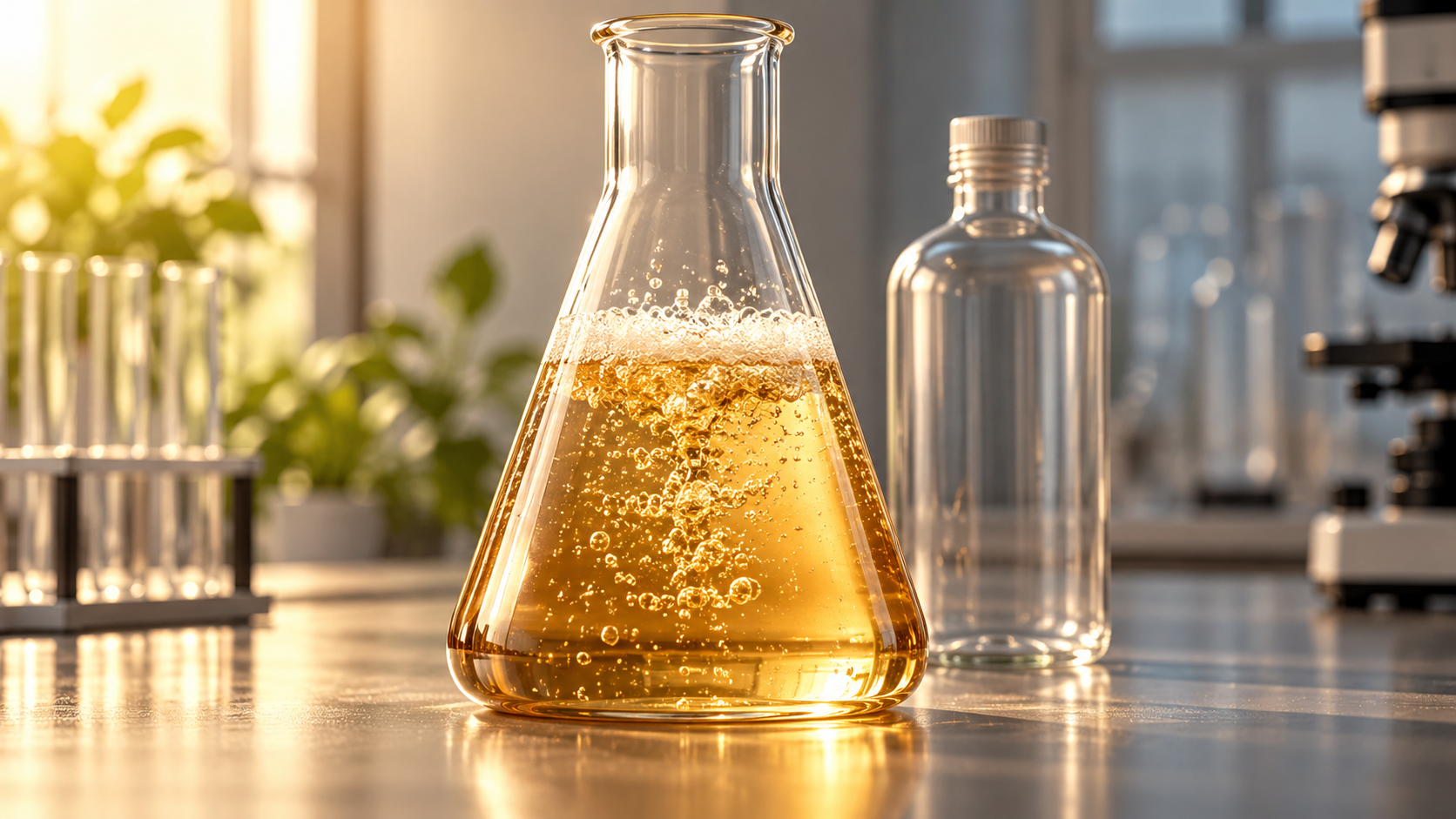
From Waste Feedstock To A Tested Ingredient
Why Plastic-Derived Food Is A Chemistry Question
The idea uses chemical processing and engineered microbes to make new ingredients, rather than adding plastic to ordinary food.
Researchers are exploring whether carbon from waste plastic can become useful food ingredients after chemical processing and microbial conversion. The proposal is not to grind a bottle into flour. It is to break material down, feed suitable compounds to engineered microorganisms and recover different molecules from that process.
The American Chemical Society described work by a Southern Illinois University Carbondale team in August 2026. It was presented as conference research, with further development and assessment still needed. Renewed September coverage should not imply a new consumer product has been approved.
The Starting Material And Final Ingredient Are Different
Chemistry can rearrange atoms into molecules with very different properties. The origin of carbon alone does not determine whether a final substance is nutritious, harmful or suitable for a particular use.
That principle cuts both ways. It explains why a waste-derived ingredient should not be dismissed solely because of its starting material. It also explains why being made by a microbe does not automatically establish safety. The finished composition and the reliability of the process have to be assessed.
A useful everyday comparison is the distinction between a raw material and a manufactured product. Knowing the source helps trace the process, but it cannot substitute for testing the output.
What The Researchers Describe
The ACS account outlines a process that breaks down PET plastic and plant waste into smaller compounds, then uses engineered yeasts to produce ingredients. Those ingredients are combined with additional materials to make experimental snacks called µBites.
This is a multi-stage conversion. Each stage matters because the next depends on what has been produced before it. The final mixture is not simply the original waste in a more appealing shape.
The research team’s potential applications include environments where food supply is constrained. That provides a reason to investigate unusual feedstocks without establishing that the approach is economical or desirable for every food market.
Safety Is A Property Of The Whole Process
A credible assessment would need to examine the intended ingredients and possible unwanted residues. Consistency is equally important: a clean result from one controlled batch cannot establish that variable waste streams will always produce the same output.
Suppose a hypothetical feedstock contains an unexpected additive. The process needs either to exclude it, remove it or demonstrate that it cannot create an unacceptable final residue. Merely showing that the main polymer is transformed would not settle that question.
These are assessment questions, not evidence that the experimental snacks are harmful. They explain the work needed to move from a chemistry demonstration to a food product people can rely on.
Nutrition And Practicality Are Separate Tests
An ingredient can be safe without supplying a balanced diet. A nutritious product can still be impractical if it requires too much energy, equipment or processing time for its intended environment.
The strongest comparison would consider the whole production system against alternatives. For a remote mission, storage life and resupply constraints may matter greatly. For a supermarket product, cost, taste and dependable manufacturing may dominate.
There is no contradiction in a technology being useful for one setting and unattractive in another. The intended use should determine the benchmark.
What Would Justify A Stronger Claim?
Published methods, transparent composition and safety data, repeatable production and appropriate evaluation for the intended use would move the case forward. A taste test, if conducted, would answer an acceptability question; it would not replace safety or nutritional assessment.
The current interest lies in the conversion route and the effort to make something useful from difficult feedstocks. The work should be described at that stage. It demonstrates why “plastic into food” is a chemistry question worth investigating, while also showing how much information the headline leaves out.
