

Prions Explained: How Misfolded Proteins Can Cause Disease
Why Prions Are Difficult To Inactivate
The Difference Between Inherited, Sporadic And Acquired Disease
Prion diseases show how a protein’s shape can help propagate damage, without the disease-causing agent carrying its own genome.
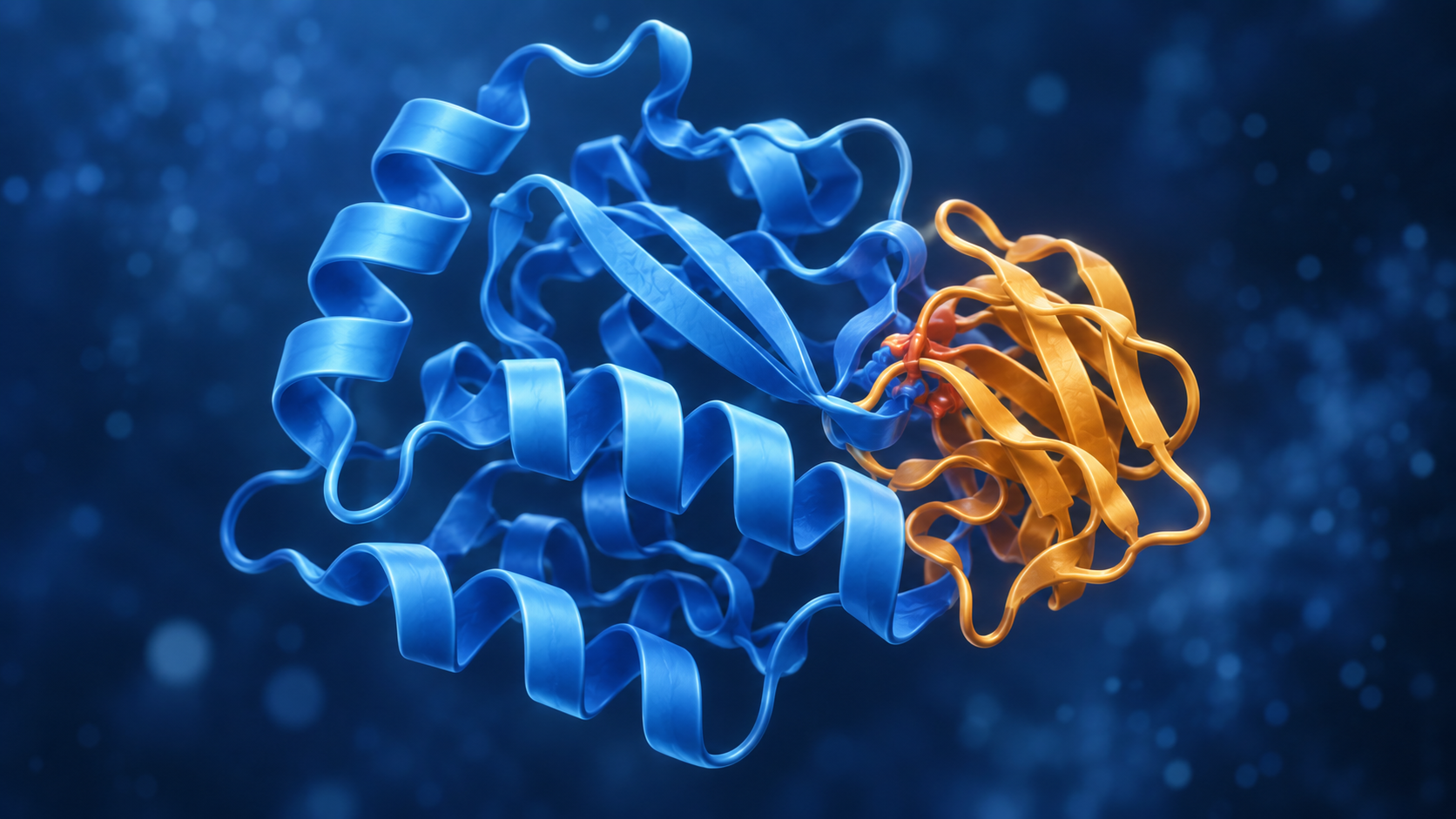
A protein is not merely a string of ingredients. It is also a structure. Fold the same chain differently and its behaviour can change.
Prion diseases take that principle into unsettling territory. An abnormal form of a protein can encourage other copies to adopt an abnormal form, helping a damaging process spread through tissue. The agent does not need its own DNA or RNA in the way a bacterium or virus does.
That does not mean every misfolded protein is infectious, or that prion diseases spread through ordinary social contact. Human prion diseases are rare, and the most common form usually occurs without a known external exposure.
The important questions are how this form of propagation works, why the brain is vulnerable, and why several diseases with similar names must be kept distinct.
Why Protein Shape Matters
Cells build proteins from chains of amino acids. The sequence influences how a chain folds, and the resulting three-dimensional structure helps determine what the protein can do.
Some proteins act as enzymes. Others provide support, transport substances or help cells communicate. Their useful behaviour depends on more than their chemical ingredients considered separately.
A simple analogy is a sheet of paper folded into different structures. The material can be the same while the resulting shape behaves differently. Biological proteins are vastly more complex, and the analogy does not explain their chemistry, but it helps separate sequence from conformation: the arrangement the molecule adopts.
Cells have systems for assisting folding and dealing with damaged or unwanted proteins. Misfolding is therefore not automatically a catastrophe. The difficulty arises when abnormal forms persist, accumulate or interfere with normal cellular processes.
Prion biology concerns a particularly consequential kind of persistence. An abnormal arrangement can help promote similar changes in other molecules of the relevant protein.
What Is A Prion?
The normal cellular prion protein is commonly called PrP. It is produced by the body, including in the nervous system. Its normal biological functions remain an area of research.
Disease-associated forms of this protein can participate in a self-propagating process. They interact with compatible protein molecules and favour the formation of further abnormal structures. Aggregates can grow, and fragmentation can create additional sites from which growth continues.
The word “replication” needs care here. A prion does not reproduce by dividing like a bacterium. Nor does it carry a separate genetic instruction set that tells a cell to manufacture a virus.
Instead, propagation involves the host’s protein and a change in its organisation. The supply of normal protein provides material from which additional disease-associated structures can form.
Stanley Prusiner’s work helped establish the protein-based explanation for these agents, challenging the expectation that an infectious agent must contain its own nucleic acid. Later research has examined the molecular structures and biological conditions that make propagation possible.
This is a major scientific idea, but the shorthand “a protein that infects proteins” can conceal important limits. Compatibility matters. The particular protein, its sequence, the abnormal structure and the biological environment all influence what happens.
Why This Does Not Break Biology’s Rules
Prions are sometimes described as if they overturn the relationship between genes and proteins. They do not eliminate it. The host still needs genetic instructions to make the normal protein.
What changes is the recognition that biologically important information can also be carried in a molecular arrangement. A structure can influence the structure adopted by additional molecules without encoding a new amino-acid sequence.
The distinction is between producing the material and organising it. The host makes the protein; the abnormal form helps direct a harmful configuration of that protein.
Calling this “life without DNA” is therefore misleading. Whether a prion should count as alive is a definitional debate, not the mechanism that makes the disease understandable. Its dependence on host biology is central.
How The Brain Becomes Damaged
Prion diseases are associated with progressive damage to the nervous system. Abnormal protein accumulation, disrupted cellular functions and loss of neurons contribute to the clinical picture.
The term “spongiform” refers to microscopic changes that can give affected brain tissue a sponge-like appearance. It should not be imagined as a brain literally transforming into a household sponge. The description concerns the appearance of tissue under examination.
The relationship between protein aggregates and toxicity is more complicated than a simple claim that every visible deposit kills the nearest cell. Researchers investigate which molecular forms are harmful and how changes at the level of proteins produce failure across neural systems.
That distinction matters for treatment. Removing one visible feature would not necessarily reverse damage if the most harmful process occurred earlier or involved other molecular forms.
Symptoms can include rapidly progressive cognitive difficulties, problems with movement and coordination, and other neurological changes. The pattern varies by disease and individual. These are not symptoms from which a reader can reliably diagnose a rare condition without specialist assessment.
The seriousness of the diseases is clear. Once symptomatic human prion disease develops, it is progressive and currently fatal. Supportive care can still address symptoms and the needs of patients and families, even though no established cure reverses the underlying disease.
The Different Routes To Prion Disease
The same broad molecular process can arise through different routes. Keeping those routes separate prevents a common misunderstanding: that every patient must have acquired the disease from contaminated food or another person.
Sporadic Disease
Most classic Creutzfeldt–Jakob disease, usually shortened to CJD, is sporadic. It occurs without a recognised inherited cause or identified source of transmission.
“Sporadic” describes that pattern of occurrence. It does not mean researchers can explain precisely why the process began in each patient. The initiating events remain incompletely understood.
Because sporadic CJD is the most common form, a discussion focused only on food scares gives a distorted picture of human prion disease. The dramatic acquired cases are historically important, but they are not the whole category.
Inherited Disease
Some prion diseases are associated with pathogenic variants in the PRNP gene, which provides instructions for the prion protein. In these families, a genetic change can substantially alter risk.
Inheritance and infectious propagation are different parts of the explanation. A person may inherit a variant that makes a harmful protein process more likely; the abnormal protein can then propagate within the body.
Family risk depends on the particular variant and clinical context. A broad article should not convert the existence of inherited disease into a prediction for a reader or their children. Genetic counselling and specialist interpretation are important because family history, testing and uncertainty carry practical consequences.
Acquired Disease
Rare cases have resulted from exposure to infectious material. Historical examples include particular medical products or procedures and the food-chain exposure associated with variant CJD.
The route and material matter. A disease capable of transmission under specific conditions is not necessarily transmitted through the everyday interactions that spread a respiratory virus.
The NHS distinguishes CJD from infections passed through ordinary contact. Caring for someone, speaking to them or sharing a room does not make prion disease behave like influenza.
That distinction protects patients from unnecessary isolation and families from an additional burden created by an imprecise use of the word “contagious”.
Why Classic CJD And Variant CJD Are Different
Classic CJD and variant CJD have similar names but different epidemiological histories. Variant CJD was recognised in the UK in 1996 and linked to the agent responsible for bovine spongiform encephalopathy, or BSE, in cattle.
The link made food production and animal feeding practices central to the public-health response. Preventing infected material from entering feed and the human food chain became a different task from understanding the spontaneous cases of classic CJD.
The distinction also affects how people interpret risk. A headline about CJD should not automatically be read as evidence of a new BSE food-chain event. The particular form and the evidence for its origin must be established.
Incubation periods can be long. Exposure and recognised illness may therefore be separated by years, making surveillance and causal investigation difficult.
A long incubation period is not a countdown that allows anyone to predict an individual’s future illness from an uncertain historical exposure. It describes a feature of disease development across documented cases and experimental work.
The BSE history also shows how a biological agent can be amplified by a production system. Understanding the protein was necessary, but so was identifying how practices moved infectious material between animals and potentially towards people.
Why Prions Are Difficult To Inactivate
Prions can be unusually resistant to procedures that are effective against many bacteria and viruses. Their resistance is a major reason medical infection-control guidance treats relevant tissues and instruments with particular care.
This does not mean prions are indestructible. It means that ordinary assumptions about sterilisation cannot simply be transferred to them.
A method designed to disrupt a microbial cell or damage a viral genome may not address a resistant protein structure in the same way. The material involved, the level of contamination and the treatment conditions all matter.
For a general audience, the practical distinction is between specialist infection control and everyday hygiene. The existence of demanding hospital protocols does not imply that routine contact with a patient creates the same exposure as an instrument contacting high-infectivity tissue.
Nor does resistance justify improvised household experiments. Decontamination protocols are technical procedures applied in defined settings, not recipes to be inferred from a popular-science article.
The broader scientific lesson is that “germ” is too broad a category to determine how an agent behaves. Its physical and biological properties decide which controls work.
What About Chronic Wasting Disease?
Chronic wasting disease, or CWD, affects deer and related animals. Its spread has prompted concern about wildlife health and possible exposure through infected animals.
The CDC’s February 2026 overview reported no identified human cases of CWD. That is an important observation, but it is not proof that cross-species transmission could never occur.
Species barriers are biological obstacles, not universally impenetrable walls. Differences in protein sequence and structure can make propagation less efficient or prevent it under particular conditions. The strength of a barrier can vary with the prion strain and the species involved.
The BSE experience provides a reason to investigate potential cross-species risks carefully. It does not establish that every animal prion disease will reproduce the same human outcome.
Responsible reporting therefore keeps two statements together: human CWD has not been established, and public-health agencies continue to study the possibility and advise on avoiding exposure to infected animals.
Calling CWD a confirmed human epidemic would be false. Treating the absence of recognised cases as the end of the scientific question would be premature.
Are Alzheimer’s And Parkinson’s Diseases Prion Diseases?
Researchers sometimes use “prion-like” to describe aspects of protein misfolding and spread studied in other neurodegenerative diseases. The comparison concerns mechanisms such as templated aggregation.
That terminology does not make all these diseases equivalent to classic transmissible prion disorders. Similarity in one molecular process does not establish identical causes, routes of transmission or risks from everyday contact.
Scientific language can become alarming when a technical analogy is stripped of its scope. A finding that a protein can seed aggregation under experimental conditions is different from evidence that a disease commonly passes between people.
The useful question is what the experiment actually demonstrated: which protein, in what preparation or organism, through which route, and with what outcome?
This discipline allows researchers to borrow useful ideas across disease fields without turning every shared mechanism into a claim of shared epidemiology.
Why Treatment Is So Difficult
A treatment must do more than interact with an abnormal protein in a test tube. It has to reach the relevant tissues, act at a useful stage of disease and produce a meaningful benefit without unacceptable harm.
The timing problem is severe. If a long silent process precedes rapid clinical decline, substantial damage may already exist when the disease is recognised. Preventing further propagation and restoring lost function are different challenges.
Researchers investigate approaches including reducing the availability of normal prion protein and interfering with harmful forms or their spread. Experimental promise must be separated from demonstrated patient benefit.
A laboratory result, an animal study and a successful human trial are different steps. None should be presented as a cure merely because the proposed mechanism is persuasive.
Rare diseases create additional practical challenges for trials: small patient populations, variation between forms and the need to detect meaningful changes over limited time. These difficulties do not make progress impossible, but they explain why plausible ideas can take a long time to become established treatments.
Why A Long Incubation Period Complicates Research
When exposure and symptoms are separated by years, a present-day diagnosis may require investigation of events far in the past. Medical records may be incomplete, procedures may have changed and an exposure shared by several people may not initially be recognised as relevant.
This makes surveillance more than a count of current patients. Patterns in age, clinical presentation, family history and past treatment can help researchers distinguish different routes to disease.
Long delay also affects prevention research. If a treatment is intended to act before symptoms, a study needs a credible way to assess whether it is changing the disease process without waiting indefinitely for clinical outcomes.
A biomarker can help, but only if its meaning is established. Lowering a laboratory measurement is not automatically the same as preventing illness. Researchers must connect the marker with the biological process and the outcome that matters to patients.
The challenge illustrates a wider distinction in medicine: detecting a process, predicting a person’s future and proving that an intervention changes that future are separate achievements. Prion research needs progress at all three levels.
What Prions Have Taught Science
Prions made the shape of a protein central to a new understanding of biological propagation. The host’s own material could participate in a process whose harmful organisation helped reproduce itself.
That discovery did not make every misfolded protein dangerous or every prion disease easily transmissible. It required scientists to become more precise about the difference between sequence, structure, infection, inheritance and disease.
Those distinctions also make the subject less mysterious for readers. Prions are unusual, but they are investigated through ordinary scientific questions: what changes, how is that change transmitted, which experiments support the explanation, and where does the evidence stop?
The unsettling feature is real. A molecule’s arrangement can become part of a self-propagating disease process. Understanding that arrangement is also what gives researchers a route towards preventing the damage it causes.
Further Evidence
Disease categories, rarity, clinical seriousness and CWD status.
CDC: About Prion Diseases — 20 February 2026.
Folding, sporadic/inherited/acquired routes and ordinary-contact distinction.
NHS: Causes of Creutzfeldt–Jakob disease — Page checked September 2026; historical surveillance figures not reused.
Mechanistic review; public abstract used.
Aguzzi and Calella: Prions—protein aggregation and infectious diseases — 2009.
Molecular basis and the research approach to prevention.
Eric Minikel: Research background — Undated author page; checked September 2026.
