

The Longevity Race Is No Longer Science Fiction — It Is Becoming A Billion-Dollar Battle Over Human Time
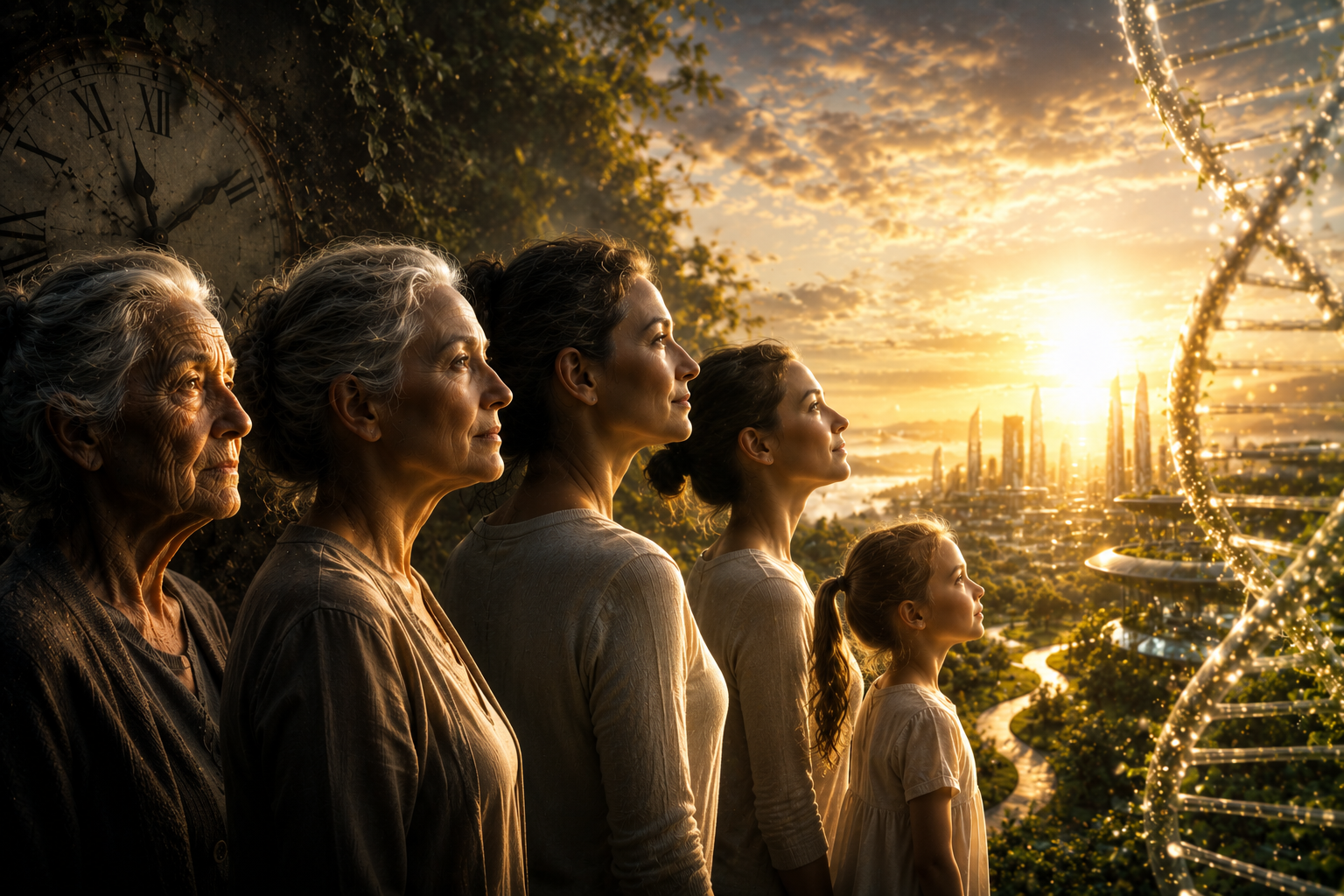
The Scientists Trying To Turn Back The Human Biological Clock
The Race To Reverse Ageing: Could Science Make Old Age Optional?
For most of human history, ageing has been treated as a fact of existence. You are born, you grow, you mature, and then the body gradually loses its ability to repair itself. Medicine has traditionally stepped in only after the damage becomes visible: cancer, dementia, heart disease, frailty, organ failure, arthritis, immune decline.
Longevity science asks a more dangerous question. What if those diseases are not separate accidents, but downstream symptoms of the same biological collapse? What if medicine has spent centuries fighting the fires while ignoring the slow electrical fault running through the whole building?
That is why reverse-ageing research has become one of the most consequential scientific fields of the century. The promise is not simply more birthdays. The real prize is extra healthy time: more years with strength, memory, movement, independence and identity still intact. That is a different ambition from immortality, and it is far more serious.
The field is still early, messy and full of overclaiming. But the direction of travel is unmistakable. Ageing is no longer being treated only as a natural decline. It is being studied as a biological process made of mechanisms, signals, failures and repair systems. Once something becomes mechanistic, science starts asking whether it can be slowed, interrupted, measured or reversed.
Why Humans Age In The First Place
Ageing is not caused by one switch hidden inside the body. It is a pile-up of damage, miscommunication and failed maintenance across billions of cells. DNA accumulates errors. Telomeres shorten. Proteins misfold. Mitochondria become less efficient. Stem cells lose power. Immune signals become noisier. Cells that should die linger in the body and spread inflammatory signals.
The classic scientific framework describes ageing through overlapping biological hallmarks, including genomic instability, telomere attrition, epigenetic alterations, loss of proteostasis, deregulated nutrient sensing, mitochondrial dysfunction, cellular senescence, stem cell exhaustion and altered communication between cells. Later updates have added further pressures such as chronic inflammation, disabled autophagy and disruption in the microbiome. Ageing is less like one broken cog and more like a whole machine drifting out of coordination.
That complexity is exactly why the field is both thrilling and frustrating. A simple anti-ageing pill is unlikely because ageing is not simple. But the fact that ageing has multiple mechanisms also means there are multiple possible intervention points. Scientists do not need to solve the whole machine at once to make meaningful progress.
The key distinction is between chronological age and biological age. Chronological age is how many years have passed since birth. Biological age is how old the body appears to be at a molecular, cellular and functional level. Two people can be 70 on paper, while one has the immune system, muscle strength and metabolic profile of someone much younger. That gap is where the longevity race begins.
The Body Has Clocks Hidden Inside Its Cells
One of the most important shifts in longevity science is the rise of biological ageing clocks. These systems use molecular patterns, especially DNA methylation, to estimate how old tissue appears biologically. They are not perfect crystal balls, and some scientists warn that clocks can be overinterpreted. But they give researchers something medicine desperately needed: a way to measure ageing before waiting decades to see who becomes sick or dies.
Epigenetics matters because every cell contains essentially the same DNA, but different cells read different parts of it. A neuron, a skin cell and a liver cell are not different because they possess totally different genetic libraries. They are different because they activate and silence different instructions. Ageing appears to disturb that reading system.
This is where the idea becomes radical. If ageing partly reflects corrupted cellular instructions, then perhaps some aspects of ageing could be corrected by restoring a younger pattern of gene expression. That does not mean wiping a person back into infancy. It means asking whether old cells can be reminded how to behave more like healthy younger cells.
Telomeres tell another part of the story. They act like protective caps at the ends of chromosomes, helping preserve genetic stability during cell division. As cells divide, telomeres can shorten, and when they become critically short, cells may stop dividing or enter dysfunctional states. But telomeres are not the whole story. Some long-lived people do not simply have magic telomeres, and forcing cells to divide endlessly can raise cancer concerns. Longevity science is powerful because it sits on that knife edge: repair too little, and ageing continues; push repair too hard, and the body may lose control.
Cellular Senescence Is Ageing’s Zombie Problem
Cellular senescence is one of the clearest examples of ageing as both protection and threat. A senescent cell is a cell that has stopped dividing, often because it has detected damage or stress. In the short term, that can protect the body from cancer by preventing damaged cells from multiplying. In the long term, senescent cells can accumulate and release inflammatory signals that poison the tissue around them.
That is why senescent cells are sometimes called zombie cells. They are not fully dead, but they are no longer properly alive in the service of the body. They linger, signal distress, disrupt repair and help create the low-grade inflammation associated with ageing.
Some longevity strategies aim to remove these cells using senolytics, drugs designed to selectively clear senescent cells. The idea is elegant: remove the toxic cellular debris and allow tissues to function better. In animal studies, senescence has become one of the most important targets in the wider anti-ageing field, although translating that safely into humans remains a serious challenge.
The danger is that senescence exists for a reason. Cells enter senescence partly to prevent cancer. Any intervention that tampers with the body’s damage-control systems has to be precise. Longevity medicine is not just about making cells younger. It is about making them younger without making them reckless.
Yamanaka Factors Turned Ageing Into A Reprogramming Problem
The most dramatic idea in reverse ageing comes from cellular reprogramming. In 2012, Shinya Yamanaka and John Gurdon were awarded the Nobel Prize for discoveries showing that mature cells could be reprogrammed back toward a pluripotent state, meaning a more flexible, stem-cell-like condition. The key Yamanaka factors — commonly known as Oct4, Sox2, Klf4 and c-Myc — changed the way scientists thought about cellular identity. Mature cells were not as fixed as they once appeared.
The terrifying part is that full reprogramming is not the goal inside a living human body. If you push cells too far back, they may lose their identity. A skin cell should not forget it is a skin cell. A heart cell should not become a blank embryonic-like cell inside the heart. That is where cancer, tissue dysfunction and loss of control become real risks.
Partial reprogramming is the more serious and more delicate idea. Instead of turning cells all the way back into stem cells, scientists try to expose them to reprogramming signals briefly enough to restore youthful features while preserving cell identity. In animal studies, short-term expression of Yamanaka factors has been shown to improve some age-associated markers and regenerative capacity. That does not make it a ready human treatment, but it does prove the concept is not fantasy.
This is the moment longevity science became cinematic. The body was no longer only wearing out. It might also be running an old operating system. If that operating system could be partially reset, the line between ageing and repair would never look the same again.
The Breakthroughs Are Real, But They Are Not Magic
The most important reverse-ageing breakthroughs are not miracle claims about humans suddenly living for centuries. They are narrower, more technical and more credible. Researchers have rejuvenated cells in dishes. They have improved age-related markers in animal models. They have used epigenetic clocks to measure biological shifts. They have shown that partial reprogramming can affect tissue repair, cellular identity and molecular ageing signals.
One striking example came from research on human skin cells, where scientists reported a method that rejuvenated cells by around 30 years according to molecular measures while preserving important cell functions. The work was not a human anti-ageing treatment. It did not make a person younger. But it showed that cellular age markers could be moved dramatically in a controlled laboratory setting.
The next frontier is translation. Can any of this become safe, targeted medicine? Can reprogramming be delivered to the right cells, at the right dose, for the right length of time, without increasing cancer risk or scrambling tissue identity? Can a therapy improve healthspan rather than merely make a biomarker look younger?
That last question matters. A biological-age test is only useful if it connects to real health outcomes. A person does not want younger-looking methylation data while remaining frail, inflamed or cognitively impaired. The goal is not cosmetic youth at molecular scale. The goal is functional resilience.
AI Could Become The Longevity Field’s Most Powerful Microscope
Artificial intelligence is becoming central to longevity because ageing is too complex for old-fashioned trial and error alone. The human body generates vast layers of data: genes, proteins, metabolites, immune signals, imaging, microbiome patterns, clinical history and epigenetic marks. No human researcher can manually see all the relationships inside that storm.
AI can help identify patterns across biological datasets, build ageing clocks, discover drug candidates, model cellular states and predict how interventions might affect ageing pathways. This does not make AI a magic scientist. It makes it a new kind of instrument: less like a calculator, more like a microscope for hidden biological structure.
In longevity, that pattern-finding role may matter even more because the field is not looking for one disease target. It is trying to understand a moving biological network. Ageing is not a single enemy standing still. It is a shifting system of damage, defence, repair and decline.
AI-designed drug discovery also connects directly to ageing research. If machine-learning systems can identify molecules that affect senescence, inflammation, mitochondrial function or epigenetic drift, the search space becomes far larger than traditional laboratory screening. That does not remove the need for clinical trials. It simply changes how quickly serious candidates can be found.
The Money Is Following The Biology
Longevity science has moved far beyond obscure academic speculation. Major companies, research groups and investors are now treating ageing as a biomedical frontier. Some are focused on cellular rejuvenation. Others are building biological-age diagnostics, senolytic drugs, regenerative medicine platforms, gene therapies, AI discovery systems and healthspan interventions.
That shift matters because science moves differently once large amounts of capital arrive. More labs form. More data is collected. More clinical trials become possible. More talent moves into the field. The danger, of course, is hype. The same money that accelerates serious science can also inflate claims far beyond what the evidence supports.
The most credible longevity framing is healthspan, not immortality. Healthspan means extending the period of life spent in good condition, rather than merely dragging out the final years of decline. That is why competitions and companies increasingly focus on muscle, cognition, immune function and measurable biological resilience.
This is where the story becomes bigger than science. If ageing can be delayed, measured and partly reversed, the winners will not only be patients. They will be companies that own the diagnostics, therapies, platforms and data systems of longer life. The business model of longevity could become one of the most powerful markets ever created.
The Obstacles Are Brutal
The biggest obstacle is safety. Ageing and cancer are deeply linked because both involve cell division, DNA damage, repair and control. A therapy that makes cells more youthful may also risk making them more capable of uncontrolled growth. That is why partial reprogramming is so delicate. The difference between rejuvenation and chaos may come down to timing, dosage, delivery and tissue context.
The second obstacle is complexity. Ageing does not move at the same speed in every tissue. The immune system, brain, skin, muscles, blood vessels and organs may all age differently. A therapy that helps one tissue could harm another. A drug that improves a biomarker in blood may not improve cognition, mobility or lifespan.
The third obstacle is proof. Humans live a long time, which makes longevity trials difficult. If a company claims a therapy slows ageing, how long should it be tested? Five years? Ten years? Thirty years? Biological clocks may accelerate trials, but they are not yet universally accepted as final proof of meaningful rejuvenation.
The fourth obstacle is access. If these therapies work, they may initially be expensive, limited and concentrated among the wealthy. That creates the darkest version of the longevity future: not a world where everyone ages better, but a world where class divides become biological divides.
The Ethics Could Be As Disruptive As The Science
Reverse ageing forces society to confront questions it has never had to answer at scale. Who gets access first? Should public health systems pay for age-reversal therapies? Would they be considered medicine, enhancement or luxury? Would extending healthy life reduce healthcare costs, or create longer periods of consumption, competition and inequality?
There are also population questions. If people live much longer, retirement, pensions, inheritance, housing, careers and family structures all change. A 90-year life and a 150-year life produce different societies. Power may concentrate if leaders, founders, investors and property owners remain active for far longer. Younger generations could find the ladder blocked by people who no longer age out of influence.
But the ethical story is not one-sided. If science could prevent decades of dementia, frailty, loneliness and dependency, refusing that progress would also carry a moral cost. Ageing is not romantic when it strips people of memory, movement and dignity. The case for longevity science is strongest when it focuses not on vanity, but on reducing suffering.
That is why the central question is not whether humans should live forever. The real question is whether society can handle a medicine powerful enough to change the expected shape of a human life.
Could Humans Realistically Live To 120, 150 Or Beyond?
Living to 120 is already biologically possible, but extraordinarily rare. The question is whether science can make extreme old age less exceptional and more survivable. A future where more people reach 100 or 110 in good health is far easier to imagine than a future where millions live to 200.
A lifespan of 150 is more speculative, but not absurd if multiple breakthroughs converge: better cancer control, stronger cardiovascular prevention, immune rejuvenation, senolytics, organ regeneration, improved metabolic health, AI-designed drugs and safe partial reprogramming. The deeper issue is not whether a single therapy gets humans there. It is whether medicine becomes a layered maintenance system for the body.
Beyond 150, certainty collapses. The body is not a car with replaceable parts. The brain stores identity in living tissue. The immune system adapts over decades. Cancer risk compounds. Evolution did not design humans for indefinite repair. Claims about routine 200-year lives should be treated with extreme caution.
The most realistic near-to-mid-term future is not immortality. It is compression of morbidity: more years lived well, with serious decline pushed later. That alone would be revolutionary. A society where 80 feels like 60 would transform work, family, healthcare and the meaning of age.
The Real Breakthrough Would Be Control Over Decline
Reverse ageing science is often sold as a fantasy of eternal youth, but the real story is colder and more powerful. Humanity is trying to take control of the biological timetable that has governed every life, empire, family and ambition in history. Ageing has always been the final veto. It ends careers, breaks bodies, empties homes and turns memory into something fragile.
The new longevity race does not guarantee that old age will become optional. The science is too early, the risks too serious and the human body too complex for easy promises. But it has already changed the question. Ageing is no longer only something humans endure. It is something scientists can measure, model, manipulate and maybe one day partially reverse.
If that happens, the future will not simply contain older people. It will contain people who are old by the calendar and younger by biology. That would not just extend life. It would rewrite the meaning of time itself.
