Three Sisters, 316 Years, And The DNA Mystery Hidden Inside Extreme Longevity
The Brazilian Sisters Who May Force Science To Rethink The Limits Of Human Age
The Family Record That Became A Scientific Warning About Human Time
Three Sisters Have Turned Longevity Into A Live Experiment
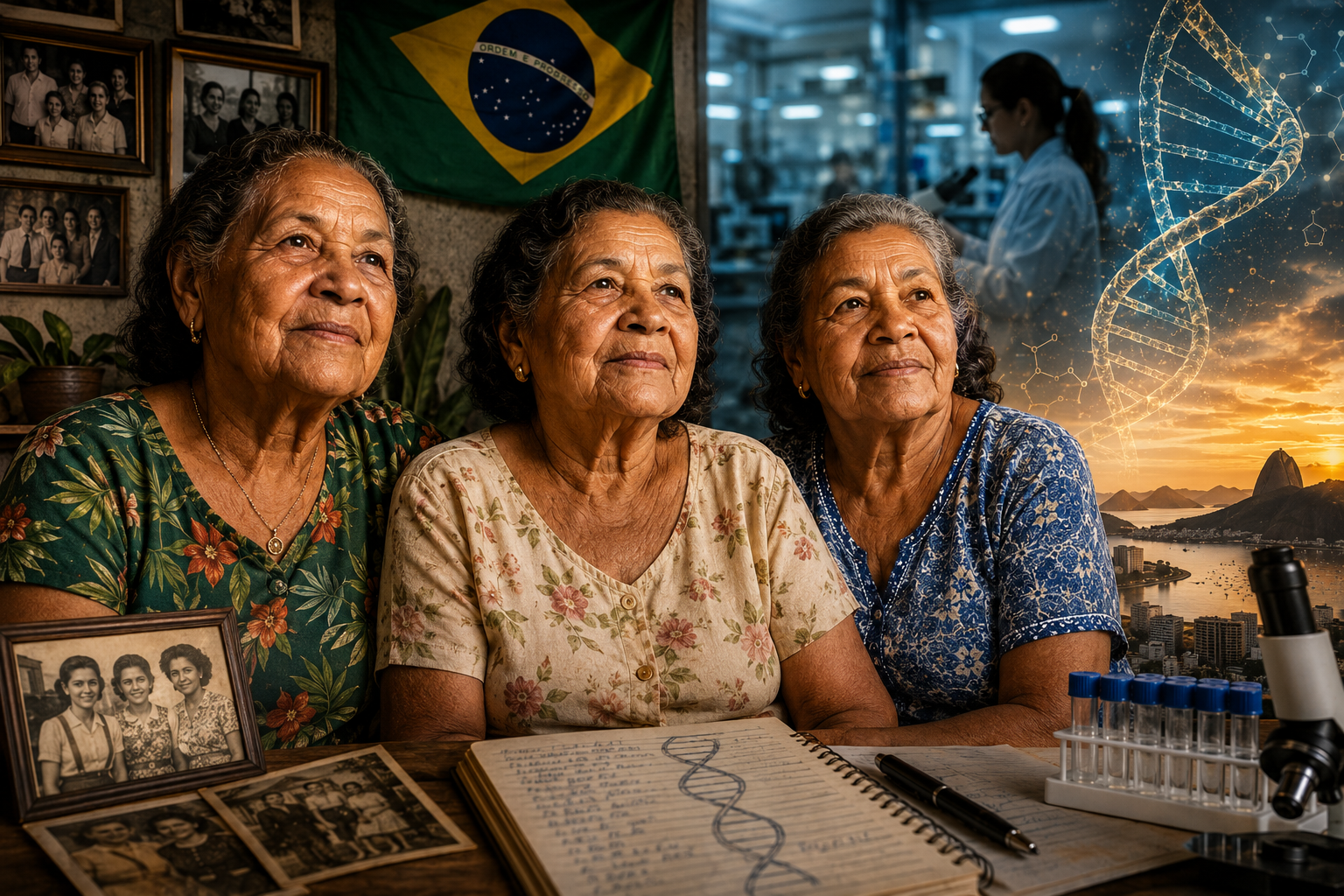
Three Brazilian sisters, Zulina de Deus Nunes, Zoraide de Deus Mota and Levita de Deus Nunes, have become far more than a charming record-breaking family story. Guinness World Records says the sisters have a combined age of 316 years and 302 days, confirmed by LongeviQuest, making them the living trio of siblings with the highest combined age.
That number is astonishing on its own. But the deeper story is not that three sisters lived past 100. It is that one family may help scientists study why some people not only survive into extreme old age, but appear to delay the physical and cognitive decline that usually closes in much earlier. The public sees a remarkable family. Researchers see a rare biological archive.
The Real Question Is Not How They Lived So Long
The instinctive response to stories like this is to hunt for lifestyle secrets. What did they eat? Did they walk every day? Did they avoid stress? Did they drink coffee, eat fresh food, pray, work hard, stay close to family, or simply refuse to stop moving?
The sisters themselves have pointed toward familiar explanations: healthy food, active childhoods and strong family bonds. Their early lives reportedly included physical activity, fresh food and close social ties, all of which fit the familiar public language of healthy aging. But science has to be more ruthless than inspiration. A long life story is not the same as proof of cause.
That is where extreme longevity becomes uncomfortable. Many people eat well and remain active without reaching 103, 104 or 109. Many others live imperfectly and still reach extraordinary ages. The point is not that lifestyle is irrelevant. The point is that when several siblings in one family cross the century mark, the genetic question becomes much harder to ignore.
The DNA Longevo Project Is Looking For Protective Biology
The sisters are now being studied through the DNA Longevo Project, led by University of São Paulo scientist Mayana Zatz. The project is investigating biological and genetic factors behind exceptional aging, with researchers looking for protective genes and comparing unusually long-lived people with others who experience frailty, chronic illness or cognitive decline.
That makes the sisters especially valuable. A single centenarian can be explained away as an outlier. Three sisters from the same family are harder to dismiss. They offer scientists a tighter question: are there inherited traits that help some bodies resist the normal acceleration of aging?
This is not about finding one magic gene that makes someone live forever. Aging is too tangled for that. It involves immunity, inflammation, DNA repair, metabolism, cellular maintenance, cardiovascular resilience, cancer resistance and neurological protection. The real scientific prize is not immortality. It is understanding why some people remain functional for so long while others decline decades earlier.
Brazil May Be A Hidden Map Of Human Longevity
Brazil matters because its population history is genetically diverse, making it a potentially powerful place to study rare variants linked to extreme age. Earlier scientific coverage of Brazilian supercentenarian research has highlighted the country’s importance as an underused resource for studying why some people reach 110 or beyond despite difficult life circumstances.
That matters because much of modern biomedical research has historically leaned too heavily on narrower population datasets. If longevity research only studies a limited slice of humanity, it risks missing protective patterns that exist elsewhere. Brazil’s genetic diversity may help researchers identify variants and biological pathways that would otherwise remain invisible.
The sisters therefore sit at the intersection of family history and population science. Their lives are intimate, domestic and human. But their DNA may belong to a much larger scientific puzzle: how many routes are there to old age, and how many have science failed to map properly?
The Dangerous Mistake Is Turning Them Into Lifestyle Gurus
There is a trap in every centenarian story. The public wants a recipe. Media culture wants a headline. Longevity marketing wants a product. But the honest lesson from people who reach extreme ages is often less tidy.
Scientists regularly warn that the habits of the oldest people in the world should not automatically be treated as the reason they lived so long. Survivorship bias matters. A 109-year-old may credit a simple daily habit, but thousands of people may have shared the same habit and died much earlier.
That does not make lifestyle meaningless. Not smoking, eating reasonably well, remaining socially connected and staying physically active are still sensible for population health. But the Brazilian sisters are not useful because they can sell a morning routine. They are useful because their survival may reveal how biology protects some people from the usual damage of time.
The Bigger Prize Is Healthspan, Not Just Lifespan
The modern longevity race is often sold badly. Too much of it sounds like billionaires trying to outrun death. The more serious question is not whether humans can become immortal, but whether more people can spend their final decades with less disease, less frailty and less cognitive collapse.
That is why the sisters matter. The true scientific value of extreme old age is not the birthday number. It is the delay of failure. If researchers can identify patterns that protect against dementia, cardiovascular disease, cancer, immune collapse or severe frailty, the benefit may not be people routinely living to 110. It may be people reaching 80 or 90 in far better condition.
This is where the story links directly to the wider longevity science race. The future of aging research will not be built on miracle claims. It will be built on slow, difficult work: comparing genomes, tracking biological markers, studying families, separating luck from mechanism, and identifying which pathways can actually be changed.
The Human Limit May Be Less Fixed Than It Feels
Extreme-age research remains statistically difficult because the number of people who live beyond 110 is tiny. Studies of the oldest-old have debated whether there is a hard cap on human lifespan, with some statistical work suggesting that any upper limit may lie beyond the highest reliably recorded human lifetimes.
That does not mean humans are about to live to 150 as a normal outcome. It means the boundary is scientifically murkier than everyday intuition suggests. The body is fragile, but not equally fragile in everyone. Some people seem to carry biological protections that keep major systems functioning long after the usual odds have turned against them.
The Brazilian sisters do not prove that human aging can be defeated. They show something subtler and more important: aging is not a single clock ticking at the same speed in every body. It is a process with variation, resistance and hidden resilience. That variation is where science now wants to dig.
One Family Has Become A Mirror For Everyone Else
There is something quietly brutal about this story. Three sisters have lived long enough to become a global scientific curiosity, but the reason they matter is because everyone else is running out of time. Their lives force a question most people prefer to avoid: why do some bodies endure while others break?
The answer will not be romantic. It will not fit neatly into a wellness slogan. It will probably involve genes, childhood conditions, food, infection history, family support, social structure, medical luck and biological systems that researchers still do not fully understand. That is exactly why the story matters.
The sisters are not a miracle cure, a secret formula, or a promise that everyone can reach 100 by living correctly. They are evidence that human aging contains hidden exceptions. If science can understand those exceptions, the prize is not merely longer life. It is the possibility of making ordinary aging less punishing, less random and less cruel.
