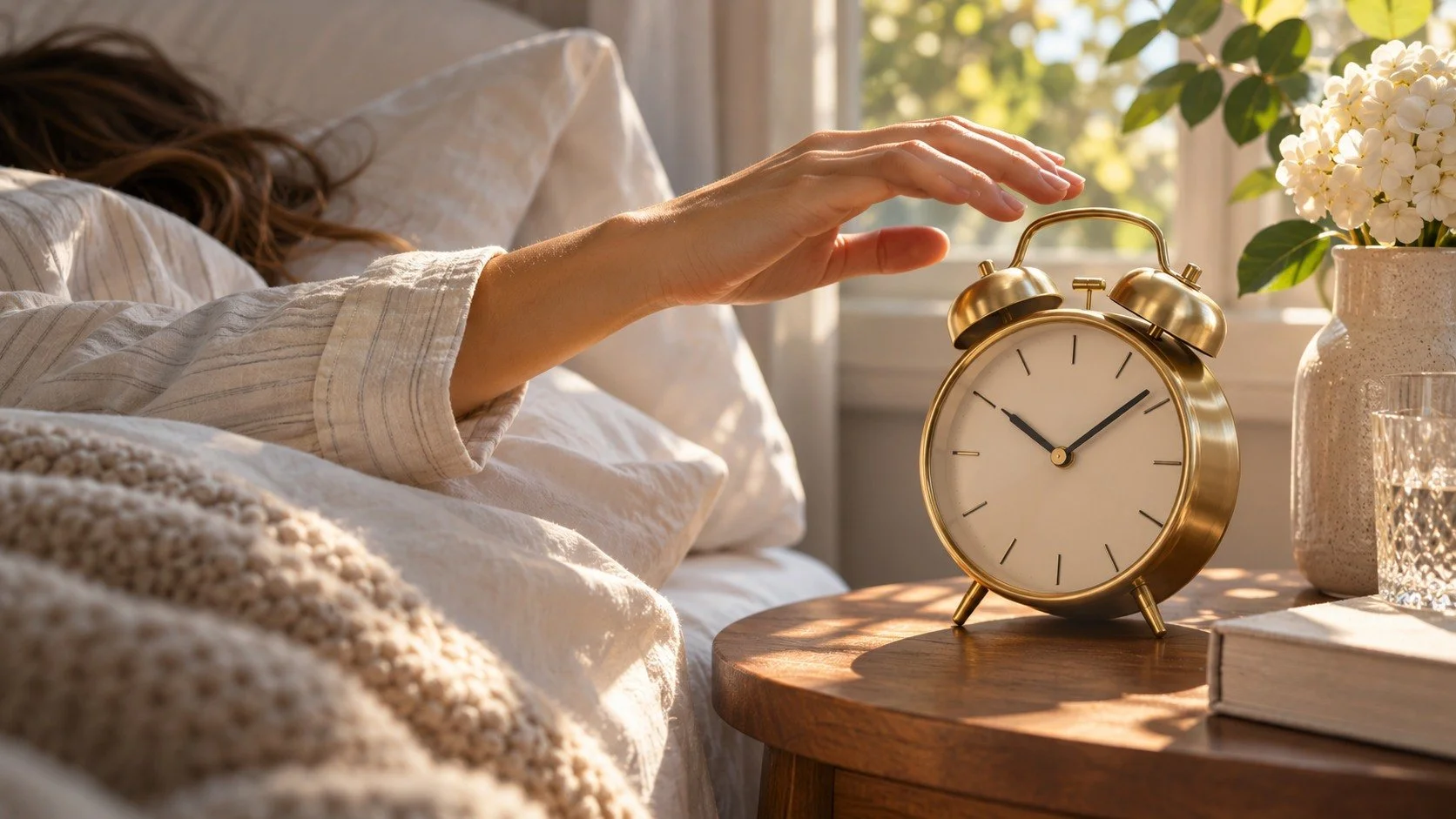
The most striking mornings are the ones when you open your eyes, check the clock and see that you have beaten the alarm by two minutes.
How Can You Wake At 6:58 When The Alarm Is Set For Seven?
The most striking mornings are the ones when you open your eyes, check the clock and see that you have beaten the alarm by two minutes. The mornings when the alarm drags you out of sleep are easier to forget. To explain the apparent precision, it helps to separate three things: a body accustomed to waking around the same time, anticipation of a particular morning and the way you count the occasions when the prediction seems to work.
Your circadian system helps organise sleep and wakefulness over roughly a day. Light and regular routines help keep that timing aligned with the world outside. If you regularly get up at seven, the approach of seven often coincides with a body already moving towards wakefulness. The alarm has been sharing its work with a biological rhythm all along.
What Anticipation Might Add
Researchers have investigated whether expecting to wake at a particular time changes physiology before that time arrives. A small laboratory study published in Nature found a change in the hormone ACTH before an anticipated early awakening. The observation suggests that expectation can influence preparations for waking. It did not demonstrate that people possess a conscious clock accurate to the minute.
Imagine two mornings. On one, somebody tells you before bed that you must get up unusually early. On the other, somebody wakes you unexpectedly at that same early hour. The clock on the wall reads the same time. Your expectations do not. An experiment comparing those conditions asks a more precise question than a collection of stories from people who occasionally beat an alarm.
Why The Last Few Minutes Are Easy To Remember
Suppose you wake briefly at 5:40, turn over and forget it. At 6:58 you check the time and hear the alarm almost immediately afterwards. Only the second awakening becomes a memorable coincidence. If you are already wondering about the phenomenon, the next close call will attract even more attention.
The room may also provide cues before an alarm sounds. Light reaches the window, heating starts or someone else in the household moves around. These cues can occur at regular times without being loud enough for you to identify what woke you. A clock check tells you when you became aware of being awake. It rarely tells you which cue started the process.
A simple way to examine the experience is to record all waking times for a stretch of ordinary mornings, including the days the alarm wins. That gives the striking two-minute successes a denominator. The interesting result may be that you wake within a broad window with some regularity. The human achievement is anticipating morning; the memorable flourish is occasionally looking at the clock just before it rings.
