Dog Walker’s Killer Given Indefinite Hospital Order After Random Knife Attack
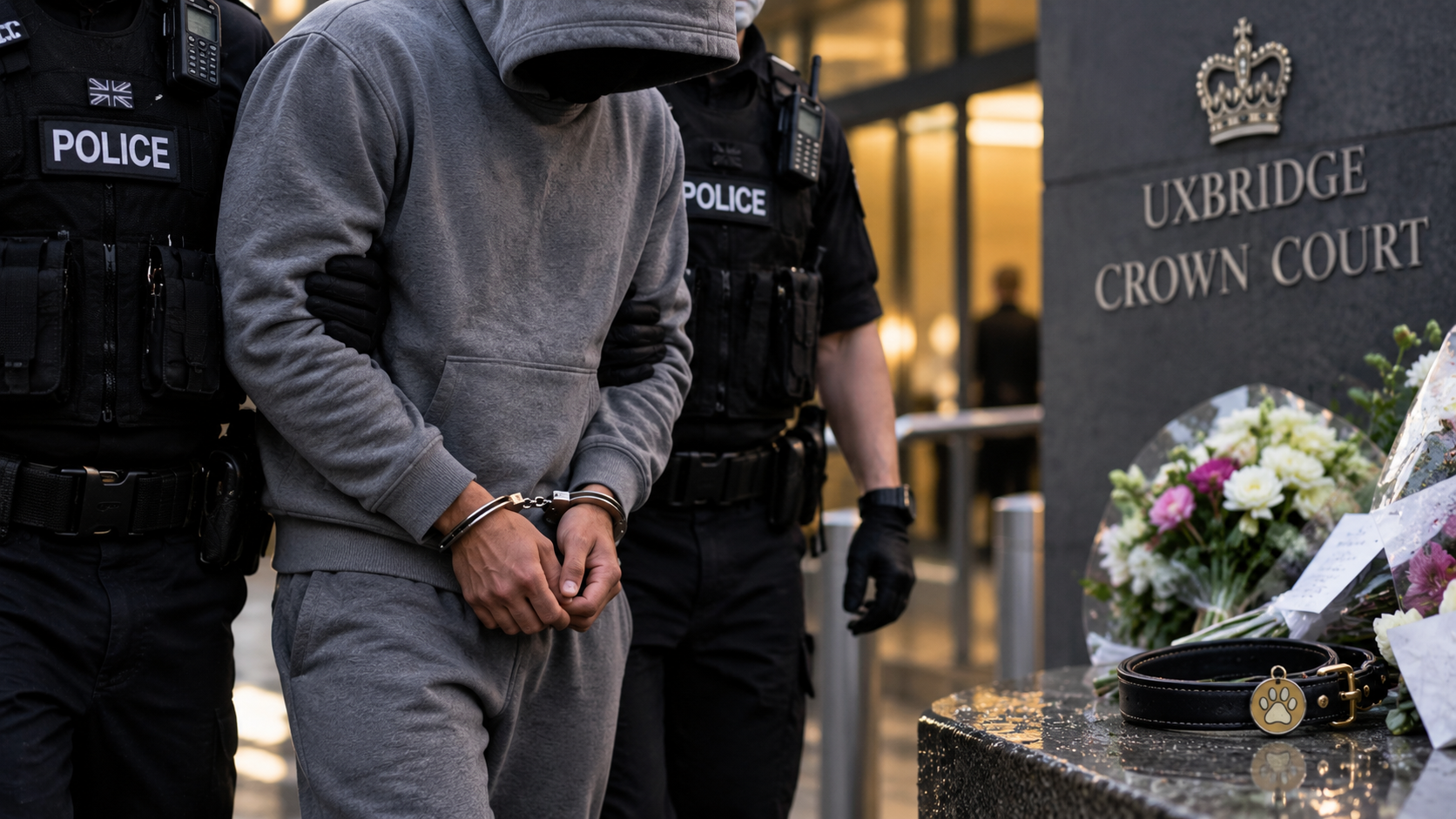
The Random Uxbridge Attack That Killed Wayne Broadhurst
Wayne Broadhurst Killing: The Sentence Explained
Dwood Safi killed 49-year-old Wayne Broadhurst as he walked his dog in Uxbridge, after first attacking his landlord and before injuring a teenage boy.
Dawood Safi has been given an indefinite hospital order after killing dog walker Wayne Broadhurst in a random knife attack in west London.
Mrs Justice Cutts ordered the 28-year-old to remain in a secure hospital for mental-health treatment after concluding that he had been in a psychotic state when the violence unfolded in Uxbridge on 27 October 2025.
The judge also recommended that Safi be deported, saying his continued presence in the United Kingdom would be to its detriment. Any final decision on deportation rests with the Home Secretary.
The sentence closes the criminal proceedings over an attack that began inside a home and spilled into the street, where a man with no connection to Safi happened to be walking his dog.
Wayne Broadhurst Was Walking His Dog
Broadhurst, 49, worked as a street sweeper for Ealing Council and was walking his dog, Harry, near Midhurst Gardens when he crossed Safi’s path.
He did not know him.
Safi pursued Broadhurst and stabbed him repeatedly after the dog walker tried to get away. Broadhurst died at the scene despite emergency efforts to save him.
The violence was not the beginning of the incident.
Minutes earlier, Safi had attacked his landlord, Shahzad Farrukh, inside the property where Safi had been living as a lodger. Farrukh suffered multiple stab wounds and life-changing injuries.
A 14-year-old boy was also injured during the sequence of attacks.
Police were called at about 4.55pm. Officers confronted Safi while he was still carrying a knife. He refused to put it down and was Tasered before being arrested.
The suddenness of the killing is what makes the case especially stark. Broadhurst had no dispute with Safi and no role in the events inside the house. He entered the scene by chance.
That pattern of violence echoes wider public concern around apparently sudden knife attacks in London, where the central question is often not only what happened but whether any warning signs were visible beforehand.
Why The Case Became Manslaughter Rather Than Murder
Safi was originally charged with murder.
That changed after psychiatric evidence was examined.
Four psychiatrists concluded that Safi was suffering from psychotic depression and delusional beliefs when he carried out the attacks. Their evidence was that his condition substantially impaired his ability to form rational judgments and exercise self-control.
Prosecutors therefore accepted a guilty plea to manslaughter by diminished responsibility in relation to Broadhurst’s death.
That distinction matters.
Diminished responsibility does not mean that the killing did not happen or that Safi was cleared of criminal responsibility. It is a partial defence to murder under English law. In this case, it changed the homicide offence to manslaughter because of the effect of Safi’s recognised mental disorder at the time.
The same legal distinction has been central to other British cases involving severe mental illness, including the Nottingham attacks and the questions surrounding hospital orders.
The evidence also showed that Safi’s mental state did not remove every allegation against him.
He was separately tried over the attack on Farrukh and was found guilty of attempted murder.
He had already admitted assault occasioning actual bodily harm against the teenage boy. The jury did not reach a verdict on the more serious attempted murder allegation relating to the child, and prosecutors later decided not to seek a retrial on that count.
Warning Signs Before The Attack
The psychiatric evidence did not describe a mental-health crisis that appeared only after Safi was arrested.
Investigators established that he had been experiencing untreated psychotic delusions in the days before the stabbings.
He had presented to his GP and a local hospital. He had also contacted police and his landlord about concerns arising from those delusions.
That history does not by itself establish that the attacks could have been predicted or prevented. It does, however, make the period before 27 October part of the case rather than mere background.
The court heard that Safi believed family members were conspiring against him and that his thinking had become detached from reality.
This is where the case moves beyond the simple image of a stranger attacking a stranger.
Broadhurst’s death was random from the victim’s point of view. But the violence emerged from a documented deterioration in Safi’s mental health, followed by attacks on people around him and then on a passer-by who happened to be nearby.
Cases involving severe psychiatric illness often produce a difficult public argument about responsibility, treatment and prevention. The legal system can recognise diminished responsibility while still recognising the irreversible harm done to victims.
The Indefinite Hospital Order
The court has now decided that Safi should be detained in a secure hospital rather than sent to an ordinary prison sentence.
An indefinite hospital order has no fixed release date.
Its purpose is to keep the offender detained while treatment and risk remain central concerns. Indefinite does not automatically mean detention for the rest of a person’s life, but release is not tied to the completion of a conventional prison term.
That difference is one reason hospital-order cases can be difficult for bereaved families.
Broadhurst’s relatives had wanted Safi to face a murder conviction. His partner, Ann Newman, told the court that the attack had taken away the future she expected to have with him.
Her sister, Laura Ireland-Cochrane, said the family had struggled with the manslaughter outcome and with the possibility that Safi could one day be released if his condition and legal status changed.
The sentence therefore resolves what will happen to Safi now, but it does not erase the family’s unease over what indefinite detention may mean decades from today.
The Judge Also Recommended Deportation
Immigration became another part of the sentencing hearing.
The court heard that Safi came to the United Kingdom from Afghanistan in 2020 on the back of a lorry and claimed to be 17 when he arrived. He was later granted asylum in 2022.
Mrs Justice Cutts recommended deportation after sentence, saying his continued presence in the country would be detrimental.
That recommendation is significant, but it is not itself a deportation order taking immediate effect.
The Home Secretary ultimately decides the immigration outcome, and Safi’s detention and medical condition mean that the criminal, mental-health and immigration processes do not collapse into a single decision.
The distinction is important because the sentencing court has dealt with the offences. The next stages concern treatment, continuing detention and, separately, whether deportation is eventually pursued.
A Family Left With The Cost
Broadhurst’s family described him after his death as kind, caring and loving, with a passion for Liverpool Football Club.
They said he was the sort of person who would do anything for someone else.
That is the clearest measure of the case.
The legal language is complicated: diminished responsibility, attempted murder, psychiatric evidence, hospital detention and deportation recommendations.
The event itself was brutally simple.
A man went out to walk his dog. He did not know the attacker. He did not begin the confrontation. He never came home.
The court has now determined where Safi will be detained and why. For Broadhurst’s family, the part that cannot be resolved by any sentence is the ordinary life that disappeared with him.
Sources
Crown Prosecution Service — Man convicted in connection to Uxbridge stabbings — Confirms the charges, psychiatric evidence, diminished-responsibility plea and attempted-murder conviction.
Metropolitan Police — Man convicted following death of Wayne Broadhurst — Confirms the attack chronology, police response, victim details and family tribute.
Sky News — Afghan refugee who stabbed dog walker Wayne Broadhurst to death sentenced to indefinite hospital order — Confirms the 5 October 2026 sentence, deportation recommendation and statements made at the sentencing hearing.
Next Reads
True Crime: The Nottingham Attacks – Connecting The Health And Police Timelines — Another major British case examining diminished responsibility, severe mental illness and an indefinite hospital order.
Four Men Stabbed In Covent Garden As Woman Arrested In Broad Daylight — Examines a separate London stabbing and the difficult boundary between mental-health crisis, public safety and criminal investigation.
The Golders Green Stabbing: What We Know About The Suspect, Motive, And A City On Edge — A related London knife-attack case focused on confirmed evidence, motive and the public response.
