How Did Men in Their Sixties and Seventies Empty a London Vault, and Why Did It Fall Apart So Quickly?
Over the Easter bank holiday weekend of 2015, a gang of experienced thieves let themselves into a building on Hatton Garden, the centre of London's jewellery trade, climbed down a lift shaft and drilled through the wall of an underground vault. When they left in the early hours of Easter Sunday, they had ransacked 73 safe deposit boxes and taken cash, gold, gems and jewellery that the sentencing judge later estimated at "just short of £14 million". It was widely called the largest burglary in English legal history.
The ages of the men involved, several of them in their sixties and seventies, turned the case into something close to folklore. Within a few years it had inspired a Michael Caine film, an ITV drama and a run of books and documentaries. But the real story is less romantic than the screen versions. The plan nearly failed on the first night, a police alarm call went unanswered, the gang were identified within weeks by cameras and covert recordings, and most of what they stole has still not been recovered.
This explainer sets out what happened that weekend, how detectives caught the men responsible, who was convicted and what sentences they received, what happened to the loot, and where the gang ended up. It draws on the judge's published sentencing remarks, police statements and court reporting.
What Was the Hatton Garden Heist?
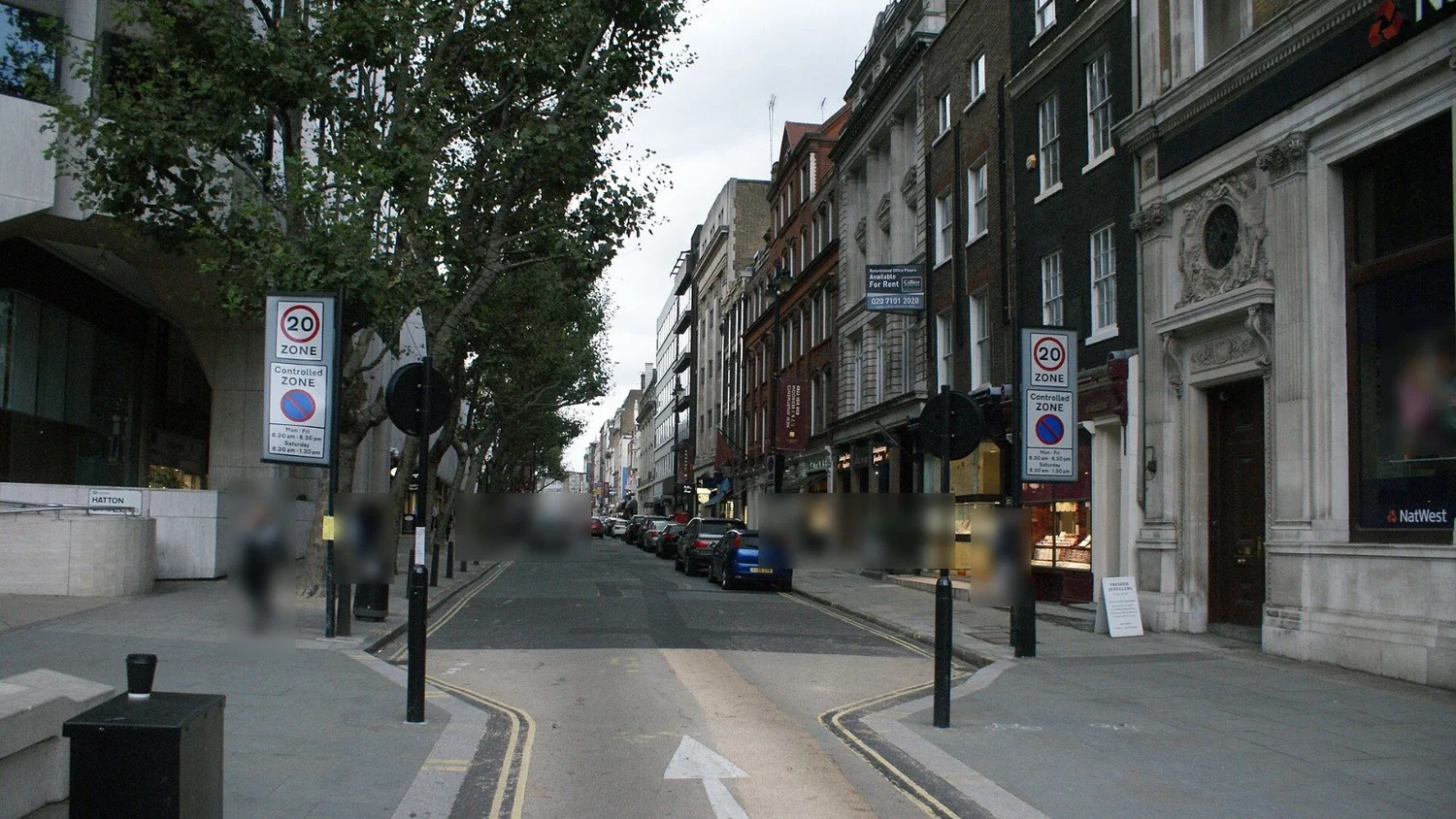
Hatton Garden Safe Deposit Ltd operated an underground vault at 88–90 Hatton Garden in Holborn, central London. Many of its customers were jewellers and traders who used the boxes to store stock, cash and valuables close to their workshops. The vault sat in a basement reached through a lift shaft, an airlock and metal shutters, according to the sentencing remarks of Judge Christopher Kinch QC at Woolwich Crown Court.
The burglars chose the long Easter weekend, when many businesses in the street were closed for four days. The Met Police announced on 7 April 2015 that the vault had been burgled. There was no visible sign of forced entry from the street, and early coverage quickly filled with speculation about who could have pulled off such a raid.
Some of that speculation was wrong. A large underground electrical fire had broken out nearby in Kingsway on 1 April, disrupting power and communications across part of central London, and there was talk that it might have been a diversion. The London Fire Brigade later said the fire had been caused by an electrical fault, with no sign of arson.
How Did the Burglars Get Into the Vault?
CCTV footage, first published by the Daily Mirror and later released by police, gave a minute-by-minute picture of the weekend. Staff locked the building at 21:19 on Thursday 2 April. Four minutes later, a man the newspaper nicknamed "Mr Ginger" went down towards the vault, followed by men pulling wheelie bins.
According to the judge, the gang was let in by an insider known as "Basil", who probably used a key. The plan was to disable the lift and climb down its shaft to the basement. Once there, they used a heavy-duty diamond core drill to cut three overlapping holes through the vault wall, which was about 50 centimetres thick. Reports at the time identified the drill as a Hilti DD350. The hole allowed them to bypass the main vault door altogether.
The first night went wrong
Getting through the wall was not enough. On the other side stood heavy metal cabinets holding the safe deposit boxes. The gang had brought a pump and hose to force a cabinet over, but the equipment failed. The judge recorded that the attempt was abandoned that night. Brian Reader, the oldest of the ringleaders, left after the first night and did not take part when the gang came back.
The alarm that nobody answered
The burglary did not go unnoticed by the security system. At 00:21 on Good Friday, 3 April, the alarm monitoring company called the Metropolitan Police's central communications command to report that a confirmed intruder alarm had been activated at Hatton Garden Safe Deposit Ltd. The Met later said the call was recorded and passed to its dispatch system, where "a grade was applied to the call that meant that no police response was deemed to be required". The force opened an inquiry into why, and said it was too early to say whether handling the call differently would have changed the outcome.
Return on the Saturday night
The gang came back on the evening of Saturday 4 April, and this time they reached the boxes. Carl Wood, who had been recruited for the job, walked away that night after finding that a fire escape door had been locked, according to the judge. Inside the vault, Daniel Jones and Basil broke open the boxes while others kept watch or ferried the bags. The CCTV showed the men leaving at around 06:10 on Easter Sunday, 5 April. The theft was not discovered until staff returned after the bank holiday.
What Was Stolen, and How Much Was It Worth?
Of the 73 boxes ransacked, 44 were in active use and had goods taken, the judge said. He put the value at "just short of £14 million", adding that the figure was still a work in progress. Later court reporting used a figure of about £13.6 million.
Some early headlines claimed far higher sums, with £60 million and even £200 million quoted in the first days after the raid. Those figures were speculation and were not borne out in court.
The real losses were felt most by small businesses. The judge said many of the victims were small independent jewellers. He described one family business keeping stock for their retirement, and a jeweller of more than 30 years who lost about £30,000 in cash, gold bars and jewellery. Hatton Garden Safe Deposit Ltd itself went into liquidation in September 2015.
Who Was in the Hatton Garden Gang?
The court identified four ringleaders, all of whom pleaded guilty to conspiracy to commit burglary:
- Brian Reader, 76 when he was arrested. Reader had previously been jailed for his part in handling gold from the 1983 Brink's-Mat robbery at Heathrow.
- John "Kenny" Collins, 74 at the time of the burglary, who acted as lookout and driver and whose home was where the stolen goods were first taken, according to the judge.
- Daniel Jones, who went into the vault on the second night.
- Terry Perkins, who was also inside the building on the second night.
Others had smaller roles. Carl Wood was recruited by Jones and pulled out on the second night. William Lincoln helped with transport and the handling of bags of jewellery afterwards. Hugh Doyle provided a place for a handover at his workplace in Enfield. Another man charged, Jon Harbinson, was found not guilty and discharged.
"Basil" was not identified for almost three years. In March 2018 police arrested Michael Seed, an alarm specialist from Islington, who was later convicted as the man who let the gang into the building.
The ages of the men caught the public imagination. The Sun calculated that the gang had a combined age of 448, and newspapers nicknamed them "Dad's Army" and the "Diamond Wheezers". Those labels made the case sound like a caper, but the judge treated it as a serious, carefully planned crime.
How Did the Police Catch Them?
The investigation went to the Flying Squad, the Met's specialist robbery unit. Despite years of planning, the gang were arrested within about six weeks. On 19 May 2015 police carried out a series of raids and announced the arrest of nine suspects.
Several things gave them away. Kenny Collins's distinctive white Mercedes was caught on CCTV in nearby Leather Lane during the burglary, according to the judge. Detectives then used number plate recognition cameras, mobile phone evidence and further CCTV to trace the gang's movements. Peter Spindler, then head of specialist crime investigations at Scotland Yard, called them "analogue criminals operating in a digital world".
The most damaging evidence came from the gang's own mouths. Police placed them under surveillance and covertly recorded conversations in their cars. The judge said the recordings showed Jones, Collins and Perkins discussing the burglary and that police had been "observing and listening for some time" before the arrests. The planning had taken place partly at meetings in the Castle pub on Pentonville Road, and the gang had carried out reconnaissance and at least one dry run. They had ditched their mobile phones for walkie-talkies on the night, but that did not protect them from the cameras or the recordings that followed.
What Sentences Did the Gang Receive?
The sentencing took place at Woolwich Crown Court on 9 March 2016 before Judge Christopher Kinch QC. Collins, Jones and Perkins had pleaded guilty. Wood and Lincoln were convicted after a trial. Doyle was convicted only of handling the proceeds and cleared of the wider conspiracy.
- Kenny Collins: seven years. The judge took a starting point of ten years and reduced it for his guilty plea.
- Daniel Jones: seven years, on the same basis.
- Terry Perkins: seven years, on the same basis.
- William Lincoln: seven years for conspiracy to burgle, with seven years concurrent for conspiracy to conceal, convert or transfer criminal property.
- Carl Wood: six years, with six years concurrent on the second count.
- Hugh Doyle: 21 months, suspended for two years, for concealing, converting or transferring criminal property.
Brian Reader was sentenced separately. On 21 March 2016 he was jailed for six years and three months.
Michael Seed was tried separately at Woolwich Crown Court in 2019. A jury convicted him of conspiracy to burgle and conspiracy to conceal or disguise criminal property, and in March 2019 he was jailed for ten years for the first offence and eight years for the second, to run concurrently. The same jury cleared him of a separate charge relating to a planned 2010 burglary at a Bond Street jewellers. Detective Mark Bedford of the Flying Squad said Seed had been "responsible for accessing the Hatton Garden premises and disabling the security systems within", and that his conviction closed "one of the longest investigations in the Flying Squad's history".
What Happened to the Stolen Jewels and Cash?
This is the part of the story the films tend to skip. At the 2016 sentencing, the prosecution's estimate, based on the owners' own figures, was that "at best, approximately one third" of the property, around £4.5 million, had been recovered. In 2019, after Seed's conviction, the Flying Squad said it had recovered "just over a third" of what was stolen, much of which had been returned to its owners. When police searched Seed's flat in 2018, they found about £143,000 worth of gold, gems and jewellery in his bedroom.
Courts have since tried to claw the money back under the Proceeds of Crime Act. The main confiscation orders, as reported in court, were:
- January 2018: Collins, Jones, Perkins and Reader were ordered to pay a total of £27.5 million or face extra time in prison.
- August 2018: Jones had his sentence extended by six years and 287 days for failing to hand over about £6.6 million.
- August 2019: Collins was given an extra 2,309 days in prison after it emerged he had repaid only £732,000 of a £7.6 million order.
- October 2020: Seed was ordered to pay back £5,997,684.93 or serve an extra seven years. In July 2021 the Court of Appeal found the order had been overstated by £318,386 because it counted unclaimed jewellery the other men had agreed police could sell, and reduced the default term by 136 days.
Hearing Seed's appeal, the Court of Appeal was told that about £4 million of jewellery had been stolen and that all but around £690,000 of it had been returned to its owners. The cash, gold and gems are a different matter. Millions of pounds of the haul are still unaccounted for, and no court has established where it went.
Where Are the Hatton Garden Gang Now?
Terry Perkins died in prison in February 2018, about a week after the £27.5 million confiscation ruling.
Brian Reader was released in 2018, aged 79 and in poor health. He died at his home in Dartford, Kent, in 2023, aged 84. His death certificate reportedly described him as a "retired gardener".
Kenny Collins and Daniel Jones both had their sentences extended for failing to pay their confiscation orders, as set out above.
Michael Seed was given a further six years in 2022 for failing to pay his confiscation order, having repaid only about £50,000, according to GB News. The Ministry of Justice has confirmed that he was then "released in error" from HMP High Down on 12 August 2025, after his sentence was miscalculated, and returned to custody on 5 February. GB News reported that he had not been due for release until June 2027. It was also revealed at his trial that Seed had never paid tax, claimed no benefits and rarely used a bank account.
Why Did the Case Become So Famous?
Part of the appeal was the image of elderly men pulling off "one last job". No one was hurt, the target was a commercial vault rather than a home, and the gang's mistakes made them seem almost comic. The case also linked back to one of Britain's most notorious robberies, Brink's-Mat, through Reader.
That image has been reinforced by several dramatisations:
- Hatton Garden: The Heist (2016), a low-budget film and the first to be released.
- The Hatton Garden Heist (2017), a BBC Radio 4 play by Philip Palmer.
- The Hatton Garden Job (2017), a feature film with Larry Lamb and Phil Daniels.
- King of Thieves (2018), the highest-profile version, starring Michael Caine, with Tom Courtenay, Jim Broadbent, Michael Gambon, Paul Whitehouse and Ray Winstone.
- Hatton Garden (2019), a four-part ITV drama starring Kenneth Cranham and Timothy Spall. Its broadcast was delayed for about 18 months because of continuing legal proceedings, and it found a new audience when it trended on Netflix in the UK in 2024.
These are dramatisations. They compress events, invent dialogue and lean towards the charm of the ageing crooks. The court record is harsher. It describes a meticulously planned crime whose victims included small traders who lost savings and stock, and a gang who mostly failed to hold on to what they took.
What Questions Remain Unanswered?
Two questions remain open. The first is where the rest of the stolen property went. Courts have ordered the men to repay many millions of pounds, but repeated extensions of their sentences show that much of that money has not been handed over.
The second is how many other crimes the gang may have committed over the years. Detectives said after Seed's conviction that they believed the men could have been operating undetected for decades, but said they could not link them to any other crimes. That remains a suspicion, not a finding.
Conclusion
The Hatton Garden heist is remembered for the age of the thieves and the scale of the haul. The court record tells a more ordinary and more revealing story: a plan that nearly collapsed on the first night, an alarm call that was graded as needing no police response, a car caught on camera and conversations recorded by detectives. All of the men responsible were caught, and most were in custody within weeks. The money is a different story. More than a decade later, millions of pounds of what was taken from the vault have never been found.
Sources
- Judiciary of England and Wales: R v Collins and others, sentencing remarks of HHJ Christopher Kinch QC, Woolwich Crown Court (9 March 2016)
- IBTimes UK: Hatton Garden robbery: Police failed to attend jewels heist (10 April 2015), quoting the Metropolitan Police statement
- Westminster Extra: Ten years for the 'last' of the Hatton Garden gang (26 March 2019)
- PA via Yahoo News UK: Hatton Garden robber 'Basil' wins reduction in £6m confiscation order (30 July 2021)
- Yahoo News UK: Hatton Garden heist: how much was stolen and where are they now? (16 May 2024)
- GB News: Hatton Garden burglar Michael Seed freed from jail by mistake, with Ministry of Justice statement
- Wikipedia: Hatton Garden safe deposit burglary (summarising BBC, Guardian, Telegraph and Sky News reports)
Next Reads
- The Great Train Robbery Explained: How the 1963 Gang Stopped a Mail Train and What Happened to Them
- The Brink's-Mat Robbery Explained: Where Did £26m of Heathrow Gold Go?
- Securitas Depot Robbery: Britain's Biggest Cash Heist and the Security Truth It Exposed
- The Modern Mafia Explained: Who Runs Organised Crime Today
- How Cold Cases Are Solved: From Old Evidence to New DNA Leads
- The Greatest Unsolved Historical Mysteries Ranked
