How Did a Gang That Planned Everything Leave Their Fingerprints on a Monopoly Board?
In the early hours of Thursday 8 August 1963, a gang of about 15 men stopped the Royal Mail's overnight train from Glasgow to London in the Buckinghamshire countryside. Within about half an hour they had unloaded 120 mailbags of used banknotes and disappeared. The police later put the haul at £2,595,997, a figure usually rounded to £2.6 million and worth tens of millions of pounds today. It was called the crime of the century before the week was out.
The plan was meticulous in some ways and careless in others. The robbers fooled a railway signal with a glove and a battery and moved the train to a bridge where their lorry was waiting. Then they spent days at a farmhouse less than 30 miles away, playing Monopoly with real money. Police found the farm within five days, and fingerprints on the board game and a ketchup bottle helped send most of the gang to prison for 30 years.
The violence against the train driver, Jack Mills, sits at the centre of the story and is often left out of the legend. This explainer sets out what happened that night, how detectives caught the gang, the sentences that shocked the country, the escapes of Charlie Wilson and Ronnie Biggs, what became of the money and what happened to the men afterwards. It draws on police and archive accounts, court reporting and later reporting, and notes where the sources disagree.
What Was the Great Train Robbery?
The target was the Travelling Post Office, a mail train on which Post Office staff sorted letters and parcels as it ran overnight from Glasgow to London Euston. It left Glasgow on the evening of Wednesday 7 August 1963 with 12 carriages and was due into Euston at about 4am, according to The National Archives and later accounts.
The second carriage behind the locomotive was the High Value Package (HVP) coach. It carried registered mail, much of it used banknotes. On an ordinary day the HVP coach held about £300,000, according to British Transport Police. The weekend before had been a bank holiday, so this load was far larger.
The Postal Museum notes a detail that has fuelled suspicion for more than 60 years. The Post Office had three HVP carriages fitted with extra security, including bars, bolts and alarms, but none was in service on 8 August 1963. A reserve carriage without those features was used instead.
How Did the Gang Stop the Train?
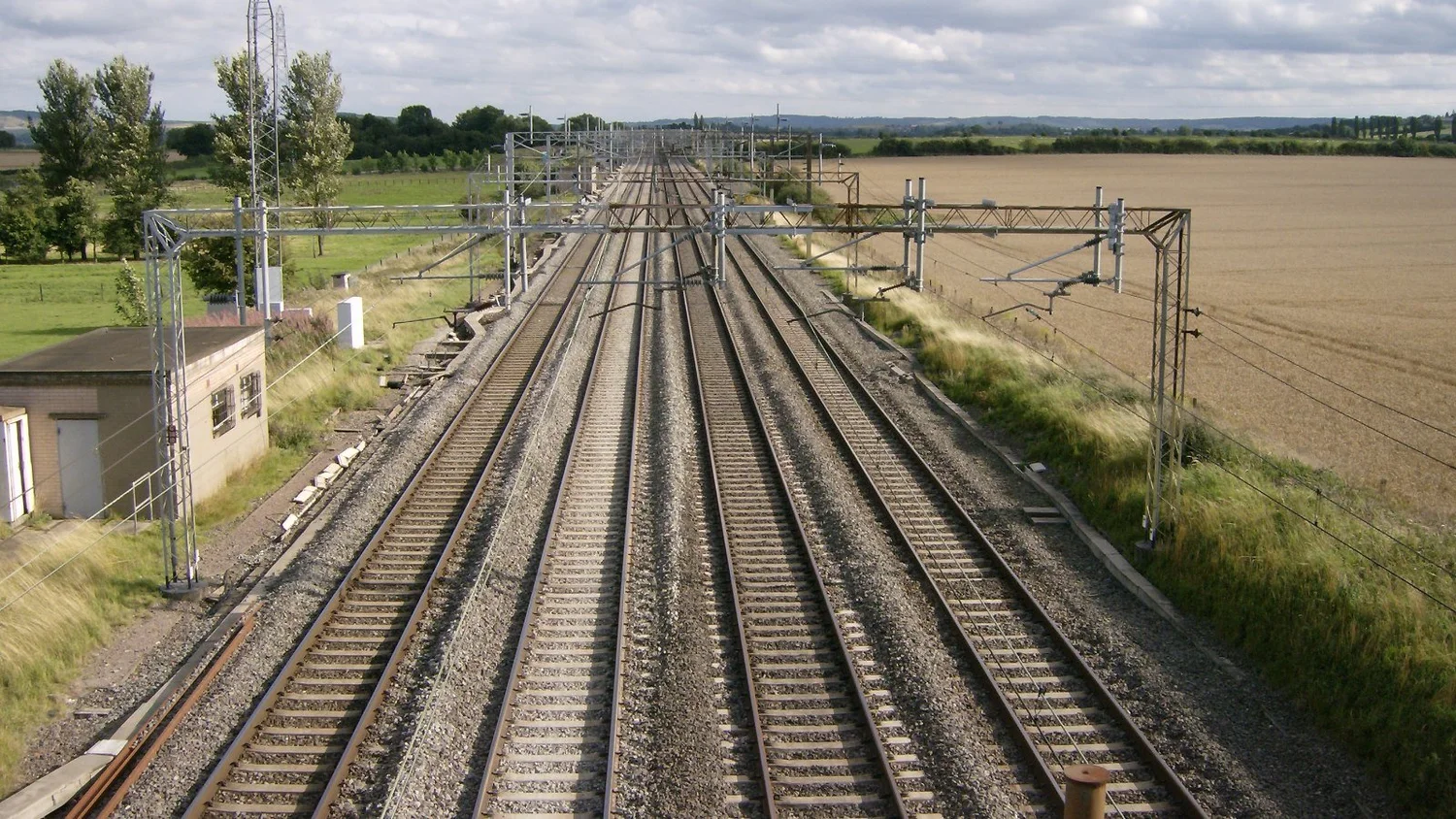
The robbers chose a quiet stretch of the West Coast Main Line near Ledburn, between Leighton Buzzard and Cheddington. At Sears Crossing they tampered with the signals. A glove was placed over the green light and the red light was powered by a battery, according to British Transport Police and photographs held by The National Archives. The train stopped at the red signal at about 3.03am.
The fireman, or co-driver, David Whitby, climbed down to use the lineside telephone and call the signalman. The cables had been cut. Whitby was seized by the gang and pushed down the embankment, according to police accounts. Accounts differ on whether he was hurt, but he was not seriously injured.
The attack on Jack Mills
In the cab, a masked man struck the driver, Jack Mills, on the head. British Transport Police describe a cosh; other accounts describe an iron bar. Mills, a 58-year-old from Crewe, was badly hurt. Contemporary reports and Crime+Investigation also describe him falling against the side of the cab.
The gang then uncoupled the engine and the first two carriages from the rest of the train. The plan was to move them about half a mile to Bridego Bridge, where the embankment allowed them to unload into waiting vehicles. They had brought a retired train driver to do it, but he could not operate the diesel locomotive. Ronnie Biggs had recruited him, and his job that night was to look after him. Mills, injured, was forced to drive the train himself.
What Happened at Bridego Bridge?
At the bridge, the gang broke into the HVP coach. The postal workers inside were overpowered and made to lie on the floor. The other ten carriages, left behind at Sears Crossing, were full of Post Office staff who did not realise anything had happened.
The robbers formed a human chain down the embankment and passed sacks of money into a lorry. They took 120 of the 128 mailbags. British Transport Police put the weight at about two and a half tons. Most of the notes were £1 and £5 notes. They left a handful of sacks behind, reportedly to keep to their timetable.
Before leaving, one of the gang told the postal staff not to move for 30 minutes. Detectives later reasoned that this meant the hideout was within about half an hour's drive. A railway worker raised the alarm at Cheddington station, and Buckinghamshire police were at the scene by about 5am.
How much was stolen?
The police figure was £2,595,997 10s, in 636 packages. Press accounts at the time quoted £2,631,784. Most modern sources round it to £2.6 million. Estimates of its value today vary widely depending on the method used, from about £30 million to more than £50 million, so we have not chosen a single figure.
Who Was in the Great Train Robbery Gang?
The gang was led by Bruce Reynolds, a London burglar and armed robber. Most of the men were from south London. Those later tried for the robbery included Gordon Goody, Charlie Wilson, Ronnie Biggs, Tommy Wisbey, Bob Welch, Jim Hussey, Roy James and Roger Cordrey. Ronald "Buster" Edwards, Jimmy White and Reynolds himself went on the run.
Others were convicted for their parts in the plot or its aftermath, including the solicitor's clerk Brian Field, Leonard Field, who had been involved in buying the farm, the solicitor John Wheater and William "Bill" Boal. John Daly was tried and acquitted.
Who was the Ulsterman?
The robbers had inside information. According to Crime+Investigation and other accounts, Goody waited at Brian Field's home on the night of 6 August for a call from a man known as "the Ulsterman", whose job was to confirm when a large consignment was on its way. The Ulsterman has never been officially identified. In 2014 Goody named a man he said was the source, but that claim has been disputed and was never tested in court. The Postal Museum notes that Post Office investigators looked into several staff after the robbery and found no link.
How Did Police Find Leatherslade Farm?
The gang drove to Leatherslade Farm, a run-down farmhouse near Oakley and Brill in Buckinghamshire, about 27 miles from the bridge. It had been bought weeks earlier through an associate. Crime+Investigation calls the purchase "one of the gang's biggest mistakes".
The robbers had planned to stay several days. They shared out the money, ate from a stocked larder and, famously, played Monopoly with real banknotes. They left earlier than planned. British Transport Police says low-flying RAF training aircraft unsettled them. Someone was supposed to clean the farm or burn it down. That did not happen.
On 13 August, after a tip from a local man, police reached the farm. According to The National Archives, they found food in the larder, sleeping bags, bedding, Post Office sacks, registered mail packages and banknote wrappers. The robbers' vehicles were there too. Fingerprints were found on the Monopoly set, a ketchup bottle and beer bottles, according to Crime+Investigation. Biggs's prints were found on the ketchup bottle, according to accounts of the case.
The investigation was run by Buckinghamshire police and Scotland Yard's Flying Squad, with the Post Office Investigation Branch and British Transport Police also involved. Arrests followed through the late summer and autumn of 1963. Roger Cordrey was among the first, in Bournemouth. Charlie Wilson and Biggs were arrested within weeks. Money was also found. Crime+Investigation reports that a suitcase holding about £100,000 was found in woodland.
What Happened at the Trial?
The trial opened at Aylesbury in January 1964 before Mr Justice Edmund Davies. The Shropshire Star puts its length at 58 days. Charlie Wilson refused to speak, earning the nickname "the silent man".
John Daly was acquitted after his lawyer argued that his fingerprints on the Monopoly set could have been left before it reached the farm. Biggs's case had to be heard again separately after the jury learned of his previous imprisonment, according to Crime+Investigation. On 16 April 1964, the judge sentenced 12 men to a total of 307 years in prison.
- 30 years: Ronnie Biggs, Gordon Goody, Charlie Wilson, Tommy Wisbey, Bob Welch, Jim Hussey and Roy James
- 25 years: Brian Field and Leonard Field (both later reduced to five years on appeal)
- 24 years: William Boal (later reduced to 14)
- 20 years: Roger Cordrey
- Three years: John Wheater
The judge rejected the idea of the robbers as romantic outlaws. "Let us clear out of the way any romantic notions of daredevilry," he said, according to Yahoo News. "This is nothing less than a sordid crime of violence inspired by vast greed." He said the sentences were meant to show others "that crime does not pay".
The National Archives notes that the length of the sentences sparked a debate about whether they were fair. Boal's conviction has also been questioned, as accounts of the case say he was not one of the men on the track.
How Did Charlie Wilson and Ronnie Biggs Escape?
On 12 August 1964, four months into his sentence, Charlie Wilson escaped from Winson Green prison in Birmingham. A small group of men broke into the prison and let him out. He fled abroad and was eventually traced to Canada, where he was arrested in January 1968.
On 8 July 1965, Ronnie Biggs escaped from Wandsworth prison in London. He climbed a rope ladder over the wall during exercise and dropped onto the roof of a waiting removal van. He went to Europe, had plastic surgery and then moved to Australia with his family. As police closed in, he left for South America and reached Brazil in 1970.
Brazil had no extradition treaty with Britain at the time. In 1974 a Daily Express reporter found Biggs in Rio de Janeiro, and Detective Chief Superintendent Jack Slipper flew out to arrest him, but Biggs could not be extradited. He became a minor celebrity, sold his story and even recorded with the Sex Pistols. In 2001, in poor health, he flew back to Britain voluntarily and was arrested as soon as he landed.
The others on the run
Bruce Reynolds fled to Mexico and later Canada. When his money ran out he returned to England, and in 1968 he was arrested in Torquay and jailed for 25 years. Buster Edwards also went to Mexico and gave himself up in 1966. Jimmy White was caught in 1966 after about three years on the run.
What Happened to the Money?
Most of the money was never recovered. Police found some of it in the months after the robbery, including about £100,000 in a suitcase in woodland, and ITV News reported that Boal was arrested with about £141,000. Widely repeated accounts put the total recovered at under £400,000, a small fraction of the haul, though we have not seen an official figure.
Each full share was worth about £150,000; British Transport Police puts Biggs's share at £147,000. No court has established where the rest of the money went.
What Happened to Jack Mills and David Whitby?
Jack Mills gave evidence at the trial while still recovering. He returned to light duties and retired in 1967. Mills died in 1970, aged 64, of leukaemia. His death was attributed to an unrelated illness, but accounts of the case say he never fully recovered from the attack. His son John later said he resented those, "including Biggs", who had made money from the robbery. In 2015 a road in Crewe was named after him.
David Whitby died of a heart attack at the age of 34. The Shropshire Star reports that his family said he was never the same after the robbery.
British Transport Police says that, apart from the attack on the driver, the robbery was "non-violent and no firearms were used". That is accurate as far as it goes, but it was Mills's injuries that the judge put at the centre of his sentencing.
Where Are the Great Train Robbers Now?
All of the best-known members of the gang have now died.
- Bruce Reynolds was released in 1978 and wrote a memoir, Crossing the Line (1995). He died in February 2013, aged 81.
- Ronnie Biggs was released from prison on compassionate grounds on 6 August 2009, two days before his 80th birthday, after the Justice Secretary, Jack Straw, had earlier refused parole, calling him "wholly unrepentant". He died on 18 December 2013, aged 84.
- Charlie Wilson served another ten years after his recapture. He was shot dead at his home near Marbella in Spain on 23 April 1990.
- Buster Edwards served nine years and later ran a flower stall outside Waterloo station. His story was turned into the 1988 film Buster, starring Phil Collins. He was found dead in 1994.
- Gordon Goody was released in 1975 and moved to Spain. He died in 2016.
- Jim Hussey died in 2012, Tommy Wisbey in 2016 and Roy James in 1997. Hussey and Wisbey were convicted of drugs offences in 1989.
- Bob Welch was described in 2020 as the last surviving member of the gang. He died in 2023.
The bridge where the train was robbed has since been renamed Mentmore Bridge.
Why Is the Great Train Robbery Still So Famous?
The robbery combined huge sums of money, an apparently clever plan, a cast of colourful characters and, in Biggs, a fugitive who lived openly in Rio de Janeiro for decades. The heavy sentences turned the robbers into figures of sympathy for some people, and the escapes made them folk villains.
The story has been told many times, including in the 1988 film Buster and a BBC drama that was broadcast just hours after Biggs's death in 2013. The Postal Museum notes that Madame Tussauds displayed waxworks of Biggs and Wilson for 19 years.
Biggs himself wrote in 2007 that "there is no honour to being known as a Great Train Robber". The judge's warning about "romantic notions" still applies. The robbery was a planned attack on working people doing their jobs, and the man who drove the train paid the highest price.
The case also links to later British heists. Charlie Wilson's 1990 killing has been linked in press reports to the Brink's-Mat gold, and Brian Reader, who handled Brink's-Mat gold, went on to lead the Hatton Garden burglary in 2015.
What Questions Remain Unanswered?
The biggest question is the identity of the Ulsterman. No court has established who gave the gang their inside information, and the claims made since have not been proven.
The second is the money. Most of it was never found, and no public account has explained where all of it went.
There are also unresolved questions about who else took part. Accounts say at least one man who was on the track that night was never identified or charged.
Conclusion
The Great Train Robbery is remembered as a daring raid by clever thieves, but the record tells a less romantic story. The gang fooled a signal, beat the driver, took £2.6 million and then left their fingerprints all over a farmhouse less than 30 miles away. Most were caught within months and given sentences that still divide opinion. Two escaped, and one spent 36 years as a fugitive. The money mostly vanished, the Ulsterman was never named in court, and Jack Mills, who never fully recovered, became the robbery's lasting victim.
Sources
- British Transport Police: Crime history, the Great Train Robbery
- The National Archives blog: The Great Train Robbery
- The Postal Museum: 10 Things You Might Not Know About the Great Train Robbery
- Encyclopaedia Britannica: Great Train Robbery
- Crime+Investigation: The Great Train Robbery
- Yahoo News UK: On this day, Great Train Robbers sentenced to more than 300 years (15 April 2013)
- Shropshire Star: Train robbery sentences which sent shockwaves (16 April 2020)
- ITV News: 50 years on, what happened to the Great Train Robbers? (8 August 2013)
- Wikipedia: Great Train Robbery (1963) and Ronnie Biggs
Next Reads
- The Hatton Garden Heist Explained: How an Ageing Gang Emptied a Vault and Got Caught
- The Brink's-Mat Robbery Explained: Where Did £26m of Heathrow Gold Go?
- Securitas Depot Robbery: Britain's Biggest Cash Heist and the Security Truth It Exposed
- The Murder of John Lennon Explained: Mark David Chapman, the Dakota and Why He Is Still in Prison
- The Greatest Unsolved Historical Mysteries Ranked
