Why Was the Man Who Got Lennon's Autograph Still Waiting for Him That Night?
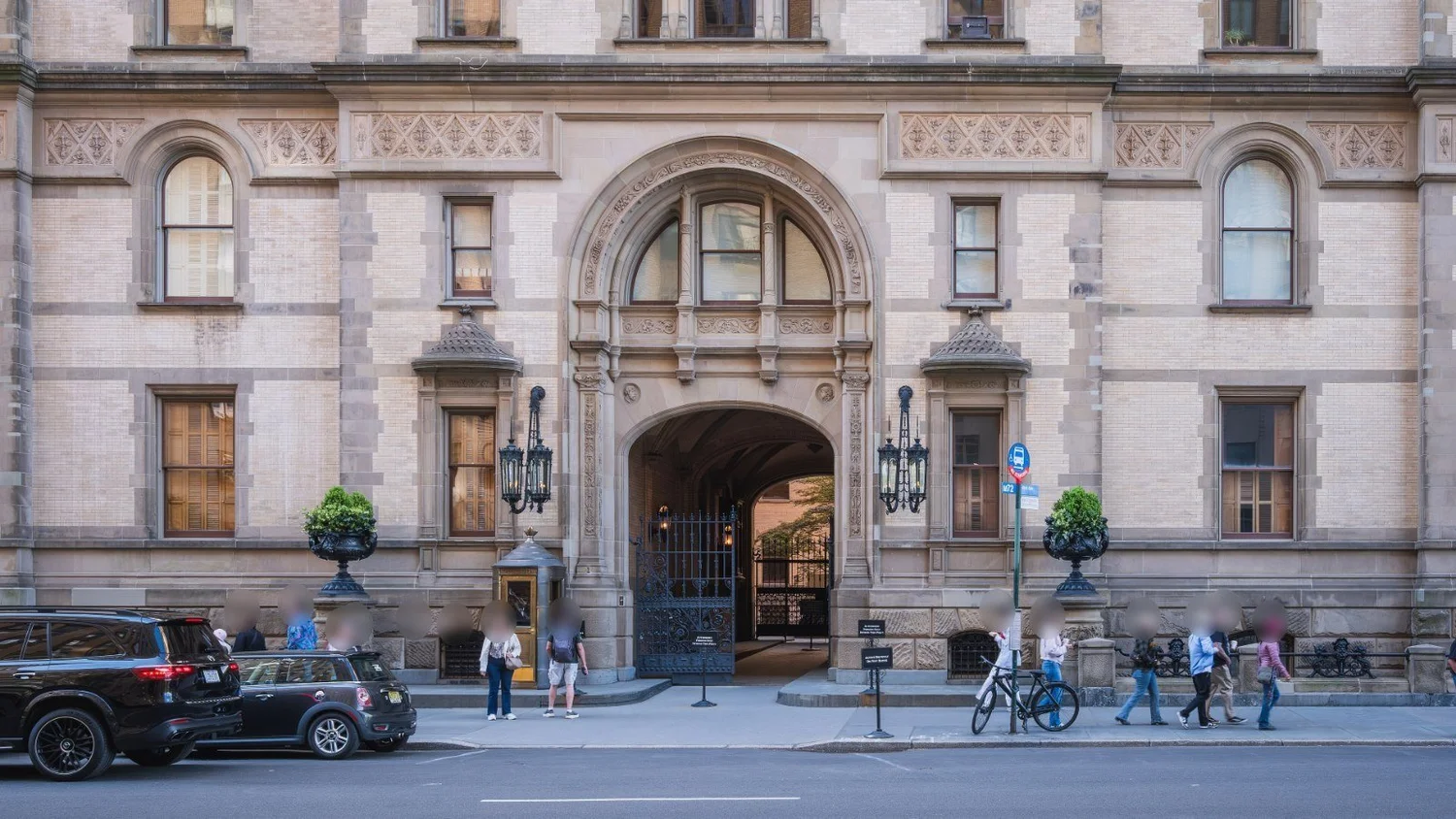
Late in the afternoon of Monday 8 December 1980, John Lennon stopped on the pavement outside the Dakota, his apartment building on New York's Upper West Side, and signed a copy of his new album, Double Fantasy, for a quiet 25-year-old fan from Hawaii. A few hours later, at about 10.50pm, the same man was standing in the shadows of the building's archway when Lennon came home. He fired five shots. Four hit Lennon in the back and shoulder. The former Beatle was dead within the hour, aged 40.
The killer was Mark David Chapman. He did not run. He took off his coat to show he had no other weapon, and waited on West 72nd Street, reading a paperback of J. D. Salinger's The Catcher in the Rye, until police arrived. In Britain it was just before 4am on Tuesday 9 December when the shots were fired, so much of the country woke up to the news.
Forty-six years later, the murder is one of the most retold crimes of the 20th century, and one of the most misremembered. This explainer sets out what happened hour by hour, what is established and what is still disputed, what Chapman has said about why he did it, how the case was dealt with in court, and why he remains in prison after 14 parole refusals.
The Short Answer
- What happened: John Lennon was shot outside the Dakota, 1 West 72nd Street, Manhattan, at about 10.50pm local time on 8 December 1980. He was taken to Roosevelt Hospital in a police car and pronounced dead; his death certificate gives the time as 11.15pm.
- Who did it: Mark David Chapman, then 25, a former security guard from Honolulu with no previous criminal convictions. He was arrested at the scene.
- The legal outcome: Chapman was charged with second-degree murder. Against his lawyers' advice to pursue an insanity defence, he pleaded guilty, and in August 1981 he was sentenced to 20 years to life.
- Where things stand now: He became eligible for parole in 2000. He has been refused 14 times, most recently after a hearing on 27 August 2025, and is held at Green Haven Correctional Facility in New York State. His next eligibility date is February 2027.
Who Was John Lennon in December 1980?
By 1980 Lennon had spent five years largely out of the music business. He stepped back in 1975 to raise his son Sean, born that October, with his wife Yoko Ono. The family lived at the Dakota, an apartment block completed in 1884 on the corner of Central Park West and West 72nd Street, with a carriage archway on 72nd Street leading to an inner courtyard.
The autumn of 1980 was his return. On 9 October he turned 40, the same day as Sean's fifth birthday. In November he and Ono released Double Fantasy, a joint album that alternated his songs with hers. It had a mixed critical reception and, initially, modest sales, but Lennon was busy promoting it, giving interviews and working on new material. In an interview with Rolling Stone on 5 December, three days before his death, he spoke about peace.
That matters to how the murder landed. Lennon was not a fading figure; he was a 40-year-old father in the middle of a comeback, and the album he signed for his killer was only weeks old.
Who Was Mark David Chapman?
In December 1980 Chapman was 25, married and living in Honolulu, where he had worked as a security guard. He had no previous criminal convictions, and he was a Beatles fan.
What changed, according to Chapman's own later accounts, was his relationship with Salinger's 1951 novel The Catcher in the Rye. Its teenage narrator, Holden Caulfield, rails against adult hypocrisy and "phonies", and Chapman came to identify with him intensely. He has said he was angered by Lennon's 1966 remark that the Beatles were "more popular than Jesus", and that he decided Lennon was a hypocrite for singing about a world with no possessions while living a wealthy life in one of New York's grandest buildings.
In later parole hearings Chapman gave a blunter explanation: he wanted to be famous. At a 2022 hearing he said he knew what he was doing was "evil" and that he "wanted the fame so much" that he was willing to take a life. Both accounts come from Chapman himself, decades apart, and neither has been tested in a trial, because there never was one. What the record does show is planning.
The Planning: Honolulu to New York
On 27 October 1980, Chapman bought a five-shot Charter Arms .38 Special revolver in Honolulu. Two days later he flew to New York, having checked how to carry a gun on a flight. Because he had learned that ammunition could be damaged in the hold, he did not bring bullets with him.
That first trip did not end in an attack. Chapman left New York around 12 or 13 November and returned to Hawaii. On 6 December he flew back to New York, spent a night at a YMCA on the Upper West Side and then moved to a Sheraton hotel in Midtown. By the morning of Monday 8 December he was outside the Dakota with the gun, hollow-point ammunition and a copy of Double Fantasy.
The months of preparation became central to how the case was understood. They are why prosecutors were never dealing with a sudden outburst, and why Chapman's later claims that part of him wanted to walk away were weighed against what he actually did.
8 December 1980, Hour by Hour
Accounts of Lennon's last day differ on exact times, particularly for the afternoon. The sequence below follows the most widely cited reconstructions; where sources disagree, we say so.
Morning: The Wait Begins
Chapman spent most of the day near the Dakota's entrance, chatting to the doorman and to other fans. He missed Lennon arriving back at the building by taxi earlier in the day. Later that morning he met Lennon's family nanny returning from a walk with five-year-old Sean, and reached out to shake the boy's hand.
Late Morning and Early Afternoon: The Photo Shoot and the Last Interview
The photographer Annie Leibovitz came to the apartment for a Rolling Stone cover shoot. One image from that session, of Lennon curled around a fully clothed Ono, became the magazine's cover on 22 January 1981, and in 2005 the American Society of Magazine Editors named it the top magazine cover of the previous 40 years.
Lennon then gave what turned out to be his final interview, to a team from San Francisco's RKO Radio Network led by the presenter Dave Sholin, talking about the 1960s, peace and his hopes for the decade ahead.
Late Afternoon: The Autograph
Some time between about 4.30pm and 5pm (reconstructions differ), Lennon and Ono left the Dakota for the Record Plant studio to work on Ono's song "Walking on Thin Ice", which features Lennon on lead guitar. Their car was running late and they accepted a lift with the RKO crew.
On the pavement, Chapman held out his copy of Double Fantasy. Lennon signed it. Paul Goresh, an amateur photographer and Lennon fan who often waited outside the building, took a picture of the moment: the last known photograph of Lennon alive, showing him beside the man who would kill him. Chapman later described Lennon as patient and kind, and said Lennon asked if he needed anything else.
Chapman then stayed. He had what he had supposedly come for, and he did not leave.
Evening: The Record Plant
Lennon spent the evening at the studio mixing "Walking on Thin Ice". It was his last recording session. The couple left to return home, planning to say goodnight to Sean before going out to eat.
About 10.50pm: The Shooting
Instead of driving into the Dakota's more secure inner courtyard, the couple's limousine stopped on West 72nd Street, and they walked towards the archway entrance. As Lennon passed Chapman, he appears to have glanced at him.
Chapman drew the revolver and fired five hollow-point bullets from roughly nine or ten feet away. One missed. According to the autopsy, two struck the left side of Lennon's back and two hit his left shoulder. Lennon staggered up the steps into the building's entrance area, said he had been shot, and collapsed.
One detail is still disputed. An eyewitness quoted by police in 1980 said Chapman called out "Mr Lennon" and dropped into a combat stance before firing. Chapman confirmed the stance in a 1992 television interview but told his 2008 parole hearing that he did not call out Lennon's name.
What Happened in the Minutes After
The doorman, José Perdomo, shook the revolver out of Chapman's hand and kicked it away. The concierge, Jay Hastings, went to Lennon, covered him with his uniform jacket and called the police. Chapman took off his coat and hat to show he was not carrying another weapon, then stood on the pavement.
Officers Steven Spiro and Peter Cullen, who were nearby at 72nd Street and Broadway, arrived about two minutes after the shots. They found Chapman standing calmly, reading The Catcher in the Rye, and arrested him without resistance.
A second set of officers found Lennon in the lobby, badly injured. Judging that he could not wait for an ambulance, they put him in the back of a patrol car, and Officers James Moran and Bill Gamble drove him to Roosevelt Hospital on West 59th Street, with Ono following in another police car.
Could Lennon Have Been Saved?
No, according to everyone who examined the injuries. Lennon arrived at Roosevelt Hospital a few minutes before 11pm with no pulse and not breathing. A small team worked on him for somewhere between 10 and 20 minutes, including opening his chest in a last attempt to restore circulation.
The bullets had destroyed major blood vessels around his heart and badly damaged his left lung. His death certificate recorded hypovolemic shock, the loss of more than 80% of his blood volume, from multiple gunshot wounds to the left shoulder and chest. The head of the emergency department, Stephan Lynn, later said that even if Lennon had been shot in an operating theatre with surgeons waiting, he would not have survived.
Two points remain contested:
- The time of death. The death certificate says Lennon was pronounced dead on arrival at 11.15pm; 11.07pm has also been reported.
- Who treated him. Lynn is usually credited, but another emergency surgeon, Richard Marks, said in 1990 that he operated, and a third doctor, David Halleran, then a surgical resident, said in 2015 that he did most of the work. The accounts cannot all be fully accurate, and none changes the outcome.
How the World Found Out
Ono asked the hospital not to announce the death until she had told Sean, who was at home and might be watching television. That wish could not be kept. A WABC-TV news producer, Alan Weiss, happened to be in the same emergency department after a motorcycle accident, overheard what had happened and called his newsroom.
The news reached ABC's Monday Night Football, where the New England Patriots were playing the Miami Dolphins. With seconds left in the game, the commentator Howard Cosell, who had once interviewed Lennon during a broadcast, told millions of American viewers that Lennon had been shot outside his apartment building and was dead on arrival at hospital. For many Americans, that was how they heard.
Crowds gathered outside the Dakota and the hospital within hours. In Britain, where it was the early hours of Tuesday, people heard the news on waking.
The Reaction: Liverpool, Central Park and a Ten-Minute Silence
George Harrison issued a statement saying he was "shocked and stunned". Paul McCartney spoke to reporters outside his home and called Lennon a great man who would be missed by the whole world; a later, brief remark to reporters in London, that it was a "drag", was widely criticised, and McCartney later explained that he had been in shock and unable to express what he felt. Ringo Starr flew from the Bahamas to New York to be with Ono and Sean. The former Prime Minister Harold Wilson called the death "a great tragedy".
There was no funeral. Lennon was cremated the day after his death at Ferncliff Cemetery in Hartsdale, New York. Ono asked instead for ten minutes of silence around the world on Sunday 14 December. About 30,000 people gathered in Lennon's home city of Liverpool, and more than 100,000 in Central Park, near the Dakota. New York radio stations went silent for the ten minutes.
The music also changed overnight. Double Fantasy became a worldwide commercial success and won Album of the Year at the Grammy Awards. Roxy Music's cover of Lennon's "Jealous Guy", released as a tribute in early 1981, went to No 1 in the UK.
Chapman in Court: Why There Was No Trial
After eight hours of questioning at the 20th Precinct, Chapman was taken to court and sent to Bellevue Hospital for psychiatric evaluation. He was charged with second-degree murder; under New York law at the time, premeditation alone did not support a first-degree murder charge.
His lawyers prepared an insanity defence. Chapman overruled them and pleaded guilty, saying he believed it was what God wanted. Because he pleaded guilty, there was no jury trial and the evidence was never tested in front of a jury. Before he was sentenced in August 1981, he was allowed to address the court, and he read a passage from The Catcher in the Rye.
The sentence was 20 years to life imprisonment, which meant he could first be considered for release in 2000. HISTORY reports that psychiatrists described him as borderline psychotic; the guilty plea meant that question was never decided by a court.
Why Does Chapman Keep Being Refused Parole?
In New York, a sentence of 20 years to life means a prisoner can apply for release after the minimum term, but the state parole board decides whether release is compatible with public safety and with the seriousness of the crime. Chapman has appeared before the board roughly every two years since 2000, and has been refused every time.
At his first parole review in 2000, officials told him his "vicious and violent act" appeared to have been driven by his need to be acknowledged. In 2022, denying release again, the board said the murder had left "the world recovering from the void" he created. Chapman's own statements have grown more direct over the years: in 2012 he said part of him had wanted to leave with the signed album, but that he was "so compelled" that nothing would have dragged him away; in 2022 he said he wanted fame enough to kill for it.
His 14th refusal followed a hearing on 27 August 2025, according to the New York State Department of Corrections and Community Supervision. He is now in his seventies and remains at Green Haven Correctional Facility. His next parole eligibility date is February 2027, so there is no decision due on this anniversary.
Could the Murder Have Been Prevented?
This is analysis rather than settled fact, but two points come up repeatedly.
- The entrance. Lennon routinely walked in from the street and stopped for fans. Dan Richter, who worked for Lennon and Ono as a personal assistant from 1969 to 1973, later told The Daily Telegraph that the front door was a "danger point" and that a side entrance could have been used. On the night, the car stopped on 72nd Street rather than driving into the courtyard.
- The gun. Chapman bought the revolver in Hawaii and planned how to bring it to New York. The murder became part of the American debate on handgun control, and McCartney cited Lennon's killing when he joined the 2018 March for Our Lives against gun violence.
Neither point changes who is responsible. Chapman planned the killing over weeks, came back to New York to carry it out, and pleaded guilty.
The Conspiracy Theories, and What the Evidence Says
Because the FBI and the CIA did keep watch on Lennon in the early 1970s over his anti-war activism, his murder has attracted conspiracy theories. The best known came from the barrister and journalist Fenton Bresler, whose 1990 book Who Killed John Lennon? suggested Chapman might have been programmed as an assassin. Later books, a stage play and a 2010 documentary pushed variations on the idea that Chapman was a pawn or did not fire the fatal shots.
None of these theories has produced evidence that stands up. Chapman was arrested at the scene, the revolver was recovered there, he pleaded guilty, and over more than four decades of parole hearings he has repeatedly described planning and carrying out the killing himself. The surveillance of Lennon in the 1970s is documented; a link between it and his murder is not.
One genuine echo did follow. Three months later, John Hinckley Jr tried to assassinate President Ronald Reagan. Police found a copy of The Catcher in the Rye among his belongings, along with a tape in which he spoke about Lennon's death.
How Lennon Is Remembered
- Strawberry Fields: In 1985 New York dedicated an area of Central Park opposite the Dakota as Strawberry Fields, with trees donated by countries around the world and an "Imagine" mosaic given by the city of Naples. Fans gather there every 8 December.
- The Dakota window: Ono has placed a lit candle in the window of Lennon's room at the Dakota each anniversary.
- The Imagine Peace Tower: On the island of Viðey, near Reykjavík in Iceland, a column of light dedicated by Ono in 2007 shines each year from Lennon's birthday on 9 October until the anniversary of his death on 8 December.
- Songs: Harrison's "All Those Years Ago", McCartney's "Here Today" and Elton John's "Empty Garden (Hey Hey Johnny)" were all written in response to the murder.
What We Know and What Is Still Disputed
- Established: the date, place and approximate time of the shooting; that Chapman fired five shots and four hit Lennon; that Chapman was arrested at the scene; the cause of death; the guilty plea and the 20-years-to-life sentence; the 14 parole refusals.
- Disputed or uncertain: the exact time Lennon was pronounced dead (11.15pm or 11.07pm); which doctors did what at Roosevelt Hospital; whether Chapman called out Lennon's name; exact afternoon timings; and the weight to give Chapman's shifting explanations of his motive, which have never been tested at trial.
- Unsupported: claims that intelligence agencies directed the killing or that someone other than Chapman fired the shots.
Conclusion
The murder of John Lennon was not a mystery in the usual sense. The killer was caught on the spot, admitted it and has never been released. What has kept the case alive for 46 years is the gap between how ordinary the day was and how it ended: a haircut, a photo shoot, a radio interview, an autograph on a pavement, a session in a studio, and a man who had been given exactly what he asked for still waiting outside when the car pulled up.
As this year's anniversary approaches on 8 December, the practical questions are settled. Chapman remains in prison, his next parole date is in 2027, and the record of what happened outside the Dakota is clear. The harder question, why a man would kill a stranger he admired for the sake of being known, is one that his own changing answers have never fully closed.
Sources
- Wikipedia: Murder of John Lennon (with its cited contemporary reporting, including The New York Times, TIME and The Washington Post)
- HISTORY: John Lennon shot (updated 3 December 2025)
- Biography.com: John Lennon's Death: A Timeline of Events
- WLOS: John Lennon's killer, Mark David Chapman, has been denied parole for the 14th time (11 September 2025)
Next Reads
- The Harvey Milk and George Moscone assassinations explained
- Joe Colombo: the mob boss shot at Columbus Circle
- The JFK assassination: 15 pieces of evidence that challenge the official story
- Tupac Shakur's murder: a timeline of what happened
- The Charles Manson murders: the Family, the evidence and the myth
