Why Did a Double Political Murder End in a Manslaughter Verdict?
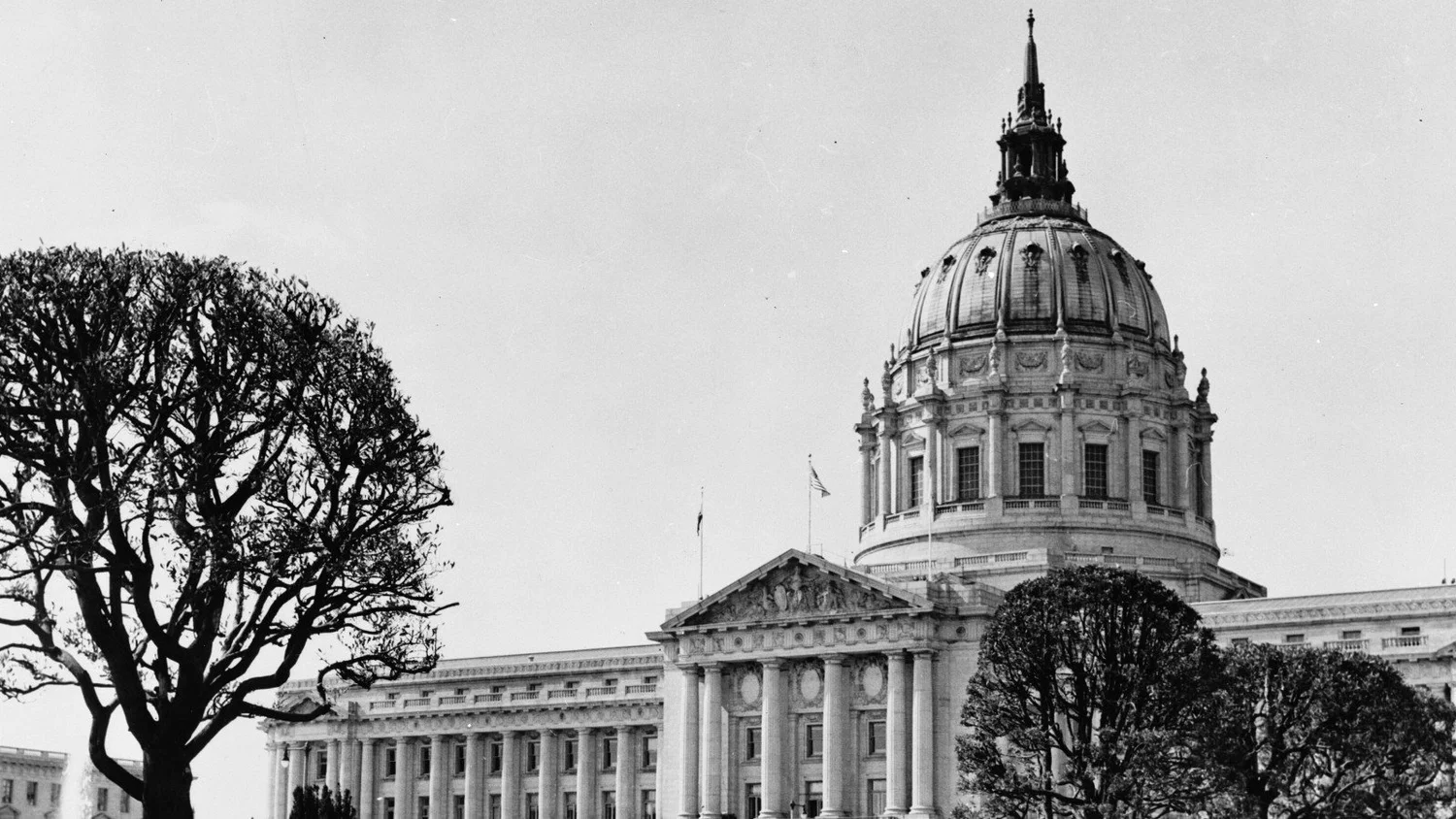
On the morning of Monday 27 November 1978, a former San Francisco city supervisor named Dan White climbed through a basement window of City Hall with a loaded revolver in his pocket. Within about ten minutes he had shot dead the city's mayor, George Moscone, and Supervisor Harvey Milk, one of the first openly gay elected officials in the United States. He then walked out of the building and, a short time later, turned himself in at the police station where he had once worked.
There was never any doubt about who had fired the shots. White confessed on tape that afternoon. Yet six months later a jury convicted him not of murder but of voluntary manslaughter, and he was sentenced to seven years and eight months in prison. The verdict set off one of the most violent nights in San Francisco's modern history, changed California's criminal law, and gave the English language a phrase, the "Twinkie defence", that is still used to describe a far-fetched legal excuse.
That phrase is also one of the most persistent myths in American legal history. Forty-eight years on, this explainer sets out what happened at City Hall, why White wanted his old job back, what his lawyers actually argued, why the jury reached the verdict it did, and how the killing turned Harvey Milk into one of the most recognisable figures in the history of gay rights.
The key facts
- When: Monday 27 November 1978, at about 10.45am (Moscone) and 10.55am (Milk), Pacific time.
- Where: San Francisco City Hall: the mayor's private office, then White's former office in the supervisors' suite.
- Who was killed: Mayor George Moscone, 49, and Supervisor Harvey Milk, 48.
- Who killed them: Dan White, a former police officer and firefighter who had resigned from the Board of Supervisors 17 days earlier.
- Charge: two counts of first-degree murder with special circumstances, which made him eligible for the death penalty.
- Verdict: guilty of two counts of voluntary manslaughter, 21 May 1979.
- Sentence: seven years and eight months. He was paroled in 1984 after serving about five years.
Who Were George Moscone and Harvey Milk?
George Moscone was elected mayor of San Francisco in 1977. He was a liberal Democrat who favoured a neighbourhood-oriented approach to the city's development rather than the pro-growth agenda backed by many of its business interests.
Harvey Milk, born in New York in 1930, had moved to San Francisco in 1972 and opened a camera shop, Castro Camera, in the Castro district, a neighbourhood then becoming the centre of the city's gay community. He ran for supervisor in 1973 and again in later races without success. In November 1977 the city switched to electing supervisors by district rather than citywide, and Milk won the seat for District 5, which included the Castro. He became the first openly gay man elected to public office in California.
The same election brought Dan White onto the board for District 8, a more conservative, largely working-class area. The new board was strikingly diverse for its time. Wikipedia's account of the period, drawing on contemporary San Francisco Examiner reports, lists its first Chinese American member, first Black woman, first unwed mother, first openly gay member and first former firefighter. All eleven supervisors were sworn in on 9 January 1978, with Dianne Feinstein as board president.
Milk and White clashed repeatedly. Accounts of the period describe tension after Milk voted in favour of placing a group home in White's district, and White cast the only vote against the city's landmark gay rights ordinance, which the board passed in April 1978 and Moscone signed into law. Milk was also a leading campaigner that year against Proposition 6, the so-called Briggs Initiative, which would have required California's public schools to fire gay teachers and any staff who supported gay rights. Voters rejected it at the November 1978 general election, by 58.4% to 41.6% according to UC Law San Francisco's ballot archive, three weeks before the killings.
Why Did Dan White Resign and Then Want His Job Back?
White had served in the San Francisco police and fire departments before entering politics. The city charter barred anyone from holding two city jobs at once, so on joining the board he gave up his better-paid firefighting post. A supervisor's salary was $9,600 a year. He tried to supplement it with a food stand at the Pier 39 development, and a committee he sat on had blocked a proposed pay rise in the summer of 1978.
On 10 November 1978 White resigned, telling Moscone he could not support his family on the salary. Five days later, after relatives offered loans and constituents urged him to stay, he asked for his resignation letter back. Moscone initially seemed willing. "District 8 is well off with White," he told the Examiner, according to Smithsonian magazine.
The legal position was less simple. On 16 November the city attorney ruled that White had in fact resigned, so the mayor would have to make an appointment to fill the vacancy, either of White or of someone else. Progressive supervisors, Milk and Carol Ruth Silver most prominently, lobbied Moscone not to reappoint him. White's departure was an opportunity to shift the balance of a board that was split roughly 6–5 in favour of pro-growth members.
Then, on 18 November, came the news from Jonestown in Guyana, where more than 900 members of the Peoples Temple, a movement that had been based in San Francisco until shortly before, died in a mass murder-suicide. The city was plunged into mourning and the question of White's seat was pushed aside for days. Moscone said on 21 November that a decision was a week away and gave no guarantee of reappointment. White, accounts suggest, still believed he would get his seat back.
Moscone had decided otherwise. He planned to appoint Don Horanzy, a federal housing official and moderate liberal, at a press conference set for 11.30am on 27 November. White learned of the decision the night before, when a reporter called him. According to American Heritage's account of the case, he was angry that Moscone had not told him personally, and he stayed up through the night.
What Happened at City Hall on 27 November 1978?
After a series of bombings and bomb threats in the Bay Area in the mid-1970s, City Hall had introduced guards and metal detectors at its public entrances. White avoided them.
He had a former aide drive him to City Hall that morning. He was carrying his old police service revolver, a five-shot .38-calibre Smith & Wesson, loaded with hollow-point bullets, and ten spare rounds in his coat pocket. At about 10.25am he climbed through a ground-level window into a basement laboratory, telling a building engineer, William Melia, that his aide had failed to let him in by a side door.
The mayor's office
White went to the mayor's suite and asked to see Moscone, who was meeting the California Assemblyman Willie Brown. After Brown left, Moscone saw White, refused again to reappoint him, and, to avoid a scene, took him into a small private room next to his office. Moscone's appointments secretary heard what she took to be a car backfiring outside.
According to the accounts summarised by Wikipedia and American Heritage, White fired twice into Moscone's shoulder and chest. After the mayor fell, White stood over him and shot him twice more in the head at close range. He then reloaded. (Smithsonian's shorter account refers to three shots; the fuller reconstructions, based on the coroner's findings, describe four.)
The supervisors' offices
White walked quickly to the other end of the building, where the supervisors had their offices. Dianne Feinstein saw him pass and called out to him. He told her it would have to wait. He found Milk and asked whether he could see him for a minute. The two men went into White's former office and closed the door.
At about 10.55am, White shot Milk five times. The first bullet struck Milk's wrist as he raised it to protect himself; the last two were fired into his head. White left before Feinstein reached the office and found Milk's body.
The coroner later concluded, according to Randy Shilts's biography of Milk, The Mayor of Castro Street, that the wrist and chest wounds were not fatal and that the head shots, fired at very close range, killed both men.
The announcement and the surrender
At about 11.20am Feinstein, as president of the Board of Supervisors, faced reporters who had gathered for the Horanzy announcement. "Both Mayor Moscone and Supervisor Harvey Milk have been shot and killed," she told them. "The suspect is Supervisor Dan White." She was shaking so badly that the police chief had to support her as she spoke.
White had already left the building unchallenged. He took his aide's car keys, drove to a diner, called his wife from a payphone and met her at a nearby church. Roughly half an hour after leaving City Hall he turned himself in at the San Francisco police department's Northern Station, where he had served as an officer, and that afternoon gave a taped confession to a detective he knew, Frank Falzon. In it he admitted the shootings but denied planning them.
How Did San Francisco Respond?
That evening a candlelit march set out from the Castro to City Hall. Accounts put the crowd at tens of thousands; American Heritage gives a figure of 40,000. It was a silent memorial to both men, and especially to Milk. Moscone's funeral at St Mary's Cathedral was attended by 4,500 people.
Feinstein became acting mayor as president of the board, and on 4 December the supervisors elected her mayor. She would hold the office for the next decade and later served as a US senator for California from 1992 until her death in 2023. She appointed Don Horanzy to White's old seat on 7 December, and in January 1979 appointed Harry Britt to succeed Milk in District 5.
What Was Dan White Charged With?
White was charged with two counts of first-degree murder with special circumstances. Two of the circumstances that applied, the killing of an elected official in retaliation for or to prevent their official duties, and the commission of more than one murder, had been written into California law by Proposition 7, approved by voters at the same election that defeated the Briggs Initiative, only three weeks earlier. If convicted as charged, White could have faced the death penalty.
To many San Franciscans, a conviction for murder seemed a foregone conclusion. White had entered the building through a window, avoided the metal detectors, carried spare ammunition, reloaded after killing the mayor and walked the length of City Hall to find his second victim. The prosecution, led by Deputy District Attorney Thomas Norman, argued that those actions showed exactly the planning that first-degree murder requires.
What Did the Defence Actually Argue?
White's lawyers, led by Douglas Schmidt, did not dispute that he had killed both men. Their case was about his state of mind. Under the law California applied at the time, a defendant could argue "diminished capacity": that a mental condition had left him unable to form the premeditation and malice that a murder conviction requires. If the jury accepted that, the charge would fall to manslaughter.
The defence argued that White had been suffering from serious depression, worsened by financial strain, the pressures of his job and his failed attempt to return to the board. Witnesses described changes in his behaviour, including his diet. White's sister testified that he ate junk food such as Twinkies and chocolate cupcakes when he was depressed. The psychiatrist Martin Blinder told the court that White's unhealthy eating might have been an indicator of his depression, and suggested that without all the pressures on him, "and perhaps if it were not for the ingestion of this aggravating factor, this junk food", the killings might not have happened.
The trial, which began in May 1979, also turned on the jury. According to American Heritage, the panel was made up mostly of white, working-class Catholics, many from in or near White's former district and none from the area around the Castro. The judge did not allow the prosecutor to ask prospective jurors whether they were gay. When White's taped confession was played in court, with its account of the pressures he said he had been under, some jurors were reported to have been moved to tears.
Is the "Twinkie Defence" a Myth?
Yes, at least in the form most people know it. The popular version says White's lawyers claimed that eating too much sugary junk food drove him to kill. That is not what they argued. In the defence case, junk food was evidence of White's depression, a symptom, not its cause. The diet came up only briefly in a long trial, and neither of White's lawyers argued that Twinkies made him a killer.
The misunderstanding began with news reports at the time that presented the junk food as the centrepiece of the defence. It became a punchline within days of the verdict, and then a shorthand for any excuse that seems to let a defendant escape responsibility. In 2003, the San Francisco Chronicle published a piece under the headline "Myth of the 'Twinkie defense'" to set the record straight, and American Heritage called it "a legal legend that refuses to die".
It has not died yet. Even some respected reference sources still summarise the case as a defence claiming that "copious amounts of junk food" caused White's mental problems. The jury accepted a psychiatric argument that White's depression had diminished his capacity to premeditate. That argument, not snack cakes, produced the verdict.
None of that means the outcome was fair. The point critics made then, and still make now, is not that the jury believed a story about sugar. It is that a man who brought a gun and spare bullets into City Hall by a window, reloaded and hunted down a second victim was found not to have planned what he did.
The Verdict and the White Night Riots
On 21 May 1979, after 36 hours of deliberation according to American Heritage, the jury found White guilty of two counts of voluntary manslaughter. He was sentenced to seven years and eight months in prison.
The response was immediate. Within hours, protesters, many of them gay, marched on City Hall. The protest turned violent: the building's glass doors and windows were smashed, and protesters fought police in the street. American Heritage puts the toll at 11 police cars set on fire, about 120 people injured and around 30 arrests. One rioter told a reporter to "make sure you put in the paper that I ate too many Twinkies."
Later that night, according to the same account, a group of police officers raided the Elephant Walk, a gay bar in the Castro, and beat patrons, many of whom had nothing to do with the riot at City Hall. White had been a police officer, and officers had helped to raise money for his defence fund, which deepened the anger in the gay community. The night became known as the White Night riots.
How Did the Case Change California Law?
The verdict made diminished capacity politically untenable. The state legislature restricted the defence in 1981, and in 1982 California voters approved Proposition 8, a wide-ranging criminal justice measure that abolished the diminished capacity defence altogether.
What replaced it was narrower. A 1996 review in the Journal of the American Academy of Psychiatry and the Law describes how California moved to a "severely attenuated" defence known as diminished actuality, under which evidence of a mental condition can be used only to argue that the defendant did not actually form the required intent, not that he lacked the capacity to form it. The authors argue that the change "was made in response to an unpopular jury verdict" in a political climate unreceptive to psychiatric testimony. In practice, it means a Dan White-style defence would be far harder to mount in California today.
Was It a Hate Crime?
This is the part of the story where facts and interpretation have to be kept apart.
What is established: White killed the two officials he blamed for denying him his seat. He had clashed with Milk politically, voted alone against the gay rights ordinance, and represented a district very different from Milk's. The verdict was widely seen in the gay community as evidence that the killing of a gay man was valued less, and many believed homophobia had influenced the jury.
What is disputed: how far White's motive was hostility to gay people rather than political grievance. Some writers, including a 2008 SF Weekly piece cited in histories of the case, have argued that his motive was more about a sense of betrayal over the lost seat. Others see the two as inseparable, given that Milk was both the most prominent opponent of his reappointment and the city's most visible gay politician.
What came later: in 1998 Frank Falzon, the detective who took White's confession, said that White had told him in 1984 that the killings were premeditated and that he had also intended to kill Carol Ruth Silver and Willie Brown. That account was reported by the journalist Mike Weiss at the time. White could not be retried for the killings, and he was not alive to respond to it, so it remains Falzon's account rather than a court finding.
What Happened to Dan White?
White served five years, one month and nine days of his sentence before being paroled in 1984. He served his parole in the Los Angeles area. Feinstein, still mayor, publicly asked him not to return to San Francisco, but he moved back to the city in early 1985. He never made a direct public statement of remorse. In October 1985 he took his own life.
The revolver he used was later found to have been destroyed by a police clerk in about 1983, under a court order, and melted down at a foundry, according to reporting by the San Francisco Chronicle cited in accounts of the case. Much of the other evidence, including the tape of White's confession, was preserved. Part of the recording became public in 2014.
How Is Harvey Milk Remembered?
Milk spent less than a year in office, but his death turned him into a national symbol. Aware that his visibility made him a target, he had recorded his thoughts on tape in case he was killed, including whom he wanted to succeed him and a now famous line: "If a bullet should enter my brain, let that bullet destroy every closet door."
- Film: the 1984 documentary The Times of Harvey Milk won the Academy Award for best documentary feature. The 2008 film Milk starred Sean Penn, who won the Oscar for best actor, with Josh Brolin, nominated for his performance as White, and Victor Garber as Moscone.
- Honours: President Barack Obama awarded Milk the Presidential Medal of Freedom posthumously in 2009, and California declared his birthday, 22 May, Harvey Milk Day. In 2019 he was among the first people inducted onto the National LGBTQ Wall of Honor, unveiled for the 50th anniversary of the Stonewall uprising.
- Memory: the suit he was wearing when he was killed is on display at the GLBT Historical Society's museum in the Castro.
Moscone's family has kept his memory in view too: his son Jonathan, who was 14 when his father was killed, directed the 2012 play Ghost Light, which explores the effect of the murder on him.
Why the Moscone and Milk Killings Still Matter
The assassinations of George Moscone and Harvey Milk are remembered for three things that are easy to blur together: the murders themselves, a verdict that much of San Francisco regarded as a betrayal, and a phrase that misdescribes the trial.
Separating them makes the story clearer. The verdict was the product of a now-abolished legal doctrine, an argument about depression that the jury accepted, and a jury whose make-up critics regarded as stacked in White's favour. The "Twinkie defence" was a media shorthand that turned a complicated psychiatric argument into a joke, and in doing so made it harder to see what actually went wrong in the courtroom.
What has lasted longest is Milk himself. A politician who served for eleven months is now one of the best-known figures in the history of the gay rights movement, partly because of the way he lived and campaigned, and partly because of the way he died. Forty-eight years after a former colleague climbed through a basement window at City Hall, his name is on schools, streets and a US Navy ship, and the question his death raised, whether the justice system valued his life equally, still shapes how the case is told.
Sources
- American Heritage: Murder at City Hall, and a Travesty of Justice in the Courtroom? (David Rapp, 27 November 2007)
- Smithsonian Magazine: Harvey Milk, One of the World's First Openly Gay Politicians, Was Assassinated on This Day in 1978 (27 November 2024)
- HISTORY: San Francisco leaders George Moscone and Harvey Milk are murdered (updated 28 May 2025)
- Journal of the American Academy of Psychiatry and the Law: California's Diminished Capacity Defense: Evolution and Transformation (1996)
- UC Law San Francisco ballot archive: California Proposition 6 (1978), School Employees. Homosexuality (summary and result)
- Wikipedia: Assassinations of George Moscone and Harvey Milk (summarising contemporary San Francisco Examiner, Chronicle and New York Times reports)
- Wikipedia: Harvey Milk
Next Reads
- The Murder of John Lennon Explained: Mark David Chapman, the Dakota and Why He Is Still in Prison
- Jonestown Explained: Jim Jones, the Peoples Temple and the Road to Mass Death
- Inside the Zodiac Killer's Unfinished Reign of Fear
- The JFK Assassination: 15 Pieces of Evidence That Challenge the Official Story
- Joe Colombo: The Mafia Boss Who Picketed the FBI and Was Shot at His Own Rally
- The Brink's-Mat Robbery Explained: Where Did £26m of Heathrow Gold Go?
