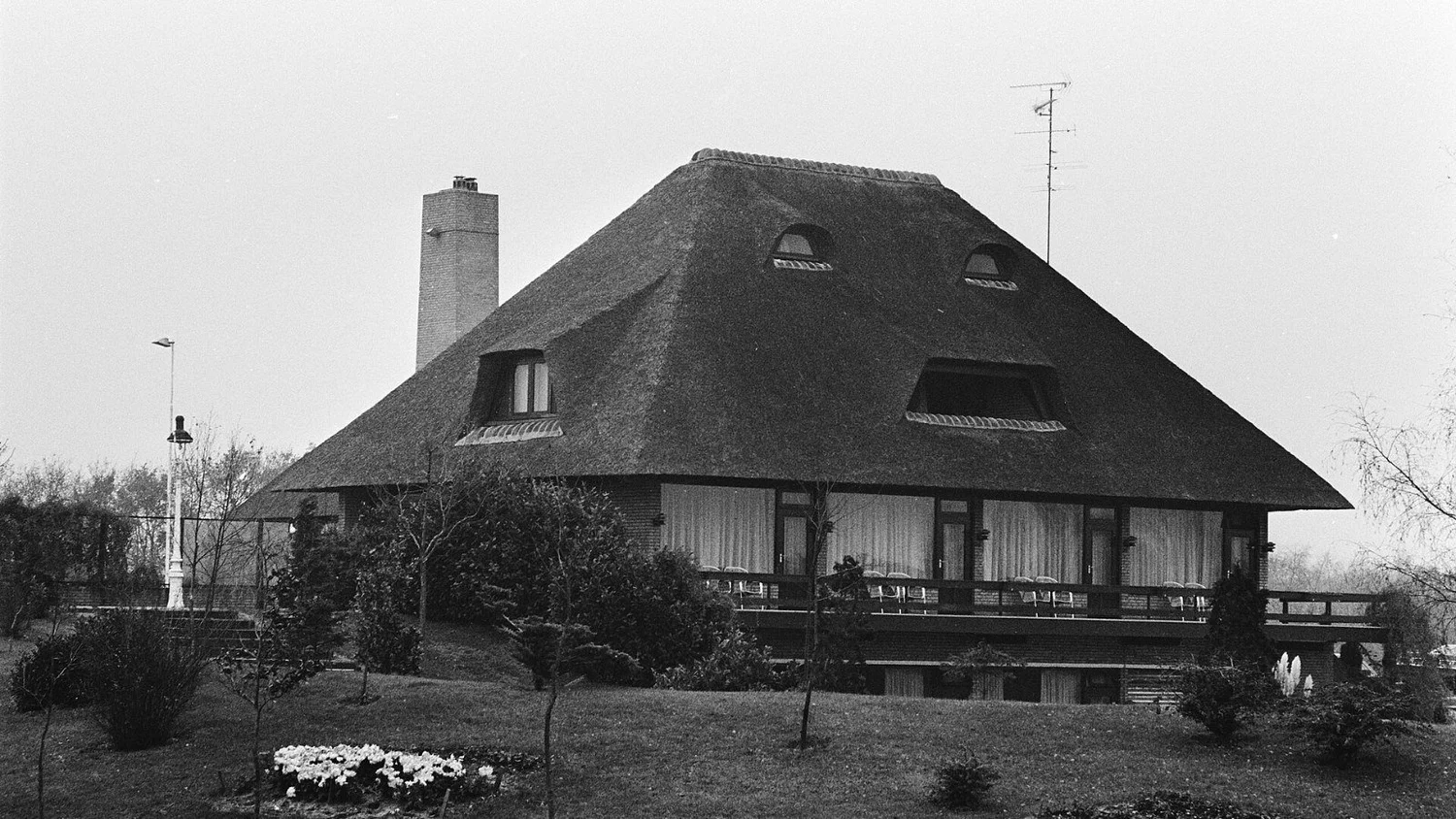
Why Did Kidnappers Who Came for Gerrit Leave With Toos?
Late on the evening of Friday 26 November 1982, three men came to the Van der Valk family home beside the motel the couple had built at Nuland, near 's-Hertogenbosch in the southern Netherlands. They had come for Gerrit van der Valk, the head of the country's best-known hotel and restaurant family. He was not there, or at least his wife told them he was not. So they took her instead.
Toos van der Valk, then 51, spent the next three weeks chained up in a flat in Brussels while her family negotiated by telephone with men demanding millions. She was freed on 17 December 1982, after a ransom of about 13 million guilders was paid, and set out of a car near Eindhoven. Most of the money was never found.
That is the true story behind Toos: The Van der Valk Kidnapping (in Dutch, Toos: De Van der Valk ontvoering), the six-part Dutch drama that Netflix released worldwide on 26 November 2026, 44 years to the day after the abduction. The short answer to "is it a true story?" is yes, with a clear qualification. The kidnapping, the ransom, the Brussels flat and the arrests are all documented. But the family's own website stresses that the series is fiction inspired by real events, not a documentary, and that characters, conversations and scenes have been adapted or invented.
This explainer sets out what is on the record, what the series changes or adds, and what happened to Toos afterwards. It covers how the real case ended, which is also how the series ends. If you want to watch first, come back later.
What Is Netflix's Toos: The Van der Valk Kidnapping?
The series is a Netflix original made by the Dutch production company Submarine. Netflix announced the release date on 13 October 2026 and bills it as "inspired by" the case.
- Writers: Maaik Krijgsman and Carl Joos.
- Directors: the Belgian pair Inti Calfat and Dirk Verheye, who also co-directed the first season of Netflix's Into the Night.
- Cast: Lies Visschedijk as Toos and Frank Lammers (Undercover) as Gerrit, with Gijs Blom as their son-in-law Joep van den Nieuwenhuijzen, Joy Verberk as their daughter Marijke, Richelle Plantinga as their daughter Carlita, Jim Deddes as Marijke's husband Harry Heinrichs, Victor Löw as Gerrit's brother Arie, and Juda Goslinga as a detective called Cor Mulder. Italian actors including Alessio Gallo (My Brilliant Friend) play the kidnappers.
- Length: six episodes.
- Filming: Omroep Brabant reported in October 2025 that shooting had begun and would run until February, in the Netherlands, Belgium and Germany.
Netflix's synopsis describes a "twenty-day" ordeal in which a police officer, Cor Mulder, moves into Hotel Nuland undercover as "nephew Cor" while the family falls apart under pressure, the press follows every detail and the government worries that paying a ransom would set a precedent.
Reviews so far have been warm. Anke Meijer, writing for VPRO Cinema, gave it four stars out of five, calling it carefully made and genuinely tense in its second half, "even if you already know how it ends". Her main criticism was that, in such a large family, many characters remain little more than extras.
Who Is Toos van der Valk?
Anthonia "Toos" van de Cappelle was born in Delft on 22 December 1930, according to her official website and Dutch Wikipedia. She met Gerrit van der Valk in August 1947 and married him in Delft on 21 August 1953. (Dutch Wikipedia gives the year of the wedding as 1954; the family's own timeline says 1953.)
Gerrit came from a family whose hospitality business traces back to an inn opened by his grandfather Nicolaas van der Valk in Voorschoten in 1862. In 1954, Gerrit and Toos started their own business, the restaurant De Witte in Vught, and raised their seven children above it. On 27 September 1968 they opened Motel Nuland beside the motorway between Den Bosch and Nijmegen, which the family describes as the first big motel in the Netherlands and the first hotel it designed and built itself. In 1975 the couple moved into a house beside the hotel in Nuland. That was the home the kidnappers entered.
By 1982 the Van der Valk name, with its toucan logo, was one of the most recognisable in Dutch hospitality. Omroep Brabant described the couple as running the largest hotel chain in the country. That prominence is what made them a target.
What Happened on 26 November 1982?
The broad facts of the night are consistent across the family's website, Omroep Brabant and Dutch Wikipedia. Late on the Friday evening, Toos was taken from her home in Nuland by three Italian men. Their target was Gerrit. Because Toos said he was not at home, they took her.
She was driven to Brussels with a woollen hat pulled over her head. According to the account in Dutch Wikipedia, drawn from her own later testimony, gaps in the hat sometimes let her see enough to know where she was being taken.
For the Netherlands, the case was a shock. Jan Bart Dieperink, writing for BNNVARA's Joop in February 2026, recalled that the evening news audience peaked as the kidnapping was reported, and that it held the country's attention for three weeks. He placed it in a run of high-profile kidnappings of wealthy Dutch figures, including those of property tycoon Maup Caransa, brewer Freddy Heineken and supermarket executive Gerrit Jan Heijn, which he argued ended post-war Holland's sense of innocence. Omroep Brabant called it a turning point in how the Netherlands viewed serious crime and the safety of prominent business owners.
Twenty-One Days in a Brussels Flat
Toos was held in an apartment in Brussels. Dutch Wikipedia, citing the Reformatorisch Dagblad's 2011 interview with her and the account in her book, describes the conditions:
- She was chained to a radiator and made to lie in a small tent day and night.
- When she needed the toilet, a pillowcase was put over her head.
- She tried to raise the alarm by pushing a note through a ventilation grille in the bathroom, but her captors found out.
She also did something that later mattered. Throughout her captivity she tried to take in as many details of her surroundings as she could. One of them was a cake she was given, which came with a piece of paper from a local bakery printed with its address. After her release, those details helped her lead police back to the building where she had been held.
How long the ordeal lasted depends on how you count. The family's website says 21 days, from 26 November to 17 December. Netflix and its marketing describe a "twenty-day" race to save her. Both refer to the same dates.
The Ransom Negotiations
The family's side of the negotiations was at first led by Joep van den Nieuwenhuijzen, who was married to Toos's daughter Carlita and later became well known in the Netherlands as a "company doctor" who turned around struggling businesses. Contemporary Anefo photographs held by the Dutch National Archives show him acting as the family's spokesman.
The first attempt to hand over the money failed, and after that he was taken off the negotiations, according to Dutch Wikipedia. In the end it was Toos's daughter Marijke and her husband, Harry Heinrichs, who succeeded in delivering the ransom to the kidnappers.
How much was paid? The figure most often cited is 13 million guilders, used by the Dutch regional broadcaster Omroep Brabant and by Dutch Wikipedia. Dieperink notes that Het Parool reported on 18 December 1982 that "more than 10 million guilders" had been paid, and that it later emerged the sum was about 13 million. At the fixed rate used when the Netherlands adopted the euro, 13 million guilders is about €5.9 million, before any adjustment for inflation since 1982. Only about two million guilders of it was ever recovered.
VPRO Cinema's review says the series dramatises the strain this put on the wider family: Gerrit's brother Arie tries to persuade the bank to lend the millions, not every relative is equally willing to put their money at risk, and the household argues over who should make the drop. Those are the series' portrayals of private family dynamics. The documented record confirms who carried out the negotiations and the handover, not what was said behind closed doors.
The Release Near Eindhoven
Shortly after the ransom was handed over, on 17 December 1982, Toos was released. She was put out of a car near Eindhoven, rang the doorbell of a nearby house, and the police were called.
The next day, 18 December, she made a statement to the press. Anefo's photographers recorded her being comforted and embraced by Gerrit.
The moment has stayed with her. In October 2026, her official website reported that she still visits people who matter to her, including the woman at whose door she rang on the night of her release, and published a photograph of the two of them by the tree where Toos was let go, 44 years later.
How the Police Caught the Kidnappers
The investigation was led by Guus Wesselink, then head of detectives in the region. Speaking to Omroep Brabant in 2014, he said that around 250 officers worked on the case across five countries. "At a murder you have an investigation and you only have to find a perpetrator," he said. "But with a kidnapping you know someone is in mortal danger and you don't know where that person is."
The decisive break came from the telephone. The calls with the ransom demands were made from a phone box in Italy, which police were able to establish from data they recovered, according to Dutch Wikipedia. Dieperink's account in Joop adds more detail. The calls were routed through Zurich, where investigators could not obtain information, but the telephone exchange in Rotterdam already had modern Ericsson equipment that could show where a call came from. The connection was diverted through Rotterdam, and the kidnappers, who used the same phone box each time, were located. Dieperink's account is a columnist's retelling rather than an official one, but it is consistent with the core point in the other sources: the calls were traced to Italy.
Three of the four Italian kidnappers were arrested within a month of Toos's release, Dutch Wikipedia says, citing the Reformatorisch Dagblad of December 1982. They were reportedly members of a gang of around 40 Italian bank robbers and had watched the family for a year, knowing details such as which cars they drove and which schools the grandchildren attended.
Wesselink himself travelled to the Gargano peninsula in southern Italy during the inquiry, where, he told Omroep Brabant, he was able to arrest the Italian "brain" behind the kidnapping. After retiring, he and his wife walked from Den Bosch to southern Italy, a journey he said was directly inspired by the case.
The Trial and Sentences
In August 1983 four defendants stood trial at the district court in Den Bosch, according to Dutch Wikipedia, which cites Reformatorisch Dagblad and NRC reports from the time. The prosecution charged them with kidnapping, unlawful deprivation of liberty, extortion and threats.
- The principal defendant, a 32-year-old Italian, was sentenced to 12 years.
- A second defendant was also sentenced to 12 years.
- A 35-year-old Italian who had become a naturalised West German, and who was said to have handled the telephone contact with the family and the ransom instructions, was sentenced to eight years. The court did not find the kidnapping and deprivation-of-liberty charges proven against him.
- A 37-year-old man from Brussels, said to have let the kidnappers use the flat, had already been released.
The convicted main defendant told the court he did not know where the ransom money was. Nine more Italians were later convicted in Italy for their part in the kidnapping, Dutch Wikipedia says.
One point is not fully settled in the sources read for this article. Contemporary reporting cited by Wikipedia said in December 1982 that the "brain" behind the kidnapping had been arrested, and Wesselink later described arresting the Italian mastermind in Gargano. Yet at the 1983 trial a defence lawyer pointed to another man, known by the nickname "La Volpe" (the fox), as the real organiser, and he was still at large at the time. Who conceived the plan is therefore less clear than the outline of the crime itself.
Taylor Tailored has not named the convicted men. Contemporary Dutch reporting identified them by initials, and more than 40 years on, their names add nothing to understanding the case.
What Is Real and What Is Dramatised?
The family's website answers the question directly: the series is "fiction based on true facts from 1982", and, as usual for a drama, characters, conversations and scenes have been adapted or invented. Dutch Wikipedia likewise notes that the series departs from the real events on certain points. Here is how the main elements compare with what is documented.
Clearly based on the record
- The date of the kidnapping, its location in Nuland, and the fact that the kidnappers had come for Gerrit.
- Italian-speaking kidnappers, captivity in Brussels, and the 17 December release near Eindhoven.
- Joep van den Nieuwenhuijzen as the family's negotiator, and Marijke and Harry Heinrichs as the couple who delivered the ransom.
- Toos's own attentiveness to her surroundings, which helped investigators afterwards. Heaven of Horror's review notes that the series makes a point of how little she misses, and that this "will become extremely important in the end".
Dramatised or unverified
- Detective Cor Mulder. The real investigation was led by Guus Wesselink. Netflix's undercover "nephew Cor", living with the family at Hotel Nuland, may be invented or a composite; no source read for this article confirms that such an officer existed under that name.
- Family arguments. Disputes over money and over who should make the drop, and details such as Gerrit sleeping in his suit in case he had to collect his wife in the middle of the night, are the series' portrayal. VPRO Cinema describes them; the record does not document them.
- The opening of a new hotel on the day of the kidnapping. In the series, Toos and Gerrit attend the opening of a new branch run by Marijke and Harry earlier that day. This could not be verified.
- The government's position on paying a ransom. This is a theme in Netflix's synopsis. The sources read here do not document the government's internal deliberations.
Frank Lammers was candid about his approach. "If you play someone who really existed, you mustn't base yourself too much on the truth," he told Omroep Brabant in 2025. "That isn't what it's about, but telling a story as well as possible."
Toos herself has never treated the series as her account. Her version is the book Mijn ontvoering ("My Kidnapping"), written by Elle van Rijn and published in 2011, subtitled "told for the first time by Toos van der Valk". According to Dutch Wikipedia, she had long been approached to tell her story but feared reprisals from the kidnappers, and she decided to work with Van Rijn because published accounts contained many inaccuracies. The family says the book is being reprinted and will be available again from December 2026.
What Happened to Toos After the Kidnapping?
The aftermath did not end with the trial. On 16 April 1983, the hotel at Nuland burned down for the second time (the first fire, in October 1976, was probably caused by a short circuit). The family's timeline says the cause of the 1983 fire was never established but that it is suspected to have been connected to the kidnapping. The hotel was rebuilt, bigger than before.
In 1984 Toos and Gerrit moved to Switzerland, to a village near Gstaad in the canton of Vaud. In 1987 she launched a perfume line with her daughter Marijke, a new venture the family's website describes as a deliberate choice after the kidnapping.
The decades since brought losses. Her son Martien died in a car accident in 2003, aged 43. Gerrit died on 20 January 2009, aged 80, after more than half a century of marriage. Carlita died in 2013, and Marijke in 2017.
Toos is still alive. She turned 95 in December 2025, and her website said in October 2026 that she was doing very well and still travelling regularly to see family and friends at home and abroad. She is mother of seven, grandmother of 38 and great-grandmother of 60, according to that site. Several Van der Valk hotels now carry her name on products and a restaurant, and the family's branch of the business, Van der Valk International, runs hotels in the Netherlands, Germany, Belgium and Spain. Hotel Nuland is run by one of her granddaughters.
The series' final scene, Heaven of Horror reports, shows the real Toos in the present day, with information on how large her family has grown.
How Did the Family React to the Series?
In a statement released by Netflix, Toos van der Valk's family said: "Even after all these years, the kidnapping remains a deeply sensitive chapter in our lives. It is remarkable to see attention being brought to it again now, and to have our story brought to life so compellingly by such a strong cast."
The family's website, which states that it is independent of Netflix and the series' makers, is more careful. It describes the series as fiction and points readers who want "the real story" to the book.
Analysis: That combination of cooperation and caution is typical of dramatised true crime made while those involved are still alive. The family appear to accept the drama as a respectful retelling, while making sure that the account in Toos's own words remains the reference point. For viewers, it is a useful rule of thumb: the events are real, and the emotional texture of the family scenes is the writers' invention.
Conclusion
Netflix's Toos is built on one of the most notorious crimes in modern Dutch history. Kidnappers who came for Gerrit van der Valk took his wife instead, held her chained in a Brussels flat for three weeks and released her near Eindhoven on 17 December 1982 after a ransom of about 13 million guilders, most of which was never recovered. Calls traced to a phone box in Italy, a large international police operation and Toos's own sharp memory of her surroundings brought several of the kidnappers to court in 1983, and more were later convicted in Italy. The series compresses, invents and dramatises around that core, particularly inside the family and in the figure of the undercover detective. But the woman at its centre is real: Toos van der Valk turned 95 last December, and her own account of those three weeks is about to return to bookshops.
Sources
- Netflix: Netflix Sets Release Date and Unveils First Look at 'Toos: The Van der Valk Kidnapping' (13 October 2026)
- Toos van der Valk official website: De Netflix-serie Toos èn het echte verhaal
- Toos van der Valk official website: Het leven van Toos van der Valk (timeline)
- Wikipedia (Dutch): Ontvoering van Toos van der Valk (citing Reformatorisch Dagblad 1982–83 and 2011, NRC 1983 and Mijn ontvoering)
- Omroep Brabant: Netflix toont eerste beelden van serie over ontvoering Toos van der Valk (13 October 2026)
- Omroep Brabant: Frank Lammers druk met rol Gerrit van der Valk (16 October 2025)
- Omroep Brabant: Recherche-chef Guus Wesselink ging te voet terug naar vindplaats ontvoerders Toos van der Valk (23 October 2014)
- BNNVARA Joop, Jan Bart Dieperink: Toos van der Valk — een dramatische ontvoering (2 February 2026)
- VPRO Cinema, Anke Meijer: Toos: De Van der Valk Ontvoering is met zorg gemaakt en oprecht spannend (26 November 2026)
- Heaven of Horror: Toos: The Van der Valk Kidnapping review (26 November 2026)
- Nationaal Archief / Anefo via Wikimedia Commons: Ontvoering van mevrouw Van der Valk uit Nuland, photo series (December 1982)
Next Reads
- The Unthinkable Daughter True Story: Suzane von Richthofen
- Murder in Galicia True Story: What Netflix Changed About the Isabel Fuentes Case
- Gordon Netflix True Story: Who Was Aníbal Gordon?
- American Nightmare True Story Explained: The Vallejo Kidnapping
- Kidnapped: The Elizabeth Smart Case Explained
- The Child (El Niño) True Story: The 1980 Ortuella School Explosion
