Where Did the FTX Money Go?
Why Did Caroline Ellison Prepare Seven Versions Of The Same Balance Sheet?
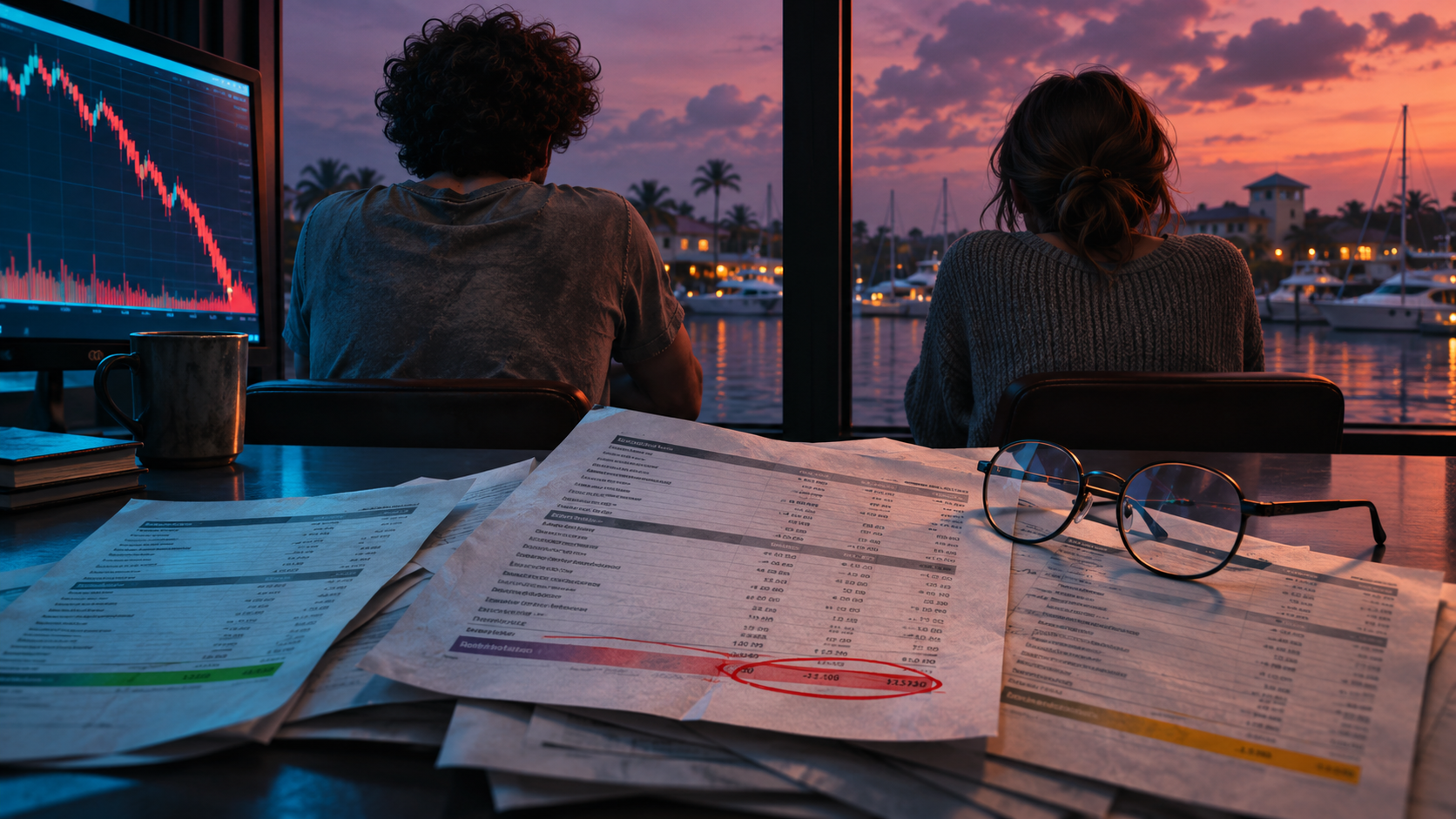
In the summer of 2022, a lender wanted to know what Alameda Research owned and what it owed. Caroline Ellison could have sent the trading firm’s real figures. Instead, she prepared seven alternatives. Sam Bankman-Fried chose the seventh. Ellison sent it to Genesis, a company deciding whether it could trust Alameda with more money. Behind the figures were people with accounts at a different company, FTX. They had deposited money to trade cryptocurrency. Some of that money had gone towards paying Alameda’s debts.
Netflix’s The Altruists, due on 19 November 2026, tells the story of Bankman-Fried and Ellison through their on-and-off romance. Anthony Boyle plays the founder of FTX. Julia Garner plays the woman who ran Alameda and later testified against him. The eight-part drama takes its inspiration from New York Magazine reporting. One way into the real story is to follow those two people from their first meeting to the moment a lender asked an ordinary question and an honest answer had become dangerous to them both.
Before FTX, There Was a Mock Trading Exercise
Ellison remembered meeting Bankman-Fried in 2015 during a mock trading exercise at Jane Street in New York. He was a junior trader helping to coach the exercise. She was a Stanford mathematics student on a summer internship. In the account her lawyers later gave the court, another early encounter took place at a Brazilian steakhouse during a work dinner. Two vegetarians found themselves with something to talk about.
They shared an interest in effective altruism, a movement concerned with how to use limited resources to do the most good. For Ellison, that had already influenced a practical choice. She had applied for paid internships partly because she wanted money to give to public-health and animal charities. Bankman-Fried, who had studied at MIT, took seriously the related idea of “earning to give”. A successful trader could finance work that might otherwise go undone. He donated a substantial share of his Jane Street salary.
The series title draws on that history. It also invites a question about sincerity that no verdict can settle for every stage of either person’s life. Ellison’s interest in giving preceded the internship where she met him. Bankman-Fried’s early donations were real. The limit of their reasoning becomes clearer later, once the source of the money changes. Bankman-Fried was entitled to decide how much of his salary he wanted to give away. A customer wiring their savings to FTX had made no comparable choice about how he could use them.
The Trader Who Built a Marketplace
Bankman-Fried founded Alameda Research in 2017. One early opportunity lay in the different prices people would pay for bitcoin in different countries. A trader who could buy it relatively cheaply in one market and sell it for more in another could pocket the difference after costs. The idea was easy to grasp. Moving money between countries, keeping accounts funded and completing both sides of a trade before the price gap closed were the difficult parts. Ellison left Jane Street to join Alameda in 2018.
In 2019, Bankman-Fried and Gary Wang launched FTX. Alameda could now trade on a marketplace its owners had built. There was a commercial reason for the arrangement. An exchange is a frustrating place to buy an asset if nobody stands ready to sell it. A market maker such as Alameda posts prices at which it will buy and sell, helping other traders complete orders. More activity can attract more customers, whose trades generate fees for the exchange.
The awkward question was who would enforce the rules against the market maker. An independent exchange can demand more collateral from a trader taking large risks. It can close positions if the trader fails to supply it. At FTX, taking either step against Alameda could damage another business in which the founder had a large personal stake. Customers had to rely on FTX to protect them precisely when doing so might cost its owner the most money.
As the exchange grew, outsiders acquired plenty of reasons to recognise its name. FTX secured naming rights to the Miami Heat’s arena. Its US advertising reached the Super Bowl. Investors valued the exchange at $32 billion in early 2022. That figure expressed what investors were willing to pay for a stake in the business. It told a customer remarkably little about whether their last deposit was still available for withdrawal.
What Happened After a Customer Pressed Deposit?
In FTX’s early days, some customers wiring dollars to the exchange received bank details for accounts controlled by Alameda. FTX credited the customer’s trading account. From the customer’s end, the transfer appeared to have worked. They could see a balance and place an order. Behind the screen, the dollars had arrived in a bank account belonging to the trading operation.
Consider someone depositing $1,000. The exchange can record that it owes this person $1,000 in seconds. If the recipient of the wire then spends the cash, nothing automatically changes on the customer’s screen. Other deposits and withdrawals may go through normally for a considerable time. The shortfall becomes visible to customers when enough of them ask to withdraw. An accountant could detect it much earlier by comparing what the company owes its customers with what it actually holds for them.
Alameda also enjoyed privileges inside FTX’s trading system. Wang, FTX’s chief technology officer, told jurors that the software allowed Alameda to carry a negative balance and gave it a $65 billion line of credit. That figure is sometimes easy to mistake for the amount that disappeared. It described how far the system would let Alameda go. The amount prosecutors said Bankman-Fried stole from FTX customers was more than $8 billion.
Here was an uncomfortable feature of a business that sold customers on its ability to manage risk automatically. A computer can close a losing position faster than a human dealing desk. It can just as faithfully obey an instruction to exempt a favoured account. A customer watching the exchange process thousands of trades had no way to discover which instructions applied to the founder’s firm.
Ellison Had Already Worked Out What a Crash Would Cost
By 2021, Ellison shared the job of running Alameda with Sam Trabucco. When he stepped down in 2022, she became sole chief executive. She and Bankman-Fried had also been romantically involved, and both lived for a time with colleagues in the Bahamas. For an understanding of how power worked between them, one assignment he gave her is more revealing than the details of their accommodation.
In autumn 2021, Bankman-Fried wanted to know what would happen if Alameda put another $3 billion into venture investments. Ellison modelled a downturn. Alameda had borrowed on terms that allowed lenders to demand repayment. A stake in a young company, meanwhile, might take years to sell at a sensible price. Her analysis showed that if the market fell and lenders called in their loans, Alameda would have to reach into FTX customer funds to repay them. She advised against taking the additional risk. Bankman-Fried wanted to proceed.
That exchange matters to any judgement about Ellison. She understood the danger well enough to calculate it and argued against the spending. Her warning also meant that when the demands for repayment arrived, she recognised what using customer money would entail. Her testimony that Bankman-Fried directed her actions sits alongside evidence of her own ability to see where they would lead.
In spring 2022, the collapse of the Terra and Luna cryptocurrencies sent losses spreading through lenders and trading firms. Alameda’s creditors began calling in loans. A lender demanding money back could see whether Alameda paid on time. It could rarely see whose money arrived. By using FTX deposits, Alameda could meet a demand that would otherwise have disclosed its financial condition. The lender received real money. The person left carrying the risk might still have been logging in to FTX every morning and seeing exactly the balance they expected.
What the Seventh Balance Sheet Hid
It was against that background that Ellison prepared the alternative balance sheets. The changes obscured Alameda’s borrowing from FTX and large loans to executives. A prospective lender reading the selected version would struggle to see how much of the business was already being sustained by people with claims on the same pot of money. Lenders went on to extend fresh credit.
There is a legitimate reason for a finance director to prepare different scenarios. A forecast can show what happens if prices fall, stay steady or rise. The reader understands that each version describes a possible future. Genesis had asked about Alameda’s existing position. There was only one history of how much the firm had borrowed. Choosing which version of that history someone else got to see was a decision about what that person could discover before committing their money.
The episode establishes something that the couple’s private conversations alone could never prove. Both had a part in producing the account that left the building. Ellison constructed the alternatives and sent the chosen one. Bankman-Fried made the selection. A lender’s copy, the underlying spreadsheet and the decision to lend could all be examined afterwards. A jury could test what Ellison said against things that existed while the business was still operating.
Nine Days in November
On 2 November 2022, CoinDesk published details of an Alameda balance sheet. Readers learnt that a substantial part of the firm’s assets consisted of FTT, a token FTX itself had issued. An asset outsiders could previously treat as just another entry in Alameda’s accounts now raised a specific question. If the firm needed money in a hurry, who would buy that much FTT from it?
The quoted price of a token usually tells you what a relatively small quantity has just changed hands for. Multiply it by a very large holding and you get an impressive figure, provided buyers will keep paying the same price as you sell. Alameda had a further difficulty. Anything that undermined confidence in its close relationship with FTX could make buyers wary of the FTX token. The asset it might need to sell in an emergency was particularly likely to lose value in just such an emergency.
On 6 November, Changpeng Zhao, chief executive of rival exchange Binance, announced plans to dispose of its remaining FTT. Ellison publicly offered to buy Binance’s holding at $22 a token. For an FTX customer, there was little advantage in waiting for two of the most powerful people in crypto to settle their disagreement. Withdrawing early meant getting control of your assets. Waiting meant relying on everyone else to wait as well.
For a day, a rescue appeared possible. On 8 November, Binance announced a preliminary agreement to acquire FTX’s non-US business. It withdrew on 9 November. That same day, Ellison spoke at an Alameda staff meeting. Someone recorded it. Employees heard that their firm had used customer funds to repay lenders and that Bankman-Fried had made the decision. This account preceded her deal with prosecutors. On 11 November, FTX, Alameda and numerous affiliates filed for US bankruptcy protection. Bankman-Fried resigned.
The People Who Had to Find the Money
John J. Ray III, the restructuring specialist who took over, had worked on Enron’s aftermath. At FTX, one of the first difficulties was establishing which bank accounts the group even had. Employees had submitted requests for expenditure in online chats where supervisors sometimes approved payments with personalised emojis. Some Bahamian properties bought with company money had been recorded in the names of individuals. The paperwork Ray expected to explain those arrangements was missing in certain cases.
The emojis made memorable headlines. For a customer waiting for repayment, the practical consequence of poor records was expensive and slow. Suppose a business pays for a house whose title names an employee. Before someone can sell it for creditors, they must establish who owns it, whether the employee owes the company money and what evidence supports either claim. A payment that took seconds to approve can leave years of work for the people recovering it.
What the Jury Heard From Both Sides
Bankman-Fried testified in his own defence. He acknowledged serious mistakes and denied intending to defraud anyone. His position deserves precision. A business can fail because its managers took foolish risks or lost track of what they owed. A run on an exchange can also destroy a business that might, given time, have realised considerable value from its investments. Indeed, the team that inherited FTX would eventually recover billions.
The harder evidence for the defence concerned what people had been told while their money was being used. Wang described the special privileges built into the exchange. Ellison explained the instructions she received. Nishad Singh, FTX’s former head of engineering, testified about spending and the falsification of revenue figures. FTX’s former general counsel, Can Sun, described being asked to find a legal explanation for the missing funds and telling Bankman-Fried that the possible explanations he could think of did not fit the facts.
The cooperating executives all had reasons to hope prosecutors would speak well of them at sentencing. That gave the defence grounds for challenging their testimony. It also explains the importance of the records they helped jurors interpret. Disbelieving an ex-partner’s assessment of a relationship still leaves the question of why a trading account had exceptional privileges, or why Genesis received a financial statement that concealed debts.
On 2 November 2023, one year to the day after the balance-sheet story appeared, a Manhattan jury convicted Bankman-Fried on all seven fraud and conspiracy counts. In March 2024, Judge Lewis Kaplan sentenced him to 25 years in prison. Ellison, who had pleaded guilty to seven counts and cooperated extensively, received a two-year sentence in September 2024. She was released from US federal custody in January 2026.
Bankman-Fried continued to challenge his conviction. On 12 June 2026, the federal appeals court upheld the judgment. In September he petitioned the US Supreme Court to hear his case. As of 16 November 2026, that petition was pending, with the government’s response due by 16 December. The conviction and sentence remain in force.
What It Meant to Get Your Money Back
A final complication awaits anyone trying to put a dollar figure on the ending. By 30 June 2026, the FTX Recovery Trust had distributed about $10.3 billion across several classes of claims, including interest and payments to administrative claimants. That figure covers a broader group than customers alone. The recoveries were substantial. They also left some customers with a perfectly intelligible objection to the suggestion that they had been made whole.
Take one bitcoin held at FTX. For the bankruptcy process, its owner’s claim was valued in dollars as of November 2022, when one bitcoin was worth roughly $16,000. By the time the repayment plan gained court approval in October 2024, a bitcoin was worth more than $63,000. Someone receiving the full dollar value of the original claim could therefore afford only a fraction of the coin they had previously owned. Someone who had deposited dollars faced a different calculation. Both had lost the ability to decide for themselves when to sell, spend or withdraw.
That lost decision is perhaps the closest a viewer of The Altruists can get to the experience of an ordinary FTX customer. Bankman-Fried could decide whether a venture investment was worth the risk. Ellison could warn him, model the losses and ultimately help move the money. A lender at least knew enough to ask for a balance sheet, even if the answer it received was false. The customer whose deposit made another repayment possible had no seat at any of those discussions. Years later, what came back to them was a dollar payment calculated using a sale price they had never chosen.
Sources
Netflix Tudum — The Altruists trailer, cast and release date Netflix Tudum
Caroline Ellison’s sentencing submission — her account of Jane Street and Alameda courthousenews.com
US prosecutors’ sentencing memorandum — Ellison’s risk analysis, balance sheets and recorded staff meeting courthousenews.com
UK Treasury Committee — Binance’s account of the November 2022 timeline Nov 14th
John J. Ray III’s first bankruptcy declaration mustreadalaska.com
US Department of Justice — Bankman-Fried’s convictions and sentence United States Department of Justice
Second Circuit judgment — trial evidence and appeal decision and US Supreme Court docket supremecourt.gov
The Guardian — Caroline Ellison’s release from federal custody The Guardian
FTX Recovery Trust — June 2026 distribution accounts and Reuters — why customers disputed the valuation of their claims Page 18 of 22
