True Crime: Amy Bradley - The Woman Who Vanished From A Cruise Ship
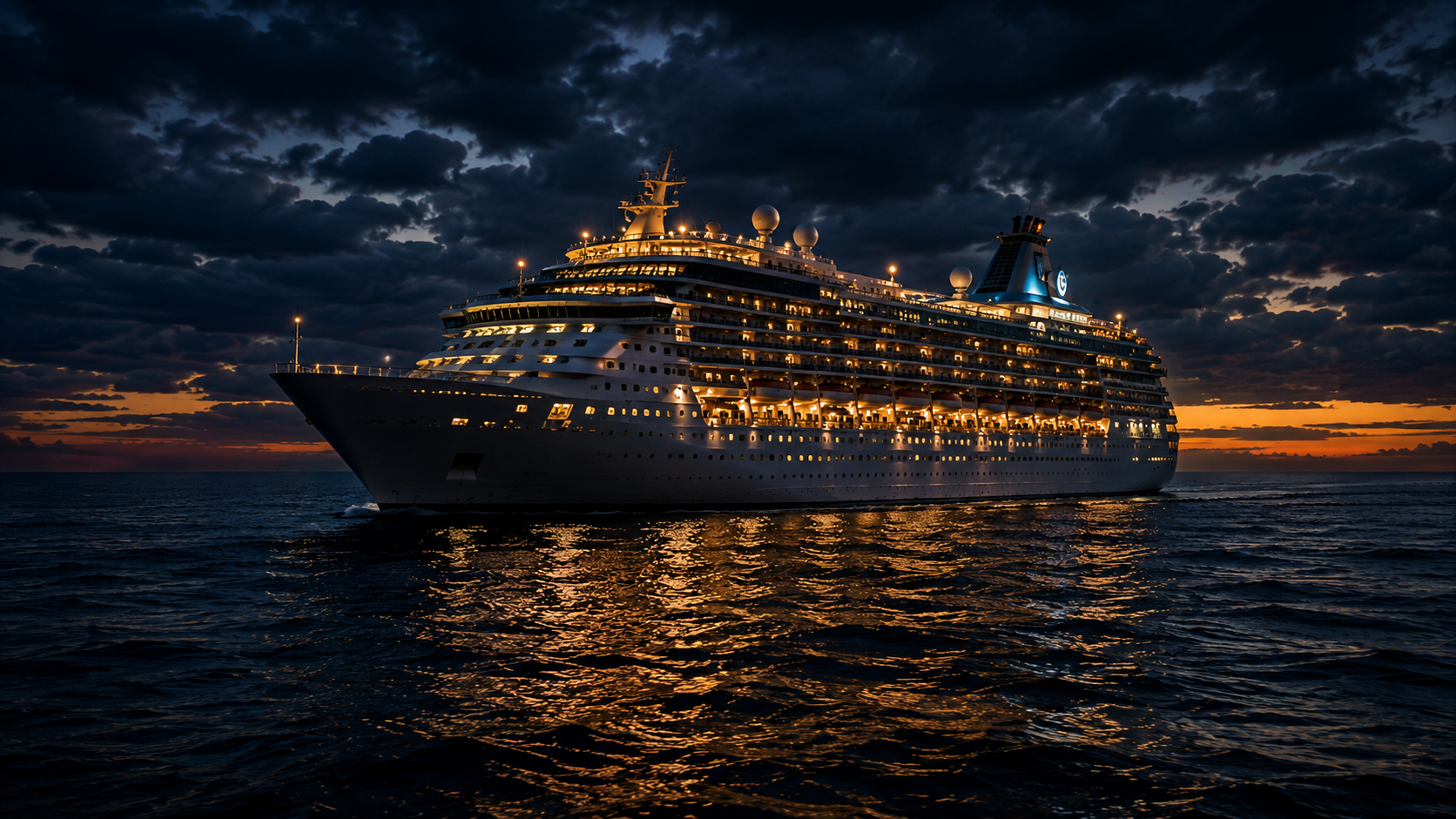
The Rhapsody Of The Seas Disappearance
The Balcony, Curaçao And The Missing Hours
On the balcony of a cruise-ship cabin, a young woman rests in a chair while the Caribbean night gives way to morning. Beyond the railings is open water. Ahead is Curaçao. Inside the cabin, her family is sleeping after another night of a holiday that has so far looked much like thousands of others.
Amy Lynn Bradley is twenty-three years old. She is travelling aboard Rhapsody of the Seas with her parents, Ron and Iva, and her younger brother, Brad. The ship is approaching its next port after leaving Aruba. Amy has spent much of the previous evening dancing, drinking and socialising aboard the vessel.
At some point around dawn, her father wakes and looks towards the balcony. Amy appears to be there. He goes back to sleep.
When Ron wakes again, the chair is empty.
Amy is not immediately assumed to be in danger. A cruise ship is enormous, filled with restaurants, decks, lounges, corridors and passengers moving between them. She could have gone for coffee. She could have met somebody. She could be elsewhere on board.
But Amy does not return.
And as Rhapsody of the Seas reaches Curaçao, the first and most important question becomes painfully simple: where is she?
Amy Before The Cruise
In March of nineteen ninety-eight, Amy Bradley is at a transitional point in her life. She has graduated from Longwood University in Virginia with a degree connected to physical education, has experience as a lifeguard and is looking towards the next stage of adulthood. Accounts from the period describe new professional plans waiting for her once the family holiday is over.
There are ordinary anchors tying her to home. She has family, friendships and plans. Her mother has described her excitement about a new apartment and a bulldog she intends to collect after returning from the cruise. Those details matter because they belong to the life Amy is living at that moment, rather than to theories developed afterwards.
The Caribbean cruise has come through Ron Bradley's employer. On Saturday, March twenty-first, the family boards Royal Caribbean's Rhapsody of the Seas in San Juan, Puerto Rico. The vessel travels first towards Aruba. It is the kind of holiday built around a predictable rhythm: days at sea, evenings aboard, a new island appearing beyond the decks the following morning.
Amy reportedly has some unease about the scale of the ship and the open ocean, but she joins the family trip. Once aboard, she participates in the social life of the vessel alongside Brad.
On Monday, March twenty-third, Rhapsody of the Seas leaves Aruba and begins travelling towards Curaçao. The Bradley family expects to arrive the following morning. The FBI's present case summary confirms this basic route: San Juan to Aruba, then from Aruba through international waters towards Curaçao.
Nothing about that itinerary yet makes the Bradley holiday exceptional.
The Night Between Aruba And Curaçao
On the evening of March twenty-third, Amy and Brad spend time in the ship's nightclub. Other passengers and crew are around them, along with musicians connected to the ship's entertainment.
Video recorded during the evening captures Amy dancing with Alister Douglas, known as Yellow, a bass player in the ship's band. That interaction has subsequently attracted enormous attention, but at this point in the chronology it is simply part of Amy's evening. There is no responsible basis for turning an ordinary recorded interaction into evidence of a crime before any crime is known to have occurred.
Brad eventually heads back towards the family's cabin. Available accounts place his return at roughly three thirty-five in the morning, with Amy returning shortly afterwards. The siblings spend some time together before Brad goes to sleep.
The details become unusually important because they narrow the period in which Amy's movements can be reconstructed with reasonable confidence.
She has been seen socialising.
She has returned to the cabin area.
Her brother is asleep.
The ship continues towards Curaçao.
Sometime during the early morning, Ron Bradley wakes. The most commonly reported family account places this at around five fifteen to five thirty. From inside the cabin, he sees Amy apparently resting or sleeping in a chair on the balcony.
There are later disagreements around precise timings in some reconstructions of the case. That uncertainty is important. Memories of minutes during the early morning hours are not the same as electronic timestamps, and the surviving public record does not permit every movement to be fixed with absolute precision.
What matters at this stage is simpler.
Amy is still believed to be with her family aboard the ship.
Then Ron wakes again.
The Empty Balcony
At roughly six in the morning, Amy is no longer where Ron expects to find her.
He begins looking.
Her absence is immediately unusual enough to concern him. Amy has not told the family she is going anywhere, and the ship is reaching Curaçao. What initially might be explained by somebody waking early and wandering to another deck becomes less comfortable as Ron fails to locate her.
The rest of the family is alerted.
They search.
Amy does not appear.
The family contacts ship personnel and asks for help. According to repeated Bradley family accounts, they also ask that passengers not be permitted to leave the vessel until Amy is located. The request is crucial from the family's perspective: if Amy is somewhere aboard, controlling the exits could help preserve the boundaries of the search.
The gangways nevertheless open as the ship docks in Curaçao. Passengers begin disembarking.
At this point, nobody has established that Amy has left the ship.
Nobody has established that she has entered the water.
Nobody has established that another person is involved.
Those possibilities remain radically different from one another, yet the window for distinguishing between them is already becoming wider. Every passenger who leaves, every crew movement and every area not immediately secured increases the number of potential explanations.
A ship-wide announcement asking Amy to report to the purser's desk is made later in the morning. By then, many passengers have already gone ashore. A broader search of the vessel follows, but Amy is not found.
The ordinary explanation — that Amy has simply gone elsewhere aboard the ship without telling her family — is becoming increasingly difficult to sustain.
Searching Rhapsody Of The Seas
Cruise ships create a particular investigative problem. They are controlled environments in one sense and extraordinarily porous ones in another.
There are cabins, staircases, crew areas, passenger decks, service corridors and restricted spaces. There are thousands of people whose identities may be documented but whose movements are not continuously recorded. A vessel may also cross jurisdictions within hours.
In nineteen ninety-eight, surveillance technology is far less comprehensive than the systems passengers might expect on a modern ship.
The initial search produces no clear explanation for Amy's absence.
Authorities face several possibilities. She might still be hidden somewhere aboard. She might have gone ashore. She might have entered the sea accidentally or intentionally. Someone else might have been involved.
The Netherlands Antilles Coast Guard conducts an air-and-sea search lasting several days. Search efforts cover waters around the route and Curaçao, but they produce no confirmed trace of Amy.
The ship, meanwhile, continues its itinerary.
FBI agents become involved and catch up with Rhapsody of the Seas. Accounts describe a more extensive examination of the vessel and interviews with people who may have information. The FBI would ultimately preserve Amy's case as an active missing-person investigation.
One critical fact has now emerged from the search.
There is no simple answer aboard the ship.
The Question Of Going Overboard
The ocean presents the most obvious explanation.
Amy is on a ship. She disappears while that ship is at sea or approaching port. If she falls or jumps from the vessel, the absence can theoretically be explained without requiring another person to remove her.
Yet an obvious theory is not the same thing as a proven one.
No confirmed witness publicly establishes seeing Amy enter the water. No recovered physical evidence conclusively demonstrates that she went overboard. Searches fail to recover her.
Some family members have also pointed to Amy's swimming ability and fear of heights when arguing against accidental or intentional entry into the sea. Neither characteristic can prove what happened. Strong swimmers can drown, and personal fears are not absolute behavioural rules. But they form part of why the Bradley family resists treating an overboard scenario as self-evident.
The FBI's investigation has therefore had to remain broader. Accident, voluntary disappearance and foul play have all been considered over the years without any one explanation being publicly established as the definitive answer.
Had the story ended with an empty search, the disappearance might have remained primarily a maritime mystery.
Instead, reports begin arriving from land.
A Report From Curaçao
Around a month after Amy disappears, the Bradley family returns to Curaçao as part of its own effort to find information.
A taxi driver reportedly tells them he believes he saw Amy on the morning the ship arrived. His account places a woman resembling her on the island, apparently looking for a telephone.
The report has obvious significance if accurate. It would mean Amy left Rhapsody of the Seas alive.
But eyewitness identification is vulnerable to error, particularly after photographs of a missing person have circulated. The taxi driver's account does not produce independent evidence capable of establishing that the woman was Amy.
The sighting remains a lead rather than proof.
Then another account emerges.
The Divers At The Beach
Several months into the disappearance, Canadian tourist David Carmichael reports an encounter on Curaçao.
He says he saw a woman he came to believe was Amy at a beach while diving. According to his account, she was with men whose behaviour made him uncomfortable. What particularly affects him after learning about Amy's disappearance are physical details he believes match her.
Amy has several distinctive tattoos. The FBI's current listing describes a Tasmanian Devil spinning a basketball on her shoulder, a sun on her lower back, a Chinese symbol on her right ankle and a gecko around her navel, together with a navel piercing.
Carmichael says the woman he observed displayed details consistent with Amy's appearance and tattoos.
He becomes convinced he saw her.
Investigators examine the information, but conviction on the part of a witness cannot substitute for corroboration. No photograph, contemporaneous identification or physical evidence establishes that the woman at the beach was Amy.
The sighting nevertheless changes the emotional shape of the case.
If Amy entered the sea, such accounts must be mistakes.
If Amy reached Curaçao alive, they could be enormously important.
Both possibilities remain open.
The Musician From The Ship
Attention also turns towards people Amy interacted with during the final reconstructed hours aboard Rhapsody of the Seas.
One of them is Alister Douglas.
Amy was recorded dancing with Douglas during the previous night's entertainment. Later accounts have also examined whether he was seen around Amy during the early morning.
This history requires particular care because suspicion generated by documentaries, internet discussion or family concern is not evidence of responsibility.
Douglas was questioned during the investigation and has denied involvement in Amy's disappearance. Accounts state that he underwent a polygraph examination and was not charged. No court has found that he abducted or harmed Amy.
The distinction is essential.
His contact with Amy belongs in the timeline because investigators reasonably examined people who had interacted with her.
It does not establish guilt.
The same principle applies to crew members and passengers whose actions have been repeatedly dissected since nineteen ninety-eight. In an unsolved disappearance, unresolved behaviour can easily harden into public accusation. The evidential record does not justify that transformation.
A Claim That Arrives Years Late
One of the most disturbing reported sightings concerns a United States Navy serviceman.
The encounter is said to have occurred in Curaçao in early nineteen ninety-nine, but investigators do not learn about it at the time.
The serviceman later claims that while visiting a brothel he encountered an American woman who identified herself as Amy Bradley and said she was being held against her will.
If true, the implications are extraordinary.
The problem is the delay.
The witness does not report the encounter immediately. According to later accounts, concern about the consequences of admitting he had visited the establishment contributes to his silence. By the time he eventually comes forward, years have passed and the location can no longer be investigated in anything approaching its original condition.
The FBI investigates the claim.
It cannot be corroborated.
This becomes a pattern in the Bradley case: a lead emerges with enough specific detail to seem potentially transformative, but without the contemporaneous evidence required to turn it into established fact.
Hope Creates Another Vulnerability
By the beginning of the new century, the Bradleys have spent years searching for information.
That desperation attracts somebody willing to exploit it.
A man named Frank Jones approaches the family claiming access to people who can locate and rescue Amy. He presents himself as connected to highly trained former military personnel and tells the family that Amy is being held by dangerous individuals.
For parents who believe their daughter may still be alive, the proposition creates an agonising calculation. Ignore it, and they could be abandoning Amy. Believe it, and they must trust a stranger making extraordinary claims.
Money is provided for the supposed operation.
There is no rescue.
Federal authorities eventually establish that Jones has defrauded the family and organisations supporting the search. He pleads guilty to mail fraud and receives a prison sentence.
The episode contributes nothing to establishing what happened aboard Rhapsody of the Seas.
But it demonstrates one of the cruellest secondary consequences of unresolved disappearances: uncertainty itself becomes something other people can monetise.
More Sightings, Still No Confirmation
Reports continue.
In the early two-thousands, witnesses in San Francisco claim to recognise a woman resembling Amy accompanied by men.
Later, another account emerges from Barbados. A woman says she encountered someone who gave the name Amy in a public restroom under circumstances she found concerning.
Again, investigators receive descriptions.
Again, none produces the evidential bridge needed to establish identity.
The accumulating reports create two competing impressions.
Viewed together, repeated claims that Amy has been seen alive may appear to support the possibility that she survived whatever happened on the morning of March twenty-fourth.
Viewed individually, each sighting remains unconfirmed.
Those ideas are not contradictory.
Several weak pieces of evidence do not automatically become one strong piece simply because they point in the same direction.
The Photographs Of “Jas”
In two thousand and five, a different kind of lead reaches the Bradley family.
Photographs have been found on an adult website connected to the Caribbean. They show a woman presented under the name “Jas”.
The Bradleys see similarities to Amy.
Unlike a remembered encounter described years afterwards, the photographs are physical material that can actually be examined. Facial comparison becomes possible. Investigators pursue the lead.
Some later analysts have expressed the view that the woman strongly resembles Amy. Other accounts have overstated this into claims that identification was conclusively established. The publicly available record does not support treating the photographs as definitive proof that the woman is Amy Bradley. An FBI agent discussing the material has explained the difficulty of determining the provenance and possible alteration of online images from that period.
That limitation is decisive.
A photograph can look compelling and still fail to answer the questions that matter.
Who is the woman?
When was the photograph taken?
Where was it taken?
Who uploaded it?
Is it original?
Can its digital history be reconstructed?
Without those answers, resemblance remains resemblance.
For the Bradley family, however, the images understandably reinforce the possibility they have feared for years: that Amy did not enter the ocean at all.
The Trafficking Theory Takes Shape
The reported Curaçao sightings, the Navy serviceman's account and the “Jas” photographs gradually feed a theory that Amy was abducted and trafficked.
It is one of the most widely repeated explanations of the case.
It is also not an established fact.
Human trafficking exists throughout the world, including in tourist economies and the Caribbean. That general reality does not prove that it explains Amy's disappearance.
For the theory to account for the known timeline, somebody would have needed either to remove Amy from the vessel or induce her to leave it, avoid detection during a narrow and uncertain window, and then maintain control afterwards. The rapid disembarkation of passengers in Curaçao could theoretically have created opportunity, but opportunity is not evidence that an abduction occurred.
The later sightings provide potential support only if the witnesses actually saw Amy.
The photographs provide potential support only if the woman shown was Amy.
Neither proposition has been publicly established.
The trafficking theory therefore remains possible, serious enough to investigate, but unproven.
The Overboard Theory Remains Possible Too
The alternative explanation requires fewer people.
Amy is last reliably placed aboard a ship with direct access to the sea. A fall, intentional jump or other entry into the water could occur without leaving the type of evidence an abduction might generate.
That simplicity is important.
It is not proof.
People lost at sea are not always recovered, and failure to recover Amy cannot rule out an overboard event. Equally, the absence of a witness, physical trace or confirmed fall prevents the theory from becoming a demonstrated conclusion.
The family's objections cannot disprove it.
The later sightings cannot disprove it unless one of those sightings is authenticated.
The case remains trapped between explanations whose strongest apparent evidence also contains their greatest weaknesses.
What The Evidence Can Actually Support
By this point, the record permits several conclusions with confidence.
Amy Bradley boarded Rhapsody of the Seas with her family.
She socialised aboard the vessel on the night of March twenty-third.
She returned towards the family cabin during the early morning.
Her father reported seeing her around the balcony area later that morning.
She could not be found when the family began searching.
The ship reached Curaçao and passengers were allowed to disembark.
Searches of the vessel and surrounding waters did not locate her.
Investigators subsequently pursued numerous reported sightings and theories.
None has publicly produced conclusive proof of what happened.
Everything beyond that requires calibration.
That is why the case remains compelling almost three decades later. There is no single piece of evidence powerful enough to collapse the possibilities into one answer.
The Legal Declaration
Twelve years pass.
On March twenty-fourth, two thousand and ten, Amy Bradley is declared legally dead.
The terminology can sound more conclusive than it really is.
A legal declaration of death after a prolonged disappearance does not establish how a missing person died, where they died or even provide physical confirmation of death. It allows legal and civil matters to proceed after an extended period without verified contact.
No remains identified as Amy's have been recovered.
No person has been convicted of causing her disappearance.
No confirmed reconstruction has established her movements after the early morning aboard Rhapsody of the Seas.
The investigative question therefore survives the legal declaration.
Why No Theory Has Won
The Amy Bradley case is often presented as though one theory must be obviously correct.
The evidence does not permit that confidence.
An overboard scenario benefits from geography and simplicity. Amy was aboard a ship surrounded by ocean. It requires no organised conspiracy and no years-long concealment.
Its weakness is evidential. There is no confirmed observation or physical finding establishing that she entered the water.
An abduction scenario can incorporate the later sightings and photographs.
Its weakness is that those supporting elements are themselves unconfirmed.
A voluntary disappearance would also explain the absence of a clear struggle, but it would require Amy to abandon family, plans and her previous life without any verified subsequent contact. Nothing publicly available establishes that she intended to do so.
There are also more complicated possibilities involving an accident or encounter aboard the ship followed by concealment, but complexity cannot compensate for missing evidence.
The responsible conclusion is therefore uncomfortable.
Several scenarios are possible.
None has been proved.
The Investigation Returns To Public Attention
Interest in Amy's disappearance never entirely disappears, but it rises dramatically again in the middle of the twenty-twenties.
A major documentary series brings the case to a new audience. Old witnesses are reconsidered. Family members revisit the timeline publicly. Online communities begin scrutinising photographs, ship layouts and testimony again.
Renewed attention generates new information.
In twenty twenty-six, reports connected to people involved in the renewed investigation claim that the FBI has questioned individuals with alleged trafficking links and that investigators have received potentially significant tips. Those claims are important enough to note but must be separated from confirmed FBI findings: the Bureau has not publicly announced that a trafficking organisation abducted Amy or identified anybody as responsible for her disappearance.
The difference between a promising lead and a solved case remains enormous.
The most authoritative current indicator is much simpler.
The FBI still lists Amy Lynn Bradley as missing.
The FBI's Current Appeal
As of August sixteen, twenty twenty-six, Amy remains on the FBI's public missing-person pages.
The Bureau describes her as having gone missing during the early morning of March twenty-fourth, nineteen ninety-eight, while travelling aboard Rhapsody of the Seas between Aruba and Curaçao.
The current FBI page offers a reward of up to one hundred thousand dollars for information leading to Amy's recovery and information leading to the identification, arrest and conviction of anyone responsible for her disappearance.
That wording is significant.
The FBI has not closed the matter by declaring that Amy fell overboard.
It has not announced that she was trafficked.
It has not publicly identified a perpetrator.
The appeal remains broad because the answer remains unknown.
What The Record Cannot Prove
The public record cannot prove that Amy entered the ocean.
It cannot prove that she reached Curaçao.
It cannot prove that the taxi driver saw her.
It cannot prove that David Carmichael saw her.
It cannot prove that the woman who allegedly identified herself to the Navy serviceman was Amy.
It cannot prove that the woman photographed as “Jas” was Amy.
It cannot prove that any particular crew member, passenger or musician harmed her.
And it cannot prove that Amy voluntarily disappeared.
The absence of proof does not make every theory equally probable. It simply establishes the boundary between evidence and speculation.
That boundary is especially important in a case that has spent decades accumulating retellings.
The Lost Opportunity Of The First Morning
One question can be examined without deciding what happened to Amy.
Could the initial response have preserved more information?
The family's account of asking for the ship to be secured before passengers disembarked has become central to the case. If the vessel had been sealed immediately and searched systematically before anyone left, investigators might have been able to establish more confidently whether Amy remained aboard.
That does not mean an immediate lockdown would necessarily have found her.
It means the investigative universe could have been smaller.
Once passengers enter Curaçao, possibilities multiply. Witness memories become harder to test. Potential routes expand. The distinction between ship and shore becomes blurred.
Cruise lines today operate in an environment of far greater awareness around missing passengers, onboard crime, surveillance and cooperation with authorities. Amy's disappearance belongs to an earlier era in which some of those expectations were less developed.
The consequences of the first morning therefore remain part of the mystery.
Not because they prove wrongdoing.
Because they helped leave questions that can no longer easily be reconstructed.
The Human Cost Of Permanent Uncertainty
Most investigations move towards an answer.
This one repeatedly moves towards a possibility.
A beach sighting appears.
It cannot be confirmed.
A witness remembers a woman.
The report arrives too late.
Photographs surface.
Their identity cannot be established conclusively.
A supposed rescuer promises certainty.
He turns out to be a fraudster.
New attention generates fresh tips.
None has yet produced a publicly confirmed resolution.
For Amy's family, that means grief itself cannot settle into a single form. The possibility that she died and the possibility that she survived have existed alongside one another for decades.
It is difficult to imagine a more exhausting form of uncertainty.
The Balcony Again
The chair on the balcony matters because it marks the last narrow part of the story.
Before that moment, Amy's movements can be reconstructed through family accounts, key-card information and witnesses aboard Rhapsody of the Seas.
Afterwards, the case expands in every direction.
Into the sea.
Onto Curaçao.
Towards passengers and crew.
Into reported sightings.
Into trafficking theories.
Into photographs on an early internet website.
Into fraudulent rescue schemes.
Across Barbados and the United States.
And eventually into a twenty-first-century investigation still asking for information about something that happened before smartphones, ubiquitous digital photography and modern shipboard surveillance.
Nearly three decades of attention have produced thousands of words, theories, recollections and arguments.
They have not produced Amy.
The most compelling aspect of the case is therefore not any one elaborate explanation.
It is the tiny interval at its centre.
A father sees his daughter near the balcony.
He sleeps again.
A short time later, she is not there.
Everything investigators have tried to determine since depends upon what happened inside that gap.
As of August sixteen, twenty twenty-six, the FBI continues to seek the answer.
