True Crime: Breonna Taylor and the Door That Should Never Have Opened
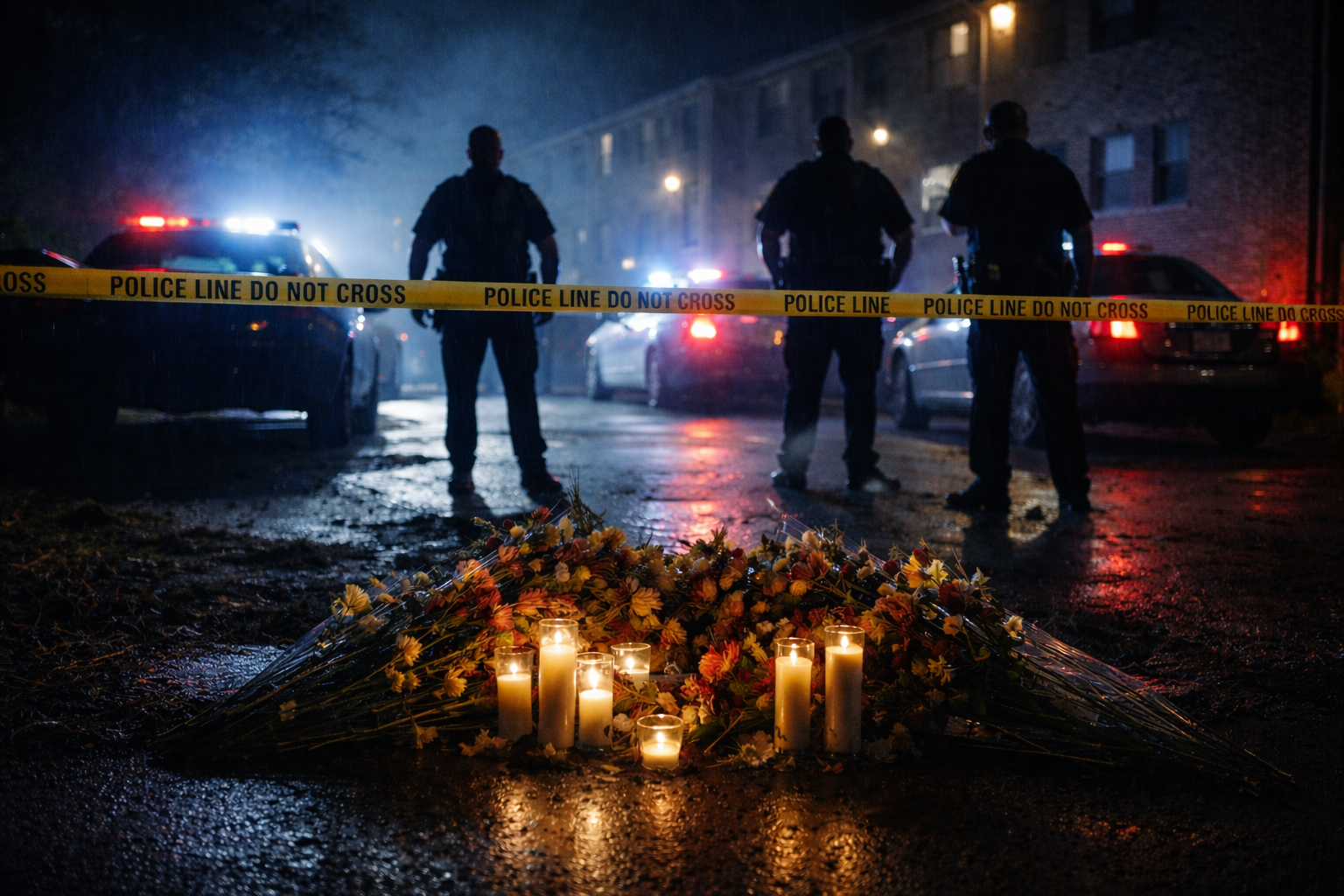
Breonna Taylor and the Raid That Changed America
A Woman Building an Ordinary Life
The night of March 13, 2020, did not begin as public history. Taylor and Kenneth Walker were inside her apartment shortly after midnight when plainclothes officers came to serve a warrant connected to a drug investigation focused on a man Taylor had previously dated. The warrant had been approved as a no-knock warrant, though the officers who executed it later said they knocked and announced before forcing entry.
That dispute is one of the case’s central fractures. Officers later told investigators they knocked and announced for somewhere between roughly 30 and 90 seconds. Walker said he and Taylor heard banging, that she called out, and that neither of them heard police identify themselves. One witness eventually supported the officers’ account, but investigators also acknowledged that the witness had changed his story.
That is the atmosphere in which the fatal seconds begin to make sense: darkness, plainclothes officers, a forced entry, fear on one side, asserted authority on the other, and no shared understanding inside the doorway. Whatever anyone later argued about legality, the human reality at the threshold was confusion.
The Warrant That Opened the Door
The warrant would become more than background. It became the hinge of the entire case. In 2022, federal prosecutors said officers in Louisville’s Place-Based Investigations Unit had falsified the affidavit used to obtain the search warrant for Taylor’s home and that the false warrant violated her civil rights and led to her death. Kelly Goodlett, a former detective, later pleaded guilty and confessed to conspiring to falsify the affidavit and cover up the subsequent actions.
The government’s theory was not just that the raid went wrong. It was that the paperwork that made the raid possible was itself corrupt. That distinction mattered because it widened the story from a single violent entry into a deeper allegation about investigative culture, warrant practices, and truthfulness inside policing.
But the law did not move in a straight line. In 2024, a federal judge dismissed the most serious felony theory against Joshua Jaynes and Kyle Meany, ruling that the false warrant was not the legal cause of Taylor’s death because Walker would have fired even if police had entered with a valid warrant. Then, in March 2026, after the Justice Department moved to drop the case, the remaining charges against Jaynes and Meany were dismissed with prejudice.
The Fatal Encounter, Second by Second
What happened once the door gave way is clearer in outline than in every detail. Walker fired one shot. It struck Sergeant Jonathan Mattingly in the leg. Officers then unleashed a burst of return fire inside and around the apartment. Public reporting and court records consistently describe 32 police shots in total. Myles Cosgrove fired 16. Brett Hankison fired 10 from outside through a covered window and sliding glass door. Jonathan Mattingly fired the rest from inside the doorway area.
Taylor was in the hallway. She was unarmed. Multiple police bullets hit her. Later official and public accounts have not always described the wound count consistently, but the larger facts remain stable: she was struck during the return fire, collapsed in the apartment, and died there. State investigators later concluded that Cosgrove fired the fatal shot. Federal prosecutors later proved that Hankison’s shots did not hit Taylor, but that firing through a covered window put her in danger and violated her rights.
Some details remain permanently contested or incomplete. The exact timing of the shots, the degree to which individual officers could identify a target in the darkness, and what each man understood in real time will never be reconstructed with perfect certainty. But some points are clear. Walker believed intruders were entering. Officers say they were lawfully serving a warrant. Once Walker fired, the apartment became a kill zone in seconds. The scene was so chaotic that one officer later said he did not immediately realize he had fired his weapon.
Legally, the smallest details carried enormous weight. If Walker did not know they were police, the first shot looks like panic and self-defense. If the officers had properly announced and been clearly understood, the return fire would look different in law. If falsehoods poisoned the warrant itself, the entire entry takes on a different perspective. This is why the case never rested on a single question. It was always several cases stacked on top of each other: a warrant case, a self-defense case, an excessive-force case, and a public-trust case, all detonating at once.
The Hours After and the First Break in the Story
The first public version of the event was cold, bureaucratic, and incomplete. The deeper human version came from the people left inside it. Walker’s 911 call remains one of the most important pieces of evidence in the emotional history of the case. “Somebody kicked in the door and shot my girlfriend,” he told dispatch. In those words, there is no sign that he understood police had entered the home.
He was then arrested and charged with attempted murder and assault for shooting the officer. Those charges would later collapse, but their initial existence shaped the early balance of the story: police had been shot, an officer was wounded, and the woman at the center of the raid was dead. That framing made it easier, at least at first, for official processes to move around Taylor rather than through her.
The first major rupture came as more information surfaced. No drugs were found in the apartment. Questions mounted about the warrant, about whether officers announced themselves, and about how an operation aimed elsewhere ended with a woman dead in her hallway. Once those facts entered public view, the case stopped looking like a tragic byproduct of a narcotics search and started looking, to many people, like something structurally rotten.
When a Local Killing Became a National Uproar
Taylor’s death might once have remained a local scandal. It did not. As 2020 unfolded, her name moved into national protests about policing and race. Her killing, alongside other high-profile cases that year, became part of a wider public reckoning over Black deaths, police force, and the gap between legality and legitimacy.
The imagery mattered. Murals, memorials, and the repeated demand to say her name helped prevent the case from being absorbed into procedure. In Louisville, the pressure produced concrete changes: the city announced a $12 million settlement with Taylor’s family in September 2020, and earlier that summer Louisville Metro Council passed Breonna’s Law, banning no-knock warrants and requiring tighter standards around warrant service.
But protest did more than produce reform language. It changed the scale of scrutiny. What had first looked like a disputed late-night raid became a referendum on the use of force, the credibility of police narratives, and whether reform could exist without accountability. Once the case reached that point, no local official could contain it.
The First Charging Decision
The first criminal outcome satisfied almost no one. In September 2020, a state grand jury did not bring homicide charges against the officers who shot Taylor. Brett Hankison was indicted instead on wanton endangerment charges tied to bullets that entered a neighboring apartment. State officials justified the officers' actions by stating that they were returning fire after Walker shot first.
That decision transformed public anger into lasting mistrust. Many people did not understand how a woman could die in her apartment, and yet the only immediate indictment would focus on danger to neighbors rather than the person who was killed. The structure of the charge mattered symbolically as much as legally. It suggested, to critics, that the system could recognize reckless danger around Taylor more easily than harm done to Taylor herself.
The controversy intensified when the grand jury did not receive homicide charges. That did not prove those charges would have been returned. However, it did confirm that the grand jury had never actually tested one of the most emotionally significant possibilities in the case.
A Legal Record Built on Dispute and Distance
In March 2021, Walker’s charges were dismissed with prejudice, ending the threat that he could be recharged for shooting at the officers. That did not settle the public argument. It sharpened it. If Walker could no longer be prosecuted, many people asked, what did that say about the premise that he had been the clear criminal actor in the apartment?
Then came the state trial of Hankison. In 2022, he was acquitted on wanton endangerment charges related to the bullets that entered the neighboring apartment. Again, the verdict underscored the brutal distinction between public certainty and courtroom proof. Suspicion, outrage, and moral clarity do not automatically satisfy the burden required for conviction.
Federal prosecutors later took a broader approach. In 2022, the Justice Department charged four current and former officers. Three were accused over the allegedly falsified warrant and subsequent cover-up. Hankison was charged separately for using excessive force by firing through covered glass and a covered window. That charging theory did not require proving he killed Taylor. It focused instead on the constitutional danger created by how he fired.
The Outcomes That Satisfied Almost No One
The federal case finally produced what the state system had not: a conviction. In November 2024, a federal jury found Hankison guilty of depriving Taylor of her constitutional rights when he fired five shots through a bedroom window covered by blinds and a blackout curtain. The jury found those shots were an attempt to kill, even though they did not strike Taylor. In July 2025, he was sentenced to 33 months in prison.
Yet even that outcome felt partial. Hankison was not convicted of killing Taylor. The officer identified as firing the fatal shot, Cosgrove, was never federally indicted in connection with the shooting itself. And the warrant case that had seemed capable of reaching the deeper origin of the raid began to narrow, then fracture, and finally collapse for two of the officers charged.
That is why the case has lingered so painfully in public memory. The legal record does not match the emotional record. One says there was some accountability. The other says the center of the harm still feels untouched. Both can be true at once.
The Officers in the center did not disappear.
Public memory of the case continued to evolve after the first wave of outrage. Cosgrove, the officer state authorities said fired the fatal shot, was eventually fired by Louisville police but later resurfaced working for a sheriff’s office in Kentucky. That fact mattered because it reinforced a central theme of the case: formal separation from one department did not necessarily mean durable exclusion from law enforcement.
Hankison’s path was different. He was laid off, acquitted in state court, convicted federally, and then sentenced. His case became the clearest example of how the same underlying event could generate radically different outcomes depending on the charging theory and the forum.
Goodlett, who pleaded guilty in 2022 to conspiracy tied to the warrant, remained part of the unresolved record as of late March 2026, with local reporting saying sentencing was then scheduled for July 29. Jaynes and Meany, meanwhile, saw their remaining federal charges dismissed with prejudice in March 2026 after the Justice Department moved to abandon the case.
Federal Review, Federal Charges, and Their Limits
The federal government did not just prosecute individuals. In 2023, the Justice Department said it had found reasonable cause to believe Louisville police engaged in a pattern or practice of unconstitutional conduct, including excessive force, unlawful discrimination against Black people, and searches based on invalid warrants. That finding placed Taylor’s death inside a larger institutional diagnosis rather than treating it as an isolated disaster.
But even that broader institutional path had limits. In 2025, the Justice Department under a new administration withdrew from proposed police-reform accords in Louisville and Minneapolis. Then, at the start of 2026, a federal judge dismissed Louisville’s proposed consent decree after the government withdrew support. The message was blunt: even when structural misconduct is identified, reform can still stall, narrow, or dissolve in the space between diagnosis and enforcement.
Thus, the federal record was split into two records. One showed the government's willingness, at one stage, to call out unlawful policing and pursue charges. The other showed how vulnerable those efforts remained to legal rulings, charging standards, and political change.
Why This Case Still Matters
The Breonna Taylor case still matters because it exposed how many failure points can coexist inside one death. A questionable warrant. A forced nighttime entry. a disputed announcement. A frightened resident with a legal gun. officers fired 32 rounds into a dark apartment. a woman was unarmed in the hallway. No drugs were found. Years of litigation have passed, yet many people still feel that the outcome is not proportionate to what was lost.
It also matters because it changed law and politics even while leaving grief unresolved. Louisville banned no-knock warrants. A federal bill bearing Taylor’s name was reintroduced in 2025. Her case reshaped the language of national protest and the public understanding of how warrant practices, race, and police force can collide inside private space.
But the deepest reason the case endures is simpler than any statute. It forces an unbearable question that remains legible even after the court filings are stacked away: How can a woman die in her home under state authority and still leave behind a record in which accountability arrives late, partially, unevenly, and for many people not nearly enough?
