True Crime: Christchurch Mosque Attacks Explained: The Prayer Rooms, The Timeline, And The Questions That Remain
How A Friday Prayer Became A National Reckoning
The Horror New Zealand Still Studies
The Prayer Rooms, The White Car, And The Public Record New Zealand Is Still Working Through
Friday prayer is built from repetition.
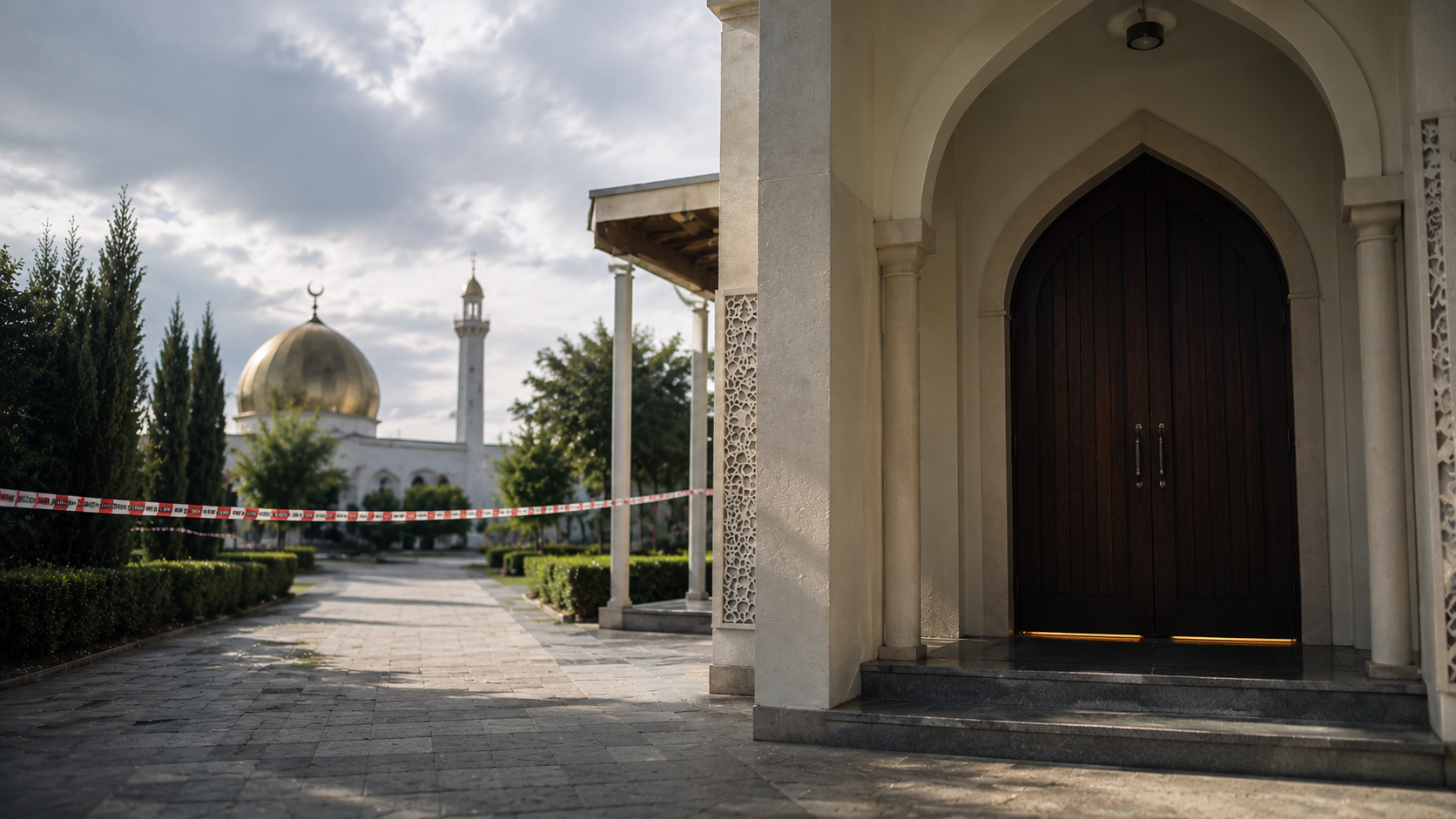
People arrive. Shoes come off. Phones quieten. A room that is ordinary for the people who know it becomes still in a way outsiders rarely see. At Masjid An-Nur on Deans Avenue, and at the Linwood Islamic Centre across Christchurch, that rhythm was part of the city’s weekly life before the world knew those buildings by their street names.
The first thing the public later learned was the scale. The more difficult thing to hold was the ordinary detail behind it: people had come to pray, greet friends, stand beside family, listen, kneel, and return to the rest of their Friday. The two mosques were not symbols to the people inside them. They were part of home.
This article follows the case through the latest confirmed legal and coronial developments as of July 5, 2026. The full answer did not arrive in one moment. It moved through emergency calls, witness accounts, police timelines, court records, a Royal Commission, firearms-law reform, online-safety work, an appeal attempt, and a coronial process still focused on unanswered public-interest questions.
The Christchurch mosque attacks are often remembered through the number attached to them. But the record is more precise, and more demanding, than a number. It asks how an extremist prepared in open life without being stopped, how a firearms licensing system failed, how emergency systems responded under pressure, how families were treated afterward, and why a case with a legal outcome can still leave a country examining itself.
That is where the story has to begin: not with the attacker’s notoriety, but with the prayer rooms whose meaning changed because the public record forced everyone else to look again.
The Life Before The Case
Before March 15, 2019, the people who gathered at Masjid An-Nur and the Linwood Islamic Centre were not a single public category. They were worshippers, parents, students, workers, grandparents, migrants, citizens, new arrivals, long-settled residents, volunteers, children, friends, and neighbors. The coronial materials later emphasized a human fact that can get lost in shorthand: the 51 shuhada came from 21 countries and spoke 13 languages.
That detail matters because the attacks were aimed at Muslim life, but Muslim life in Christchurch was not one thing. It carried accents, histories, migrations, family structures, private routines, and different relationships with New Zealand. Some people had fled violence elsewhere. Some had built new roots over years. Some were part of families who had made ordinary plans for the same Friday afternoon.
The Royal Commission’s engagement with affected whānau, survivors, and witnesses recorded not only grief, but the continuing physical, psychological, cultural, and practical consequences of the attacks. Survivors described life-changing injuries, long recoveries, repeated surgeries, pain, limb loss, retained fragments, and ongoing care needs. Families described the first 24 hours as a period of confusion, inconsistent information, and agonizing waits for confirmation about loved ones.
Public reporting after mass violence often compresses people into victims first. The official record resists that, even when it cannot restore full private lives. It shows families trying to navigate hospitals, police information, funeral arrangements, legal processes, victim-impact statements, language needs, trauma support, and public attention all at once. That is not background. It is part of the case.
The people in the mosques did not enter history because they wanted to be part of a national reckoning. They entered it because an act of anti-Muslim terrorism forced public institutions to account for what had been missed, what was done, and what could still be changed.
The People Around Them
The supporting cast in the Christchurch mosque attacks is unusually broad. It includes worshippers who tried to help others, injured survivors who became witnesses, families who became advocates, police officers who responded, ambulance staff and bystanders who gave emergency aid, prosecutors, defense counsel, judges, commissioners, coronial teams, government agencies, and Muslim community leaders who carried both grief and public expectation.
Some names became known because of acts inside the emergency itself. Police later recognized Dr Naeem Rashid for confronting the attacker at Masjid An-Nur, an action police said allowed others to escape. They also recognized worshippers and bystanders who helped protect others or assisted in dangerous conditions. At Linwood, Abdul Aziz became widely associated with resistance during the attack, though the wider story of survival there belongs to many people whose names are less publicly repeated.
Two police officers also became central to the official timeline. Senior Constables Jim Manning and Scott Carmody stopped the attacker’s vehicle on Brougham Street and arrested him minutes after the first emergency calls. Police later recognized both with the New Zealand Bravery Decoration. The citation describes a high-risk stop carried out before officers could know everything inside the car or everything the attacker had planned.
The Royal Commission later put another group at the center: the communities who had warned, before and after the attacks, that anti-Muslim prejudice, racism, discrimination, and hate speech were not abstract problems. Muslim communities told the Commission about fear, harassment, and the challenge of being treated as outsiders in the country they called home.
The attacker tried to make himself the author of the public story. The people around the case forced a different record into being. The case became not only a matter of criminal guilt, but a test of whose experiences New Zealand would treat as evidence.
The First Cracks
The first cracks were not visible to everyone at the same time.
The Royal Commission later found that the attacker, Brenton Harrison Tarrant, was a white Australian man who arrived in New Zealand in August 2017 and settled in Dunedin. It said his life became largely devoted to planning and preparing the attacks, including online activity, travel, firearms training, and physical preparation. The Commission also found that he was socially isolated in New Zealand but capable of presenting himself well enough that people dealing with him had no reason, from those interactions alone, to suspect what he was preparing.
That is one of the hardest facts in the official record. The warning signs were not a clean set of red flags handed to one agency. They were distributed across digital spaces, private radicalization, travel, weapons acquisition, ideological fixation, and a firearms licensing system that did not examine risk deeply enough.
The firearms licensing issue became one of the clearest institutional failures. The Commission found that the attacker’s firearms licence was approved within about three months, despite his limited history in New Zealand. It found that replacement referees used in the licensing process were not suitable in the way the system required, and that police did not give enough attention to that problem. The licensing process, the Commission concluded, did not meet required standards.
The Commission also found that New Zealand’s regulation of semi-automatic firearms was vulnerable to exploitation and had been recognized as a risk for years. In plain language, the official record does not say every part of the attack was foreseeable. It does say the firearms system had weaknesses that mattered.
A crack is not always a dramatic warning. Sometimes it is a form accepted too easily, a system built for trust rather than hostile intent, an extremist able to look ordinary at the exact moments when scrutiny might have mattered.
The Last Ordinary Movements
The official police timeline places the first attack shortly before 1:40 p.m. on Friday, March 15, 2019. The attacker had traveled from Dunedin with firearms, ammunition, incendiary devices, and a helmet-mounted camera. Police later said he attacked worshippers inside the mosques and people fleeing or nearby. The same police account identifies Masjid An-Nur on Deans Avenue and the Linwood Islamic Centre on Linwood Avenue as the two locations struck.
The last ordinary movement of the people inside the mosques was not a single movement. It was hundreds of small ones. People crossed thresholds. People found places in the prayer rooms. Some may have recognized friends. Some may have been visitors. Some may have had errands waiting afterward. The record can tell the public when the attack began. It cannot give every private thought back to the people inside.
The attacker’s movements, by contrast, became part of a legal and investigative sequence. Court records later described him traveling from Dunedin to Christchurch with the purpose of attacking worshippers. He brought multiple firearms and planned the violence as a terrorist act. The legal record did not need to make his notoriety larger than it already was; it needed to identify conduct, intent, and criminal responsibility.
There was another movement that mattered before the first shot: digital material was sent shortly before the attack. Police later released a timeline showing an email containing a document associated with the attacker was received by multiple recipients at about 1:40 p.m., just before the first emergency calls. Court material and the Royal Commission both treated the timing as crucial, because it left authorities with no realistic opportunity to intervene before the attack began.
The last ordinary detail, then, was not only inside the prayer rooms. It was also in the gap between a message arriving and a city understanding what it meant.
The First Alarm
The first 111 call came at 1:41 p.m., according to the police timeline. By 1:43 p.m., all available police units had been instructed to head toward Deans Avenue. Armed Offenders Squad members near the scene began moving in. First responders reached the Deans Avenue mosque around 1:51 p.m., while the attacker had already moved on.
The speed of those minutes matters because public memory can blur emergency time. To those inside the buildings, time became danger. To those outside, it became reports, dispatches, partial locations, and uncertainty. Police later cautioned that electronic clocks can differ, but their released timeline gives the clearest official sequence of the immediate response.
The attacker spent about six minutes at Masjid An-Nur and around three minutes at Linwood, according to the police timeline. At 1:56 p.m., officers received a false report of an active shooter at Christchurch Hospital. Seconds later, officers were flagged down by a member of the public. By 1:57 p.m., the two officers who would stop the attacker saw his vehicle on Brougham Street. By 1:59 p.m., he had been apprehended. Police described the interval from first emergency call to arrest as 18 minutes.
That timeline does not erase what happened. It narrows what can be fairly judged. The first alarm produced a rapid response under chaotic conditions, but rapid did not mean simple. Officers had to distinguish reliable information from incomplete reports while people were injured, buildings were unsecured, and the attacker was mobile.
The first official question was immediate: where was the danger now? The later public question became wider: why had the danger reached the prayer rooms at all?
The Search For An Explanation
In the first hours and days, the public explanation was necessarily incomplete. There was a suspect in custody. There were two attack sites. There were injured survivors and grieving families. There were digital materials to assess, emergency response questions to examine, and a national security system suddenly under pressure from a form of threat many people had not treated as urgent enough.
The Royal Commission later found that 217 public-sector agencies were asked whether they held relevant information about the attacker before the attacks. Only 10 held any information, and the only direct information about the attacks themselves was the email sent minutes before the violence began. The Commission described the other information as fragmentary and unremarkable in isolation.
That finding is uncomfortable because it refuses an easy explanation. It does not support the idea that one obvious warning was ignored by everyone. It also does not absolve the system. The Commission found that counterterrorism resources had been concentrated too heavily on Islamist extremist terrorism, while right-wing extremism had received less developed attention. Baseline work on right-wing extremism had only begun in May 2018 and was incomplete by March 2019.
The public version often flattens that into one sentence: agencies were looking the wrong way. The official record is more exact. It says the focus was inappropriate, that capability and capacity were limited, and that earlier strategic work may have improved the chance of detecting or disrupting a threat. But it also says there was no plausible way agencies could have detected this specific attacker except by chance, based on what was actually known at the time.
That distinction matters. The case is not made smarter by pretending the answer was obvious. It is made more serious by seeing how a system can fail without leaving behind one single missed alarm bell.
The Evidence That Did Not Fit
The evidence that mattered most did not all point in the same direction at first. Some of it showed preparation. Some showed ideology. Some showed system weakness. Some showed the limits of intelligence collection. Some showed courage and response under pressure. Together, those strands changed the case from a criminal prosecution into a national inquiry.
The attacker’s online life became one of the most difficult evidence categories. The Royal Commission examined his internet activity and radicalization but found that his online conduct did not produce a usable pre-attack warning for agencies. That did not mean online extremism was irrelevant. It meant the evidence available before the attacks was not the same thing as the evidence visible afterward.
Digital evidence often tempts hindsight. Once an attack has happened, old posts, searches, purchases, travels, and messages can look like a straight road. Before the attack, they may be scattered across platforms, private devices, foreign jurisdictions, weak reporting systems, or communities that do not understand their significance. The Christchurch case exposed that gap between retrospective clarity and preventive intelligence.
Firearms evidence was more concrete. The Commission found that tighter control of semi-automatic firearms could have prevented the attack, and that firearms licensing was the administrative point where a better process might have created friction. That is not the same as saying one licensing officer caused the attack. It means the system allowed a person with hostile intent to obtain and modify access in ways the law should have been better designed to prevent.
The evidence could show planning, route, weapons acquisition, extremist intent, and institutional weakness. It could not show that every danger sign was legible in real time. That is why the case still resists a clean slogan.
The Event At The Center Of The Case
The central event must be described without turning suffering into spectacle.
Police said the attacker began at Masjid An-Nur shortly before 1:40 p.m., then drove to the Linwood Islamic Centre. The official police account says he fired inside the mosques and at people fleeing or nearby. Between the beginning of the first attack and the arrest on Brougham Street, 51 people were killed, 40 were injured by gunfire, and 49 others sustained other injuries.
Court records later established the legal frame: 51 charges of murder, 40 charges of attempted murder, and one charge of committing a terrorist act. The attacker pleaded guilty to all charges on March 26, 2020. At sentencing, the High Court imposed life imprisonment without parole, the first sentence of its kind in New Zealand.
The legal language is blunt because it has to be. Murder identifies the deaths. Attempted murder identifies the people prosecutors proved he intended to kill but did not. The terrorism charge identifies the wider purpose: violence intended to advance an ideological cause and intimidate or coerce beyond the immediate scene. The court did not have to treat the attacks as random public violence. It treated them as ideologically directed mass murder.
The police timeline also shows how narrow the second phase of danger became. After Linwood, the attacker’s vehicle was spotted and stopped by officers who rammed it, confronted him, and made the arrest. Police said the timing and decision-making prevented further harm.
What happened inside the mosques cannot be fully restored by legal records. Some details belong to survivors, families, and the dead. The public file can establish sequence, responsibility, emergency response, and institutional consequences. It cannot convert private terror into public understanding without limits.
When The Story Broke Open
The Christchurch mosque attacks became a global story almost immediately, not only because of the number of people killed and injured, but because the attacker had tried to weaponize the internet. New Zealand’s foreign ministry later described the online impact as greater than any previous attack of this kind, noting that the violence had been designed to go viral.
That changed the public meaning of the case. The attack was not only a physical assault on two mosques. It was also an attempt to recruit attention, spread extremist material, and force platforms, governments, and media systems into a secondary distribution role. The attacker did not merely want casualties. He wanted an audience.
New Zealand’s Parliament responded first in symbolic and legislative terms. In the first sitting after the attack, faith leaders were present and an Arabic prayer was offered. The same period became the beginning of rapid firearms reform, with legislation introduced to remove many semi-automatic firearms and certain parts from the general population.
The firearms law response moved quickly. The government announced restrictions on military-style semi-automatic firearms and assault rifles, followed by legislation, amnesty, and a buyback scheme. The Firearms Safety Authority’s summary records that the Arms Amendment Act received Royal assent on April 11, 2019, and became law on April 12.
Online safety also became part of the aftermath. The Christchurch Call to Action was adopted in Paris on May 15, 2019, with governments and technology companies committing to reduce terrorist and violent extremist content online. The case had forced a question that was not limited to New Zealand: what should states and platforms do when an attacker designs violence for online circulation?
The story could no longer be contained by the original crime scenes. It had entered firearms policy, counterterrorism strategy, platform governance, and the public meaning of anti-Muslim hatred.
The Case Built From Fragments
The criminal case did not become a contested trial. That fact can make the legal process look simpler than it was. A guilty plea removes the need for a jury to decide guilt, but it does not remove the need for a court to determine sentence, legal meaning, and public accountability.
The High Court sentencing record shows the attacker pleaded guilty to 51 murders, 40 attempted murders, and one terrorist act. The judge concluded that no minimum period of imprisonment would be sufficient and imposed life imprisonment without parole. In plain English, that meant the court decided the case was so grave that eligibility for release could not properly be built into the sentence.
The evidence architecture was not a mystery at sentencing. The attacker’s identity, responsibility, intent, preparation, and ideological purpose were legally established by his pleas. What remained for the court was the gravity of the crimes, the harm caused, the terrorist purpose, the number of victims, the attempted murders, and whether any lesser sentence could meet the law’s purposes.
The Royal Commission had a different task. It was not sentencing the offender. It was asking what public-sector agencies knew, what they did, what they could have done, and what should change. That meant the same event had to be examined through different legal lenses: criminal responsibility in court, institutional prevention in the Commission, and later death-investigation questions in the coronial process.
One common misunderstanding is that a guilty plea answers every public question. It does not. A plea can establish criminal guilt. It cannot, by itself, explain whether licensing systems were strong enough, whether intelligence priorities were balanced, whether survivors received adequate support, or whether emergency and post-incident systems should change.
The case was legally resolved in one sense, but it was never only a criminal file.
The Outcome That Did Not End The Story
On August 27, 2020, the High Court sentenced Brenton Harrison Tarrant to life imprisonment without parole for the Christchurch mosque attacks. He also received life imprisonment for the terrorist act and concurrent 12-year terms for attempted murder. Official summaries describe this as the first life-without-parole sentence imposed in New Zealand.
The sentence gave the case a formal criminal outcome. It did not give families an end to grief, nor did it remove the public responsibility to examine how the attacks had been possible. The Royal Commission report, released publicly in December 2020, made 44 recommendations covering national security, firearms, support for affected people, diversity, social cohesion, and implementation oversight.
In 2026, the Court of Appeal addressed an attempt to bring a conviction appeal out of time. The notice of appeal had been filed in November 2022, far beyond the usual deadline. After later developments, the court accepted abandonment of the sentence appeal but refused to simply allow abandonment of the conviction appeal because of the significant public interest. It then declined an extension of time, finding the proposed conviction appeal lacked merit and that the guilty pleas were voluntary, not coerced.
That appellate ruling matters because it updated the legal status without reopening the case as a new trial. The convictions remained in force. The sentence remained in force. The Court of Appeal did not accept the proposed argument that the pleas should be treated as unsafe.
The law had answered the guilt question. The country still had to answer the prevention question.
The Aftermath People Still Argue About
The aftermath of Christchurch has several layers, and they do not all move at the same speed.
The first layer is personal. The Royal Commission’s community engagement recorded families and survivors dealing with physical injury, bereavement, trauma, financial pressure, support gaps, children’s distress, language barriers, and uneven experiences with public agencies. Some families described confusion about victim-impact statements and uncertainty about how different state services coordinated.
The second layer is institutional. The Royal Commission concluded that firearms licensing and semi-automatic firearms regulation were central weaknesses. The government changed firearms law rapidly, and later reviews found the buyback scheme was managed effectively while noting limits in measuring how many prohibited firearms might remain outside official control.
The third layer is national security. The Commission criticized the over-concentration of counterterrorism attention on Islamist extremist terrorism and the limited development of work on right-wing extremism before the attacks. It also found that a public-facing counterterrorism strategy, stronger community engagement, and earlier firearms tightening could have improved prevention.
The fourth layer is social cohesion. The Commission did not treat racism and anti-Muslim hostility as background noise. It placed the experiences of Muslim communities inside the question of safety, belonging, and trust. Its Māori title, Ko tō tātou kāinga tēnei, was translated by the Commission as “This is our home.”
The argument that remains is not whether the attacker was responsible. The law has answered that. The argument is how a democratic society recognizes danger before it becomes visible in blood, and how it treats targeted communities after the cameras leave.
The Review, Appeal, Or Unanswered Question
The coronial process is one reason the case remains publicly active. New Zealand’s Coroners Court describes the inquiry as the largest coronial investigation the country has seen. It explains that coroners investigate sudden, violent, or suspicious deaths and determine who died, when and where they died, and how the deaths happened. A coroner can make recommendations to prevent deaths, but cannot impose penalties or compensation or decide criminal, civil, or disciplinary liability.
That distinction is vital. The coronial inquiry is not a second criminal trial. It does not exist to decide whether the convicted terrorist is guilty. It exists to examine death-investigation questions and potential prevention issues within the limits of coronial law.
The Coroners Court has divided the inquiry into phases and issues. Its public updates show attention to emergency response, victim identification, public-sector actions, and a later second-phase issue involving firearms licensing matters. In August 2024, the court recorded that Tarrant retained interested-party status for Issue 10, which concerned firearms licensing, and that a second-phase hearing was scheduled in Christchurch for October 2024.
The latest listed coronial update found during this review was a March 12, 2025 message from the coroner marking the anniversary during Ramadan. That means any publisher updating this article should check the Coroners Court page again before publication for new findings or hearing material.
The unanswered question also reaches beyond the coronial file. In 2026, academic researchers publicly argued that later open-source work had identified hundreds of previously undiscovered online posts attributed to the attacker, including material they said showed explicit signals over time. That does not overturn the court outcome or automatically rewrite the Royal Commission’s legal findings. It does show why the case remains subject to reappraisal as digital evidence methods improve.
The uncomfortable lesson is that public records do not freeze in place. A case can be legally closed and still remain analytically unfinished.
Why This Case Still Matters
The Christchurch mosque attacks still matter because they sit at the intersection of four public failures: anti-Muslim hatred, firearms access, online extremist amplification, and the difficulty of detecting lone-actor terrorism before violence begins.
They also matter because the official record avoids two easy lies. The first lie is that nothing could have been done. The Royal Commission did not say that. It found weaknesses in firearms licensing, regulation, counterterrorism focus, community engagement, and public strategy. The second lie is that every failure was obvious in advance. The Commission did not say that either. It found that the attacker left too little directly usable pre-attack information for agencies to detect him except by chance.
Holding both facts at once is harder than choosing one. It means prevention is not a single heroic interruption. It is licensing detail, intelligence balance, community trust, platform design, social cohesion, emergency planning, and willingness to take targeted communities seriously before they become victims.
The court outcome gave the attacks their criminal answer. The Royal Commission gave them institutional shape. The firearms reforms changed the legal environment. The Christchurch Call made the online dimension international. The coronial process continues to test what else can be learned from the deaths themselves.
What remains at the center is still the prayer room. Not as an image of helplessness, and not as a symbol for outsiders to use at a distance. It was a place where people had the right to be ordinary. The case still matters because the public record asks whether the systems around that ordinary life were strong enough to protect it.
