True Crime: George Floyd and the Nine Minutes the World Could Not Unsee
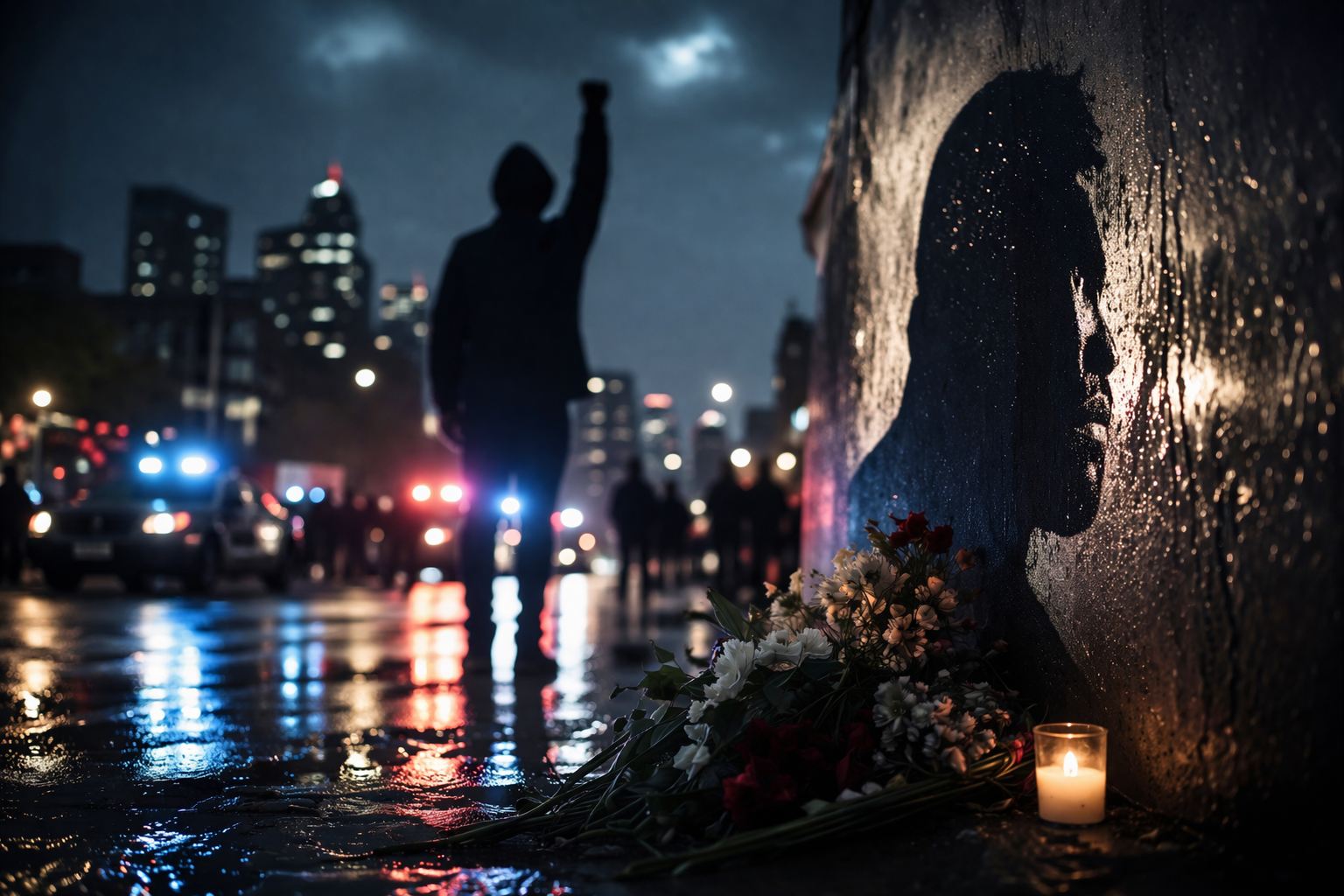
True Crime: George Floyd and the Arrest the World Could Not Ignore
Street Corner That Changed America
A Minneapolis street corner. Memorial Day evening. A man is pinned to the pavement while strangers, then a teenager with a phone, begin to understand that something is going terribly wrong in front of them. One officer kneels. Another keeps the crowd back. The man on the ground says he cannot breathe. Then he says less. Then almost nothing.
The scene does not end when paramedics arrive. It does not end when the body is loaded into an ambulance. It does not even end that night, when the city starts to fill with grief, fury, disbelief, and smoke. What was captured on that phone would move from a street in south Minneapolis into courtrooms, statehouses, police academies, campaign speeches, and protest lines across the world.
George Floyd was 46 years old. By then, he had lived several lives already: star athlete, son of Houston public housing, father, mentor, man with a record, man trying to start again, security worker, bouncer, truck-driving student, and friend to people who remembered both his mistakes and his gentleness. The footage froze him in one position. The subsequent case compelled the nation to reflect on what had gone unnoticed prior to that final frame.
What happened to him was recorded in public. The argument was not what it meant. That is where the true crime story begins.
The Man Before the Footage
Long before murals turned his face into a symbol, George Floyd was a boy in Houston’s Cuney Homes, the public-housing complex known as the Bricks. His mother moved the family from North Carolina when he was 2. Friends remembered a child carrying both the stigma of poverty and the size that made adults notice him early. As a second-grader, he wrote that he wanted to be a Supreme Court justice. At Jack Yates High School, he became a standout tight end and played in the 1992 state championship game. Coaches and teammates remembered a big man with a soft center, someone they called “Big Friendly.”
The life after that was less clean. He left for junior college, spent time at Texas A&M-Kingsville, then drifted back to Houston. Jobs came and went. So did chances. He served prison time after an aggravated robbery case. Friends later said those years cost him dearly, but they also said something in him changed afterward. He became, in the language of the neighborhood, an older head others listened to. He posted videos urging young men to put guns down. He asked teenagers about school and their mothers and grandmothers. He was also the father of five children, carrying bills, obligations, and the drag of a past that never fully loosened its grip.
In 2014, he left Houston for Minnesota, looking, as a friend put it, for a fresh start. In Minneapolis he worked security at the Harbor Light Center, then at Conga Latin Bistro, while trying to move toward truck driving. Co-workers described him as protective, funny, awkwardly playful, and careful with women leaving work late at night. By the spring of 2020, the pandemic had knocked out his club job. On Memorial Day, he was out of work again, in a city that did not yet know his name.
Memorial Day at Cup Foods
South Minneapolis on May 25, 2020, was not yet a historic site. It was a neighborhood intersection with traffic, a corner store, and people going about the slow routines of a holiday evening. Floyd was with two other people when Cup Foods employees accused him of using a counterfeit $20 bill to buy cigarettes. What began there was not, at first glance, the kind of police call that enters national memory. That is one reason the case carried such force later: the gap between the trivial starting point and the fatal ending was almost impossible to absorb.
By then Floyd was in a precarious stretch of life. He had lost work during COVID. He was still trying to hold together a future that had never been stable for long. The store clerk who accepted the bill later testified that he thought the note looked fake but also believed Floyd probably did not know it was phony. He considered letting the store deduct it from his wages. Instead, the matter went to a manager and then to police. That small chain of ordinary decisions is what makes the next part so difficult to read cleanly. Nothing about the call itself suggested a death scene was about to form on the asphalt outside.
The terrible horror of the case is not only what happened. It shows how little had to happen before the machinery was set in motion.
The Call Over a Twenty-Dollar Bill
Police were called over suspected counterfeit currency, but almost immediately the scene widened beyond the bill. Officers approached Floyd in a car outside the store. Body-camera and surveillance evidence later shown at trial captured a frightened, distressed man confronted at gunpoint. Witnesses described him as anxious and overwhelmed. The legal fight that followed would center less on whether the bill was fake than on why an encounter over a nonviolent suspicion escalated into prolonged force against a handcuffed man on the ground.
That shift matters. A minor suspected offense became the entry point to competing narratives about compliance, fear, police training, intoxication, medical distress, and race. Defense lawyers would later lean on Floyd’s drug use, heart disease, and physical agitation. Prosecutors would argue that whatever his condition, once he was handcuffed, pinned down, and in obvious medical trouble, the officers had an obligation to stop using force and start preserving life. The case turned on that difference—not on whether Floyd was an easy arrest, but on what police are allowed to do after control has plainly been established.
And once the officers took him to the ground, the argument stopped being theoretical. A clock had started.
Nine Minutes and Twenty-Nine Seconds
The most famous number in the case is not a badge number or a statute. It is a duration. Court records later fixed the restraint period at approximately nine minutes and twenty-nine seconds, from the moment Floyd was placed prone until Derek Chauvin lifted his knee from Floyd’s neck. At that time, Floyd was handcuffed. For part of it, two other officers helped restrain him. Tou Thao kept back the bystanders who pleaded for the officers to stop. By the final stretch, Floyd was motionless. Chauvin refused to provide aid and did not allow immediate aid before paramedics took over.
Those seconds became the legal and moral center of the case. The county medical examiner classified Floyd’s death as a homicide and listed the cause as cardiopulmonary arrest complicating law enforcement subdual, restraint, and neck compression, while also noting heart disease, fentanyl intoxication, and recent methamphetamine use as other significant conditions. At trial, prosecution experts said police restraint and low oxygen killed Floyd. Defense experts argued heart disease and drugs were more important causes. Even the county examiner’s testimony reflected the tension: the restraint was, in his view, more than Floyd could bear given his physical condition, but “homicide” in medical language did not itself answer the criminal question.
That is why the footage remained so devastating even after years of argument. The camera showed a man deteriorating in real time while the people with state power did not meaningfully change course.
The Night Minneapolis Broke Open
The first official actions came fast by the standards of police misconduct cases, but nowhere near fast enough to prevent rupture. The day after Floyd died, all four officers were fired. By then the video had already spread, and thousands of people gathered near the scene and the Third Precinct. The initial demonstrations were angry but not yet the full-scale upheaval to come. Then the familiar American pattern returned: protest, riot gear, tear gas, projectiles, and a city beginning to tilt.
For Floyd’s family, this public convulsion unfolded beside private devastation. A father was gone. A brother was gone. A life that had always contained contradiction was now being flattened into headlines, slogans, criminal-record debates, and political symbolism. That split between intimate grief and public abstraction is one of the deepest wounds in modern true-crime storytelling. The dead person becomes evidence before he is allowed to remain a son. In Floyd’s case, the family would spend years insisting on both truths at once: that he was a real, imperfect, loved man and that his killing had exposed something much larger than one night in Minneapolis.
The city was now beyond containment. The case no longer belonged to one intersection.
The Video the World Could Not Unsee
Many police killings have been disputed into abstraction. George Floyd’s death was not. A bystander, Darnella Frazier, recorded the restraint on her cellphone, and the footage moved with extraordinary speed across social media, news broadcasts, and eventually into the courtroom. Reuters later described that video as the chief reason the case drew such vast attention. The Pulitzer Board would award Frazier a special citation for recording it. In a different century, the killing might have become a contested report. In 2020, millions watched it.
The protests that followed were immense. Reuters called the summer of 2020 the United States’ biggest protests for racial justice and civil rights in a generation. AP’s later retrospective described ten consecutive days of demonstrations across not only major cities but also suburbs and small towns. The movement also spilled well beyond the United States, with Reuters documenting protests tied to Floyd’s death in Berlin, London, Sydney, São Paulo, Toronto, Copenhagen, and elsewhere. The case had become a global referendum on policing, racism, public violence, and what a smartphone could force the world to witness.
That scale changed the criminal case too. By the time prosecutors moved, they were no longer handling a local homicide alone. They were operating inside a worldwide reckoning.
Charges, Pressure, and the Reach of the State
Derek Chauvin was charged on May 29, 2020, with third-degree murder and manslaughter. On June 3, as protests continued, prosecutors added second-degree murder and charged the three other officers with aiding and abetting second-degree murder and manslaughter. For many observers, those charges were proof that public pressure mattered. For others, they were evidence that the system was bending under political heat. Both readings would follow the case all the way to the verdict.
The legal theory was broader than Chauvin alone. Thomas Lane and J. Alexander Kueng had physically helped restrain Floyd. Tou Thao had held the crowd back. Prosecutors argued that police duty did not disappear just because one officer was the most visibly violent. If Floyd’s distress was obvious, and if his collapse was visible, then standing by became its own form of liability. That mattered because police prosecutions often fail not only on the trigger-puller question but also on the quieter question of who watched and did nothing. This case did not let that silence hide in the background.
Still, charges are not convictions. And in police cases, the gap between the two is usually where public faith starts to fray.
A Trial Built on Breath, Training, and Time
When Chauvin’s trial began in March 2021, the courtroom fight was narrower than the public conversation. The country was arguing about racism, policing, and history. The jury was asked to decide whether Chauvin’s conduct met the elements of murder and manslaughter under Minnesota law. The prosecution used the video, witness testimony, police-policy evidence, and medical experts to make a simple case: Floyd was handcuffed, subdued, plainly deteriorating, and denied the care any reasonable officer should have recognized he needed. A police-use-of-force expert testified that once Floyd was prone and cuffed, the force no longer served a legitimate policing purpose.
The defense pressed in the other direction. Floyd had heart disease. He had fentanyl and methamphetamine in his system. He had seemed panicked before he was on the ground. Defense experts suggested arrhythmia or other medical factors, not the knee restraint alone, caused the death. That is what made the medical testimony so central. Prosecution doctors said Floyd died from police pinning him down and restricting his breathing. The county examiner stood by homicide, even while acknowledging other significant conditions. The trial was not built on one clean forensic sentence. It was built on whether the full record, taken together, left room for reasonable doubt.
The jury had seen the same images as the world. The question was whether law would speak as clearly as the video seemed to.
The Verdict Heard Around the World
On April 20, 2021, a jury found Chauvin guilty on all three counts: second-degree murder, third-degree murder, and second-degree manslaughter. Reuters described the conviction as a milestone in the fraught racial history of the United States and a rebuke to law enforcement’s treatment of Black Americans. Crowds in Minneapolis cheered. Floyd’s brother said the family could “breathe again,” though not fully and not finally. Relief was real, but so was the knowledge that one conviction could not settle the forces that produced the case in the first place.
Two months later, a judge sentenced Chauvin to 22 and a half years in state prison. In July 2022, he received a concurrent 21-year federal sentence after pleading guilty to violating Floyd’s civil rights. The three other officers were also held criminally accountable in state and federal court: Lane received a 2.5-year federal sentence and agreed to a three-year concurrent state sentence; Kueng later received a concurrent 3.5-year state sentence after his federal term, and Thao was sentenced in 2023 to 4.75 years in state prison, concurrent with his earlier federal sentence. That full sweep of liability mattered. It told the public that the state did not see the death as the isolated act of one bad minute by one bad man.
But verdicts do not end stories like this. They merely move them into another register: appeals, reform fights, memory, backlash, and the slow hard question of what actually changed.
Derek Chauvin After Conviction
Some notorious defendants try to re-enter public life through interviews, grievance tours, or ideological reinvention. Chauvin’s public afterlife was different. It unfolded through court filings, sentencing hearings, and prison updates. In December 2021, he pleaded guilty in federal court to violating Floyd’s constitutional rights. In April 2023, Minnesota’s Court of Appeals upheld his murder conviction. In November 2023, the U.S. Supreme Court declined to hear his appeal. Those milestones did not revive the public argument so much as confirm that the basic criminal judgment against him was holding.
Then came the prison attack. In late 2023, Chauvin was stabbed by another inmate at a federal prison in Arizona. Authorities later charged that inmate with attempted murder. In August 2024, AP reported that Chauvin had been transferred to a federal prison in Texas. None of that altered the verdict or the facts of Floyd’s killing. But it showed that even after conviction, the case retained a strange national voltage. Chauvin was no longer a police officer, not a celebrity, not a free man shaping the story in public. Yet he remained a figure onto whom rage, symbolism, and the unfinished arguments of 2020 were still being projected.
There was no clean ending here. There was only a narrowing corridor from trial to imprisonment, with the country still looking over his shoulder toward the larger institution that had produced him.
Federal Civil Rights Cases and the Fight Over Reform
The criminal cases did not stop with Minnesota murder law. In February 2022, a federal jury convicted Thao, Kueng, and Lane of violating Floyd’s civil rights by failing to intervene and by showing deliberate indifference to his serious medical needs. Chauvin had already pleaded guilty to his own federal civil rights charges. Those cases mattered because they reframed the killing not only as a homicide but also as a deprivation of constitutional rights under color of law. They also established a broader institutional record against all four officers.
Then the federal government widened the lens further. In June 2023, the Justice Department announced that Minneapolis and its police department engaged in a pattern or practice of unconstitutional and unlawful conduct, including excessive force, discrimination against Black and Native American people, violations of protected speech rights, and discrimination against people with behavioral-health disabilities. In January 2025, the city approved a federal consent decree built on those findings. But in May 2025, the Trump administration abandoned the federal oversight effort, and a judge dismissed the proposed decree. Minneapolis says it will keep implementing the reforms anyway; the mayor signed an executive order in June 2025 to continue them, and a separate state settlement approved in 2023 remains active with an independent evaluator. In practical terms, that means Floyd’s case produced both accountability and an object lesson in the limits of federal reform: even after historic findings, long-term enforcement can turn on politics, timing, and which legal mechanism survives.
That may be the most uncomfortable truth in the entire case. The evidence can be overwhelming. The verdict can be guilty. The reforms can still remain contingent.
Why This Case Still Matters
George Floyd’s case still matters because it sits at the intersection of three things true crime rarely captures at once: a fully human victim, a fully public death, and a system that could not pretend the evidence was hidden. The video forced millions of people into the position of witness. The trials forced courts to translate that witness into criminal accountability. The years after forced the country to confront how much harder it is to turn a conviction into durable institutional change. Reuters reported four years after Floyd’s killing that comprehensive police reform remained slow and uneven. Congress never delivered the broad transformation many expected in 2020. Local and state measures moved, but not enough to make the case feel concluded.
It also matters because Floyd himself resists reduction. He was not a saint, and he did not need to be. He was not a perfect victim, and the law does not require one. He was a man who had stumbled, tried to change, cared for people, frightened people, made bad choices, made tender gestures, and was entitled, in the final minutes of his life, to something basic and non-negotiable from the state: not to be killed while handcuffed on the ground over a suspected low-level offense. That is why the case endures. Not because it was abstractly tragic, but because it was specific, visible, and clarifying. America saw exactly enough to know what it could no longer honestly deny.
And once a country has seen that much, forgetting becomes a choice.
