True Crime: Texas Killing Fields - The Road, The Field And The Questions That Would Not Go Away
The Four Women Connected By One Texas Field
Inside The Calder Road Investigation
The Interstate, The Payphone, The Empty Acreage And A Mystery Stretching Across Generations
South of Houston, Interstate forty-five runs towards Galveston through a landscape shaped by water, industry and relentless development. Today the journey passes subdivisions, shopping centres, refineries and junctions carrying thousands of vehicles. Decades ago, there were far more stretches where a car could leave the main road and disappear behind scrub, oil equipment, marshland or undeveloped fields.
One of those places lay outside League City near Calder Road. It was not famous. It was not a recognised landmark. To the people living around it, it was simply vacant acreage at the edge of a growing community. The FBI would eventually describe the site as remote and rural, dotted with oil rigs and dirt roads.
Long before the phrase “Texas Killing Fields” became nationally recognised, families across the Houston-Galveston corridor were confronting individual mysteries. Girls and women disappeared. Some were found far from where they had last been seen. Different police departments handled different cases. Different years produced different theories. The geography seemed to connect stories that the evidence did not always connect.
Then, in the nineteen-eighties, attention began to concentrate on one particular piece of land.
Four women would ultimately be associated with the Calder Road field: Heidi Fye, Laura Miller, Audrey Lee Cook and Donna Gonsoulin Prudhomme. The FBI has repeatedly stressed an uncomfortable distinction that remains crucial to understanding the case: their bodies were found in the same isolated area, but investigators did not publicly establish that one person was responsible for all four deaths.
That uncertainty is where the real story begins.
A Corridor Already Carrying Unanswered Questions
By the early nineteen-eighties, disappearances and killings of girls and women were not unprecedented around the broad corridor between Houston and Galveston. Cases dating to the early nineteen-seventies had already created a scattered record of young women disappearing near roads, bus stops, beaches and communities linked by major highways.
The phrase “Texas Killing Fields” can therefore be misleading if it is treated as the name of one crime scene or one proven series of murders. It is used both for the specific Calder Road location in League City and, much more loosely, for numerous cases across the wider Interstate forty-five corridor. A League City resolution proposed in twenty twenty-five explicitly distinguished the four women found near Calder and Ervin Roads from the broader region along Interstate forty-five where numerous murders and disappearances had occurred.
That distinction matters because the mythology of the Killing Fields has often encouraged one enormous question: was there a single serial killer hunting along the corridor?
The evidence has never supported such a simple answer.
Different cases happened years apart. Some occurred considerable distances from League City. Some eventually became linked to offenders who had no established connection to the four Calder Road cases. Others remain unresolved. The corridor may have attracted more than one violent offender precisely because its geography created opportunities: fast roads, transient populations, isolated dumping locations and overlapping jurisdictions.
The landscape was therefore not necessarily the territory of one killer.
It may have been useful to several.
Heidi Fye Leaves To Use A Telephone
In nineteen eighty-three, Heidi Fye is twenty-five and working as a bartender in the League City area.
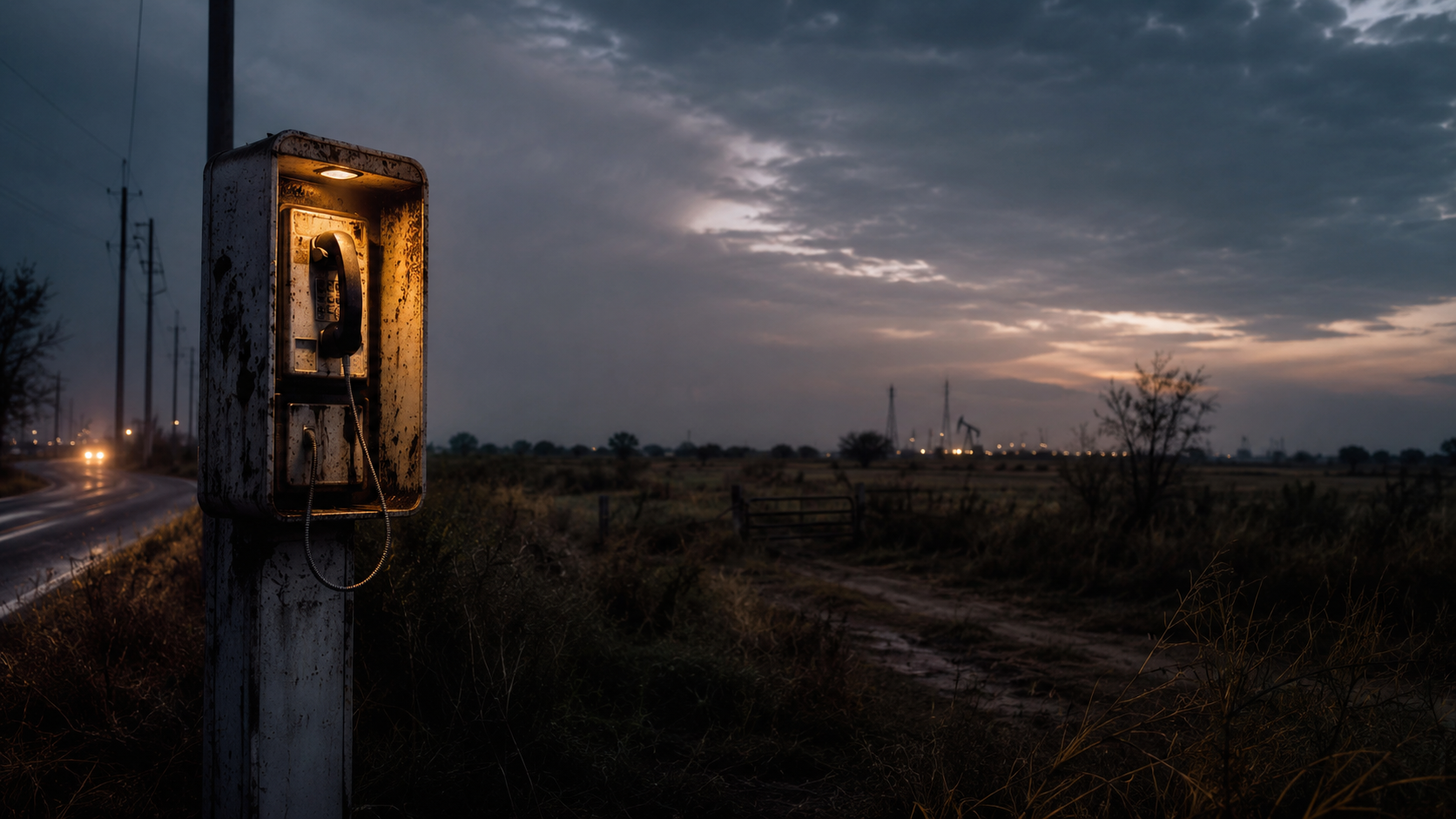
One ordinary piece of nineteen-eighties life becomes important: the payphone. Mobile phones do not exist as an everyday safety net. Calling someone while away from home often means travelling to a public telephone, sometimes outside a shop or petrol station.
Heidi leaves to use a telephone.
She does not return.
At this point there is no “Killing Fields case”. There are no four women connected by Calder Road. There is one missing young woman, a family searching for answers and investigators attempting to understand where she went.
Months pass.
In April nineteen eighty-four, a dog carries what appears to be a human bone from the vicinity of an oil field near Calder Road. A search follows. Human remains are found.
They are identified as Heidi Fye.
The empty acreage has now become something different. It is a place where the remains of a missing woman have been discovered.
There is still nothing publicly proving that another disappearance will lead investigators there again.
Laura Miller Arrives In League City
Later that year, another family is settling into League City.
Laura Miller is sixteen. She is musically talented and has sung in choir, but seizures have disrupted school and made adolescence harder. Her father, Tim Miller, would describe a teenager with ambitions and interests whose health problems had begun isolating her socially.
The family has recently moved and their telephone has not yet been connected.
On September tenth, nineteen eighty-four, Laura wants to call her boyfriend. Her mother drives her to a nearby convenience store where Laura can use a payphone. The plan is straightforward: Laura will make the call and walk roughly half a mile home.
Her parents later return.
Laura is not there.
Her boyfriend is also expecting her.
She still does not arrive.
The first explanation available to police is that Laura may have left voluntarily. Tim Miller later recalled that officers initially regarded her as a runaway and told the family she would probably make contact.
For Laura’s parents, that explanation becomes increasingly difficult to accept.
Days become weeks.
Weeks become months.
Tim begins investigating disappearances himself. The geography around League City becomes increasingly important to him. So does the earlier disappearance of Heidi Fye.
One location keeps pulling at him: the field off Calder Road.
A Father Searches The Field
The field is close enough to Laura’s disappearance to trouble Tim Miller.
He searches.
He studies the land and pushes investigators to look more closely. Yet the acreage is not transformed overnight into a major forensic operation. At the time, there is no satellite-phone tracking, no consumer DNA genealogy, no modern digital footprint and no comprehensive national missing-person infrastructure capable of automatically linking distant cases.
Investigators work with what they have: witness recollections, physical searches, dental records, local files and whatever information can be developed about movements before a disappearance.
Meanwhile, Laura remains missing.
The uncertainty is particularly cruel because the family has no confirmed answer. They know where she was supposed to be. They know she did not come home. They know another missing woman had been found in an isolated field nearby.
They do not yet know whether those facts are connected.
More than a year passes.
Then, on February second, nineteen eighty-six, two boys riding bicycles in the Calder Road field notice human remains.
Investigators return.
The search rapidly changes the meaning of the land.
Three Women In One Field
The remains are identified as Laura Miller.
She has been found not far from the location where Heidi Fye was recovered.
But investigators searching the site make another discovery.
There are additional human remains.
This woman cannot immediately be identified.
She becomes known publicly as Jane Doe.
Now the coincidence is impossible to ignore. Three women have been found in the same relatively small, isolated area: Heidi, Laura and an unidentified woman whose history investigators cannot yet reconstruct.
For the Miller family, confirmation ends one form of uncertainty and begins another. Tim no longer has to wonder where Laura is. He now wants to know who brought her to the field, how she died and why the location he had feared became the place where she was eventually found.
Investigators confront a different problem.
Finding a body does not automatically reveal a killer. Finding several bodies in one field does not automatically prove the same person deposited them.
The site points towards deliberate familiarity with the terrain. An FBI investigator would later note that whoever selected such a remote location probably knew about it. But no known witness connected all four women eventually associated with the field, and investigators could not identify one common person linking them.
The geography is powerful evidence.
It is not, by itself, an identity.
Jane Doe Has No Name
The unidentified woman found in nineteen eighty-six presents investigators with a fundamental obstacle.
Police cannot properly reconstruct the final months of a person’s life if they do not know who that person is.
A name gives investigators relatives, friends, workplaces, former addresses, relationships and routines. Without one, detectives are forced to work backwards from the body itself.
The scientific tools available in nineteen eighty-six have severe limits compared with those available today. DNA profiling is only beginning to enter forensic investigation. Genetic genealogy is decades away.
Jane Doe therefore remains Jane Doe.
Her presence nevertheless raises questions about the field. If she did not live in exactly the same social circles as Heidi or Laura, what brought all three to the same patch of land? Did the person responsible choose the field because it was close to home? Close to work? Conveniently accessible? Familiar through recreation, oil-field employment or local driving?
Or had more than one offender independently recognised its usefulness?
The evidence does not yet answer any of those questions.
Then the field goes quiet.
For several years, no new body is reported there.
A Fourth Discovery
In September nineteen ninety-one, people travelling through the area notice another set of human remains.
Police return to Calder Road.
Again, the woman cannot immediately be identified.
She becomes known as Janet Doe.
There are now four women associated with the same field: Heidi Fye, Laura Miller, Jane Doe and Janet Doe. Their discoveries stretch from nineteen eighty-four to nineteen ninety-one.
The location acquires the name that will follow it for decades.
The Killing Fields.
It is an unforgettable label, but it risks making the women sound like components of a single mystery rather than separate people.
Heidi has a family, employment and relationships.
Laura is sixteen, living with seizures and trying to call her boyfriend.
Jane Doe had a life investigators had not yet recovered.
Janet Doe had one too.
Without their identities, however, two of the four stories remain almost impossible to tell.
The Search For One Explanation
Investigators consider numerous people over the years.
One early focus is Robert Abel, a former NASA engineer who had connections to property in the area. His home is searched in nineteen ninety-three. He denies involvement, is never charged in connection with the Calder Road deaths and dies in two thousand and five. Later suspicion around him becomes part of Killing Fields folklore, but suspicion is not proof.
That pattern repeats throughout the history of the case.
Names circulate.
Possible links are discussed.
Investigators examine men with histories of violence.
Families form their own theories.
But the same-site discovery does not produce the evidentiary breakthrough that might be expected from a modern investigation. Years erode memories. People move. Witnesses die. Evidence collected before modern DNA methods may be incomplete or degraded.
The possibility of multiple offenders also complicates everything.
A detective looking for one person who connects every woman may miss a stronger link between only two. Conversely, assuming unrelated crimes might obscure a genuine repeat offender.
This is one of the central difficulties of the Texas Killing Fields: geography creates a pattern more confidently than the evidence identifies who created it.
Clyde Hedrick Moves Into The Investigation
Another name increasingly attracts attention: Clyde Hedrick.
His significance does not originate with the Calder Road cases alone.
In nineteen eighty-four, Ellen Rae Simpson Beason dies after spending time with Hedrick. Her death becomes the subject of a separate investigation that will move through the justice system decades later.
Hedrick also lives in the region and becomes a recurring figure in investigators’ examination of unsolved deaths.
For years, however, suspicion surrounding him and the Calder Road women does not produce charges.
That distinction is essential. A person can be investigated intensively, regarded as suspicious by families and linked circumstantially to locations or individuals without a court ever establishing responsibility for a particular death.
Tim Miller becomes convinced that Hedrick knows more about Laura’s death.
Police continue working the cases.
Still, there is no courtroom resolution for the Calder Road four.
The Wider Corridor Produces Another Offender
While the Calder Road cases remain unresolved, another sequence of disappearances begins in nineteen ninety-seven.
Twelve-year-old Laura Smither disappears while jogging near her Friendswood home in April.
Seventeen-year-old Jessica Cain disappears in August after socialising with friends; her vehicle is later found abandoned near Interstate forty-five.
Kelli Cox, a twenty-year-old university student and young mother, also disappears after using a public telephone at a service station.
For years, these cases add to the perception that the Houston-Galveston region is being hunted by an unknown force.
But these disappearances eventually demonstrate why the broad phrase “Texas Killing Fields” must not be mistaken for one criminal series.
William Lewis Reece becomes connected to crimes in the region. In nineteen ninety-seven he is arrested after another young woman, Sandra Sapaugh, survives an abduction and attack. He subsequently receives a long prison sentence.
Years later, DNA links Reece to the nineteen ninety-seven murder of Tiffany Johnston in Oklahoma. That breakthrough changes the Texas investigations too. He eventually provides information directing investigators to the remains of Jessica Cain and Kelli Cox.
In twenty twenty-two, Reece pleads guilty in Texas to murdering Laura Smither, Jessica Cain and Kelli Cox and receives life sentences.
Those outcomes resolve major cases associated with the wider Killing Fields narrative.
They do not resolve the four women found on Calder Road.
Instead, they prove something more complicated.
At least one highly dangerous repeat offender was operating across the region during one period. That does not mean he was responsible for every disappearance that preceded him.
The “one monster” theory becomes harder to sustain.
Tim Miller Turns Searching Into A Mission
Laura’s disappearance permanently changes Tim Miller’s life.
For years he searches not only for answers about his daughter but increasingly for other missing people. In two thousand, he establishes Texas EquuSearch, an organisation that develops from volunteer searches into a highly experienced missing-person search operation.
The irony is severe.
A family initially struggling to persuade authorities of the seriousness of a disappearance eventually builds an organisation used to help law enforcement and other families search for their own missing relatives.
Laura’s case therefore develops two legacies.
One is unresolved responsibility.
The other is a search organisation created because her father understands exactly what it means to have no answer.
That second legacy will ultimately bring Tim back into direct contact with people connected to the investigation.
Science Gives Jane Doe Her Name Back
By the twenty-tens, forensic science has transformed.
Modern DNA databases, improved extraction methods and genealogical research can do what investigators in nineteen eighty-six could not.
The unidentified women from Calder Road are re-examined.
In early twenty nineteen, investigators finally establish the identity of Jane Doe.
She is Audrey Lee Cook.
Audrey was born in Memphis in nineteen fifty-five. She had lived in areas including Houston and Channelview and worked as a mechanic. Investigators learn that her last known contact with family came in December nineteen eighty-five, when she communicated by mail. She had normally kept in contact and sometimes received money from relatives by wire transfer.
For more than thirty years, investigators possessed Audrey’s remains without possessing her story.
Now they can begin rebuilding it.
They can identify workplaces.
Friends.
Relationships.
Addresses.
People who might have known her near the end of nineteen eighty-five.
A forensic identification does not solve her death.
But it turns an anonymous crime back into the disappearance of a specific woman.
Janet Doe Becomes Donna Prudhomme
The second breakthrough arrives alongside the first.
Janet Doe is identified as Donna Gonsoulin Prudhomme.
Donna was born in nineteen fifty-seven and had lived in the Austin, Seabrook and Nassau Bay areas. Investigators believed she was approximately thirty-four when she died and said she was last seen in July nineteen ninety-one.
For decades, investigators had been trying to connect an unknown woman to a killer.
Now they could instead ask who knew Donna.
Where had she been staying?
Who had seen her?
What relationships surrounded her?
Did she have any connection to the other three women?
The identifications also make clear something that popular shorthand had obscured.
The four women were not simply four interchangeable young victims fitting a perfect serial-killer profile. They differed in age, background, work and circumstance. The FBI publicly noted that there was no known person common to all four.
The shared field remained the strongest undeniable connection.
Why The Field Matters
An isolated dumping site can tell investigators something without telling them everything.
The Calder Road location was secluded enough in the nineteen-eighties for a person to enter without attracting immediate attention. Yet it was also accessible from populated areas and the wider road network.
That combination matters.
A site can be remote without being distant.
Someone familiar with League City could know that a road apparently leading nowhere offered concealment only minutes from homes and businesses. The person would not necessarily need specialist knowledge. But repeated use of the same acreage raises the possibility of comfort with the location.
The FBI has publicly emphasised this geographical logic. The offender or offenders chose a rural place and therefore probably knew it existed. Investigators have continued searching for anomalies connecting the women: one shared acquaintance, a workplace overlap, a social contact or another detail overlooked when the cases were first examined separately.
Yet geography cannot decide whether the field was used by one killer or several.
It can only tell investigators where different stories converged.
Hedrick Is Convicted In A Different Death
The separate Ellen Beason case eventually brings Clyde Hedrick into court.
Decades after her nineteen eighty-four death, Hedrick is convicted of involuntary manslaughter in connection with Beason’s death and receives a twenty-year prison sentence. He serves approximately eight years before being released in October twenty twenty-one.
For Tim Miller, Hedrick’s release does not end the questions surrounding Laura.
Neither does it legally establish Hedrick as Laura’s killer.
That unresolved boundary — between suspicion and proof — remains in place.
Then something unusual happens.
A man who has not previously been a major public name in the Killing Fields story contacts Tim.
James Elmore Makes Contact
In early twenty twenty-two, James Dolphs Elmore Jr. reaches out to Tim Miller.
Elmore has known Hedrick.
Over the next four years, Tim meets or speaks with Elmore repeatedly — more than thirty times, according to later accounts. Elmore provides information about the old cases. Tim encourages authorities to examine him and what he is saying.
The dynamic is extraordinary.
A father whose daughter disappeared in nineteen eighty-four is now personally engaging with a man claiming knowledge about what happened.
Tim does not simply receive information once.
The conversations continue.
Elmore reportedly takes him to the Calder Road field during their first meeting. Tim later declines to reveal publicly everything Elmore told him because he does not want to jeopardise a developing investigation.
The significance of those conversations is therefore not immediately public.
But investigators now have something they did not have when Laura disappeared: a living person making statements about events almost four decades earlier.
Investigators Reopen Old Ground
By twenty twenty-four and twenty twenty-five, authorities intensify their re-examination of the Calder Road deaths.
Witnesses are interviewed again.
Old evidence is reconsidered.
The district attorney’s office begins taking a harder look at whether charges can still be brought.
This is precisely the type of case where ageing evidence creates opposing pressures.
Time damages prosecutions because witnesses die, memories weaken and physical evidence disappears.
But time can also produce new evidence. People who once remained silent may talk. Relationships change. Forensic science advances. An unidentified victim gains a name. A witness decides that whatever loyalty existed decades earlier no longer matters.
The question is whether those late developments can be converted into evidence strong enough for a criminal courtroom.
Investigators focus particularly on Hedrick and Elmore.
Then the chronology accelerates.
Clyde Hedrick Dies
In March twenty twenty-six, Hedrick is hospitalised.
He dies on March twenty-first.
Authorities later disclose that they had recently spoken with him and were preparing to seek grand-jury indictments connected not merely to Laura Miller and Audrey Cook but also to Heidi Fye and Donna Prudhomme.
Hedrick dies before those proposed allegations can ever become charges.
Prosecutors later state publicly that they believed Hedrick was responsible for killings connected to the Calder Road field. But because he died before an indictment or trial, those allegations will never be tested against him through a criminal verdict.
That legal limitation matters.
An investigative conclusion is not the same thing as a conviction.
The surviving question becomes whether anyone else can be prosecuted for conduct connected with the women.
Days later, the answer changes.
A Grand Jury Acts After More Than Four Decades
On March thirty-first, twenty twenty-six, a Galveston County grand jury indicts James Dolphs Elmore Jr.
The charges represent the first criminal proceeding directly connected to Laura Miller or Audrey Cook.
Elmore is accused of manslaughter in Laura’s death and felony evidence tampering connected to Laura and Audrey. Prosecutors allege that he supplied Hedrick with cocaine involved in Laura’s death and withheld information about where the bodies of Laura and Audrey had been placed. Elmore has pleaded not guilty.
Those allegations are not convictions.
They are propositions the state must prove.
The prosecution has indicated that statements Elmore made to Tim Miller and investigators form part of the evidence. More recent court reporting says prosecutors accuse Elmore of giving Hedrick liquid cocaine and of knowing information about the disposal or location of the women’s bodies.
For Tim, the legal development arrives more than forty years after Laura walked to a payphone.
But the case is still not finished.
Searchers Return To Calder Road
In June twenty twenty-six, police agencies and volunteers return to the Killing Fields.
The search is prompted by new information associated with Elmore and the possibility that another person may have been buried in the area.
Nearly forty Texas EquuSearch volunteers join law-enforcement personnel. Searchers use equipment including all-terrain vehicles and an excavator while examining land near Calder Drive. No new remains were publicly reported from the search that day.
The moment contains almost the entire history of the case in miniature.
The place is still being searched.
Tim Miller is still there.
The organisation created from Laura’s disappearance is helping police investigate information linked to the field where Laura was found.
And investigators are still asking whether Calder Road contains answers that were missed in the nineteen-eighties.
What The Charges Do And Do Not Establish
The twenty twenty-six prosecution is a major development, but it does not convert every Killing Fields mystery into one solved case.
Elmore has not been convicted.
His manslaughter and evidence-tampering charges concern Laura Miller and Audrey Cook.
No criminal verdict has established who killed Heidi Fye or Donna Prudhomme.
Hedrick died without standing trial for any of the four Calder Road deaths.
Nor do the new allegations prove that one offender was responsible for every woman associated with the wider Interstate forty-five corridor.
That last point is already contradicted by resolved cases. William Reece admitted responsibility for three Texas murders from nineteen ninety-seven, while the Calder Road deaths stretch back to the nineteen-eighties. The mythology may describe a single landscape of terror, but the evidence increasingly points towards a region used by different offenders across different periods.
The question is no longer simply, “Who was the Texas Killing Fields killer?”
There may never have been one answer to that question.
The Institutional Lesson
The case also illustrates how easily early assumptions can shape a missing-person investigation.
Laura Miller’s family said police initially considered her a runaway.
That classification was not unique to Laura’s era. Historically, teenagers — particularly girls — were sometimes assumed to have left voluntarily, delaying the urgency later associated with abduction cases.
The consequences can be profound.
The earliest hours of a disappearance offer the best opportunity to identify witnesses, preserve physical evidence, search routes and reconstruct movements while memories remain fresh.
Once that period disappears, investigators may spend decades trying to recreate information that once existed temporarily in ordinary human memory.
The Killing Fields cases also crossed jurisdictions. Houston, League City, Friendswood, Galveston County, Harris County and other agencies dealt with different disappearances across an expanding metropolitan region.
A person committing crimes along transport corridors does not respect police boundaries.
Evidence systems historically did.
Modern databases, shared DNA information and multi-agency tasking make coordination easier than it was during the nineteen-seventies and nineteen-eighties, but the old cases still carry the consequences of the systems that existed when the women disappeared.
No Responsible Psychological Profile Can Solve This
The temptation with an unresolved series is to create a psychological portrait of an imagined offender.
That would go beyond the evidence here.
There is no judicially established single perpetrator responsible for all four Calder Road women, much less for the wider set of cases described under the Texas Killing Fields label.
The behaviour that can responsibly be discussed is narrower.
Whoever deposited remains in the Calder Road field demonstrated knowledge that the location could provide concealment. If the same offender used the location repeatedly, repeated use may indicate familiarity and confidence. But if different offenders used it independently, the field instead reveals something about the environment: multiple people could recognise its isolation.
The surviving record cannot distinguish those possibilities with psychological certainty.
Nor can demeanour, criminal history or suspicion substitute for proof.
That restraint matters especially now, while a living defendant is awaiting trial.
What The Record Cannot Prove
The public record cannot currently prove that one person killed Heidi Fye, Laura Miller, Audrey Cook and Donna Prudhomme.
It cannot prove that every disappearance associated with the Interstate forty-five corridor is connected.
It cannot convert the accusations against James Elmore into facts before a jury considers the evidence.
It cannot provide a criminal verdict against Clyde Hedrick for the Calder Road deaths because he died before the proposed charges against him could be adjudicated.
And it cannot answer how many other cases placed under the “Texas Killing Fields” umbrella actually belong to separate offenders, separate circumstances or unrelated histories.
Those limitations do not make the investigation meaningless.
They define what remains to be established.
The First Trial Approaches
As of August twenty-fifth, twenty twenty-six, James Elmore remains the central living defendant in the newest phase of the Calder Road investigation.
He has pleaded not guilty.
Jury selection is scheduled to begin on August thirty-first in Galveston County, with the proceeding expected to examine the manslaughter allegation involving Laura Miller and evidence-tampering allegations involving Laura and Audrey Cook.
More than forty years separate Laura’s disappearance from the courtroom now preparing to hear evidence connected with her case.
That delay alone will shape the prosecution.
Witnesses are being asked about events from another era.
Statements made decades afterwards may assume unusual importance.
Jurors may have to distinguish what someone says happened from what physical evidence can still demonstrate.
And Elmore’s defence will have the opportunity to challenge the state’s allegations, interpretations and witnesses.
Until that process is complete, guilt is unresolved.
Four Names Where Two Once Were Missing
There is, however, one transformation that cannot be undone.
The field once contained two known women and two anonymous ones.
Today it contains four names in the historical record.
Heidi Fye.
Laura Miller.
Audrey Lee Cook.
Donna Gonsoulin Prudhomme.
League City has moved towards creating a memorial garden honouring all four, shifting public attention from the mythology of the land towards the people whose lives became attached to it.
That change matters.
“Killing Fields” is memorable because it sounds like the title of a horror story.
The actual history is less tidy.
It is the history of families not believed quickly enough, investigators inheriting files from earlier generations, unidentified women waiting decades for their names, suspects who died without facing the allegations against them, separate killers operating in the same broad region, changing forensic technology and a father who turned the search for his daughter into a lifetime of searching for other people’s children.
The field itself never supplied a single answer.
It supplied questions.
Who knew this place?
Who brought these women here?
Which cases truly connect?
Which apparent patterns were coincidence?
What evidence still exists?
Who remained silent?
And after four decades, what can still be proved?
The payphone Laura used is part of another technological age. League City has grown around roads that once bordered empty acreage. DNA methods that sounded impossible when Jane Doe was discovered eventually gave Audrey Cook her identity back.
Yet Calder Road remains part of an active legal story.
The road changed.
The science changed.
The people investigating it changed.
The questions survived.
