True Crime: Lockerbie Bomber - The Suitcase, The Flight, And The Case That Never Closed
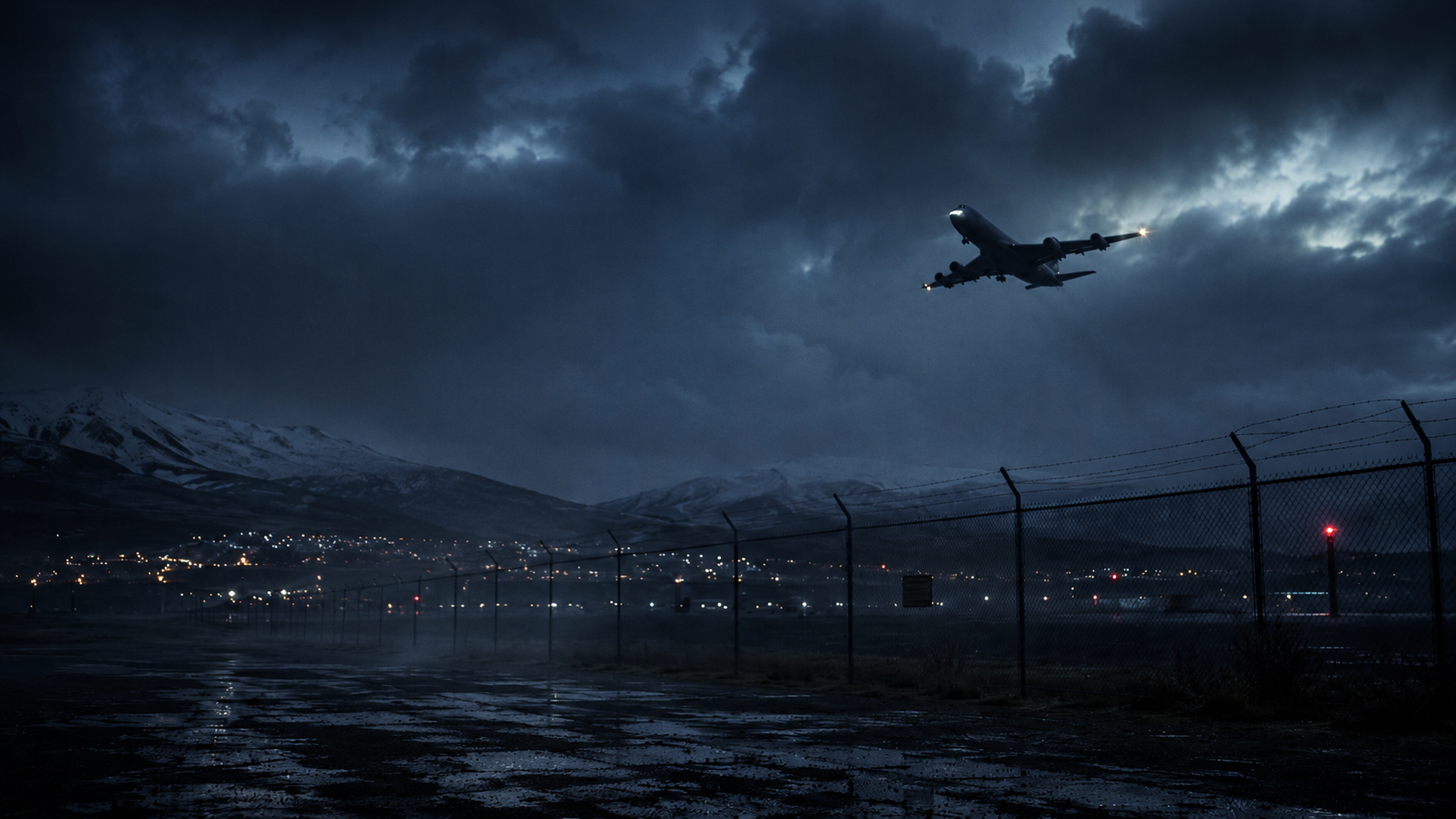
Who Was The Lockerbie Bomber?
The Pan Am 103 Case Explained
The Suitcase, The Flight, And The Investigation Still Moving Nearly Four Decades Later
On the evening of December twenty-first, nineteen eighty-eight, Pan American World Airways Flight 103 is preparing to cross the Atlantic. The Boeing 747 has begun its journey in Frankfurt, passengers have connected through London Heathrow, and the aircraft is now heading from London towards New York. For hundreds of people on board, it is an ordinary international flight in the final days before Christmas.
Below the passenger cabin, hundreds of pieces of luggage sit inside containers in the aircraft's cargo hold. Somewhere within that mass of suitcases, clothing and personal possessions is an object whose significance is invisible to everyone on the aircraft.
Flight 103 leaves Heathrow at approximately six twenty-five p.m. It climbs north-west across Britain, heading towards the Atlantic. Air traffic controllers communicate normally with the crew. Nothing in those exchanges indicates an emergency.
At approximately seven o'clock, the aircraft approaches the Scottish border.
Minutes later, something happens inside the forward cargo hold.
The radar picture changes.
Contact with Flight 103 disappears.
The Night Over Lockerbie
The aircraft is flying at around thirty-one thousand feet when an explosive device detonates inside the forward luggage compartment.
The explosion does not simply tear a hole through the Boeing 747. Structural failure spreads rapidly through the aircraft. The fuselage breaks apart in the air, and sections of the plane begin falling towards the Scottish town of Lockerbie and the surrounding countryside.
All two hundred and fifty-nine passengers and crew members aboard Flight 103 are killed. Eleven residents of Lockerbie also die when wreckage strikes the town. Houses are destroyed, fires erupt and debris is scattered across an enormous area. The dead include one hundred and ninety Americans and forty-three citizens of the United Kingdom, while passengers from numerous other countries are also among those lost.
The scale of the disaster immediately presents investigators with a problem almost without precedent.
This is not a conventional crime scene.
It stretches for miles.
Aircraft wreckage, luggage, clothing and personal belongings have fallen across southern Scotland. Investigators cannot begin by looking for a weapon lying beside a victim or a suspicious object inside a single building. They have to reconstruct an aircraft that has disintegrated thousands of feet above the ground and work backwards towards whatever caused it.
Tens of thousands of objects are eventually recovered, catalogued and examined. Parts of the Boeing are transported to a hangar at Longtown, while important portions of the aircraft are reconstructed at Farnborough. The investigation gradually begins distinguishing damage caused by the aircraft's breakup and impact from damage created before the plane came apart.
One area attracts particular attention.
It is on the port side of the forward cargo bay.
Investigators find pitting, soot, unusual fractures and metal deformed in patterns consistent with an explosion originating inside the aircraft.
The catastrophe is no longer being treated simply as an unexplained air disaster.
Someone has placed a bomb aboard Pan Am Flight 103.
Reconstructing The Explosion
Investigators begin concentrating on luggage container AVE 4041.
The physical damage suggests the explosion occurred within or immediately around this container. Forensic specialists examine fragments of metal, luggage and clothing recovered from across the crash area.
Evidence of explosive residues is detected. Court findings eventually record traces consistent with PETN and RDX, substances used in plastic explosives including Semtex. Reconstruction of the damage places the explosive device within luggage loaded into the forward cargo area.
The next task is astonishingly difficult.
Investigators need to identify the suitcase.
Among the recovered debris are fragments from what appears to have been a brown Samsonite hard-shell case. Fifty-six pieces showing explosive damage are eventually associated with the suitcase. The pattern of destruction indicates that the explosion came from inside it.
Then investigators find something smaller.
Fragments embedded within damaged clothing appear to belong to a radio cassette player. Additional pieces include parts of an instruction manual. The fragments are examined against commercially available radios.
The device is eventually identified as being consistent with a Toshiba RT-SF 16 radio cassette player. Investigators conclude that the explosive charge had been concealed inside the radio, which in turn had been packed into the Samsonite suitcase.
The ordinary objects recovered from the Scottish countryside are beginning to form a chain.
A suitcase.
Clothing.
A radio.
Explosives.
And somewhere behind them, whoever prepared the device.
The Clothes Inside The Suitcase
The damaged clothing becomes one of the investigation's most important geographical clues.
Some of the garments are sufficiently intact for investigators to identify their manufacturers or retailers. The trail takes them far from Scotland and eventually towards Malta.
Investigators establish that several items appear to have been purchased from a shop called Mary's House in Sliema.
Its owner, Tony Gauci, becomes an important witness.
Gauci describes selling a collection of clothing to a man whose identity he does not know. Investigators try to determine exactly when the purchase happened and who the customer might have been.
The question matters enormously.
If investigators can identify who bought the clothes packed around the bomb, they may be able to identify someone connected to whoever assembled or transported the explosive suitcase.
But the identification evidence is never straightforward.
Memory is imperfect. Time passes. Gauci gives descriptions of the purchaser and is subsequently shown photographs. Questions emerge about the date of the clothing purchase, the customer's appearance, weather conditions and events occurring around the shop at the time.
These details will become some of the most argued-over evidence in the entire Lockerbie story.
At this stage, however, investigators have something crucial.
The bomb suitcase appears connected to Malta.
A Tiny Circuit Fragment
Another fragment recovered from the wreckage begins leading investigators in a different direction.
Among the debris is material believed to have formed part of the timing mechanism associated with the explosive device.
The investigation eventually links a circuit-board fragment to a type of electronic timer manufactured by the Swiss company MEBO.
Those timers become significant because investigators establish connections between MEBO equipment and Libya.
A picture begins taking shape.
The clothing appears connected to Malta.
The timer evidence points towards equipment supplied to Libya.
Investigators now start examining Libyan intelligence officers who travelled through Malta around the relevant period.
Two names become increasingly important: Abdelbaset Ali Mohmed al-Megrahi and Al Amin Khalifa Fhimah.
Megrahi is associated with Libyan intelligence and travels using a passport under another identity. Fhimah formerly works for Libyan Arab Airlines at Malta's Luqa Airport.
The investigation is moving away from the wreckage fields of Scotland and towards an alleged international intelligence operation.
But establishing how the bomb reached Pan Am Flight 103 remains difficult.
How Did The Suitcase Reach Heathrow?
The eventual prosecution theory develops around an unaccompanied suitcase entering the aviation baggage system in Malta.
The proposed route is complicated.
The suitcase is alleged to have been introduced at Malta, transferred through Frankfurt and eventually placed aboard Pan Am Flight 103 at Heathrow.
Investigators analyse baggage records, airport procedures and the movement of passengers and luggage.
Yet the Malta-origin theory becomes one of the enduring areas of controversy surrounding Lockerbie.
Evidence also exists of a security breach at Heathrow during the night before the bombing. Years later, an appeal court accepts that a break-in occurred, although it concludes that the incident does not materially undermine the overall circumstantial case against Megrahi.
That distinction becomes central to competing interpretations of Lockerbie.
The official case ultimately points towards Libya and Malta.
Critics argue that alternative routes for introducing the bomb were never adequately eliminated.
These are not trivial disagreements. The precise origin of the suitcase determines how almost every other piece of evidence fits together.
Libya Moves Into The Centre Of The Investigation
By nineteen ninety-one, American and Scottish investigators believe they have enough evidence to formally accuse two Libyan men.
Megrahi and Fhimah are charged in connection with the attack.
The allegation is extraordinary in geopolitical terms.
Investigators are effectively accusing operatives connected to the government of Muammar Gaddafi of participating in the destruction of a civilian airliner carrying hundreds of passengers.
Libya refuses for years to surrender the men for trial in either Britain or the United States.
The Lockerbie investigation therefore becomes entangled with international diplomacy.
Sanctions are imposed against Libya. Negotiations continue. Families of those killed wait while governments argue over jurisdiction, extradition and the location of any future proceedings.
Eventually an unusual compromise emerges.
The two accused men will be tried under Scottish law, but the trial will take place at Camp Zeist in the Netherlands.
The arrangement allows the defendants to be surrendered without Libya having to send them directly to Britain or America.
More than eleven years after Flight 103 disappears from the sky, the Lockerbie case finally reaches a courtroom.
The Trial At Camp Zeist
Proceedings begin in May two thousand.
There is no jury.
Instead, three Scottish judges hear the evidence.
The prosecution case is fundamentally circumstantial. There is no witness who says they watched Megrahi place a bomb aboard Flight 103. There is no surviving airport video showing the device being loaded.
The case is constructed from multiple strands.
The bomb is linked to a suitcase. Clothing inside that suitcase is traced to Malta. Tony Gauci's evidence links Megrahi to the purchase of clothing resembling items recovered from the suitcase. Megrahi's movements place him in Malta around the relevant period. Timer evidence is said to connect the device to equipment supplied to Libya. The prosecution argues that these facts are not isolated coincidences but parts of a single operation.
Fhimah faces a related allegation based partly on his airport access and alleged role in facilitating the luggage.
The defence attacks the reliability and interpretation of the evidence.
Gauci's identification is challenged.
The exact date of the clothing purchase is disputed.
Questions are raised about whether the bomb suitcase necessarily originated in Malta.
Alternative theories involving Palestinian militant groups and other state sponsors are explored.
After months of evidence, the judges reach different conclusions about the two men.
On January thirty-first, two thousand and one, Fhimah is acquitted.
Megrahi is convicted of murder.
He becomes the only person convicted over the destruction of Pan Am Flight 103.
The Scottish court concludes that the circumstantial evidence, considered collectively, is sufficient to establish his involvement beyond reasonable doubt. The judges accept significant parts of the evidence connecting Megrahi to Malta, the clothing and the conspiracy surrounding the explosive device.
He receives a life sentence.
But rather than closing Lockerbie, the verdict begins another argument.
Why Megrahi's Conviction Became So Controversial
The Lockerbie verdict does not produce universal agreement, including among the families of those killed.
Some regard Megrahi's conviction as the culmination of an extraordinary international investigation.
Others increasingly question whether the evidence justified it.
Tony Gauci's identification becomes particularly controversial.
The reliability of eyewitness identification is inherently sensitive when considerable time has passed. Gauci's descriptions of the purchaser, the photograph-identification procedures and uncertainty over the precise date of the sale are repeatedly scrutinised.
The timing matters because Megrahi is known to have been in Malta on one of the dates considered relevant to the purchase.
Then there is the timer fragment.
Its provenance, handling and significance generate years of argument.
There is also the Heathrow break-in.
If someone had gained unauthorised access to the airport before Flight 103 departed, critics argue, the assumption that the bomb necessarily began its journey in Malta becomes less secure.
Alternative theories focus particularly on Iran and the Popular Front for the Liberation of Palestine-General Command.
The geopolitical context provides an obvious reason those theories endure.
In July nineteen eighty-eight, several months before Lockerbie, the USS Vincennes shoots down Iran Air Flight 655 over the Persian Gulf, killing all two hundred and ninety people aboard. Iran condemns the incident, and speculation subsequently develops that the Lockerbie bombing could have been retaliation commissioned through a Palestinian militant organisation.
Investigators had examined such possibilities, particularly because West German authorities had disrupted a PFLP-GC bomb-making network before Lockerbie.
But suspicion is not proof.
No alternative theory has produced a court judgment overturning the finding that Megrahi was involved.
That distinction is critical.
Lockerbie contains genuine evidential controversies. It also contains decades of speculation extending far beyond what can be established.
The Appeals Begin
Megrahi appeals his conviction.
His first appeal fails in two thousand and two.
The case nevertheless remains under examination, and the Scottish Criminal Cases Review Commission later conducts a major investigation.
In two thousand and seven, the commission refers Megrahi's conviction back to the appeal court after concluding that a possible miscarriage of justice may have occurred.
The referral is significant.
It does not declare Megrahi innocent.
It means there are issues serious enough to justify another judicial examination of the conviction.
A second appeal begins.
Then circumstances change dramatically.
Megrahi develops terminal prostate cancer.
In August two thousand and nine, the Scottish government releases him from prison on compassionate grounds. He abandons his appeal shortly before returning to Libya.
The decision provokes intense controversy, particularly in the United States.
Megrahi is welcomed upon his return to Libya and survives considerably longer than the prognosis discussed at the time of his release.
He dies in Libya in May two thousand and twelve.
His death does not end the legal argument.
His family continues attempting to clear his name.
Years later the Scottish Criminal Cases Review Commission again refers the conviction to the High Court.
In January two thousand and twenty-one, five appeal judges reject the challenge and uphold Megrahi's conviction. The court examines arguments surrounding Gauci's identification and other evidence but does not find a basis for overturning the verdict.
Legally, therefore, Megrahi remains convicted of the Lockerbie bombing.
Historically, however, the investigation has not stopped.
Because another name has been sitting inside the Lockerbie files.
The Name Investigators Could Not Forget
During the original investigation, authorities encounter references to a Libyan man known as Abu Agila Masud.
Investigators suspect he may have specialised in explosives.
But they cannot establish enough about his identity or whereabouts to prosecute him alongside Megrahi and Fhimah.
The trail goes quiet.
For years, Lockerbie remains defined primarily by Megrahi's conviction and the arguments surrounding it.
Then Libya changes.
In two thousand and eleven, the uprising against Muammar Gaddafi destroys the political order that has controlled the country for decades.
Gaddafi is killed.
Prisons, intelligence archives and state institutions enter a period of turmoil.
And somewhere inside that upheaval, Abu Agila Mohammad Mas'ud Kheir Al-Marimi is taken into Libyan custody.
What happens next eventually transforms the Lockerbie investigation.
The Interview In Libya
On September twelfth, two thousand and twelve, Mas'ud is interviewed by a Libyan law-enforcement officer.
According to later American charging documents, Mas'ud makes statements describing his involvement in the Lockerbie operation.
The interview does not immediately become public.
Years pass.
The FBI receives a copy around two thousand and seventeen. American and Scottish investigators continue trying to establish more about its provenance, circumstances and contents.
By March two thousand and twenty, investigators obtain additional information from the Libyan officer who conducted the interview.
The document contains an extraordinary allegation.
According to the American government's description of the interview, Mas'ud said he had worked as a technical specialist for Libya's External Security Organization and had experience constructing explosive devices.
Prosecutors say he described receiving instructions in the winter of nineteen eighty-eight to travel to Malta with a suitcase.
They allege he met Megrahi and Fhimah there.
And they say Mas'ud admitted preparing the explosive device eventually used against Flight 103.
These claims have not been proven against Mas'ud at trial.
He denies responsibility.
But more than three decades after Lockerbie, investigators believe they have found the man who constructed the bomb.
What Mas'ud Is Accused Of Doing
The American allegations provide a much more detailed operational story than the public possessed at the time of Megrahi's trial.
According to the criminal complaint, Mas'ud was allegedly summoned by a senior Libyan intelligence figure and directed to travel to Malta.
Prosecutors say he arrived carrying a prepared suitcase.
They allege that after spending several days in Malta, he received instructions from Megrahi and Fhimah concerning the timer.
The government says Mas'ud then set the device so that the explosion would occur approximately eleven hours later.
The suitcase, prosecutors allege, was a medium-sized Samsonite.
On the morning of December twenty-first, they say Mas'ud travelled to the airport with the others and handed the suitcase to Fhimah after receiving a signal.
Fhimah allegedly placed it on a baggage conveyor.
Mas'ud then departed Malta on a flight to Tripoli.
According to the prosecution theory, the explosive suitcase began travelling through the international baggage system while the alleged bomb maker headed back towards Libya.
The government further alleges that after the bombing, Gaddafi personally thanked Mas'ud and other participants.
Again, these claims form part of the prosecution case. Mas'ud has pleaded not guilty, and the allegations remain to be tested at trial.
That legal distinction matters more now than ever.
The Alleged Confession And Its Problems
The alleged two thousand and twelve statement is potentially devastating evidence.
It is also one of the most contested parts of the modern Lockerbie prosecution.
Mas'ud's lawyers argue that the circumstances surrounding the interview make it unreliable.
Libya in two thousand and twelve is not a stable democratic state with a conventional criminal-justice system operating normally after a peaceful transfer of power.
Gaddafi's regime has collapsed through civil war.
Armed factions hold prisoners.
Institutions are fractured.
Mas'ud's defence has challenged whether statements obtained while he was imprisoned can safely be treated as voluntary and truthful.
The defence argues that the alleged confession was coerced.
Prosecutors dispute that account and have sought to establish the document's authenticity and reliability through the officer involved and other evidence.
A United States federal judge has ruled that the alleged confession can be introduced at trial, meaning jurors may hear it and decide how much weight it deserves. Mas'ud remains entitled to challenge its credibility and circumstances.
This creates one of the central questions of the new Lockerbie case.
A confession can appear extraordinarily persuasive.
But a confession is not automatically true merely because a document records one.
The conditions under which it was obtained, the accuracy of the record, whether details were independently known, whether the speaker had been pressured, and whether other evidence corroborates the account all matter.
The Lockerbie case has reached a point where an American jury may eventually have to examine all of those questions.
How Mas'ud Reached The United States
American prosecutors publicly charge Mas'ud in December two thousand and twenty.
At that point, however, he remains in Libya.
The announcement therefore does not mean a trial is imminent.
The United States needs physical custody of him.
That happens two years later under circumstances that themselves become controversial.
In December two thousand and twenty-two, American authorities announce that Mas'ud is in United States custody.
He is transported to Washington and appears before a federal court.
The Justice Department says he is accused of offences arising from the destruction of Pan Am Flight 103 and the deaths of the two hundred and seventy people killed in the bombing.
Questions are subsequently raised about how he was removed from Libya and transferred into American hands.
His defence challenges aspects of the process.
But the prosecution survives those preliminary battles, and preparations move towards something Lockerbie has never previously seen.
A criminal trial connected to the bombing on American soil.
The Case Against Mas'ud Is Not The Megrahi Case Repeated
It is tempting to think of the new prosecution as simply another version of the Camp Zeist case.
It is not.
Some evidence overlaps.
Megrahi and Fhimah are important to the allegations against Mas'ud because prosecutors say the three men worked together.
Malta remains central.
The suitcase remains central.
The alleged Libyan intelligence operation remains central.
But Mas'ud's alleged statement creates a fundamentally different evidential question.
The original case relied heavily on reconstruction and circumstantial evidence connecting pieces of the bombing operation.
The modern prosecution claims it possesses an account from a man allegedly involved in constructing the device itself.
If a jury accepts that statement as authentic, voluntary and truthful — and finds it corroborated by other evidence — it could reinforce the longstanding Libyan theory dramatically.
If the defence persuades jurors that the statement was coerced, contaminated, unreliable or insufficiently supported, its importance could collapse.
This is why the new trial matters far beyond the fate of one elderly defendant.
It potentially tests parts of the entire historical narrative of Lockerbie.
What The Record Cannot Prove
Even after nearly four decades of investigation, several questions should not be treated as conclusively answered simply because one prefers a particular theory.
Megrahi's conviction remains legally valid.
That is a fact.
Fhimah was acquitted.
That is also a fact.
Libya formally accepted responsibility for the actions of its officials in two thousand and three as part of the process that led towards sanctions being lifted, although arguments have continued over what that political acceptance established about Gaddafi's personal knowledge or direction.
Mas'ud has been accused by American prosecutors of constructing the bomb.
He has not been convicted.
Alternative theories involving Iran, Syria-linked Palestinian militants or an introduction of the suitcase at Heathrow remain part of the historical debate, but none has replaced the Libyan case through a definitive judicial finding.
Lockerbie therefore contains different categories of certainty.
Some facts are established.
Some conclusions have been tested and upheld by courts.
Some allegations remain awaiting trial.
And some claims survive primarily as competing theories.
Treating all four categories as interchangeable is one reason discussion of Lockerbie becomes confused so quickly.
Why The Case Has Never Truly Closed
Lockerbie is unusual because the investigation has outlived almost everyone who originally expected to see its conclusion.
Investigators retired.
Witnesses aged.
Governments changed.
Gaddafi's regime collapsed.
Megrahi was convicted, released and died.
Families who lost relatives continued campaigning from radically different perspectives — some demanding further prosecutions, others arguing that the original conviction itself was unsafe.
Meanwhile, evidence migrated across jurisdictions.
Scottish police records.
American investigative files.
Libyan documents.
Airport evidence from continental Europe.
Forensic material collected from fields around Lockerbie.
Every decade adds another challenge.
Witness memories deteriorate.
Documents need authentication.
Officials who handled evidence may die.
Legal teams inherit investigative decisions made before modern digital evidence systems existed.
Physical exhibits have to be connected to chains of custody established in the nineteen eighties and nineteen nineties.
A prosecution almost forty years after an event is therefore not simply a historical reconstruction.
It is a battle over whether historical evidence can still satisfy modern criminal procedure.
New Evidence Stops The Trial Again
By the summer of two thousand and twenty-six, the Mas'ud case appears finally ready to reach a jury.
Jury selection is scheduled to begin in Washington at the end of August.
Pre-trial litigation is intense.
Only days before proceedings are expected to start, Judge Dabney Friedrich warns prosecutors about problems involving the authentication of some international evidence. She tells the government it proceeds "at your own peril" if it fails to establish that material properly.
Then another development arrives.
New evidence has been discovered.
On August twenty-four, two thousand and twenty-six, the judge postpones the trial.
Defence lawyers say they need time to examine the newly produced material. The court agrees that proceeding immediately would not allow the issue to be handled properly.
Jury selection does not begin as planned.
No replacement trial date is immediately set.
A status hearing is scheduled for September first to determine how the case should proceed.
Nearly thirty-eight years after Flight 103 was destroyed, Lockerbie has produced another delay.
But this one is particularly striking.
The case is not being delayed because investigators have finally run out of evidence.
It is being delayed because new material is still appearing.
Why The New Trial Matters
Mas'ud is now in his mid-seventies.
If convicted, he could spend the rest of his life in prison.
But the implications extend beyond punishment.
The prosecution presents Mas'ud as the missing operational figure in a conspiracy identified decades ago: the explosives specialist who allegedly built the device while Megrahi and Fhimah assisted the operation.
If prosecutors prove that account beyond reasonable doubt, the verdict could provide powerful additional judicial support for the proposition that the Lockerbie bombing was a Libyan intelligence operation.
It could also answer one of the most persistent questions surrounding the attack: who physically assembled the bomb?
Yet even a conviction would not automatically resolve every Lockerbie controversy.
A trial of Mas'ud cannot retroactively erase disagreements surrounding Gauci's identification of Megrahi.
It cannot make every disputed forensic question disappear.
It cannot tell the public everything Gaddafi personally knew unless reliable evidence establishes it.
And it cannot guarantee that every participant in the operation has been identified.
Criminal trials answer specific legal questions about specific defendants.
History usually demands more.
The Human Scale Behind The Evidence
The technical details of Lockerbie are so complicated that they can obscure what happened.
AVE 4041.
Timer fragments.
Baggage reconciliation.
Circuit boards.
Airport transfers.
Intelligence agencies.
Appeal references.
Those details matter because criminal responsibility depends upon them.
But they exist because two hundred and seventy people died.
Thirty-five Syracuse University students were among the passengers returning from study abroad.
Families in the United States expected relatives home for Christmas.
Families in Britain lost passengers and crew.
Eleven people died without ever boarding an aircraft because pieces of Flight 103 fell onto their town.
Lockerbie residents suddenly found themselves surrounded by wreckage, fires, bodies and possessions belonging to people they had never met.
For investigators, every recovered fragment could be evidence.
For families, many of those fragments had belonged to someone they loved.
That tension has followed the case ever since.
The pursuit of forensic certainty operates alongside grief that has no equivalent standard of closure.
The Lockerbie Bomber Question
Ask the apparently simple question — "Who was the Lockerbie bomber?" — and the answer depends on exactly what is being asked.
Legally, Abdelbaset al-Megrahi remains the only person convicted of the bombing of Pan Am Flight 103.
His conviction survived appeals and remains valid after the later challenge brought following his death.
Al Amin Khalifa Fhimah was tried alongside him and acquitted.
American prosecutors now allege that Abu Agila Mas'ud was the specialist who actually constructed the explosive device.
Mas'ud denies the allegations and has not been convicted.
That means calling him "the Lockerbie bomber" as an established fact would currently go beyond what a court has determined.
The safest description is also the most accurate.
He is the alleged Lockerbie bomb maker.
Whether prosecutors can transform that allegation into a conviction is the question the postponed Washington trial is supposed to answer.
The Suitcase Nearly Four Decades Later
The Lockerbie investigation began with an almost impossible physical task.
Collect what fell from the sky.
Identify what belonged to the aircraft.
Identify what belonged to passengers.
Find the objects closest to the explosion.
Reconstruct a suitcase.
Reconstruct a radio.
Trace clothing.
Trace a timer.
Trace travellers.
Trace intelligence officers.
Then prove what those fragments mean.
That process produced Megrahi's conviction.
It produced Fhimah's acquittal.
It produced appeals, political battles, alternative theories and allegations of miscarriage of justice.
And eventually it produced another accused man.
The brown suitcase that investigators reconstructed from fragments recovered across Scotland remains the central symbol of the entire case.
Nearly thirty-eight years later, the question is no longer whether a bomb brought down Flight 103. That has long been established.
The unfinished question is how completely the people behind that suitcase can still be identified and held legally responsible.
Mas'ud's trial was supposed to provide the next answer.
Instead, days before jury selection, new evidence stopped the proceedings again.
Lockerbie is still moving.
