True Crime: Tupac Shakur And The Keefe D Trial Evidence Problems
The Book, The Cadillac, And The Legal Fight
The Evidence Gaps Behind The Tupac Shakur Case
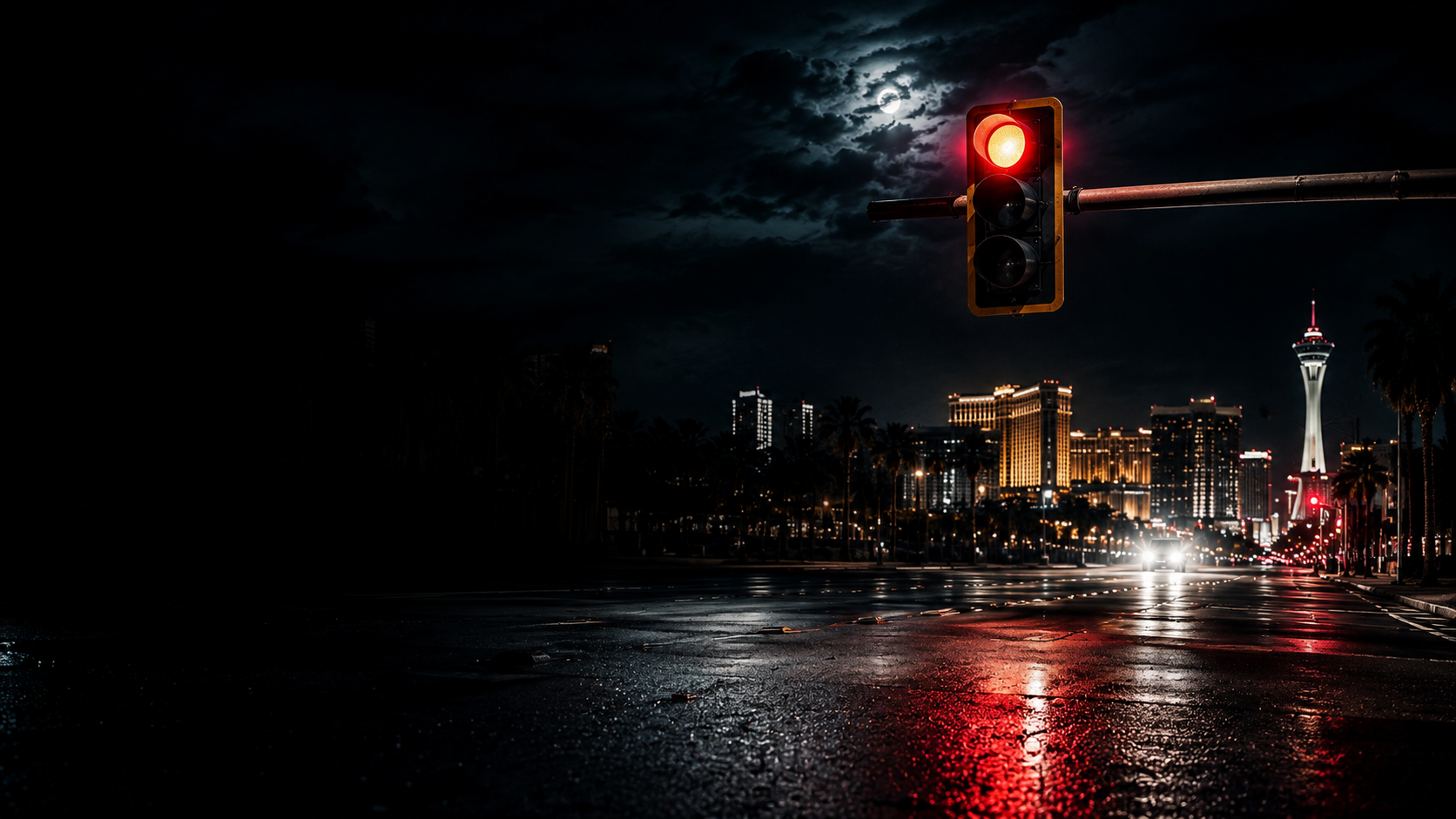
The traffic light mattered before the courtroom did.
A black BMW. A white Cadillac. A Las Vegas intersection close to the Strip. Music, movement, headlights, and a night that had already carried one confrontation before it reached the street.
For years, that intersection was remembered less as a place than as a symbol. It was where a public story hardened into myth. It was where fans, police, former detectives, writers, witnesses, rivals, and online investigators kept returning, each trying to make the same few minutes explain nearly three decades of silence.
Now the question is no longer only what happened there. It is what a jury can safely be asked to accept from a case built after a 27-year delay, public admissions, disputed immunity, missing physical evidence, dead witnesses, old files, and a defendant who now says his own words should not be trusted.
This article follows the case through the latest confirmed legal developments as of July 5, 2026. The answer is not just in the shooting. It is in the evidence problems that may decide whether one of the most famous unsolved cases in American music history can survive the courtroom.
The Life Before the Case
Tupac Shakur was 25 when the Las Vegas shooting pulled his life into the permanent machinery of police files, memorials, documentaries, lyrics, lawsuits, and myth. Before that, he was already more than a rapper. He was a performer, actor, writer, political voice, contradiction, and cultural argument moving at dangerous speed.
By September 1996, he was attached to Death Row Records and moving through a world where fame, loyalty, security, rivalry, and street reputation blurred into one another. That matters because the later case is not only about a gunman. It is about the environment prosecutors say made the shooting intelligible: crews, affiliations, insults, retaliation, and a public persona surrounded by real risk.
The human detail can get swallowed because the case is famous. Tupac becomes the image in the passenger seat, the name on the indictment, the artist whose death never stopped generating theories. But the trial evidence begins with something simpler. He was alive in Las Vegas, traveling with people he knew, moving from a fight night toward an after-party, still inside the ordinary next step of an evening.
That ordinary next step is where the case tightened. The night was not yet a trial theory. It was a route through Las Vegas.
The People Around Him
The supporting cast is unusually important because most of the people alleged to have been closest to the shooting are not available for trial in the way a clean case would need.
Marion “Suge” Knight was driving the BMW. He survived with minor injuries and remains the most significant living person from Tupac’s car that night. Prosecutors and police have described him as a witness to the shooting, but grand jury testimony also reflected concerns that he was not fully cooperative with investigators in the immediate aftermath.
Duane Keith Davis, widely known as Keefe D or Keffe D, is the man now charged. Prosecutors allege he was part of the group in the white Cadillac and played a directing role in the shooting. Davis has pleaded not guilty, and his defence says his public accounts were unreliable, fictionalised, protected by prior agreements, or exaggerated for attention and money.
Orlando “Baby Lane” Anderson, Davis’s nephew, was long discussed in connection with the case. He denied involvement and died in 1998. The other alleged occupants of the Cadillac are also dead, creating a courtroom problem that sits underneath almost every later dispute: the most direct factual witnesses from the accused vehicle cannot be cross-examined as living defendants or witnesses.
That leaves the case depending heavily on records, prior statements, grand jury testimony, old investigative material, and Davis’s own words.
The First Cracks
The first crack in the night came before the shooting.
After a Mike Tyson fight at the MGM Grand, a confrontation broke out near the casino elevators. Surveillance video, police accounts, and court testimony placed Tupac, Knight, and others in a brawl involving Anderson. Police later described Anderson and Davis as associated with the South Side Compton Crips, while Knight was linked to a rival Blood-affiliated group.
That brawl matters because prosecutors treat it as the visible spark. It gives the later shooting a possible retaliatory frame. It also gives the defence a place to attack the simplicity of the story. A fight can explain motive pressure. It does not, by itself, prove who was in a car, who had a gun, who fired, who directed anyone, or whether a particular man is legally responsible.
The first public version of the case often sounds clean: fight, retaliation, Cadillac, shooting. The courtroom version is harder. It must move from narrative plausibility to admissible proof.
That is where the case begins to strain.
The Last Ordinary Movements
After the MGM fight, the night did not move straight to the traffic light.
Available accounts place Tupac and Knight on a route that included after-party plans at Club 662. At around 11 p.m., police stopped the BMW because of loud music and a licence plate issue. The interaction ended without a ticket. That brief stop is important because it fixes the BMW in time shortly before the shooting.
At about 11:15 p.m., the BMW paused at Flamingo Road and Koval Lane. A white Cadillac pulled alongside. A witness from Tupac’s group told the grand jury that women had first driven up near the passenger side, then another car arrived, and an arm came out of the rear window before shots were fired.
The shooting itself was fast. More than a dozen rounds were fired. Tupac was hit multiple times. Knight was grazed. Police and paramedics arrived minutes later, and Tupac was taken to University Medical Center. He died six days later, on September 13, 1996.
Those facts became the fixed spine of the case. The problem is everything the spine does not answer.
The First Alarm
The first official case was not built with the luxury of a future memoir.
Police had a public crime scene, a wounded celebrity, a surviving driver, an entertainment-world feud narrative, a casino fight, witnesses moving in multiple cars, and a shooting vehicle that did not remain available for examination. The gun was not recovered. The Cadillac was not recovered. Years later, a police detective testified that investigators did not have the weapon used to shoot at Tupac and Knight, nor the vehicle from which the shots were fired.
That absence still matters. A gun can connect ballistics, possession, movement, and physical handling. A vehicle can carry fingerprints, fibres, DNA, bullet trajectories, residue, or other trace evidence. Without them, the prosecution has to build the case through statements, corroboration, sequence, motive evidence, and other records.
Cold cases often survive without the weapon. They can survive without the vehicle. But when the charge arrives almost three decades later, every missing object becomes a defence question.
The BMW and Cadillac may be the public image. The missing gun and missing car may become the courtroom pressure.
The Search for an Explanation
For years, the case moved through a mixture of investigation, suspicion, frustration, and public mythology.
Anderson was suspected by authorities but was never charged before his death. Other figures linked to the alleged Cadillac group also died. That left Davis as one of the last living people alleged to have direct knowledge of the accused vehicle.
Davis later made public statements and took part in recorded accounts of the shooting. Prosecutors say those statements revived the case and helped bring it into court. The defence says those statements are not the clean admissions prosecutors want them to be. It argues that Davis exaggerated, fictionalised, or spoke under the belief that law enforcement agreements protected him.
That is the central divide. The prosecution’s version treats Davis’s statements as unusually valuable because they came from inside the alleged offending group. The defence treats those same statements as contaminated by incentives, publicity, immunity confusion, profit, and inconsistency.
The old investigation sought a shooter. The new trial may turn on whether the defendant’s own storytelling can be separated from performance.
The Evidence That Did Not Fit Cleanly
The strongest prosecution theme is also the most vulnerable one: Davis’s words.
Grand jury testimony described hours of videos in which Davis gave broadly similar accounts of the events surrounding the shooting. Detective Clifford Mogg testified that, despite some small inconsistencies, Davis’s story was “fairly consistent” on who was in the car, the direction of travel, the U-turn, and the Cadillac pulling up before the shooting.
That helps prosecutors. Repetition across time can make an admission look less accidental. If a person tells the same core story in multiple settings, a jury may see pattern, knowledge, and confidence.
But repetition does not end the problem. A repeated claim can still be false, embellished, self-serving, or shaped by what was already public. The defence can argue that a man seeking money, attention, credibility, or protection may repeat the same story precisely because that story has become part of his identity.
This is why the case is not as simple as “he talked.” The trial question is whether his talk is reliable enough, corroborated enough, and legally admissible enough to prove the charge beyond reasonable doubt.
The Book, The Interviews, And The Proffer Problem
The most recent major ruling was a serious blow to the defence.
A judge ruled that Davis’s 2019 memoir, Compton Street Legend, can be used at trial, along with statements he made to police in 2008 and 2009. The defence tried to exclude the book and earlier police statements, arguing that the book was fictionalised and that the law enforcement statements were protected by a proffer agreement. Prosecutors argued that Davis’s later public disclosures allowed the state to use those statements.
The legal issue is sharp. A proffer agreement can allow a person to speak to investigators under limited protection. If a defendant later repeats the same material publicly, prosecutors may argue that the protection has been waived or that the public statements open the door to using related material. Davis’s defence says the earlier statements should remain out because he believed he was protected.
Judge Carli Kierny found the book admissible and said Davis had adopted its statements as his own. She also found the law enforcement statements voluntary, while noting concern over what Davis was told in 2008 about not being prosecuted for what he said in the interview.
That ruling does not convict Davis. It decides what the jury may hear. But in a case where the defendant’s words are the centre of gravity, admissibility may shape almost everything that follows.
The Evidence Problems Now Facing Trial
The defence has more than one route to reasonable doubt.
First, there is the age of the case. The charge came decades after the shooting. Delay can weaken memories, scatter witnesses, complicate chain of custody, and make missing evidence harder to explain. Davis previously sought dismissal by arguing that the 27-year delay, lack of corroboration, and alleged immunity agreements violated his rights.
Second, there is the absence of key physical evidence. Police do not have the gun or the Cadillac. That prevents a clean forensic link between Davis, the weapon, the car, and the shooting.
Third, there is the problem of dead or unavailable witnesses. Anderson is dead. Other alleged Cadillac occupants are dead. Knight is alive but complicated as a witness. The defence can argue that the state is asking a modern jury to decide an old street crime without the people and objects that would normally test the story.
Fourth, recent reporting from a court hearing has described additional file problems: allegedly missing Las Vegas and Los Angeles investigative reports, corrupted floppy disks, an unusable microcassette, partial surveillance material, and unavailable federal drug-investigation records. Because that material has been reported through a court-hearing account rather than a publicly available full court file, the safest reading is cautious: it appears to be a live evidentiary and disclosure issue, not yet a final judicial finding that the case must collapse.
Those problems do not automatically defeat the prosecution. They do, however, give the defence a clear theme: this case asks jurors to trust old words while too much old evidence is missing.
The Event At The Center Of The Case
The central event, stripped of myth, is legally narrow.
The jury will not be asked to decide whether Tupac mattered. It will not be asked whether the public has waited long enough. It will not be asked whether Davis has told damaging stories about himself. It will be asked whether the state has proved the charged murder theory under Nevada law.
Prosecutors allege that after the MGM fight, Davis obtained a gun and provided it as part of a retaliatory shooting. In public statements and the memoir, Davis allegedly placed himself in the Cadillac and described providing the weapon. Prosecutors say that makes him responsible even if he was not the shooter.
The defence can attack that on several fronts. It can say the statements were false. It can say the statements were protected. It can say the statements were made for profit or notoriety. It can point to the lack of weapon, lack of car, and lack of living direct co-participants. It can argue that public knowledge about the case allowed Davis to build a story without proving he lived it.
That is why the evidence is not one thing. It is an accumulation question. Admissions, old records, witness testimony, casino context, alleged gang motive, law enforcement interviews, and physical absences all have to be weighed together.
The prosecution needs the pattern to look like corroborated truth. The defence needs it to look like contaminated mythology.
When The Story Broke Open
The case broke open publicly in 2023 when Davis was arrested and indicted.
A Clark County grand jury indicted him in connection with the 1996 shooting. Court materials identify the matter as State of Nevada v. Duane Keith Davis, with the grand jury proceeding tied to the allegation of murder with use of a deadly weapon with intent to promote, further, or assist a criminal gang.
The indictment mattered because it transformed decades of public suspicion into a formal criminal case. But an indictment is not proof. It is a finding that the case may proceed. Davis’s later attempt to challenge dismissal through the Nevada Supreme Court failed in November 2025, with the court denying extraordinary relief and noting that a motion to dismiss the indictment was not the proper vehicle to challenge evidentiary sufficiency.
That ruling preserved the case. It did not solve the case.
This distinction matters because the public often treats court movement as confirmation. In reality, pre-trial rulings are gateways. They determine what arguments survive, what evidence comes in, and what the jury will be allowed to consider.
The evidence problems did not disappear when the case survived dismissal. They simply moved closer to trial.
The Case Built From Fragments
The prosecution case is powerful in public terms because Davis has appeared to narrate his own involvement. In many true-crime cases, that would be the kind of evidence people call a confession. In court, it is more complicated.
A confession can be disputed. It can be limited. It can require corroboration. It can be challenged as involuntary, protected, exaggerated, or false. It can also be weighed against independent evidence to see whether it contains details only a participant would know.
That is where the old case file becomes important. If Davis’s statements match details unavailable to the public, prosecutors gain force. If the defence can show those details were already reported, rumoured, or fed through law enforcement contact, the statements become easier to attack.
Grand jury testimony noted that Davis had kept materials about the case, including clippings and books. Detective testimony also connected recovered materials to old warrants and records. That can help prosecutors show long-term knowledge and interest, but it can also help the defence argue that Davis had access to public and semi-public case narratives long before he made money or attention from telling them.
The trial may therefore turn on a subtle question: did Davis know the story because he was there, or because the story had become available to him over decades?
That is not a social media question. It is the difference between guilt and reasonable doubt.
What The Evidence Could Not Prove By Itself
No single evidence strand appears able to carry the whole case alone.
The MGM fight can support a retaliation theory, but it cannot identify who fired at the BMW. Davis’s public statements can support involvement, but the defence says they were unreliable. The book can be admitted, but admissibility is not the same as truth. The 2008 and 2009 statements may be heard by the jury, but the proffer dispute gives the defence a way to argue unfairness or confusion.
The missing gun and vehicle cannot prove innocence. They do prevent the state from presenting certain forms of physical corroboration. The passage of time cannot prove the charge is weak. It does make missing witnesses, old memories, file gaps, and documentary loss more important.
That is the honest legal shape of the case. The prosecution does not need a perfect file. It needs proof beyond reasonable doubt. The defence does not need a complete alternative story. It needs to show that the state’s story is not reliable enough.
The court will not decide whether the public has heard enough. The jury must decide whether the admissible evidence proves enough.
The Outcome That Has Not Yet Ended The Story
As of July 5, 2026, Davis remains a charged defendant, not a convicted person.
The trial is scheduled to begin on August 10, 2026. A recent hearing left the prosecution with a major admissibility win: the book and police interview statements can go before the jury. The same hearing also rejected a defence request for full jury sequestration, and a final status hearing was reported as set for July 14.
Earlier in 2026, the court also denied a motion to suppress evidence gathered during a 2023 home search, meaning items from that search may be used at trial.
Those rulings give prosecutors room to present the case they want. They also sharpen the defence strategy. If the statements are coming in, the defence must make the jury distrust them. If the book is coming in, the defence must make the jury see it as performance, not proof. If old files are missing, the defence must make absence feel like reasonable doubt.
That is why the case is entering trial with both sides able to claim momentum. Prosecutors have the statements. The defence has the age, the gaps, and the burden of proof.
The Aftermath People Still Argue About
The public version of the Tupac case has always been larger than the legal file.
It carries the East Coast-West Coast mythology of 1990s rap, the later killing of Christopher Wallace, the reputation of Death Row Records, the image of Las Vegas as a stage for fame and violence, and decades of claims from people who were near the culture, near the investigation, or near the rumours. A courtroom cannot absorb all of that. It has to reduce the world to admissible evidence.
That reduction may frustrate people. It may feel too narrow for a case this famous. But it is also the point of trial. Public belief can be broad. Legal proof has to be disciplined.
The most dangerous mistake is to confuse narrative familiarity with evidence strength. Many people know the accepted story. Far fewer have read the procedural disputes, understood the proffer issue, weighed the absence of the gun and Cadillac, or separated Davis’s admitted public storytelling from what prosecutors can independently prove.
The trial will not decide the whole cultural memory of Tupac Shakur. It will decide whether the state can prove the specific charge against Davis.
That is a smaller question than the legend. It is also the only question the court can answer.
The Review, Appeal, Or Unanswered Question
Even before trial, the appellate record has previewed the dispute.
Davis argued to the Nevada Supreme Court that the case depended on uncorroborated admissions and that his statements were protected by a continuing proffer agreement. The court denied his petition for extraordinary relief. It did not rule that the state’s evidence was ultimately strong enough for conviction. It said the procedural route he used was not enough to justify intervention before trial.
That leaves the unresolved question where it belongs: in the trial court, before a jury.
If Davis is acquitted, the evidence problems will likely be seen as fatal. If he is convicted, the same problems may become appellate issues, especially around statements, proffer protection, admissibility, delay, and corroboration. If the case changes again before trial, the missing-file issue may become more than a defence theme.
For now, the legal meaning is clear. The case has survived pre-trial attacks. It has not yet survived trial.
The difference matters.
Why This Case Still Matters
The Tupac Shakur case still matters because it shows what happens when a famous unsolved killing finally reaches court after the public has already lived with one version for decades.
The traffic light remains the image. But the courtroom question is not only about the traffic light. It is about whether an old case can be rebuilt from a defendant’s words, partial records, contested agreements, missing objects, dead witnesses, and a story repeated so often that truth and performance now have to be separated under oath.
That is the hardest part of the Keefe D trial evidence problem. The public remembers a night. Prosecutors must prove a charge. The defence must test every gap between the two.
The black BMW and the white Cadillac made the case famous. The missing gun, the missing car, the disputed statements, and the old files may decide whether fame can become proof.
