True Crime: Lindsay Clancy — The Errand, The House, And The Question Unanswered
The Evidence, The Defence, And The Stakes
Duxbury, The Errand, And Criminal Responsibility
The errand was ordinary.
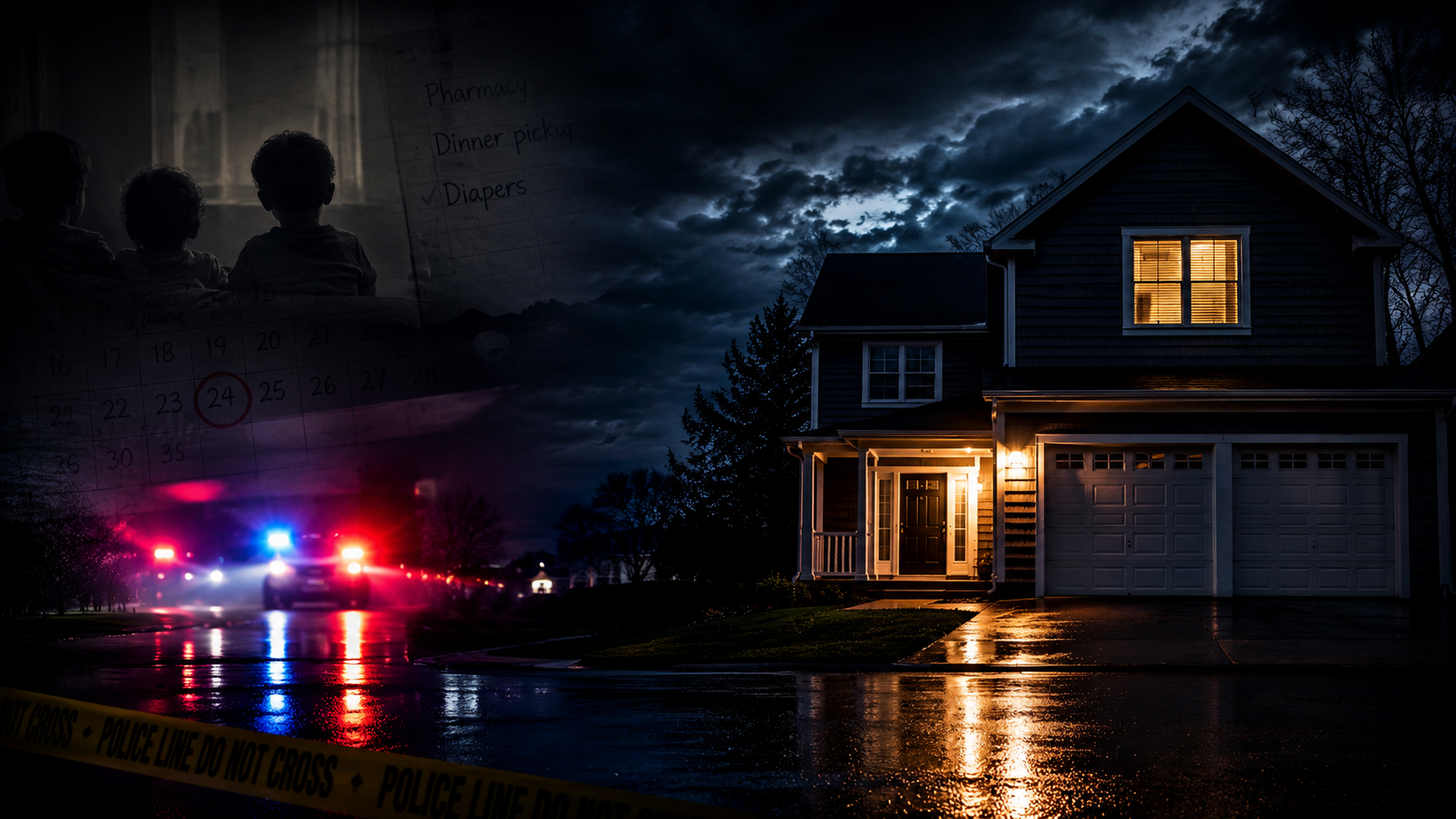
A pharmacy stop. A dinner pickup. A father leaving the house for a short trip while the evening routine waited behind him. Nothing about that kind of movement, by itself, looks like evidence.
That is why the coming trial matters. The jury will not be asked to decide whether the night was tragic. That is beyond dispute. It will be asked to decide what the law can prove about Lindsay Clancy’s state of mind, her actions, and her criminal responsibility during a narrow window inside a family home in Duxbury, Massachusetts.
This article follows the case through the latest confirmed legal developments as of July 5, 2026.
The answer the court must reach will not come from one fact alone. It will come from the alignment, or collapse, of many pieces: the errand, the house, the children’s medical findings, Clancy’s mental health history, the defence’s planned insanity argument, the prosecution’s planning theory, and the legal difference between mental illness and lack of criminal responsibility.
A trial can carry facts into public view. It cannot undo what happened. It can only decide what the law is able to call it.
The Life Before The Case
Before the courtroom, Lindsay Clancy’s public identity was ordinary in the way many adult lives are ordinary from the outside. She was a wife, a mother, and a labor and delivery nurse. She lived in Duxbury, a coastal Massachusetts town where family life, work, medical appointments, errands, and routine childcare formed the visible shape of her days.
The children were Cora, Dawson, and Callan. Cora was five. Dawson was three. Callan was eight months old when the case entered the criminal system. Their names now appear in court filings and official statements, but they were not born into case language. They were children inside a family, remembered publicly through the limited and painful fragments that legal proceedings have made visible. Official statements identified Cora and Dawson after they were transported to a hospital, and said Callan was later flown to a children’s hospital before his death.
The available public record gives more detail about the adult case than about the private lives of the children. That imbalance is common in criminal proceedings, but it should not control the moral weight of the story. The names are not just evidence markers. They are the reason the legal system is being asked to do something severe, precise, and irreversible.
Clancy’s own background will matter at trial because the defence has put her mental condition at the centre of the case. Civil filings and pretrial arguments describe months of postpartum mental health struggles, treatment, medication changes, hospital contact, insomnia, hallucination claims, and later allegations that medical providers failed her. Those claims remain contested civil allegations, not criminal findings.
The jury will hear a life that looked functional from the outside and a defence case built around the argument that internal collapse was not visible enough, understood enough, or treated correctly enough before January 24, 2023.
The People Around Them
The central relationship in the trial will be Lindsay and Patrick Clancy. He was not just the husband in the background. Prosecutors say his short absence from the home created the time window in which the central events occurred. The defence will likely use his observations, his efforts to help, and later civil claims to argue that Lindsay’s condition had deteriorated before the night at issue.
Patrick Clancy is also expected to testify. That matters because the jury may hear his emergency call and then see him questioned under oath. Prosecutors have argued that the call helps show timing, scene conditions, and the immediacy of what he found after returning home. Defence counsel objected to its emotional force but, according to pretrial reporting, acknowledged limited legal grounds to block it entirely.
Clancy’s parents and sister are another important group. A June 2026 pretrial ruling addressed witness sequestration and excluded Clancy’s parents and sister from the sequestration order. The judge noted that they had been extensively interviewed by mental health professionals and could provide evidence about what they observed in Clancy’s behaviour and condition.
The medical providers named in civil lawsuits form a separate strand. Patrick Clancy filed a wrongful death lawsuit against providers who treated Lindsay before the children’s deaths. Lindsay Clancy later filed her own medical malpractice lawsuit, alleging negligent treatment, misdiagnosis, overprescribing, and worsening mental health. Those lawsuits are not the murder trial itself, but they show how the defence and related civil litigation are likely to frame the wider story.
The people around Lindsay Clancy therefore enter the case in different roles: grieving father, spouse, witness, family observers, medical providers, civil defendants, and trial participants. Their accounts may overlap. They may also pull the jury toward very different interpretations of the same months.
The First Cracks
The defence version of the case begins before the night in Duxbury. It points to postpartum mental illness, alleged medication effects, and a pattern of seeking help. The civil lawsuits describe anxiety after childbirth, later hypomanic behaviour, insomnia, depression, hospital contact, auditory hallucinations, and suicidal ideation. They also allege that treatment decisions worsened the condition rather than stabilised it.
Those claims are powerful, but they cannot be treated as settled fact simply because they appear in lawsuits. A civil complaint is an allegation. It can shape what lawyers investigate. It can explain what one side intends to prove. It does not, by itself, decide what happened in the criminal case.
Postpartum psychosis will likely be one of the most misunderstood terms around the trial. Medical literature describes postpartum psychosis as rare, severe, and capable of involving confusion, loss of touch with reality, paranoia, delusions, disorganised thought, hallucinations, and risks of self-harm or harm to a child. It is widely described as a psychiatric emergency requiring immediate medical attention where risk is present.
The legal question is narrower than the medical one. A diagnosis, if proved, does not automatically decide criminal responsibility. A jury may hear evidence that a person was mentally ill and still have to decide whether the legal standard for lack of criminal responsibility is met.
That is where the first crack becomes the central trial question. Was Clancy’s mental state evidence of illness within a tragic case, or did it legally prevent criminal responsibility for the acts charged?
The Last Ordinary Movements
January 24, 2023 began with ordinary movements that now carry legal pressure. Civil filings say Clancy made breakfast, took one child to a pediatrician appointment, and played outside with the children that day. The prosecution has pointed to other ordinary-seeming behaviour as part of its argument that she was coherent and deliberate before the central events.
Later that evening, Patrick Clancy left the home. The prosecution alleges that Lindsay Clancy sent him out to run errands, including a pharmacy stop and a restaurant pickup, creating a short window at the house. Pretrial rulings show that the jury may be taken not only to the former home, but also to the pharmacy and restaurant connected to Patrick’s route.
A jury site visit is not a dramatic extra. It is a spatial tool. It can help jurors understand distance, timing, layout, and whether a theory about movement inside and outside the home makes practical sense. In a case where minutes matter, geography can become evidence.
The prosecution will likely use those movements to argue planning. The defence will likely push back against the idea that ordinary functioning proves ordinary thought. That distinction is critical in a trial involving mental health evidence. People in crisis can sometimes appear outwardly coherent. At the same time, outward coherence can matter if prosecutors argue deliberation, concealment, or opportunity.
The last ordinary movements are therefore not ordinary anymore. They are the route by which the jury may enter the case.
The First Alarm
The first official alarm came through a 911 call. The Plymouth County District Attorney’s Office said Duxbury police received a call at about 6:11 p.m. on January 24, 2023, reporting a suspected attempted suicide by a female resident who had jumped from a window at the family home. First responders found Lindsay Clancy and transported her for medical treatment.
What responders found afterward moved the night into a different category. Official statements said three children were located in the basement unconscious and with obvious signs of severe trauma. Cora and Dawson were transported to a hospital and pronounced deceased. Callan was flown to a children’s hospital and later died.
The early charges began while Clancy was still in a hospital bed. On February 7, 2023, she was arraigned by video and pleaded not guilty to three counts each of murder, strangulation, and assault and battery with a dangerous weapon. The judge ordered her held in a medical facility until treatment was complete, with bail status to be revisited later.
Later, a Plymouth County grand jury indicted Clancy on three counts each of murder and strangulation. The District Attorney’s Office said she was held without bail and treated in a medical facility. The state medical examiner determined that Cora and Dawson died from asphyxia and that Callan died from complications of asphyxia.
From that point, the case was no longer only about what had happened inside the house. It was about what a jury could eventually infer from the evidence.
The Search For An Explanation
The earliest public explanation split almost immediately into two opposing frames.
Prosecutors alleged planning. They argued that Clancy sent Patrick away, used the short absence to carry out the acts, harmed herself, and then jumped from a window. That argument turns ordinary timing into alleged opportunity. It treats the errand as deliberate, the window as a calculated interval, and the aftermath as part of the same sequence.
The defence pointed in another direction. It has described severe postpartum mental illness, alleged overmedication, psychiatric deterioration, and a lack of criminal responsibility. In pretrial proceedings, the defence sought a two-phase trial, asking that the jury first consider whether Clancy committed the acts and then separately consider criminal responsibility. The judge denied that request, meaning the case is set to proceed as a single trial.
That denial matters because it shapes how jurors will receive the evidence. The same witnesses, medical records, expert opinions, and factual claims may bear on both conduct and mental state. The judge found it would be difficult to divide that evidence cleanly across two phases.
The public often collapses this kind of case into a simple binary: monster or mentally ill. The courtroom cannot work that way. The jury must decide whether the prosecution proves the charged crimes and how the mental health evidence affects criminal responsibility under Massachusetts law.
That is why the explanation has never been only emotional. It is legal, medical, evidentiary, and deeply contested.
The Evidence That Did Not Fit
Several strands of evidence are likely to define the trial.
The first is timing. Patrick Clancy’s route, the duration of his absence, and the locations he visited may become part of the prosecution’s planning argument. The judge has allowed a jury site visit to the former home and related errand locations, which suggests the physical sequence will be important.
The second is the emergency call. Prosecutors have argued that the call helps establish the timeline and the scene. Pretrial reporting says the judge was inclined to allow the call, and later reporting said jurors would be allowed to hear it. Because the call is emotionally intense, its admission raises a classic trial issue: whether evidence is more useful for proving facts than it is prejudicial because of its emotional force.
The third is medical and forensic evidence. A judge allowed prosecutors to use crime scene and autopsy photos subject to specific photographs. The prosecution argued that the images would help show the incident and cause and manner of death. The defence trusted the judge’s handling of that issue, according to pretrial reporting.
The fourth is psychiatric evidence. The defence is expected to rely heavily on mental health history, expert opinion, and treatment records. The prosecution is expected to contest whether those facts meet the legal standard for lack of criminal responsibility.
The evidence does not all point in one simple direction. That is exactly why the trial is expected to be long, expert-heavy, and difficult.
The Event At The Center Of The Case
The central event is the hardest part of the case to write about responsibly because it involves children, disputed intent, and evidence the jury has not yet fully heard.
Officially, the case begins with the emergency response. Police received a call about a suspected suicide attempt. First responders found Lindsay Clancy injured outside the home. They then found the children in the basement. The state medical examiner later determined asphyxia-related causes of death. Those facts are part of the public record.
Prosecutors allege that Clancy used exercise bands to strangle the children while Patrick was away. The defence does not appear to be building its main case around mistaken identity or an unknown third party. Instead, it is expected to focus on mental illness, alleged postpartum psychosis, medication, and criminal responsibility. Pretrial reporting says Clancy, through counsel, was willing to stipulate to her involvement if the court split the trial into separate phases, but the court denied the split-trial request.
That distinction is central. The jury may not be asked only what happened physically. It may be asked what Clancy could appreciate, intend, understand, or control at the relevant time. In a first-degree murder trial, the prosecution will need to prove the required elements. If lack of criminal responsibility is placed before the jury, mental health evidence becomes not background, but a legal battleground.
Massachusetts law makes the stakes severe. A person found guilty of first-degree murder is punished by life in state prison and, for adult offenders, is not eligible for parole under the general murder punishment statute.
The defence does not need to make the night less awful to make its legal argument. It needs to persuade the jury that the mental condition evidence meets the legal threshold. The prosecution does not need to deny that Clancy had mental health struggles. It needs to persuade the jury that those struggles did not remove criminal responsibility for the charged acts.
The event at the centre of the case is therefore both physical and legal. One concerns what happened in the house. The other concerns what the law can say about the mind behind it.
When The Story Broke Open
The case became public almost immediately because the facts were nearly impossible to absorb. Three young children. A family home. A mother accused. A father returning from errands. A mental health defence taking shape before the trial even began.
But public attention can distort as much as it reveals. The internet tends to flatten cases into camps. Some people see only planning. Some see only illness. Some treat postpartum psychosis as an answer before the jury hears evidence. Others treat mental illness as an excuse before understanding the legal standard.
The trial will not be a referendum on whether postpartum illness is real. Medical sources make clear that postpartum psychosis is a severe psychiatric emergency that can involve hallucinations, delusions, confusion, and serious risk.
The trial also will not be a general debate about whether medication can worsen some psychiatric conditions. The civil lawsuits allege negligent prescribing and misdiagnosis, but those allegations are separate from the criminal charges and must be proved in their own forum.
The courtroom question is narrower and harder. Did the prosecution prove the charged crimes? If criminal responsibility is contested, did the evidence show that Clancy lacked criminal responsibility under the relevant legal standard? The jury must answer those questions from admissible evidence, not from sympathy, outrage, online certainty, or fear.
That is where the public version and the legal version begin to separate.
The Case Built From Fragments
The trial is expected to be built from fragments rather than one cinematic reveal.
There will be the errand timeline. There will be the house and its layout. There will be medical evidence. There will be the 911 call. There will be photographs the judge has allowed in some form. There will be family observations. There will be psychiatric records and expert testimony. There may be disputes over blood-pattern evidence or demonstrations, because the judge had not immediately resolved every prosecution request at the June 18 hearing.
The witness lists also suggest the scale. At a May 2026 hearing, prosecutors said their witness list stood at 168 people, while the defence said it could call about 50 witnesses, though both sides discussed overlap and possible agreements to reduce unnecessary foundational testimony.
That does not mean 200 witnesses will necessarily testify. It means both sides were preparing for a trial in which records, expert opinions, chain-of-custody issues, medical care, observations, and physical evidence may all need legal foundations.
The most important distinction may be between proof of an act and proof of criminal responsibility. An insanity defence is not the same as saying nothing happened. It is a claim that mental disease or defect affected legal culpability at the time. Massachusetts model legal materials frame lack of criminal responsibility around whether a mental disease or defect affected the defendant’s substantial capacity to appreciate criminality or conform conduct to the law.
The jury will not be deciding a slogan. It will be weighing a legal threshold against a record that both sides will try to make coherent.
The Trial That Has Not Yet Answered The Story
As of July 5, 2026, Lindsay Clancy has not been convicted. She has pleaded not guilty. Her trial is scheduled to begin July 20, 2026. The charges currently reported in the Superior Court posture are three counts each of murder and strangulation.
That status must control the language. She is a charged defendant, not a convicted person. Prosecutors allege. The defence disputes criminal responsibility. The jury has not yet reached a verdict.
The trial will remain in Plymouth after an earlier defence effort to move it was denied. The request to split the trial into two phases was also denied. The jury may view the home and related locations. Jurors may hear the emergency call. They may see selected images. They may hear from mental health experts. They may also hear from family members, medical providers, first responders, law enforcement witnesses, and others whose testimony connects the fragments.
The result may not satisfy everyone. If Clancy is convicted, some will still argue that the mental health system failed long before the criminal law arrived. If she is found not criminally responsible, others will struggle with the scale of the loss and the limits of punishment as an answer. If the jury reaches a lesser or mixed result, the public debate may become even more fragmented.
That is the pressure of the trial preview. The case is not waiting for a headline. It is waiting for a legal decision.
The Aftermath People Still Argue About
The aftermath began before the trial because civil litigation has already widened the case.
Patrick Clancy’s lawsuit alleges that medical providers’ treatment of Lindsay contributed to the children’s deaths. Lindsay Clancy’s own lawsuit alleges misdiagnosis, negligent treatment, and a course of medication that worsened her postpartum condition. Those claims name medical providers and institutions, including providers and hospitals connected to her care.
Those lawsuits create a second public question: whether the tragedy should be understood only through criminal intent, or also through medical-system failure. The criminal jury, however, will not be asked to decide every civil allegation. It will decide the criminal charges under criminal standards.
That separation matters. A medical provider could be accused of negligence in civil court without that deciding Clancy’s criminal responsibility. Clancy could have suffered severe mental illness without that automatically proving lack of criminal responsibility. The prosecution could prove a deliberate sequence without disproving every criticism of her medical care.
The public wants one master explanation. The legal system may produce several partial answers instead: one about criminal responsibility, one about medical care, one about family loss, and one about the limits of psychiatric recognition before crisis.
The children remain at the centre of all of it. The civil suits, the criminal motions, the psychiatric arguments, and the courtroom logistics all orbit the same absence.
The Review, Appeal, Or Unanswered Question
Because the trial has not yet happened, the unresolved question is not an appeal. It is the question the jury will soon have to answer.
What does mental illness do to criminal responsibility in this case?
That question should not be oversimplified. Postpartum psychosis can be real, rare, severe, and dangerous. Medical sources describe it as a psychiatric emergency requiring urgent care when risk is present.
But criminal responsibility is not a diagnosis alone. The jury will need to consider whether the mental health evidence meets the legal standard at the time of the charged acts. That is why expert testimony may be decisive and still not mechanically controlling. Experts can explain diagnoses, symptoms, medication effects, records, and risk. Jurors decide the legal meaning.
A common misunderstanding is that the case will turn on whether jurors feel sympathy for Clancy or horror for the children. A properly instructed jury cannot decide on that basis. Sympathy and horror may be human responses, but they are not legal tests.
Another misunderstanding is that the defence must prove Clancy was visibly irrational every minute before the incident. Mental illness does not always appear in an obvious public form. The prosecution, however, may use apparent planning, timing, and conduct as evidence that she retained responsibility.
The unresolved question is not whether the case is tragic. It is whether the law sees the tragedy as murder, lack of criminal responsibility, or something the jury will define through its verdict.
Why This Case Still Matters
The errand still matters because it is the ordinary movement that the prosecution says became opportunity.
The house still matters because the jury may be asked to understand its layout, distances, and timing.
The mental health evidence still matters because the defence says the visible sequence cannot be understood without the invisible condition behind it.
The children matter most because the law is not being asked to solve an abstract debate. It is being asked to respond to the deaths of Cora, Dawson, and Callan with a verdict that is both emotionally unbearable and legally exact.
The public may want certainty before the trial begins. The court cannot offer that. It can only test evidence, instruct jurors, hear witnesses, weigh expert opinions, and require language that does not outrun proof.
That is why the Lindsay Clancy trial will be watched so closely. It sits at the point where family life, postpartum psychiatric crisis, criminal law, medical accountability, and public judgment all collide.
The errand began as something ordinary. At trial, it may become one of the ways jurors decide whether the case was planned, uncontrolled, or legally somewhere between those two explanations.
