Andy Burnham Axes Digital ID Spending to Cut Energy Bills in First Strike as Prime Minister
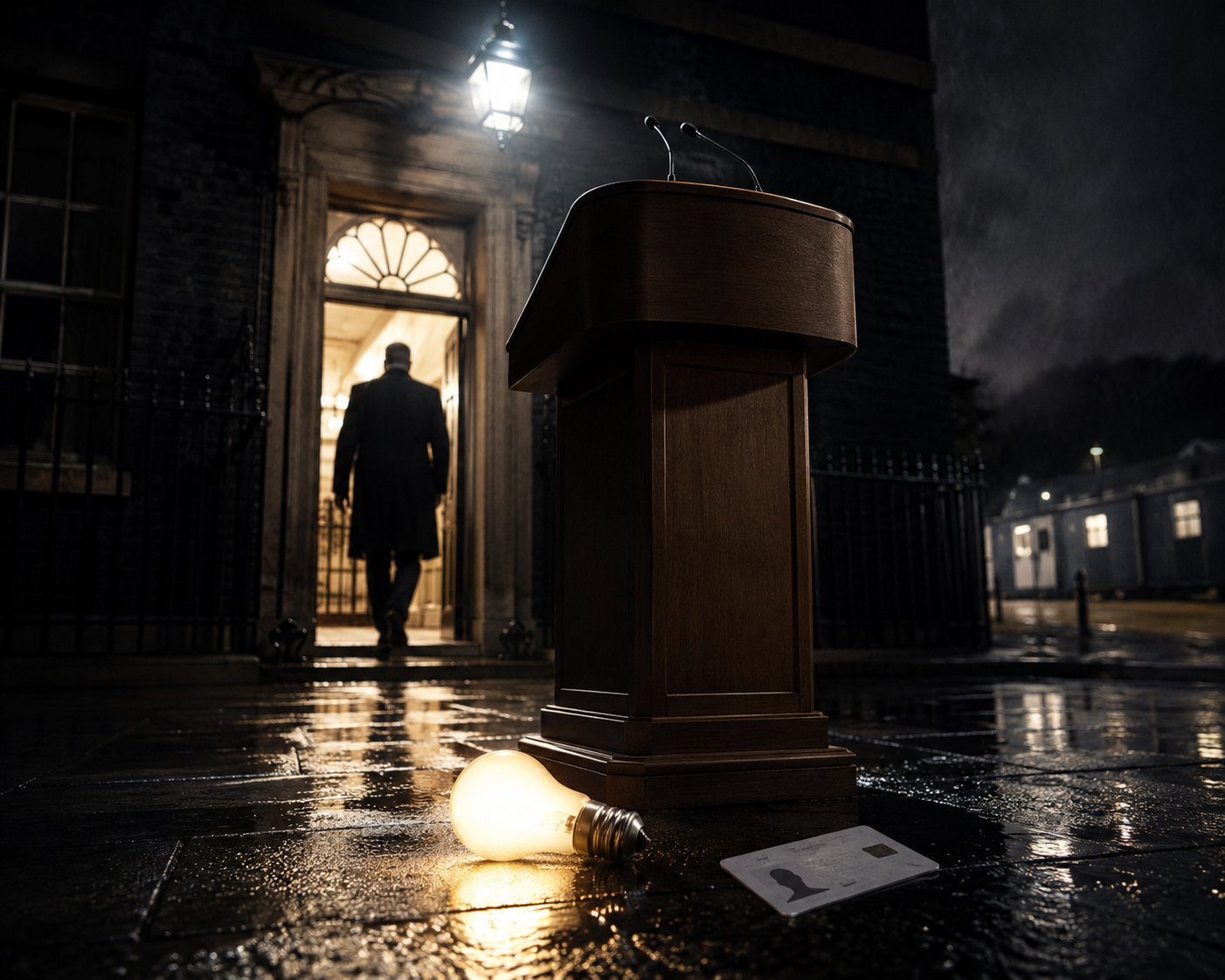
Andy Burnham Scraps Digital ID Scheme to Fund Immediate Household Tax Cut
Burnham’s First Move as Prime Minister Targets Britain’s Soaring Energy Bills
Andy Burnham has used his first full day as Prime Minister to announce an immediate cut to household electricity taxes, scrap a costly national digital identity programme and begin a major drive against rough sleeping. The measures are designed to show that the change in Downing Street will produce visible decisions rather than another extended period of reviews, consultations and carefully managed promises.
Domestic VAT on electricity is set to be removed from 1 October, cutting the tax currently included in household electricity charges. The government estimates that the change will save an average household approximately £45 a year, with the lost revenue funded by cancelling the planned £1.8 billion digital ID programme.
It is not a transformative sum for households facing annual energy costs approaching £2,000. It is, however, a clear political signal: Burnham wants his premiership to be associated with essentials such as electricity, housing and transport rather than large centralised technology projects whose benefits may take years to appear.
Electricity Bills Become the First Test
The decision arrives after the energy price cap for a typical dual-fuel household paying by direct debit rose by 13 per cent on 1 July, reaching £1,862 a year. Electricity under the current cap costs an average of 26.11 pence per kilowatt hour, while gas costs 7.33 pence, with the regulator due to announce the next quarterly cap on 26 August.
Removing VAT from electricity will not shield families from further rises in wholesale energy prices. Higher-use households will also receive a larger cash benefit than people who consume less, meaning the policy is less targeted than direct support for poorer families.
That makes the measure politically useful but economically limited. A £45 annual saving amounts to less than £4 a month, and the reduction could disappear quickly if international conflict, gas-market disruption or network costs push the October price cap higher.
Burnham’s calculation appears to be that speed matters almost as much as scale. By announcing a funded policy immediately, he is trying to establish a contrast with the political paralysis and internal conflict that consumed the final period of Keir Starmer’s premiership.
Digital ID Becomes the First Casualty
The funding choice is politically significant. The previous government intended to build a national digital identity system that would make it easier for citizens to prove their identity, access public services and complete employment checks.
A public consultation launched in March proposed a system built around the principles of usefulness, inclusion and trust. It also considered allowing people to store information such as proof of address and use the system when accessing government services, checking tax information or applying for documents.
Burnham has now chosen an immediate reduction in household costs over that longer-term digital project. The decision will appeal to people suspicious of state databases, compulsory identification systems and the expanding use of personal data, while allowing the government to argue that its first tax reduction is fully funded.
There will still be questions about how much of the proposed £1.8 billion expenditure represented firm, recoverable savings rather than projected spending over several years. Cancelling a programme does not necessarily release all its planned budget immediately, particularly when contracts, development work or existing government identity services are involved.
The Treasury will therefore need to publish a detailed costing. John Healey, appointed Chancellor on 20 July, must demonstrate that the policy does not create an unfunded gap or rely on savings that will materialise too late to cover the electricity tax reduction.
Burnham Declares War on Rough Sleeping
The energy announcement follows Burnham’s first instruction after entering Downing Street: begin a national effort to end long-term rough sleeping at the earliest opportunity.
The government has committed an additional £340 million to the opening phase. It says the money will provide 1,200 homes and intensive support for at least 3,000 people, with mayors, councils, health services and other local organisations leading delivery. Further measures are promised before the autumn.
The approach reflects Burnham’s experience in Greater Manchester, where he built his political identity around public transport, homelessness and the transfer of power away from Westminster. His argument is that central government should fund the mission, but local leaders should determine how it works on the ground.
This is more than a housing announcement. Burnham is presenting rough sleeping as an example of the expensive failure of the British state: money is repeatedly spent through hospitals, policing, emergency accommodation and the criminal justice system after people reach crisis point, rather than preventing that crisis.
Government figures accompanying the announcement estimate that one year of rough sleeping can cost public services more than £20,000 per person, compared with approximately £1,426 for a successful prevention intervention. The five-year programme is therefore being presented as both a moral commitment and a way to reduce long-term pressure on public spending.
A Bigger Break With the Starmer Era
Burnham’s opening speech promised what he called a new political and economic model. He blamed decades of centralisation, privatisation and deindustrialisation for leaving parts of Britain without the power or investment needed to reverse their decline.
He pledged to place essential services under stronger public control, use government procurement to support British industry, build more council homes and give local areas greater authority. A broader 10-year national plan is expected later in 2026.
The language marks an obvious change of emphasis. Starmer sought to establish Labour as disciplined, restrained and acceptable to businesses and financial markets. Burnham is attempting to combine fiscal credibility with a more openly interventionist argument: government should control, provide or reshape essential services when the existing model repeatedly fails the public.
The appointment of Healey as Chancellor reinforces the effort to prevent the new government from appearing economically reckless. Burnham can promise council housing, public control and industrial renewal, but the Treasury will be expected to show how each commitment fits within the fiscal rules and Britain’s already strained public finances.
That tension will define the new government. Burnham’s political instincts point towards greater public investment and stronger state intervention, while the condition of the national finances will constrain how quickly he can act.
The First Measures Are Designed to Be Seen
None of Burnham’s opening policies will resolve Britain’s structural problems alone. Removing electricity VAT will provide modest help. The rough-sleeping programme will initially support only part of the population affected. Cancelling digital ID spending will also force the government to explain what happens to existing identity services and previously planned reforms.
Yet the measures have been selected carefully. Energy bills affect almost every household. Rough sleeping is one of the most visible signs of national decline. Digital ID is an expensive and controversial project that many voters did not consider an urgent priority.
Together, they create a simple opening message: money will be moved away from Westminster technology projects and towards homes, bills and visible public need.
Burnham also enters office without a fresh general-election mandate of his own. Labour still holds the parliamentary majority won under Starmer, but the new Prime Minister must persuade the country that changing the leader has changed the government rather than merely rearranged it.
His first decisions are intended to begin that process. The decisive test will come when the symbolic opening moves give way to harder choices over taxation, welfare, borrowing, public ownership, immigration, energy security and Britain’s relationship with its international partners.
Burnham has started by choosing policies that are easy to explain and difficult for opponents to attack without appearing indifferent to household costs or homelessness. The next stage will reveal whether this is the beginning of a durable national reset or simply the most politically attractive part of a much more difficult programme.
