Andy Burnham Is Dismantling Keir Starmer’s Britain Faster Than Anyone Expected
Andy Burnham’s Shock First Decisions Are Already Changing Britain
Andy Burnham’s First Moves Leave Keir Starmer’s Legacy In Ruins
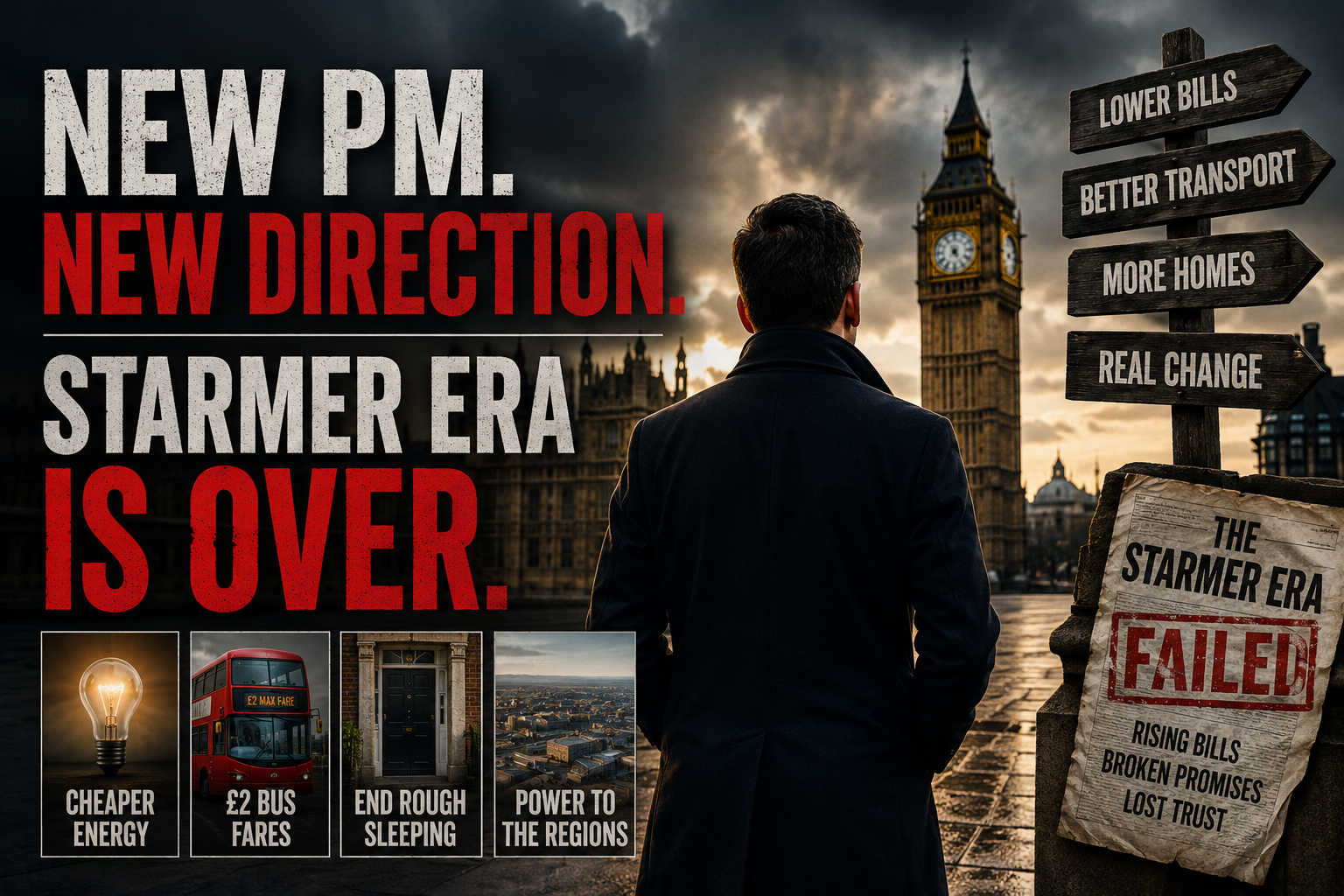
Andy Burnham has been Prime Minister for only days, but the change in political direction is already unmistakable. Household electricity taxes are being cut, bus fares are being reduced, rough sleeping has been placed at the centre of government, and Whitehall has been told to surrender more power to Britain’s regions.
These are not yet the sweeping economic reforms Burnham has promised. However, they represent something Keir Starmer repeatedly failed to provide: a clear sense of purpose, policies that can be explained in one sentence, and immediate action connected to the pressures citizens experience every day.
Electricity Bills Cut From October
Burnham’s most immediate intervention is the removal of VAT from household electricity bills from 1 October 2026. The measure will be funded by cancelling the previous government’s planned digital identity programme and is intended to reduce bills during the colder months.
The direct saving will be modest. Estimates suggest that removing the five per cent tax could save an average household approximately £45 a year, depending on electricity consumption. It will not transform family finances, but it places money back into household budgets rather than spending it on another expensive Whitehall technology programme.
That distinction matters. Starmer’s government too often appeared preoccupied with administrative systems, internal targets and policies that required lengthy explanations before voters could identify any personal benefit. Burnham’s first economic decision is simple: electricity will cost slightly less because the government has chosen to tax it less.
The measure is a painkiller rather than a permanent cure. Britain still needs greater energy generation, stronger infrastructure and reduced exposure to international supply shocks. Nevertheless, a government facing constrained finances should prioritise relief that reaches millions of people quickly, provided it does not rely on uncontrolled borrowing.
The £2 Bus Fare Is Returning
Burnham has also announced that the maximum single bus fare on participating services will fall from £3 to £2 from 1 January 2027 and remain at that level for the rest of the year. The government says millions of passengers could save up to a third on eligible journeys.
For someone making ten capped single journeys each week, the maximum theoretical saving would be approximately £10 a week, or more than £500 across a full year. Actual savings will vary because some journeys already cost less than £3, while London’s separate fare system charges less than the national cap.
Even so, this could be more significant than the electricity announcement for regular passengers. Workers, students and residents of rural or coastal areas often have limited alternatives to buses. Lower fares could therefore improve access to employment, education, healthcare and town centres while offering visible relief to people who do not benefit from rail season-ticket schemes or electric-car incentives.
It is also a characteristically Burnham policy. As Greater Manchester mayor, he brought buses under greater public control and built his reputation around practical transport reform. His early national decisions suggest he intends to transfer that approach from Manchester to the entire country.
Rough Sleeping Has Become A Government Priority
Burnham’s first instruction as Prime Minister was to begin a national drive to end long-term rough sleeping. The opening investment is intended to provide 1,200 homes and intensive support for at least 3,000 people, with further measures promised before the autumn.
This is not merely a symbolic social policy. Persistent homelessness generates costs across emergency healthcare, policing, courts, prisons, councils and temporary accommodation. Providing stable housing with sustained support can reduce the repeated interventions that occur when people remain trapped on the streets.
The challenge will be delivery. Governments frequently announce ambitions to eliminate rough sleeping without addressing shortages of suitable housing, addiction treatment, mental health provision and local support workers. Burnham will be judged by whether the promised homes appear and whether people remain housed, not by the emotional strength of his announcement.
However, his decision immediately establishes a different governing instinct. Starmer’s political method often began with caution, consultation and concern about how a proposal might be attacked. Burnham has begun with a defined social problem and instructed the state to solve it.
Power Is Moving Away From London
The largest potential change is still being developed. Burnham has promised a new political and economic model based on deeper devolution, stronger public control of essential services, reindustrialisation and government procurement that supports British businesses.
In his first Downing Street speech, he argued that political power had become excessively centralised while economic power had been privatised. He promised to transfer decision-making into “every postcode”, build more council homes, reform support for young people and publish a ten-year national plan later in 2026.
His initial conversations with the leaders of Scotland, Wales and Northern Ireland also emphasised practical collaboration and deeper devolution rather than immediate constitutional confrontation.
This may become Burnham’s most important legacy. Britain remains one of the most centralised major democracies, with councils and regional authorities heavily dependent on decisions made by the Treasury and Whitehall. Giving local areas greater control over transport, housing, skills and investment could produce policies better suited to local economies.
It could also create inconsistency. Wealthier or more capable regions may use new powers more effectively than struggling councils. Devolution must therefore come with stable funding and accountability rather than simply transferring responsibility for managing decline.
Burnham Has Broken With The Starmer Era
Burnham has also changed the government itself. Rachel Reeves has left office and John Healey has been appointed Chancellor, while a wider reshuffle has removed or demoted numerous figures associated with Starmer’s administration.
The political message is deliberate. Burnham is not presenting himself as the caretaker of Starmerism. He is attempting to replace a government defined by caution, poor communication and declining authority with one that appears more direct, regional and economically interventionist.
Starmer left Downing Street defending his record on waiting lists, poverty, immigration, defence and Britain’s international standing. Yet his departure after only two years demonstrated the scale of his political failure. A huge parliamentary majority could not compensate for the absence of a persuasive national story or a strong personal connection with voters.
Burnham understands that governments cannot survive on technical progress alone. Citizens must be able to recognise what the government is doing, why it matters and how their lives could improve.
Is Andy Burnham Becoming More Popular?
The evidence suggests Burnham begins from a much stronger position than Starmer ended with, although claims of a major popularity surge should remain cautious.
YouGov’s June polling placed Burnham on a net favourability score of minus four, with 34 per cent holding a favourable view and 38 per cent an unfavourable one. Starmer’s net rating stood at minus 45. Burnham’s rating had improved from minus 11 before his decisive Makerfield victory, although it remained below the positive figures recorded earlier in his return to national politics.
Voters were also substantially more likely to describe Burnham as competent, likeable and decisive than they were to apply those qualities to Starmer. His record as Greater Manchester mayor was judged positively by 44 per cent of Britons and negatively by only 12 per cent, rising to 71 per cent positive in North West England.
This indicates momentum rather than universal approval. Burnham remains unknown to part of the electorate, and early prime ministerial popularity can disappear once spending decisions, tax choices and international crises accumulate. The decisive test will be whether household relief and visible delivery turn curiosity into durable trust.
What Could Come Next
The next phase is likely to include further action on council housing, regional investment, youth employment, mental health support and public control of essential infrastructure. Burnham has also promised reindustrialisation, greater use of British government procurement and a ten-year plan intended to explain how these individual policies fit together.
The danger is that the early measures remain a collection of popular but relatively small interventions. Cutting electricity VAT and bus fares helps citizens, but neither policy alone solves Britain’s weak productivity, housing shortage, high debt, expensive energy system or regional inequality.
Burnham’s opportunity is larger than that. He can demonstrate that an active government does not have to mean reckless borrowing, endless bureaucracy or Whitehall micromanagement. It can mean choosing clear priorities, transferring power, demanding delivery and ensuring that citizens experience the result.
Starmer possessed an enormous majority but governed as though every bold decision might destroy him. Burnham has started by behaving as though political capital exists to be used. His first changes will not rebuild Britain by themselves, but they have already restored something the previous government had almost completely lost: the belief that the person in Downing Street knows what he wants to change.
