Birmingham Broad Street Arrest Sparks Fury As Police Face Fresh Two-Tier Policing Storm
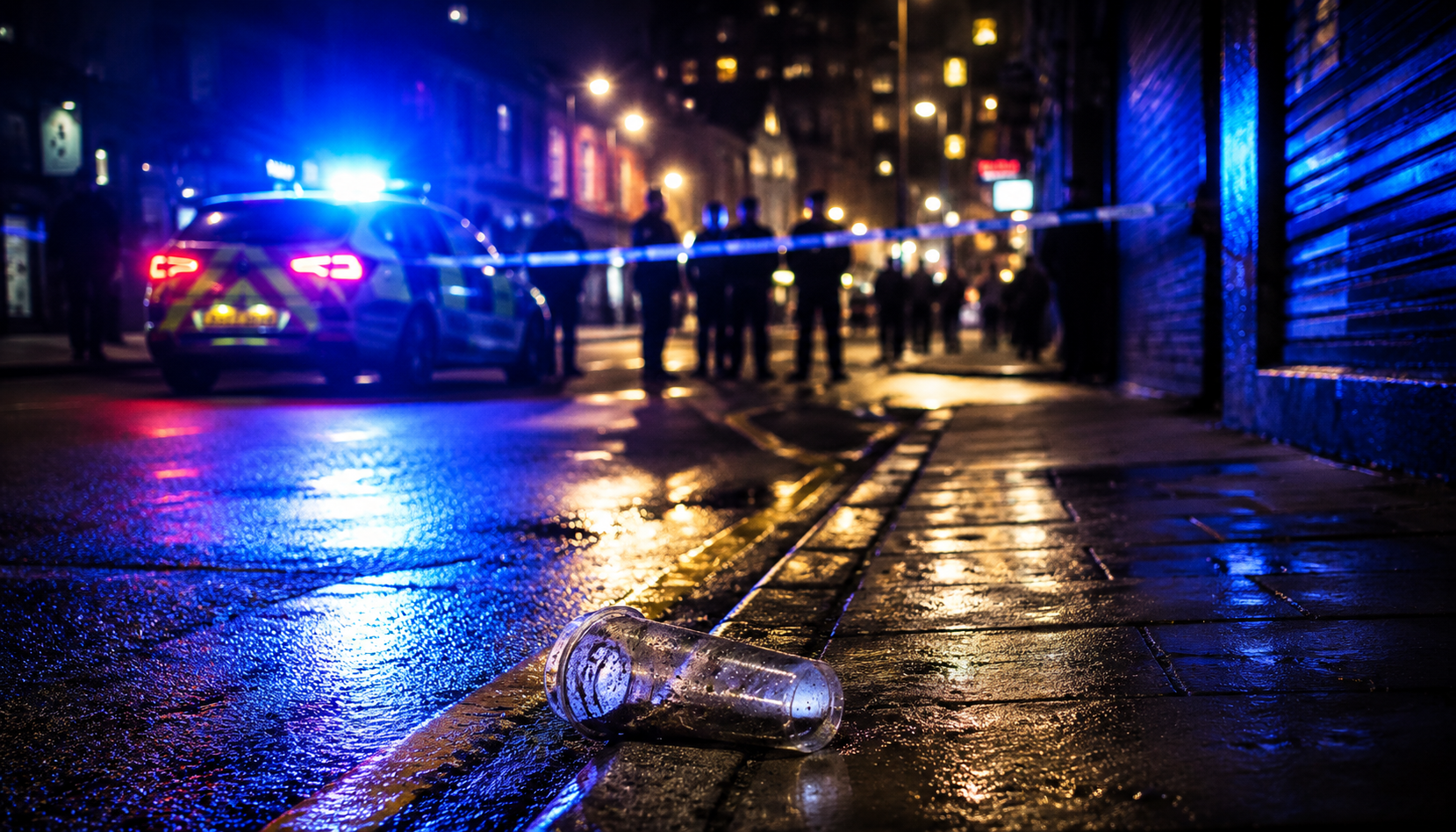
Broad Street Assault Row Explodes Into Two-Tier Policing Debate
Birmingham Arrest Video Triggers Outrage Over Police Priorities
A late-night arrest on Birmingham’s Broad Street has become the latest flashpoint in Britain’s bitter argument over police standards, public trust and claims of two-tier policing. What began as a city centre assault investigation has turned into a national row because many viewers believe the visible police response looked backwards: the man seen being attacked became the person the public saw arrested.
West Midlands Police has confirmed the core facts carefully. At around 1.30am on Sunday 21 June, officers were on Broad Street, where they arrested a 20-year-old man who has since been charged with assaulting a police officer. The force has also said it is now carrying out active enquiries to identify people involved in an assault shown in social media footage.
What Happened On Broad Street
The incident took place in one of Birmingham’s busiest night-time areas, where police routinely deal with alcohol-fuelled disorder, street fights, public order problems and sudden violence. The public anger comes from the sequence many people believe they saw online: a man apparently assaulted, followed by police attention landing heavily on him rather than immediately on the wider group.
That does not prove the police acted unlawfully. It does not prove every angle of the incident has been seen. It does, however, explain why the clip hit such a nerve. In the social media age, policing is judged not only by what officers later say happened, but by whether the first visible decision looks fair, proportionate and obvious to the public.
The force’s position is that an assault did take place and that officers were already dealing with the arrest of another man at the time. That detail matters because it gives one explanation for why the response may have looked confused or selective in the footage. It also leaves the central public question intact: if officers were nearby, why did the visible enforcement appear to fall first on the person many viewers saw as the victim?
What Has Been Confirmed
The confirmed position is narrower than the outrage online. A 20-year-old man was arrested and charged with assaulting a police officer. Police are aware of social media footage showing the incident before the arrest. They recognise that an assault took place and are seeking witnesses or information to identify those involved.
West Midlands Police has asked anyone who witnessed the assault to contact the force and quote the relevant crime reference. That means the incident is not closed in the way many angry viewers fear. The police have not said the other people in the footage are being ignored; they have said active enquiries are under way.
But the delay is the problem. Public confidence is not only about eventual process. It is about the moment people see force used, the moment they see a suspect walk away, and the moment they ask whether the same urgency would have applied if the roles had appeared different. In a trust crisis, “we are investigating” often sounds too thin when the public believes the evidence is already visible.
Why The Footage Caused Outrage
The outrage is not just about one arrest. It is about a much wider belief that British policing has become inconsistent, hesitant and politically nervous. Critics argue that officers can appear decisive with some people and strangely passive with others, especially when race, protests, immigration, public disorder or community sensitivity enter the picture.
That is where the two-tier policing accusation comes in. Supporters of that argument say the Broad Street footage looks like another example of police choosing the easier target while avoiding a more difficult confrontation with a group. They argue that ordinary members of the public are now expected to accept slow appeals, vague statements and delayed accountability, even when video footage appears to show something more immediate.
The police and many official bodies reject the two-tier label as too broad and too political. They argue that short clips can mislead, that officers make decisions under pressure, and that different incidents require different tactics. That may be true in many cases, but it does not erase the perception problem. When people believe policing depends on who is involved, what is being protested, or what backlash officers fear, legitimacy starts to rot.
Why People Say It Shows Two-Tier Policing
The Broad Street row fits a pattern that critics already believe they can see. Manchester Airport became a national controversy after footage of a violent police encounter triggered competing claims about officer conduct, suspect conduct and public accountability. The Henry Nowak case has also fed public anger after the police watchdog began investigating whether two officers failed to recognise urgent medical need and whether assumptions, prejudice or community tensions affected decision-making.
There is also the long-running anger over protest policing. Many people believe anti-immigration protests, anti-lockdown protests, pro-Palestinian marches, climate demonstrations and counter-protests have not always been handled with the same tone, threshold or urgency. Some of those comparisons are crude. Some ignore differences in violence, numbers and risk. Yet the political damage comes from the fact that millions of people no longer give police the benefit of the doubt.
The strongest version of the criticism is not that every officer is biased. It is that policing now looks too cautious where clarity is needed, too forceful where restraint would build trust, and too slow to explain itself when public anger is predictable. In that environment, every viral clip becomes evidence in a much larger trial of institutional credibility.
The Bigger Police Standards Problem
The anger also lands because police standards are already under heavy pressure. England and Wales have seen record complaints logged through the police complaints system, rising misconduct allegations, repeated high-profile failures and a deep sense that ordinary people are not getting fast, visible justice. Even when most officers act professionally, the public sees enough failure to question the culture around them.
This is the key distinction. The Broad Street incident does not by itself prove two-tier policing. It does show why the accusation spreads so quickly. When a force asks for public help after the footage has already gone viral, critics hear weakness. When the police say officers were dealing with another arrest, critics hear an excuse. When the public sees one person charged but waits to hear what happens to others, critics see imbalance.
That is why police communication matters almost as much as police action. The public does not need every operational detail in real time, and criminal investigations cannot be run by social media. But forces now operate in a world where silence creates suspicion, delay creates conspiracy, and vague statements are treated as institutional self-protection.
What Happens Next
The immediate next step is the identification of everyone involved in the Broad Street assault. If police find and charge further suspects, some of the outrage may soften. If they do not, the case will become another symbol for people who already believe the justice system is selective, defensive and detached from what the public can see with its own eyes.
The deeper issue will not be solved by one statement or one appeal for witnesses. British policing is now fighting a legitimacy battle as much as a crime battle. The public wants visible fairness, fast action, equal standards and honest explanations when things look wrong. If forces cannot provide that, every street fight, protest arrest and viral clip will keep feeding the same dangerous conclusion: that the law no longer feels even-handed.
